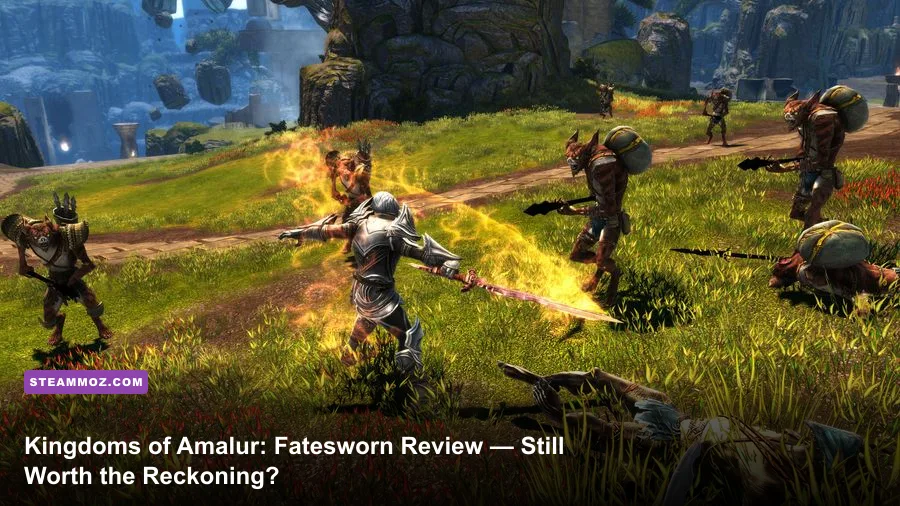
Yes, Kingdoms of Amalur: Re-Reckoning – Fatesworn is worth playing in 2026—but mainly if you already enjoy Amalur’s fast, loot-heavy combat and want another 10–15 hours of it. The expansion adds the new Mithros region, raises the level cap from 40 to 50, introduces Chaos weapons and gear, and delivers a worthwhile final campaign chapter. It doesn’t fix the base game’s repetitive side quests, dated presentation, or occasionally awkward dungeon design, so newcomers should buy it as part of the complete package rather than expect a modern open-world revolution.
That distinction matters. Fatesworn is a late expansion for a 2012 action RPG, not a reinvention. Its best moments come when you are juggling fate powers, elemental resistances, weapon swaps, and Chaos portals in tight arenas. Its weakest moments involve long conversations, familiar fetch-quest structure, and a new map that feels more like a focused adventure zone than a genuine second continent.

🎮 Get Kingdoms of Amalur: Re-Reckoning
Ready to dive in? Grab your copy today for just $9.99.
Check OfferWhat Fatesworn actually adds to Re-Reckoning
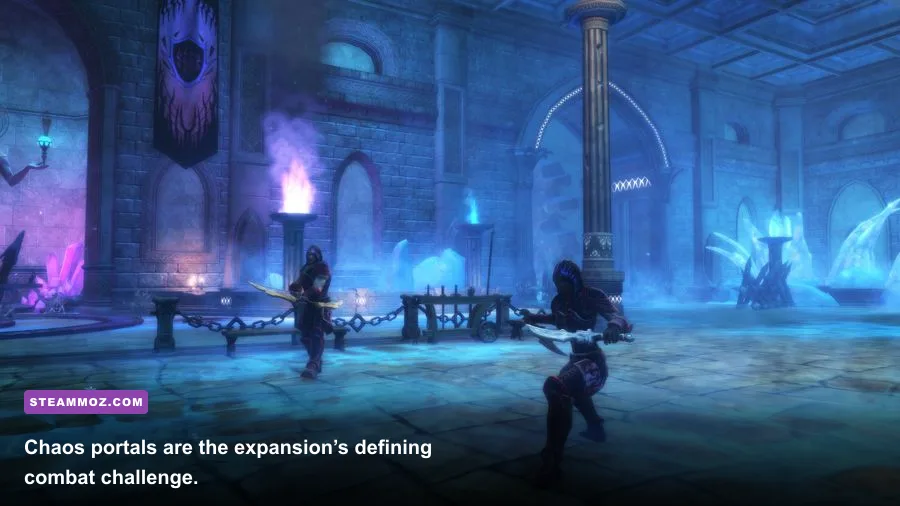
Fatesworn begins after the main campaign, with Amalur facing a new threat from the Chaos realm. The story moves the Fateless One toward Mithros, a colder, more mountainous territory built around the settlement of Crownhold. The campaign has a clear sense of escalation: investigate the Chaos disturbance, learn how the new corruption works, gather allies, and push toward a final confrontation that gives the original game a more satisfying closing note.
The headline progression change is the level cap increase from 40 to 50. You also get additional abilities, new equipment categories, a fresh faction storyline, and Chaos-infused enemies that cannot be treated like ordinary Tuatha or bandits. Chaos barriers and portals are particularly important because they create combat spaces where enemies can be protected until you interact with the correct portal or use suitable Chaos equipment.
Fatesworn’s content is separate enough to feel meaningful, but not so large that it overwhelms the original campaign. You can continue using your existing character, respec through the Fateweaver system, and bring an established hybrid build into Mithros. That makes the expansion much more enjoyable after finishing the main story than starting it with a rushed, underpowered character.
| Feature | Re-Reckoning base game | Fatesworn expansion |
|---|---|---|
| Level cap | 40 | 50 |
| Main setting | Faelands, including Dalentarth and Detyre | Mithros, centered around Crownhold |
| Combat focus | Fate powers, class destinies, standard resistances | Chaos portals, Chaos gear, higher-level encounters |
| Best use case | Large open-world RPG campaign | Focused post-game story and build extension |
For the official feature list and current package options, check the Fatesworn Steam page. The expansion is also included in editions of Kingdoms of Amalur: Re-Reckoning, so compare the bundle price before buying it separately.

🎮 FATE
Looking to experience this game? Grab your digital key directly on our store for $7.99.
View on Steammoz Store →How good is the new Chaos combat?
Chaos is Fatesworn’s strongest idea because it gives the familiar combat loop a new tactical wrinkle. In the base game, a powerful character can often cut through standard enemies by leaning on damage output, stun effects, and frequent Fate shifts. Chaos encounters punish that autopilot approach. You have to read the arena, identify active portals, and make sure your gear can deal with the enemies’ defenses.
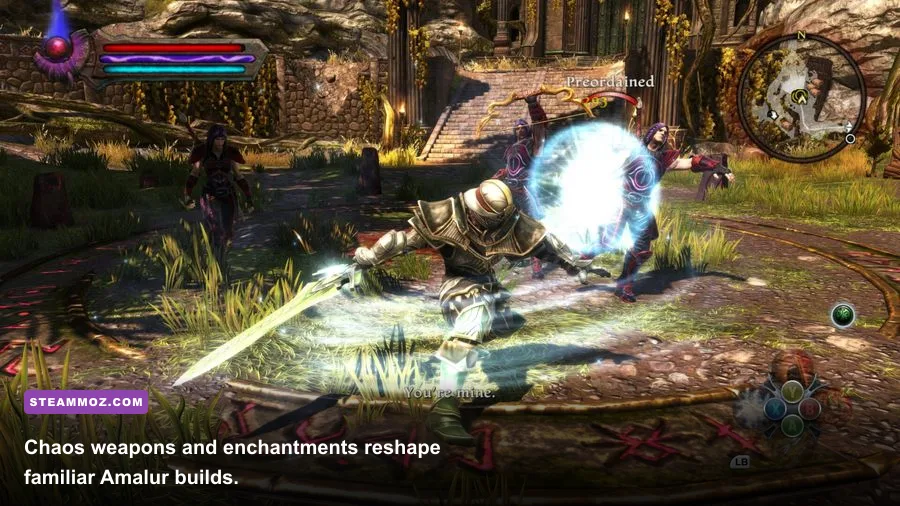
Chaos weapons are not simply stronger versions of swords and daggers. They are part of a new damage-and-progression layer, and the most useful pieces are tied to the expansion’s enemies and quests. A staff-focused Sorcery build, for example, benefits from keeping distance while using Chakrams to pressure clustered targets. A Might character can combine a greatsword opener with Harpoon to pull dangerous enemies away from a portal. Finesse builds get excellent value from Smoke Bomb, Assassin’s Art, and quick weapon swaps when an enemy resists your preferred damage type.
The combat still has the wonderfully loose feel that defines Amalur. Dodges are generous, attacks chain quickly, and the Reckoning mode can turn a bad encounter into a spectacular execution sequence. Fatesworn doesn’t suddenly become Dark Souls. It simply adds enough resistance and arena management to make your equipment choices matter again.
| Build style | Core skills | Fatesworn advantage | Watch out for |
|---|---|---|---|
| Might | Harpoon, Quake, Battle Frenzy | High stagger and reliable portal control | Slow recovery after missed heavy attacks |
| Finesse | Smoke Bomb, Assassin’s Art, Precise Weaponry | Excellent mobility around Chaos arenas | Lower margin for mistakes in crowded fights |
| Sorcery | Mark of Flame, Sphere of Protection, Meteor | Safe ranged damage and elemental pressure | Some encounters punish predictable spell casting |
| Hybrid | Harpoon, Smoke Bomb, Healing Surge | Best flexibility for unfamiliar enemies | Spread stats can delay peak damage |
My preferred setup is a hybrid Finesse/Sorcery character using daggers or faeblades for single-target damage, Chakrams for groups, and a defensive spell such as Sphere of Protection. Keep a second weapon set with a different damage profile. The game’s weapon swapping is quick enough that there’s no reason to stubbornly hit a resistant target with the same tool for thirty seconds.
Mithros is atmospheric, but smaller than it looks
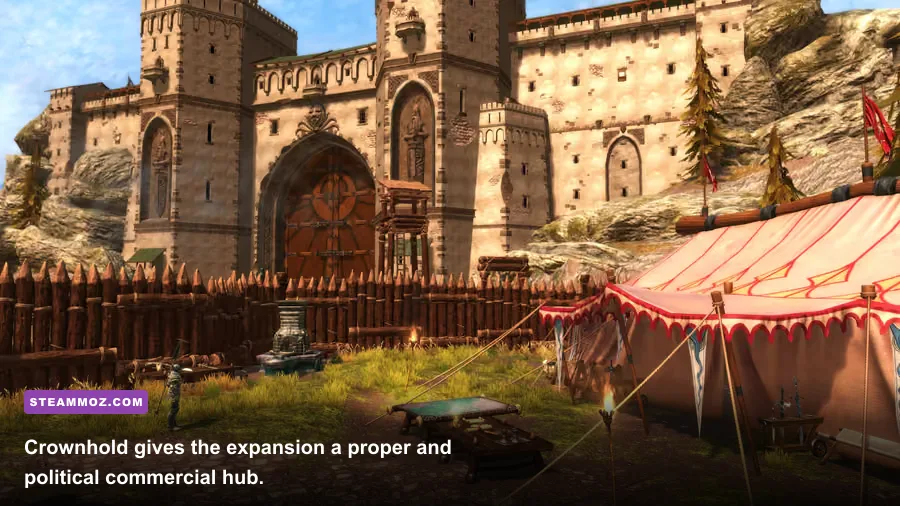
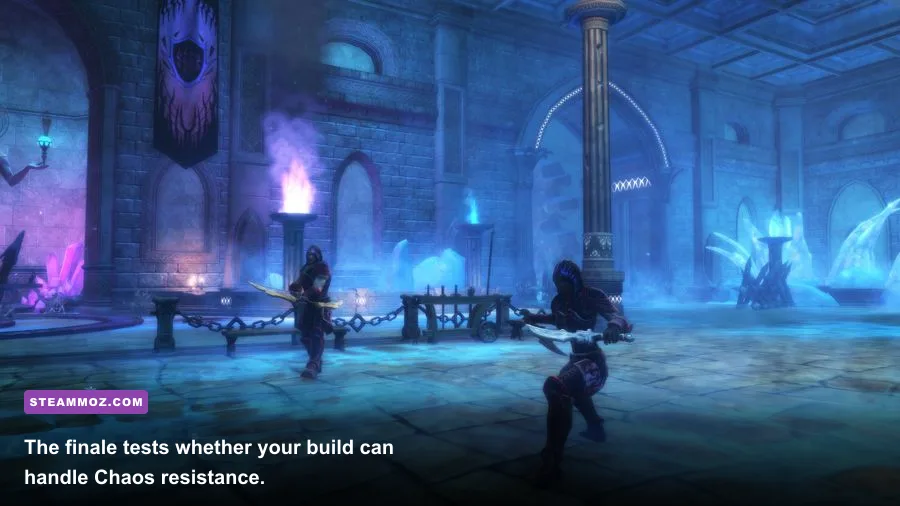
Mithros has a strong visual identity. Snow, ruined fortifications, dark forests, and icy paths give Fatesworn a moodier edge than the warmer regions of Dalentarth. Crownhold works as a useful base of operations, with merchants, quest contacts, and the kind of readable hub layout that lets you get back into the action without wandering through a giant city.
The problem is density. The original Amalur sells itself as a huge world packed with factions, ruins, caves, and distractions. Fatesworn’s map is more compact and more linear. That focus helps the main quest move along, but it also makes the recycled structure easier to notice. You will still open chests, clear enemy groups, inspect ruins, and carry items between NPCs. The scenery changes; the quest grammar mostly doesn’t.
That’s not necessarily a deal-breaker in 2026. A compact expansion can be a relief after a 100-hour RPG, especially if you’ve already completed the faction arcs involving the Warsworn, House of Ballads, House of Sorrows, or Scholia Arcana. Just don’t buy Fatesworn expecting a second full-sized Amalur campaign. Think of it as a substantial epilogue with a dedicated region.
If you’re coming to Amalur because you want another colorful, ability-driven action RPG, our recommendations for games like Blood Omen 2 and beginner build advice for Alone in the Dark may also point you toward better modern alternatives depending on whether you value combat or atmosphere more.
Performance and presentation in 2026
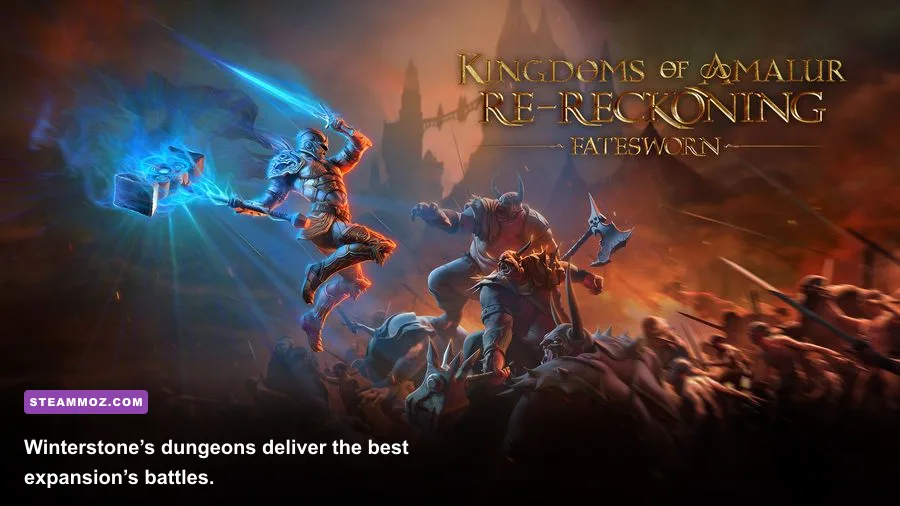
On current PC hardware, Re-Reckoning is an easy game to run, and Fatesworn does not radically change that profile. The remaster’s visuals remain dated beside newer RPGs: character faces are stiff, environments can look flat at close range, and animation transitions occasionally show their age. Still, the bright art direction holds up better than the raw technology. Mithros’ snowfields and blue-white lighting are often attractive when viewed from a distance.
Use a frame-rate cap if your system produces uneven frame pacing. A locked 60 fps usually feels better than a fluctuating 90–140 fps presentation, particularly during crowded fights where effects, particles, and multiple spell animations hit at once. On a high-refresh monitor, test 120 fps, but don’t sacrifice stable frame delivery for extra numbers.
| Setting | Recommended value | Performance impact | Visual note |
|---|---|---|---|
| Resolution | Native display resolution | High | Use resolution scaling only if GPU-limited |
| Texture quality | High or Ultra | Low to medium | Worth keeping high for armor and environment detail |
| Shadow quality | High | Medium | Lower this first on older GPUs |
| Anti-aliasing | Highest stable option | Low to medium | Helps foliage and weapon edges |
| Frame-rate cap | 60 fps, or 120 fps if stable | Improves consistency | Reduces distracting frame-time swings |
Before troubleshooting, check the official Steam community discussions for current reports about controllers, ultrawide displays, and overlays. For broader PC cleanup, Steamoz’s guides to crashes and low FPS and responsive PC settings cover the same practical basics: update drivers, disable conflicting overlays, and test exclusive fullscreen against borderless mode.
Who should play Fatesworn in 2026?
Fatesworn is a good buy for players who finished Re-Reckoning and still want more combat, loot, and Fate-based experimentation. It’s especially appealing if your character stopped at level 40 and you enjoyed switching between Might, Finesse, and Sorcery destinies. The level-cap increase gives that endgame character a reason to return, while Chaos enemies make previously solved encounters feel less automatic.
It’s a weaker recommendation for first-time players who only want a polished modern RPG. The remaster keeps the original game’s uneven writing, repeated voice lines, dated facial animation, and occasional quest bugs. You may also find the expansion’s story more functional than unforgettable. The central conflict raises the stakes, but the emotional payoff depends heavily on how much you already care about Amalur’s world and its factions.
That’s why I’d avoid buying it at full price in isolation unless you’re already invested. Look for the complete edition or a seasonal sale. If you’re comparing it with other 2026-friendly RPGs, our roundups of games like Hunt: Showdown and stranger tactical RPGs show how different the alternatives can be—but neither offers Amalur’s specific combination of real-time combos, class flexibility, and colorful fantasy spectacle.
| Player type | Verdict | Reason |
|---|---|---|
| Completed the base game | Buy | New level cap, gear, region, and a proper post-game chapter |
| New to Amalur | Buy on sale | Best experienced as part of the complete Re-Reckoning package |
| Seeking modern visuals | Skip | The remaster still shows its 2012 foundation |
| Build-crafting enthusiast | Buy | Chaos equipment and level 50 progression refresh experimentation |
Final verdict: worth playing, with realistic expectations
Kingdoms of Amalur: Re-Reckoning – Fatesworn earns a recommendation in 2026 because it understands what made Amalur fun in the first place. It gives you new powers to combine, new gear to chase, new enemies to dismantle, and a compact region with a distinct atmosphere. Chaos portals are a smart addition, and the level 50 cap makes the expansion feel like more than a cosmetic epilogue.
But Fatesworn is not the expansion that transforms Amalur into a modern classic. Its quests remain familiar, its presentation is visibly old-fashioned, and Mithros lacks the sprawling surprise of the original world. The right verdict is simple: play it if you already like Amalur, and buy it on sale if you’re curious. In the complete Re-Reckoning package, it’s a worthwhile final chapter—not an essential standalone RPG.
For more long-form RPG recommendations and practical PC coverage, keep an eye on Steamoz’s 2026 RPG recommendations. Amalur’s reckoning may be old, but when the combat clicks and a Chaos portal opens at the worst possible moment, it still has a pulse.