
Hell Is Us becomes much easier once you stop treating it like a marker-driven action RPG. There is no comforting GPS route to follow through Hadea, so your first hours should focus on three things: learning enemy tells, recording environmental clues, and returning to blocked areas after you gain new tools. These 10 tips will help you survive the opening regions, solve puzzles faster, and spend upgrades without weakening your build.
Hell Is Us is built around discovery rather than checklist completion. Remi’s journey through a war-torn country mixes deliberate melee combat, supernatural enemies, environmental riddles, and a drone that changes how you approach danger. If you usually play games by following objective icons, the adjustment can feel rough. Stick with it. The lack of hand-holding is the point, and Hadea is far more readable than it first appears.

1. Learn Hadea’s visual language before chasing objectives
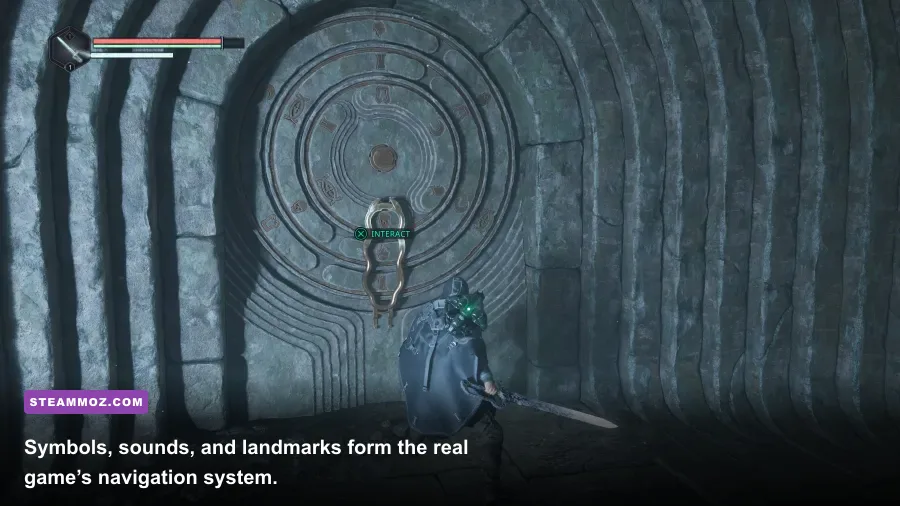
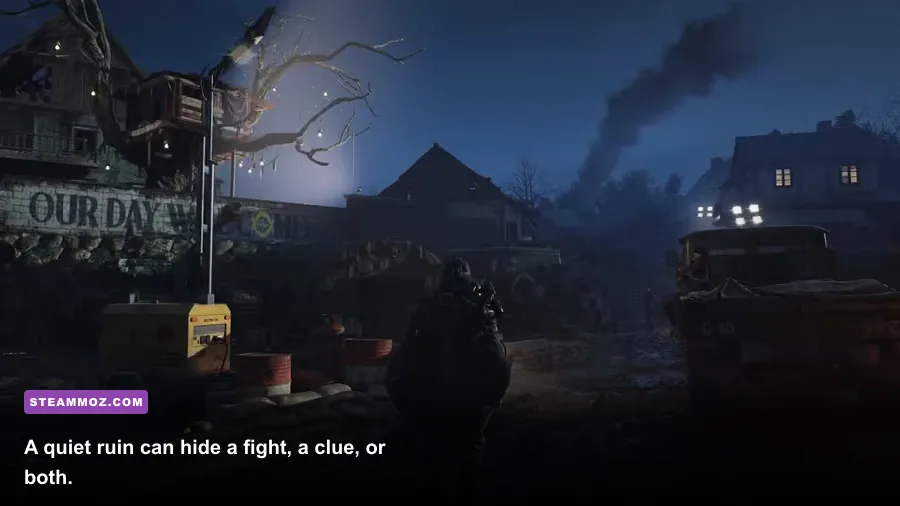
Before leaving an area, take a slow look at its architecture. Hell Is Us repeatedly uses distinctive landmarks, unusual door frames, colored materials, towers, bridges, and symbol clusters to communicate where you are and where you can go next. These details are not background decoration. They are the game’s replacement for a minimap.
Keep a mental route between major landmarks rather than trying to memorize every turn. A damaged church, an isolated checkpoint, or a tall structure can become your compass. When you discover a locked door, note what surrounds it and what kind of symbol appears nearby. You may not have the solution yet, but recognizing the location later is half the puzzle.
Also resist the urge to sprint through every quiet stretch. Hadea often places a clue shortly before the obstacle it explains. A mural, abandoned object, or repeated geometric shape can matter several minutes later. If you are lost, return to the last landmark you clearly understood instead of wandering randomly.
🎮 Hell is Us
Looking to experience this game? Grab your digital key directly on our store for $19.99.
View on Steammoz Store →2. Fight Hollow Walkers by reading the wind-up
The supernatural enemies in Hell Is Us punish button mashing. Hollow Walkers can look slow and awkward, but their attacks cover more space than their animations initially suggest. Watch the shoulders, torso, and weapon hand. A long pause is usually an invitation to panic, not proof that the attack has been canceled.
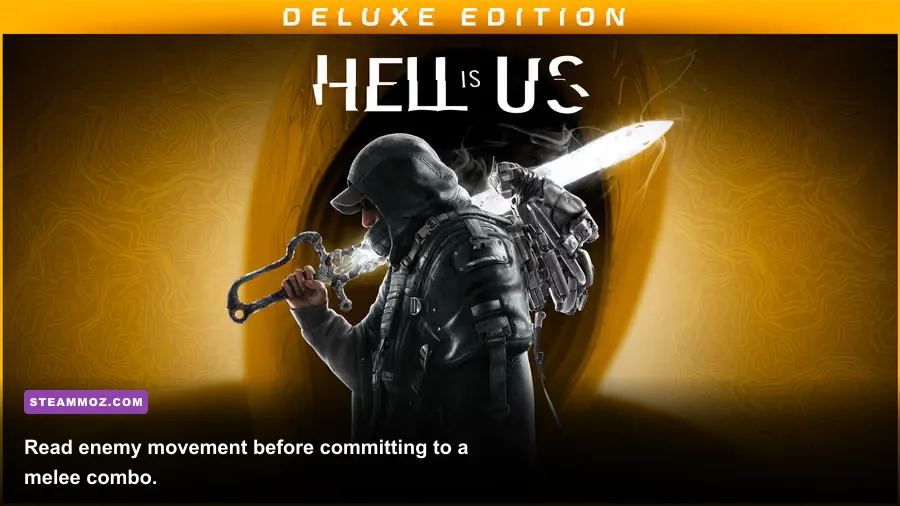
Use one or two reliable strikes, then create space. Your safest early rhythm is attack, observe, evade or guard, and punish the recovery. The exact number of hits depends on your weapon and upgrades, so do not force a universal combo. A sword generally feels more forgiving for learning timing, while heavier options reward players who are comfortable waiting for larger openings. The spear’s reach can help against isolated targets, but it becomes less comfortable when enemies surround you.
Never start a finishing sequence while another enemy is standing just outside the camera view. Lock-on makes individual targets easier to track, but it can also narrow your awareness. Break lock-on when repositioning around multiple creatures, then re-engage once you have separated the group.
| Combat situation | Best response | Common mistake | Why it works |
|---|---|---|---|
| One Hollow Walker | Short combo, then guard or evade | Extending the combo | You preserve stamina and catch the recovery |
| Two enemies approaching | Circle wide and separate them | Locking onto the closest target | Spacing prevents off-screen hits |
| Enemy begins a heavy wind-up | Wait for commitment, then punish | Dodging too early | The attack tracking often follows premature movement |
| Low health in an unknown room | Retreat and heal before scouting | Opening a chest immediately | Exploration rewards are not worth a needless death |
3. Treat the drone as a tactical tool, not a button you forget
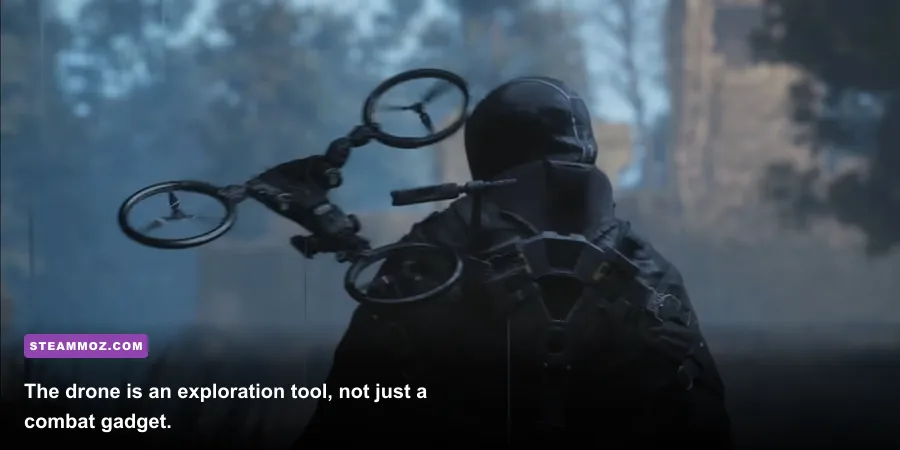
Remi’s drone is useful in more situations than combat. Send it ahead when you suspect a trap, use it to inspect suspicious spaces, and experiment with it whenever a route seems deliberately blocked. The drone can reveal information from angles that Remi cannot safely reach, and it often helps you understand whether a room is a puzzle space or an arena.
In a fight, the drone is most valuable before the first strike. Scout enemy placement, identify narrow exits, and decide where you want the battle to happen. Starting combat in the center of a room is rarely ideal. Pull enemies toward open ground, where the camera has fewer obstacles and your evasive movement remains predictable.
Do not waste drone actions simply because the tool is available. If you have already identified a safe route, save your attention for the next uncertain space. The strongest use of the drone is information: it lets you replace a blind entry with a deliberate plan.
4. Write down clues instead of trusting your memory
Hell Is Us expects you to solve connections across time and distance. A clue found in one building may explain a locked mechanism somewhere else, and the game will not always remind you what you saw. Keep a simple note on your phone or a piece of paper. Record the landmark, the symbol, the number of visible elements, and what the locked object appeared to require.
Pay attention to repetition. If the same symbol appears on a wall, a door, and an object carried by an enemy, that is probably a relationship rather than decoration. The solution may involve sequence, orientation, proximity, or matching shapes. Do not immediately assume every puzzle is a code lock.
When stuck, use a three-step reset. First, inspect the obstacle from every angle. Second, walk back along the route and look for a new interaction. Third, leave the area and pursue another lead. Progression in Hell Is Us often comes from knowledge or a later tool, not from staring at the same door until it opens.
This detective-style approach may feel unusual if you are more comfortable with traditional quest logs. Steamoz’s guide to 10 essential tips for new players in In Other Waters covers a similar lesson: observation is often the real progression system.
5. Spend upgrades around a combat identity
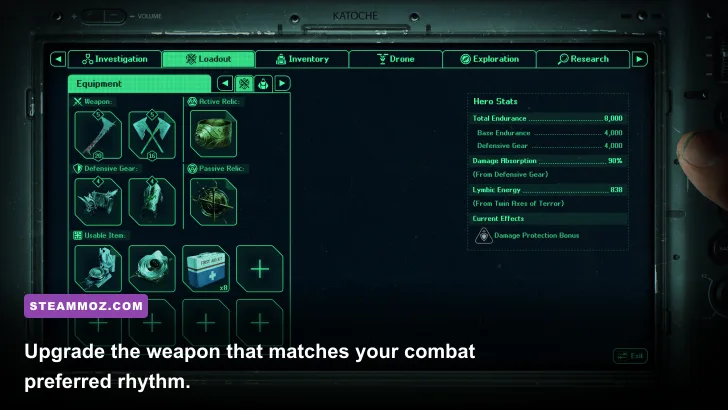
Do not spread every upgrade evenly across every weapon at the start. Hell Is Us gives you multiple melee approaches, but switching constantly can make combat timing feel inconsistent. Pick the weapon whose spacing and recovery you understand, then invest enough to make it dependable before branching out.
A practical beginner setup is a balanced sword-focused approach. Keep the sword as your default for ordinary encounters, use a heavier weapon when you have a clear opening, and reserve the longer-reaching option for enemies that punish close contact. This is not a rigid class system; it is a way to reduce decision fatigue while you learn the game.
Prioritize upgrades that improve consistency over flashy options. A stronger basic attack, better survivability, or a more useful defensive window will help in every encounter. A niche effect that only works under a narrow condition is less valuable until you understand enemy behavior and boss arenas.
| Approach | Strength | Weakness | Best beginner use |
|---|---|---|---|
| Sword-focused | Reliable speed and recovery | Requires close spacing | Learning enemy timing |
| Heavy-weapon focused | High punishment per opening | Longer recovery after mistakes | Single targets and stagger windows |
| Spear-focused | Safer reach and spacing | Less comfortable when surrounded | Isolating dangerous enemies |
| Mixed investment | Flexible answers | Slower early power curve | Players who already understand the combat system |
6. Use healing before you are desperate
Healing is not a reward for reaching one hit point. Use it when you have enough health to survive a mistake but not enough to comfortably handle the next unknown room. Entering an unexplored zone badly injured creates a chain reaction: you play cautiously, take one hit, panic, and lose the entire run.
Before opening a suspicious door or entering a large arena, top up if your resources allow it. Then look for a retreat route before engaging. Many fights become manageable once you stop backing into walls. If healing resources are limited, avoid spending them after a minor scratch in a safe corridor; spend them before a meaningful risk.
Always check the floor and room edges after combat. The safest recovery opportunity is often near the route you just cleared, not in the next chamber. Hell Is Us rewards returning to secure ground rather than pushing forward on autopilot.
7. Explore side paths before declaring an area finished
A main route is rarely the whole story. Dead ends can contain resources, lore, shortcuts, or clues that make a later puzzle obvious. More importantly, side paths teach you how a region is structured. Once you understand its boundaries, returning with a new ability becomes much less frustrating.
Use a simple rule: if a path is visible but inaccessible, remember it; if a path is accessible, inspect it now unless combat resources are dangerously low. You do not need to clear every corner immediately, but you should identify doors, ledges, sealed passages, and unusual objects worth revisiting.
Backtracking is not wasted time in this game. It is the intended loop. The best discoveries often happen when a previously meaningless detail becomes useful after you have learned a new symbol or acquired a new tool.
8. Change the camera and performance settings for combat clarity
Hell Is Us feels dramatically better when the image stays stable during melee encounters. On PC, start with the official recommended specifications listed on the Hell Is Us Steam page, then target a consistent frame rate rather than maximum visual quality. A locked 60 frames per second is more useful for parries and evasions than an unstable higher average.
Lower shadows, volumetric effects, and post-processing first if performance dips. Keep texture quality higher when your graphics memory allows it, because reduced textures make environmental clues harder to read without necessarily fixing the biggest frame-time spikes. If camera motion makes exploration uncomfortable, reduce motion blur and adjust sensitivity before lowering image quality.
| Setting | Recommended starting value | Performance impact | Visual note |
|---|---|---|---|
| Frame-rate cap | 60 FPS or your stable refresh target | Low | Improves consistent combat timing |
| Shadows | Medium | Medium to high | Small quality loss, often useful for stability |
| Volumetric effects | Medium | High in dense scenes | Can reduce fog and lighting depth |
| Textures | High if VRAM permits | Low GPU impact, higher VRAM use | Preserves readable environmental detail |
| Motion blur | Off or low | Minimal | Makes camera movement and enemy tells clearer |
For troubleshooting, compare your system against Steam’s requirements and check Rogue Factor’s official site for developer information. Steamoz’s graphics settings guide for maximum FPS also explains why stable frame pacing matters more than a flashy benchmark number.
9. Prepare for bosses by learning the arena first
Boss encounters are easier when you treat the arena as part of the moveset. Before attacking, identify walls, corners, elevation changes, and any object that can interfere with the camera. Keep the boss in a space where you can see its full body. If you are constantly fighting the environment, reposition even if it costs a damage opportunity.
Watch for phase changes rather than relying on a health-bar threshold alone. A boss may alter attack timing, summon support, or create a hazard after a scripted event. Your first attempt should be a scouting run: learn the telegraphs, find the safe side of the arena, and discover whether healing is safer immediately after a specific attack.
Do not spend every powerful resource during the opening seconds. Save burst damage for a stagger, recovery animation, or phase transition. The best boss rotation is usually defensive until the pattern becomes familiar, followed by short, controlled punishment.
10. Let curiosity set the pace
The most important beginner tip is also the easiest to ignore: Hell Is Us is not asking you to clear Hadea as quickly as possible. It wants you to notice things. Follow the suspicious sound. Inspect the object that looks slightly out of place. Return to the sealed passage you marked earlier. Those choices create the game’s momentum.
If you need a break from demanding exploration, Steamoz’s games like Blood Omen 2 list is a useful detour for dark action-RPG fans. For Hell Is Us itself, though, rushing is usually the enemy. Move deliberately, keep notes, and make each fight a small experiment.
Finally, use the official Nacon website for publisher updates and patch information. The strongest early-game routine is simple: explore one landmark at a time, record every meaningful clue, scout with the drone, separate enemies, and invest in a weapon you genuinely understand. Follow that rhythm and Hadea stops feeling like an empty maze. It becomes a world that is constantly teaching you how to read it.