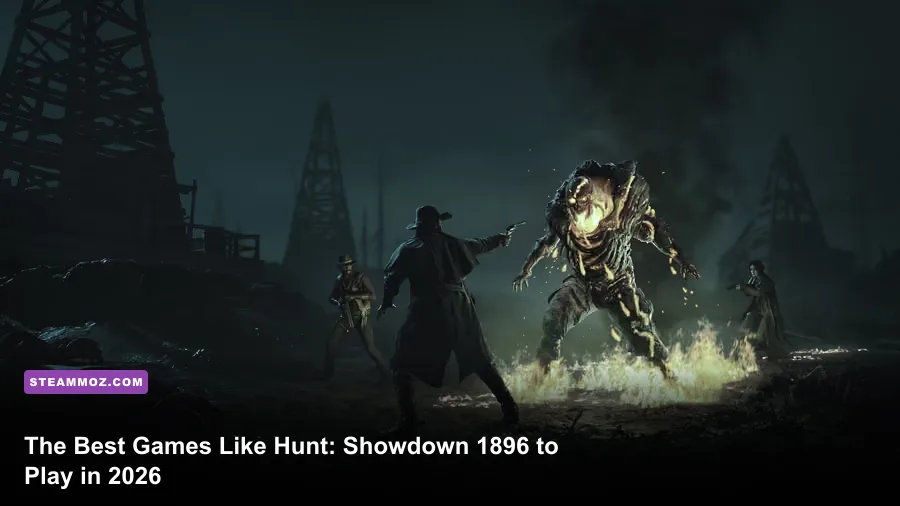
If Hunt: Showdown 1896’s slow-burn gunfights, brutal sound design, and bounty-extraction tension have you hooked, start with Escape from Tarkov for the deepest hardcore alternative, Dark and Darker for medieval PvPvE pressure, and Marauders for the closest compact extraction loop. Gray Zone Warfare is the pick if you want a larger tactical sandbox, while Hunt’s own matches remain unmatched for atmosphere and readable, high-stakes combat.
This list focuses on games that actually understand the appeal behind Hunt: Showdown 1896 and the grim tension associated with its darker content, including the community’s interest in The Penitent. That means more than simply naming shooters with loot. Each recommendation has to make you listen for footsteps, weigh an extraction against one more fight, and accept that a single bad decision can erase a successful run.
For a useful technical baseline, check Steamoz’s breakdown of Hunt: Showdown 1896 PC requirements and the more detailed look at Commedia Della Morte performance. Those details matter here because extraction games punish stutter far more harshly than a normal arena shooter.

How these Hunt alternatives compare in 2026
Hunt’s magic comes from a very specific combination: a 12-player match, a large rural map, audio-driven tracking, monsters that reveal your position, a bounty target, and an extraction decision that stays dangerous until the very last second. You are not just trying to win a gunfight. You are trying to control information.
The best alternatives copy only the parts that fit their own identity. Tarkov focuses on equipment knowledge, medical systems, and realistic weapon handling. Dark and Darker translates the same anxiety into a dungeon crawler where armor, class roles, and spell timing replace rifles. Marauders compresses the loop into shorter raids and adds a spaceship layer. Gray Zone Warfare makes the map persistent and shifts the pressure toward squad movement and long-range engagements.
| Game | Core similarity to Hunt | Player structure | Best for |
|---|---|---|---|
| Escape from Tarkov | Loot, sound cues, extraction risk | Solo or small squad raids | Hardcore gunplay and progression |
| Dark and Darker | Dark PvPvE, monsters, extraction | Solo, duo, or three-player parties | Class-based dungeon combat |
| Marauders | Raid, loot, escape, player ambushes | Solo or crews of up to four | Fast raids and vehicle combat |
| Gray Zone Warfare | Persistent objectives and tactical PvPvE | Faction-based squads | Large-map military operations |
| Hunt: Showdown 1896 | Bounty hunting and sound-led combat | Solo, duo, or trio hunters | Atmosphere and emergent fights |
One warning before you install anything: none of these games is a relaxed replacement for Hunt. They all have loss systems, uneven fights, or progression advantages that can make the first ten hours feel rough. The difference is where the pain comes from.
🎮 Hunt: Showdown 1896 - The Penitent
Looking to experience this game? Grab your digital key directly on our store for $4.99.
View on Steammoz Store →Escape from Tarkov is the deepest hardcore alternative
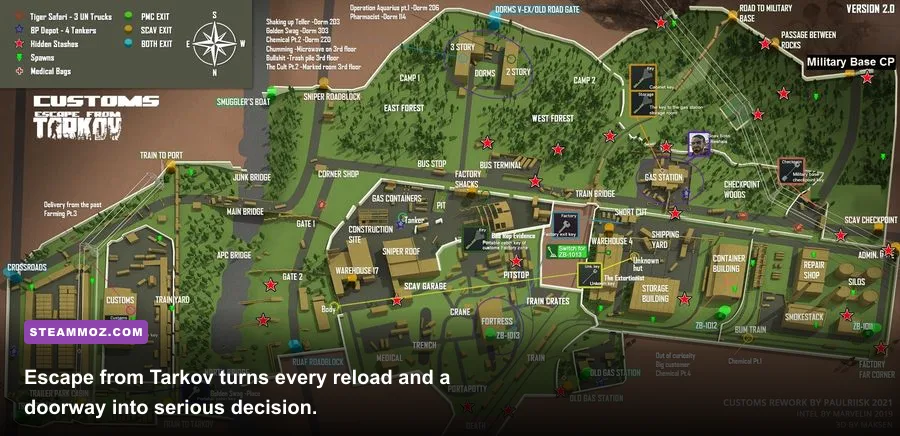
Escape from Tarkov is the obvious recommendation, but it is not simply “Hunt with modern guns.” Tarkov’s raids are more granular, more equipment-driven, and considerably less forgiving. You bring in a weapon, ammunition, armor, medical supplies, and a backpack. If you die, most of that can disappear unless insurance or another player’s decisions save it.
The closest connection to Hunt is the role of sound. A sprint through metal stairs, a suppressed shot across Streets of Tarkov, a door opening behind you, or the distinctive crack of a weapon in a concrete hallway can completely change your route. Tarkov rewards players who stop treating movement as free. Crouch-walking, leaning, holding an angle, and waiting for a reload are active decisions, not downtime.
What makes Tarkov harder than Hunt
Hunt gives weapons a relatively clean identity. A Mosin-Nagant, Sparks LRR, Romero 77, or Caldwell Conversion tells you a lot about the threat. Tarkov asks you to understand the entire ammunition system. An M4A1 loaded with weak 5.56 ammunition can lose to a cheaper rifle using armor-penetrating rounds. Armor has class ratings, helmets change survivability, and hit location matters across separate body parts.
That creates a sharper knowledge curve. Your early goal should not be a perfect meta loadout. Use dependable budget weapons such as the SKS or VPO-136, carry a reliable tourniquet and healing kit, and learn two extraction routes on one map before expanding your rotation. The most valuable skill is map memory: knowing whether a gunshot near Dorms, Interchange, or Ground Zero is likely to create a third-party fight.
| Early Tarkov priority | Recommended approach | Why it works | Common mistake |
|---|---|---|---|
| Weapon | SKS or VPO-136 with dependable ammunition | Low entry cost and useful mid-range damage | Buying an expensive gun before learning routes |
| Medical kit | Carry healing, bleeding control, and pain relief | Leg and arm damage can ruin a retreat | Relying on one healing item |
| Map learning | Master Ground Zero or one familiar location first | Extraction knowledge beats random exploration | Changing maps after every death |
| Combat habit | Stop after contact and listen for a second squad | Prevents many predictable third-party deaths | Chasing the first hit immediately |
Tarkov is the best pick if your favorite Hunt moments are the ones where you spend five minutes circling a compound, hear a magazine change, and commit only when the information is right. It is less cinematic, more technical, and far more demanding about inventory management. For PC players who want every raid to teach them something, it is still the benchmark.
Dark and Darker delivers Hunt’s PvPvE tension with swords
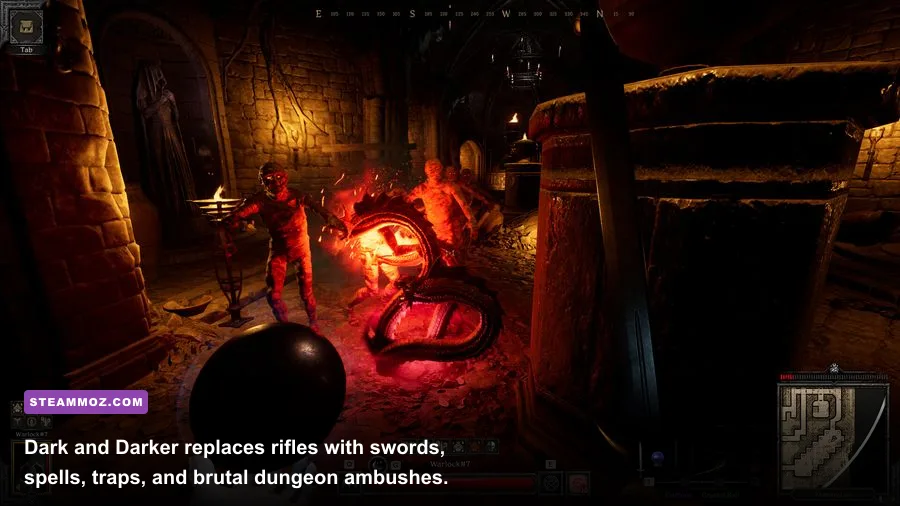
Dark and Darker is the strongest recommendation for players who love Hunt’s monsters and extraction structure more than its firearms. You enter the Forgotten Castle, Crypts, Goblin Caves, or another dungeon, fight AI enemies and rival adventurers, collect equipment, and search for a portal before the match closes around you.
The replacement for Hunt’s gunplay is deliberate melee spacing. A Fighter’s sword swing has a real arc. A Barbarian’s overhead attack can delete a careless target but leaves a huge recovery window. A Rogue can use stealth and poison to choose the engagement. A Cleric can turn a losing three-player fight with protection, healing, and well-timed buffs. You need to understand range, animation commitment, and headshot angles rather than recoil patterns.
The best beginner party composition
For a three-player group, Fighter, Cleric, and Ranger is the most forgiving starting composition. Fighter gives you a stable frontline and access to shields. Cleric supplies healing and defensive utility. Ranger controls corridors and punishes enemies who overcommit to the melee player. It is not the only viable team, but it teaches the fundamentals without requiring perfect stealth or spell knowledge.
Solo players should not blindly copy a trio build. Rogue works well for players who can disengage, loot quickly, and avoid fair fights. Ranger is excellent in open rooms but becomes vulnerable when a Barbarian closes the gap. Wizard has some of the highest upside, yet limited spell memory and fragile health make every missed cast expensive.
| Class | Core strength | Useful early skill focus | Danger to watch |
|---|---|---|---|
| Fighter | Reliable melee and shield defense | Second Wind and Weapon Mastery | Slowly chasing ranged enemies |
| Cleric | Healing, buffs, and team recovery | Protection and Lesser Heal | Wasting spells before player contact |
| Ranger | Corridor control and ranged damage | Quick Shot and Field Ration | Being trapped after firing |
| Rogue | Stealth, ambushes, and fast looting | Hide and weakpoint-focused attacks | Taking prolonged frontal fights |
| Barbarian | Huge close-range burst | Rage and aggressive frontline pressure | Predictable swings in open spaces |
Dark and Darker is also the better choice if you want a lower hardware barrier than Hunt or Tarkov. Its combat can feel brutally opaque at first, especially when gear differences are involved, but the loop becomes addictive once you understand that survival is often worth more than a flashy kill. Treat every monster as an alarm system. A missed skeleton swing, a broken door, or a fireball can tell another team exactly where you are.
Marauders is the fastest Hunt-style extraction shooter
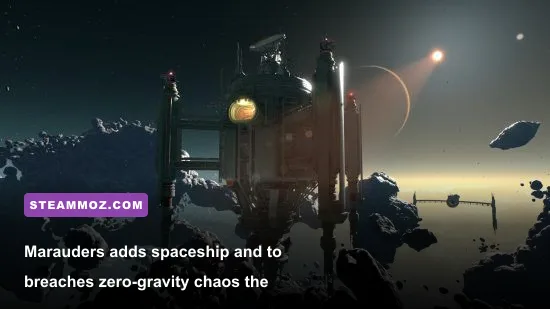
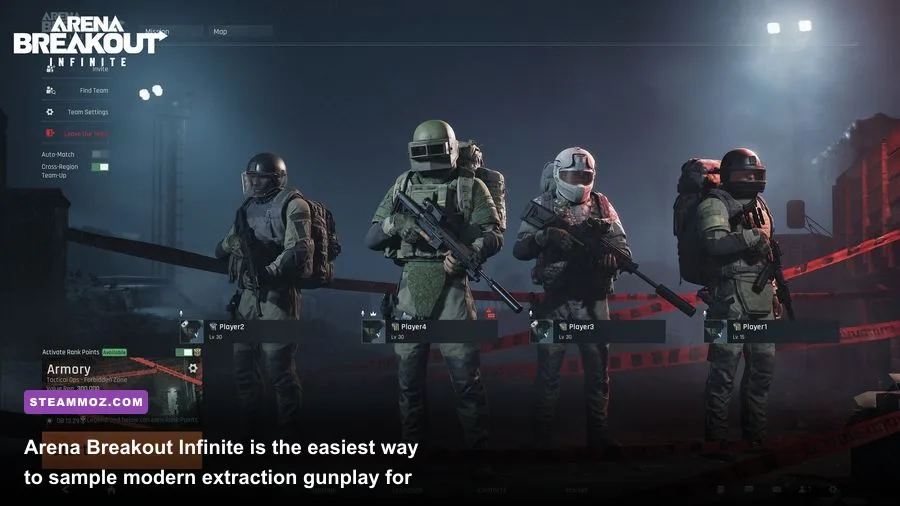
Marauders trims the extraction formula into compact dieselpunk raids. You begin in a ship, breach a space station or asteroid facility, search for weapons and crafting materials, fight AI guards and other crews, then escape through an airlock or your vessel. The ship is not just a lobby: it is a weapon, an escape route, and a target.
The most exciting Marauders fights happen before you even board a location. Pilots can damage an enemy ship, force a crew to repair, then board during the confusion. A successful boarding action feels like a Hunt compound push compressed into a few frantic minutes. You hear footsteps on metal, track doors and ladders, and try to determine whether the next room contains a solo player or a full crew.
Why Marauders works for Hunt players
Its weapons are easier to understand than Tarkov’s, and raids generally reach their decisive moments faster. That makes Marauders a good recommendation if Hunt’s one-hour match structure sometimes feels too slow. The risk remains meaningful because losing a ship and its cargo affects your next run, but the recovery process is less intimidating than maintaining an enormous stash.
Start by learning one station layout and one reliable escape route. Keep a cheap backup weapon in your stash, avoid spending all your resources on a perfect ship, and listen before opening doors. AI enemies can create enough noise to hide a real player, while a crew that goes silent may be waiting for you to cross a narrow corridor.
Marauders is not as polished or atmospheric as Hunt, and its player population can feel uneven depending on the region and time of day. Still, its boarding mechanics give it a personality most extraction shooters lack. Choose it if you want quick raids, close-quarters violence, and a setting that feels like Das Boot collided with a scrapyard space opera.
Gray Zone Warfare is the choice for large tactical operations
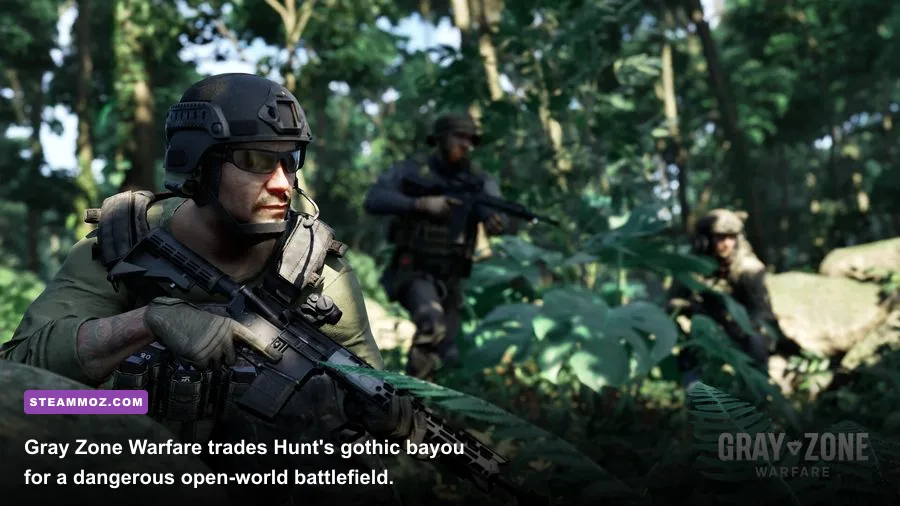
Gray Zone Warfare takes the Hunt formula in the opposite direction from Marauders. Instead of a compact match, you get a persistent open-world military environment on Lamang Island, faction objectives, AI-controlled compounds, helicopters, and long sightlines that make positioning matter more than flashy movement.
The game is built around faction-based operations rather than Hunt’s self-contained bounty match. You return to a base camp, accept missions, buy equipment, and travel into the world. A death is still painful because your character’s carried gear remains at the location, but your progress is tied to tasks, reputation, and vendor development. This creates a slower, more MMO-like curve.
How to survive your first Lamang operations
Use a squad when possible. Gray Zone Warfare’s AI can be dangerous because enemies hold buildings, reinforce compounds, and punish players who sprint through open ground. Move from cover to cover, clear a structure methodically, and avoid firing at distant targets unless you know where your squad can retreat. The game’s large map makes a single careless shot capable of attracting both AI and opposing players.
Performance is part of strategy. Streaming open-world assets, foliage, shadows, and volumetric effects can produce frame-time spikes even when the average FPS looks acceptable. A stable 60 frames per second is more useful than a fluctuating 90. Start with the game’s recommended preset, reduce volumetric fog and shadow quality, and keep textures high only if your GPU has enough VRAM. Upscaling can help, but aggressive sharpening may make distant foliage shimmer and obscure movement.
| Setting | Recommended starting value | FPS impact | Visual trade-off |
|---|---|---|---|
| Textures | High with 8GB-plus VRAM | Medium VRAM demand | Preserves weapon and terrain detail |
| Volumetric Fog | Low or Medium | High improvement in heavy areas | Less atmospheric haze and light scattering |
| Shadows | Medium | Medium improvement | Fewer soft shadows around buildings |
| Foliage | Medium | Medium improvement | Reduced grass density and distance detail |
| Upscaling | Quality mode first | High improvement at 1440p | Slight softness in distant targets |
Gray Zone Warfare is the most appealing Hunt alternative for players who want objectives and tactical travel to matter as much as the firefight. It is also the least finished-feeling recommendation here, so expect balance changes, performance patches, and systems that evolve through 2026. If you want a clean competitive package today, Tarkov or Hunt remains safer.
Which Hunt alternative should you play in 2026?
Pick Escape from Tarkov if you want the most detailed weapon, armor, medical, and inventory systems. Pick Dark and Darker if your favorite Hunt moments involve monsters, darkness, and teams making too much noise in the next room. Pick Marauders if you want the shortest path from deployment to extraction. Pick Gray Zone Warfare if you prefer squad objectives and a persistent world over neatly separated matches.
There is also a strong case for simply staying with Hunt: Showdown 1896. Its soundscape is still extraordinary. A caged dog barking at the wrong moment, a distant concertina trap, a horse screaming as a team crosses a field, or a suppressed shot disappearing into the Louisiana night creates information without giving you a clean answer. That uncertainty is the thing competitors keep chasing.
| Your priority | Best game | Why | First thing to learn |
|---|---|---|---|
| Best overall hardcore loop | Escape from Tarkov | Deepest progression and equipment decisions | One map’s extracts and ammunition tiers |
| Best PvPvE dungeon option | Dark and Darker | Classes and monsters create readable chaos | Attack ranges and portal timing |
| Best quick-session option | Marauders | Ship boarding creates immediate encounters | Station layouts and airlock routes |
| Best large-scale tactical option | Gray Zone Warfare | Persistent objectives and open-world squad play | Cover, extraction travel, and AI behavior |
| Best atmosphere | Hunt: Showdown 1896 | Unmatched audio-led bounty hunting | Sound traps and Dark Sight discipline |
Before committing to any of them, decide how much friction you actually want. Tarkov asks you to study ammunition and accept long-term losses. Dark and Darker asks you to master animation timing. Marauders asks you to understand ships and tight corridors. Gray Zone Warfare asks you to tolerate a work-in-progress open world. None is a straight clone, and that is exactly why they are worth playing.
For more Steamoz recommendations, browse the best games like Bounty Train and best games like Dragonkin. If you want a different kind of high-pressure build planning, Legend of Keepers’ starting build guide is a surprisingly good palate cleanser between extraction raids.