
If Dragonkin: The Banished – Blood Scales Edition has you hooked on talent-grid experimentation, targeted loot, and co-op dungeon clearing, start with Last Epoch. It is the closest overall match in 2026, while Grim Dawn is the better offline sandbox, Path of Exile 2 is the deeper combat challenge, Diablo IV is the smoothest mainstream option, and Titan Quest 2 is the best mythological substitute.
Dragonkin occupies an interesting corner of the action-RPG map. It wants the immediate impact of Diablo, but it also asks you to plan around a modular skill board, elemental damage, persistent upgrades, and heroes that play very differently. The result is more deliberate than a pure loot treadmill. You are not simply replacing a sword every ten minutes; you are shaping a build and deciding which modifiers deserve precious space.
That makes the right alternative depend on what you value most. The table below ranks the strongest replacements by build freedom, combat feel, endgame depth, and how closely they reproduce Dragonkin’s satisfying loop.
| Game | Best For | Build Freedom | Combat Pace | Dragonkin Similarity |
|---|---|---|---|---|
| Last Epoch | Skill customization and readable progression | Excellent | Medium-fast | S-Tier |
| Grim Dawn | Offline play and huge character variety | Excellent | Medium | S-Tier |
| Path of Exile 2 | Boss mechanics and long-term theorycrafting | Exceptional | Deliberate | A-Tier |
| Diablo IV | Polished co-op and instant accessibility | Strong | Fast | A-Tier |
| Titan Quest 2 | Mythology and class experimentation | Strong | Medium | B-Tier |
Last Epoch is Dragonkin’s closest overall match
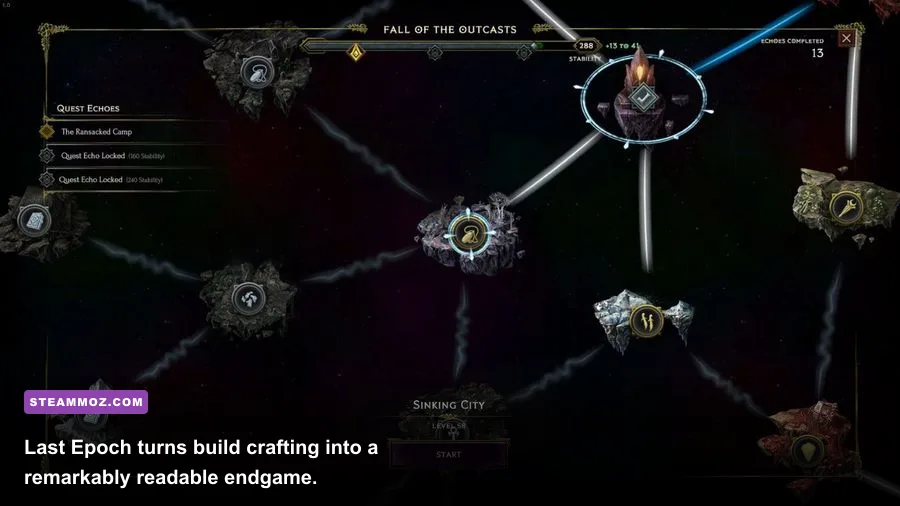
Last Epoch on Steam understands the same basic pleasure: take one familiar attack, then keep mutating it until it feels like your own. Every active skill has its own specialization tree, and that tree is where the game’s identity really lives.
Take Void Knight’s Devouring Orb. You can build it around orbiting projectiles, cooldown reduction, or a more explosive hit pattern, then support the result with passives such as Volatile Reversal and Echo-based scaling. A Forge Guard can instead lean into Manifest Armor, letting the summoned weapon inherit important offensive stats while you reinforce it with Forge Strike and Ring of Shields. These are not cosmetic choices: they alter your rotation, positioning, and gearing priorities.
Dragonkin players should begin with a straightforward Monolith route rather than chasing a perfect legendary item. Finish the campaign, unlock the Monolith of Fate, and push normal timelines until your resistances and critical avoidance are stable. Empowered timelines begin at level 100 and sharply increase the pressure, but the game gives you far more information about incoming damage than many loot-heavy rivals.
The biggest difference is pacing. Last Epoch’s enemies generally telegraph damage clearly, while Dragonkin can feel more arcade-like when several elemental effects overlap. If you enjoy reading a boss arena, dodging a marked zone, then returning to a carefully tuned skill rotation, Last Epoch is the safest recommendation here.
Best starting builds for Dragonkin players
Try a Runemaster Frost Claw setup if you want ranged control, or a Falconer Dive Bomb build if you prefer a mobile companion-driven playstyle. Frost Claw benefits from cold penetration and cast speed; Dive Bomb rewards cooldown recovery, minion damage, and movement. Neither requires a six-hour spreadsheet before it becomes fun.
For a broader look at how deliberate build planning can transform an RPG protagonist, our guide to ELEX II’s best starting build is a useful companion read.
🎮 Dragonkin - Blood Scales Edition
Looking to experience this game? Grab your digital key directly on our store for $27.99.
View on Steammoz Store →Grim Dawn is the best Dragonkin alternative for veterans
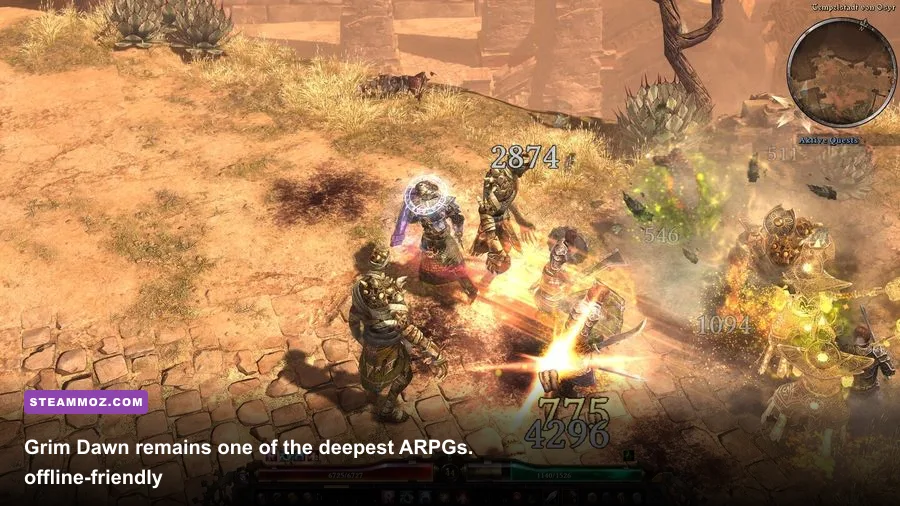
Grim Dawn is older, moodier, and less immediately generous, but its character-building ceiling remains absurdly high. The defining system is dual mastery selection. Choose Soldier and Nightblade for Blademaster, or combine Demolitionist and Occultist for Sorcerer. Each pairing changes your available damage types, defensive tools, and item targets.
A Blademaster is an excellent bridge from Dragonkin. Start with Belgothian’s Shears and Amarasta’s Blade Burst for fast area clearing, then use Phantasmal Armor and Military Conditioning to cover defenses. Add Blade Barrier as an emergency invulnerability button. The build feels aggressive, but it survives by controlling armor, physical resistance, life steal, and crowd control resistance rather than simply stacking damage.
Grim Dawn also rewards players who explore rather than sprint through the main quest. The Devil’s Crossing prison, Steps of Torment, Bastion of Chaos, and Port Valbury all offer distinct hazards and targeted farming opportunities. Nemesis enemies are particularly important: raising faction hostility eventually unlocks harder pursuers who can drop powerful Monster Infrequent items.
Its trade-off is readability. Resistance penalties arrive as you progress through difficulties, and a character that feels invincible in Normal can collapse in Elite if you ignore elemental resistance. Aim for 80% fire, cold, lightning, and acid resistance before pushing late-game content. Physical resistance and armor absorption matter just as much for melee characters.
| Grim Dawn Priority | Early Target | Late-Game Goal | Why It Matters |
|---|---|---|---|
| Elemental resistance | 50% or higher | 80% cap | Prevents sudden deaths after difficulty penalties |
| Armor absorption | 70% | 90% or higher | Makes physical hits far less punishing |
| Cooldown reduction | Only if skill-focused | 20–35% | Improves emergency skills and burst windows |
| Offensive ability | 1,500 range | 2,500-plus | Improves hit chance and critical consistency |
If Dragonkin’s gear chase is your favorite part, Grim Dawn offers more interesting detours than most modern ARPGs. If its slower movement feels dated, check our 2026 guide to Generation Zero: Alpine Unrest for another perspective on older games that still reward patient exploration.
Path of Exile 2 is the deep-end challenge
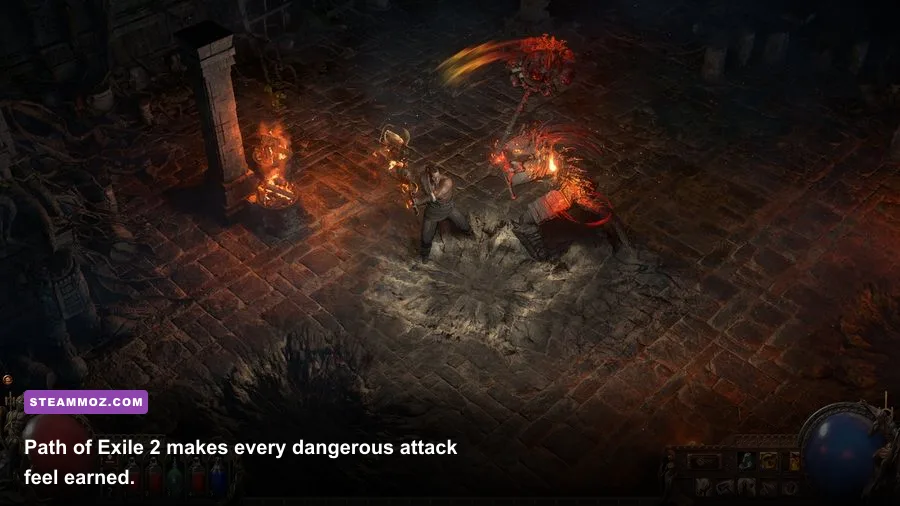
Path of Exile 2 is the recommendation for players who want Dragonkin’s experimentation pushed into much more demanding territory. Its combat is slower than Diablo IV and less forgiving than Last Epoch. Enemies surround you quickly, bosses punish greedy attacks, and the dodge roll is a core defensive tool rather than a flashy convenience.
The socketed skill-gem system makes every active ability feel like a build foundation. A skill such as Rolling Slam can be supported for larger area coverage or stronger stun pressure, while Gas Arrow can be built around poison clouds and ignition interactions. The important change is that support gems no longer feel like a separate layer you can ignore; they define how an attack behaves.
Early progression is deliberately rough. Keep a resistance ring for each major damage type, upgrade your weapon frequently, and do not treat passive-tree damage nodes as a substitute for a bad weapon. For a melee character, a weapon upgrade can double practical clear speed; for a spellcaster, gem levels and the correct scaling tags usually matter more.
Bosses are where Path of Exile 2 pulls ahead. Learn the difference between a ground marker, a delayed projectile fan, and a contact hitbox. Roll through attacks only when the animation commits; panic-rolling often leaves you without an escape when the second strike arrives. The game demands more attention than Dragonkin, but the payoff is enormous when a carefully assembled rotation finally clicks.
Who should skip Path of Exile 2?
Skip it if you want a relaxed couch co-op evening or a clean, instant power curve. Path of Exile 2 asks you to read tooltips, inspect tags, and sometimes rebuild around a skill that looked better on paper than it performs in combat. It is brilliant, but it is not frictionless.
Diablo IV wins on polish and co-op comfort

Diablo IV’s official site is the obvious choice if Dragonkin’s best moments are the loud ones: screen-filling attacks, dense demon packs, and a party tearing through a dungeon without stopping to debate every item. Its combat has the cleanest hit feedback in this group, and its open-world structure makes joining friends painless.
The game’s best Dragonkin-adjacent builds are built around a clear resource loop. A Barbarian can generate Fury with Lunging Strike, spend it on Hammer of the Ancients, and use Rallying Cry or Challenging Shout to stabilize the rotation. A Sorcerer using Chain Lightning wants mana management, cooldown timing, and defensive skills such as Ice Armor rather than blindly stacking one damage stat.
Diablo IV is also the least intimidating recommendation for a new ARPG player. The Codex of Power makes early experimentation cheap, the seasonal journey provides direction, and World Tier progression gives you obvious milestones. The downside is that seasonal balance changes can move a favorite build from dominant to mediocre overnight. Dragonkin feels more self-contained; Diablo IV feels more like a living service game.
| Player Type | Best Diablo IV Choice | Core Skill Loop | Main Warning |
|---|---|---|---|
| New ARPG player | Barbarian | Lunging Strike into Hammer of the Ancients | Watch Fury generation |
| Ranged caster fan | Sorcerer | Chain Lightning with defensive cooldowns | Mana and survivability compete for gear |
| Fast melee clearer | Rogue | Twisting Blades with mobility skills | Positioning matters constantly |
| Companion player | Druid | Companions plus storm or shapeshifting skills | Early damage can feel uneven |
For players who care about performance as much as loot, use the same discipline you would apply to other demanding PC games. Our Exogate Initiative FPS settings guide covers the kind of frame-time troubleshooting that also helps when an ARPG fills the screen with particles.
Titan Quest 2 is the mythic slow burn

Titan Quest 2 on Steam deserves a place on this list for one reason: it understands that class identity can come from combining two different philosophies. Like the original Titan Quest, its appeal is rooted in mythology, deliberate exploration, and the joy of finding a class pairing that sounds strange until it works.
Choose a mastery that matches your preferred combat rhythm, then build around the interaction rather than spreading points across every attractive button. A melee setup needs reliable physical or elemental damage, but it also needs movement, crowd control, and a panic option. The same lesson applies to Dragonkin: a build that clears a training dummy quickly can still fail when a boss forces you to move.
Titan Quest 2 is not the right pick if you want Dragonkin’s most frantic moments. Its arenas and encounters favor spacing, route knowledge, and measured ability use. That slower pace makes loot evaluation more meaningful, though it can feel conservative after the instant explosions of Diablo IV or Path of Exile 2.
Which Dragonkin alternative should you play first?
Pick Last Epoch if you want the closest match to Dragonkin’s combination of approachable combat and serious build tuning. Pick Grim Dawn if you want an offline campaign, dual-class experimentation, and years of endgame discovery. Choose Path of Exile 2 for demanding bosses and the largest theorycrafting rabbit hole. Go with Diablo IV for polished multiplayer and immediate spectacle. Choose Titan Quest 2 if mythological atmosphere and patient progression matter more than speed.
There is no single replacement that copies Dragonkin perfectly, and that is good news. Each game pulls one of its strengths in a different direction. Last Epoch clarifies the buildcraft, Grim Dawn expands it, Path of Exile 2 weaponizes difficulty, Diablo IV smooths the rough edges, and Titan Quest 2 slows the whole experience down enough to make exploration matter.
For most players in 2026, start with Last Epoch. Give it enough time to reach the Monolith, not just the campaign. That is where its skill trees, blessings, corruption system, and targeted item hunting finally show why it belongs beside Dragonkin rather than merely underneath its shadow.