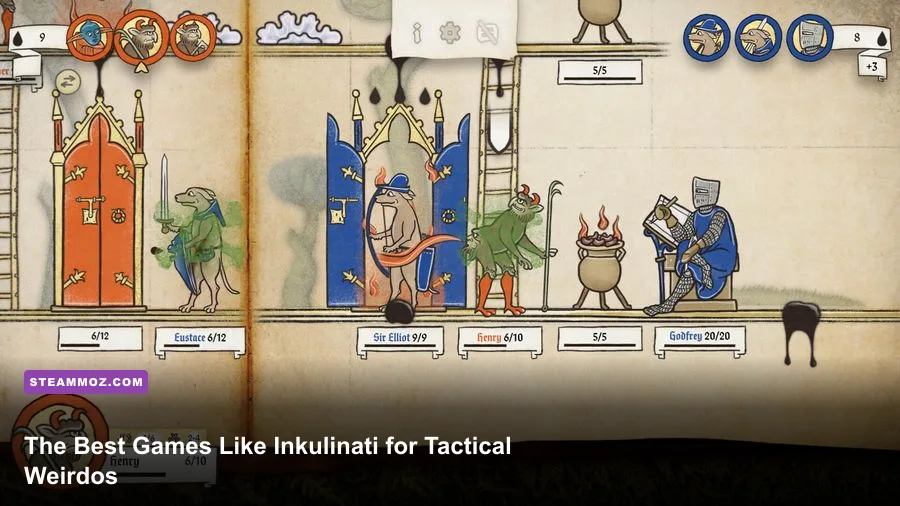
If Inkulinati's hand-drawn beasts, turn-based positioning, and delightfully nasty medieval humor clicked with you, start with Fae Tactics for the closest playful match, then move to The Last Spell for deeper battlefield planning. Wildermyth, Darkest Dungeon, and King Arthur: Knight's Tale round out the best games like Inkulinati in 2026, each preserving a different part of the formula: clever grid tactics, weird character-driven stories, or merciless attrition.
Inkulinati is a very specific beast. Its battles are not just about reducing enemy health. You manage Beasties, spend Hand actions, manipulate battlefield hazards, exploit elevation, and protect your Master while every unit fights inside a living medieval illustration. The games below aren't cheap clones, and that's good news. They offer the same tactical itch from five sharply different angles.
The Best Games Like Inkulinati Ranked
For this ranking, similarity means more than sharing a turn-based combat label. I looked for games with compact battlefields, meaningful positioning, strong unit identity, and campaigns that reward planning instead of frantic menu clicking. Inkulinati players usually want a battle system where a single shove, status effect, or line-of-sight trick can matter more than raw damage.
| Game | Tier | Best Match For | Main Difference |
|---|---|---|---|
| Fae Tactics | S-Tier | Playful grid combat and summons | More traditional JRPG progression |
| The Last Spell | S-Tier | Layered positioning and tactical puzzles | Wave defense and permanent losses |
| Wildermyth | A-Tier | Illustrated storytelling and party growth | Less encounter-to-encounter precision |
| Darkest Dungeon | A-Tier | Stress, risk, and character drama | Rank-based combat rather than free grid movement |
| King Arthur: Knight's Tale | B-Tier | Hard tactical RPG campaigns | More serious, slower, and equipment-heavy |
That split matters. If the thing you loved was the spectacle of a Donkey or Hare doing something absurd on a parchment map, Fae Tactics should be first. If you loved turning a cramped battlefield into a chain reaction of pushes, area attacks, and hazards, The Last Spell is the stronger long-term challenge. Players who cared most about the hand-illustrated presentation should jump straight to Wildermyth.
Before buying, it is worth checking Inkulinati on Steam and comparing its compact encounters with the much larger campaigns below. For another perspective on unusual genre recommendations, Steamoz's guide to games like Enigma is also a useful companion read.

🎮 Inkulinati
Looking to experience this game? Grab your digital key directly on our store for $7.49.
View on Steammoz Store →Fae Tactics Is the Closest Playful Alternative
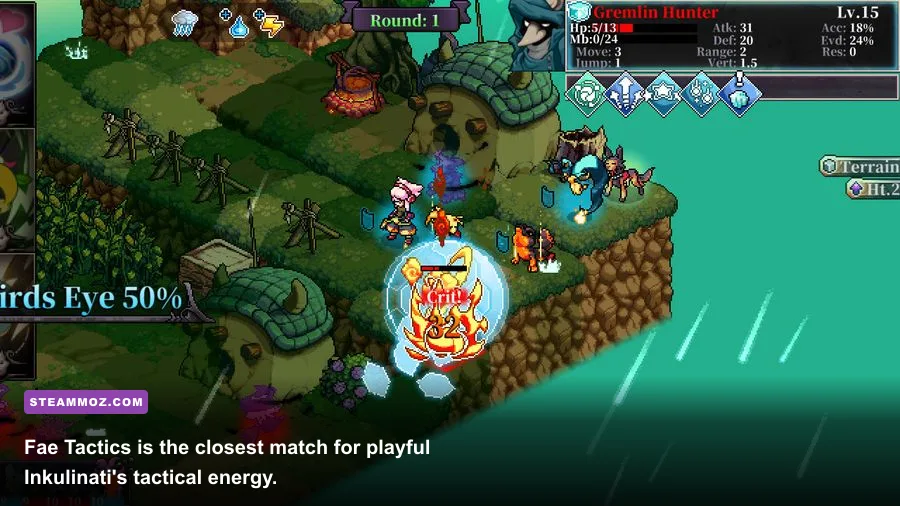
Fae Tactics earns the S-Tier spot because it understands the joy of assembling a strange little army and finding combinations that look stronger than their individual numbers suggest. You play Peony, a young mage caught in a conflict between humans, fae, and demons. The story is more conventional than Inkulinati's manuscript comedy, but the combat has the same satisfying sense of a small battlefield becoming a puzzle box.
Peony can bring summoned creatures into fights, and elemental relationships give every target a reason to inspect before attacking. Fire, water, earth, and air interactions can change how safely you approach a group, while terrain and chokepoints determine whether a summon buys time or gets deleted immediately. Peony's own spells are the engine of the party: she can soften a cluster, apply an elemental condition, then let a summon capitalize on the altered target.
The key difference is action economy. Fae Tactics feels closer to a traditional tactical JRPG than Inkulinati's hand-management system. You aren't selecting a limited deck of battlefield gestures; you're building a roster and deciding which summons deserve scarce upgrade resources. That makes the early campaign easier to understand, but it also creates a familiar trap: spreading upgrades across too many creatures leaves everyone mediocre.
How to build Peony's early roster
Keep one durable front-line summon, one ranged attacker, and one unit that provides control or elemental setup. Don't spend every resource chasing maximum damage. A summon that blocks a corridor for one extra turn can protect Peony long enough to cast a second spell, which is often worth more than a fragile attacker with a slightly higher damage number. Position Peony behind the front line, move only when necessary, and treat her spell range as the center of your formation.
Fae Tactics is available through the official Steam page. Choose it if you want Inkulinati's colorful weirdness without its more unusual Master-versus-Beasties structure.
The Last Spell Rewards Inkulinati-Level Positioning
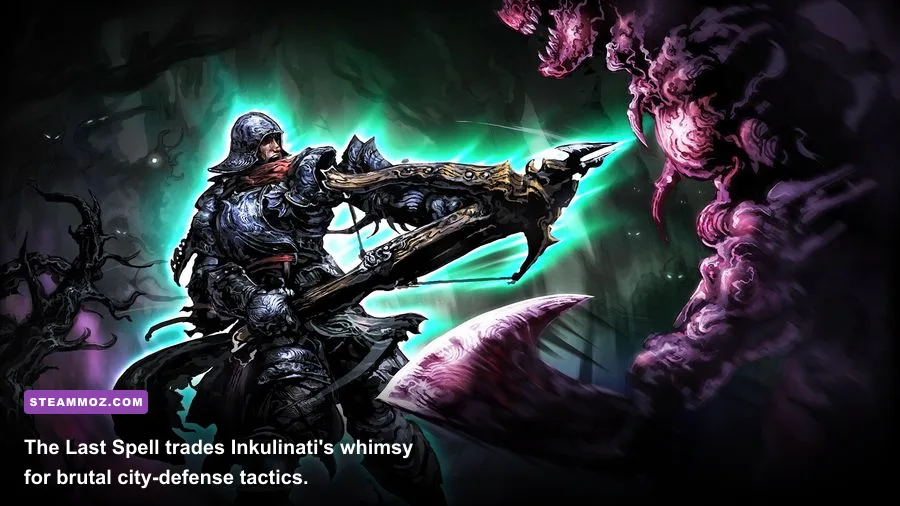
The Last Spell is the best recommendation for players who enjoyed the tactical consequences of every square. You defend Haven from nightly monster waves with a team of heroes, then use the daytime phase to repair buildings, buy gear, recruit survivors, and prepare for the next assault. Its presentation is darker and its systems are much denser, but both games reward turning movement, range, and crowd control into a weapon.
Each hero operates through action points, movement points, and willpower. A typical turn isn't simply attack, attack, end turn. You may spend movement to reach a rooftop, use an area skill to strip armor from a cluster, trigger a kill to recover action points through a perk, and then reposition before the remaining enemies can surround you. Every wave asks the same brutal question: do you spend resources to guarantee kills now, or preserve them for the enemies entering from the other side of Haven?
The Last Spell's real hook is the interaction between hero specialization and map defense. A ranged hero with high accuracy can dominate an open lane, but becomes much less useful if zombies reach adjacent tiles. A melee character with strong damage reduction can hold a doorway, yet still collapse if several enemies apply poison or stun effects. Build around coverage, not a collection of individually impressive characters.
| Role | Priority | Useful Combat Pattern | Common Mistake |
|---|---|---|---|
| Ranged damage | Accuracy, range, multi-target attacks | Clear one lane before enemies enter Haven | Spending all actions before checking reinforcements |
| Melee control | Damage reduction, stun, mobility | Hold a chokepoint and finish weakened targets | Chasing kills away from defensive structures |
| Support | Willpower, debuffs, healing | Buff a carry, then remove armor or poison | Building a support with no emergency damage |
| Flexible scout | Movement, range, utility | React to the weakest side of the map | Ignoring long-term gear and experience needs |
Expect a steeper learning curve than Inkulinati. The first few failed runs teach more than a successful early night because the game exposes how badly you valued movement and target priority. The official The Last Spell Steam listing is the right place to check its current edition and update history. Steamoz's Dungeon Siege starter-build guide is less mechanically similar, but useful if you want another build-focused RPG recommendation.
Wildermyth Captures the Illustrated Campaign Feeling
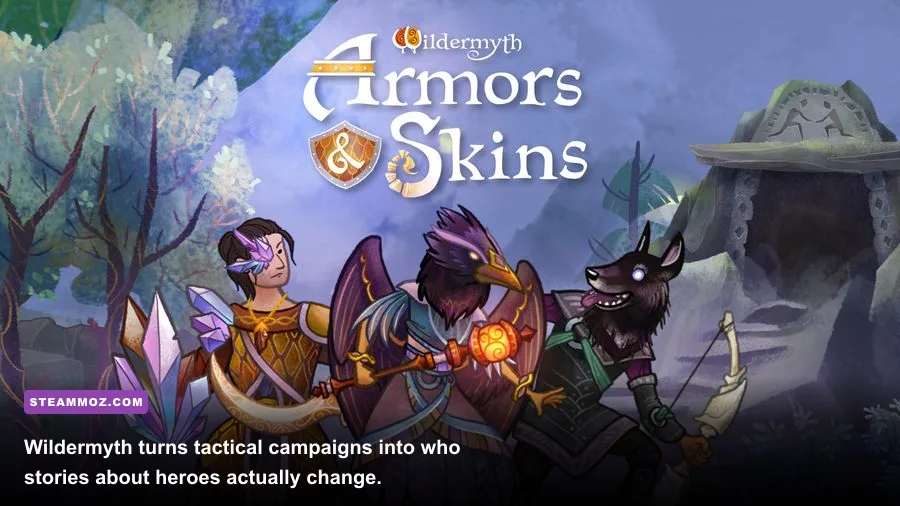
Wildermyth is the strongest pick if the hand-drawn presentation and character stories matter as much as combat. Its heroes begin as ordinary adventurers and can develop physical transformations, personality traits, relationships, and injuries across multiple campaigns. The paper-cutout art style is not medieval marginalia, but it delivers the same sense that a battle belongs inside a storybook rather than a sterile tactical simulator.
Combat uses a square grid with cover, flanking, interfusion, and action-point management. Mystics are particularly important because they can interfuse with scenery such as trees, tables, or fires, then weaponize that scenery against enemies. A mystic standing near the correct environmental object can create an area attack or control effect while preserving the team's front line. That is the kind of positional trick Inkulinati players tend to chase.
Wildermyth's progression is less about finding a perfect build and more about accepting the consequences of a campaign. A hero may gain a crow transformation, lose an eye, become rivals with a former friend, or retire after a long adventure. Those changes aren't cosmetic. They alter abilities and determine which combinations are available later. The result is less predictable than Inkulinati, but much more personal.
Start with a campaign that has a manageable party size, keep ranged heroes behind cover, and inspect every interfusion option before moving a mystic. Warriors excel when they can engage one target while the rest of the party works around them; leaving a warrior isolated against multiple enemies is how promising campaigns turn into emergency rescues. Wildermyth's official Steam page shows the core campaign structure clearly.
For another story-first recommendation, Steamoz's guide to games like Holy Potatoes! and Spud Tales is worth browsing, though Wildermyth remains the far better tactical follow-up.
Darkest Dungeon Turns Inkulinati's Risk Into Horror
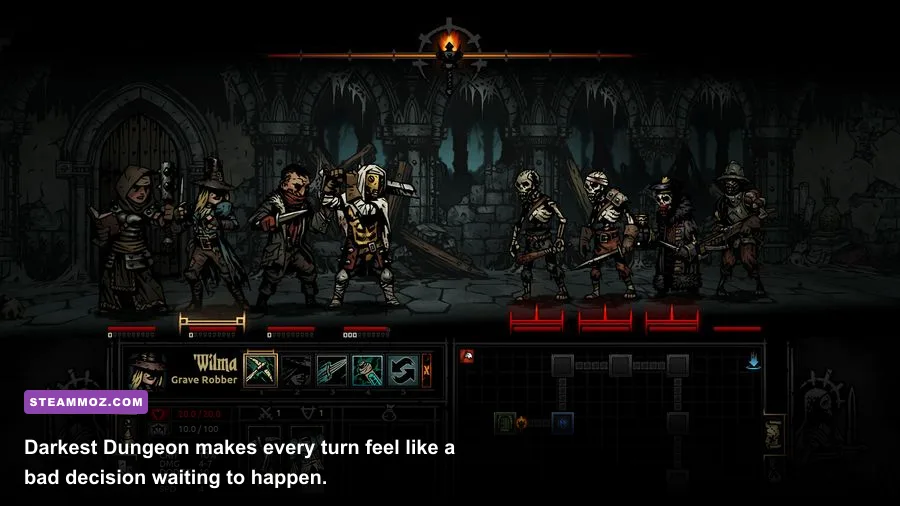
Darkest Dungeon belongs in this list because it makes formation, status effects, and bad decisions carry real emotional weight. It doesn't use a free-moving grid. Instead, your four heroes occupy ranks one through four, and many attacks only work from specific positions. That limitation creates a different tactical language, but the result is familiar: your best move often depends on where every unit can stand next.
The core pressure comes from stress. Reaching 100 stress triggers an Affliction check, which can give a hero a damaging behavioral condition such as abusive, fearful, or irrational. Reaching 200 stress causes a heart attack and drops the hero to Death's Door. At Death's Door, any further damage can kill them, while healing removes the immediate danger but doesn't make the situation safe. A hero at 0 health can still fight, but every incoming hit becomes a crisis.
That system changes target priority. Killing the strongest enemy isn't always correct if a weaker back-row unit is spreading stress, marking heroes, or applying stun. The Plague Doctor's Blinding Gas can disable ranks three and four, while Plague Grenade applies blight to those same back ranks. The Highwayman's Grapeshot Blast hits three enemies from the front ranks, and the Man-at-Arms can protect a fragile ally with Defender. These skills are valuable because they solve formation problems, not because they have the biggest damage number.
| Situation | Danger | Counter | Best Tool |
|---|---|---|---|
| Back-row stress dealer | Stress reaches 100 before damage matters | Stun or reach ranks three and four | Plague Doctor's Blinding Gas |
| Hero at Death's Door | Any damage can kill them | Heal immediately and reduce incoming actions | Dedicated heal plus stun |
| Party shuffle | Skills become unusable from new ranks | Restore formation before attacking | Movement skills and flexible heroes |
| Low torchlight | Higher risk and worse scouting | Carry torches and manage light deliberately | Scouting and controlled retreat |
Darkest Dungeon is harsher than Inkulinati and less immediately funny, but it shares the same refusal to let you autopilot. The official Darkest Dungeon Steam page remains the best starting point for the original game. If you want a lighter recommendation after all that stress, Steamoz's Bottle Pilgrim alternatives take a much more relaxed route.
King Arthur: Knight's Tale Is the Hardcore Upgrade
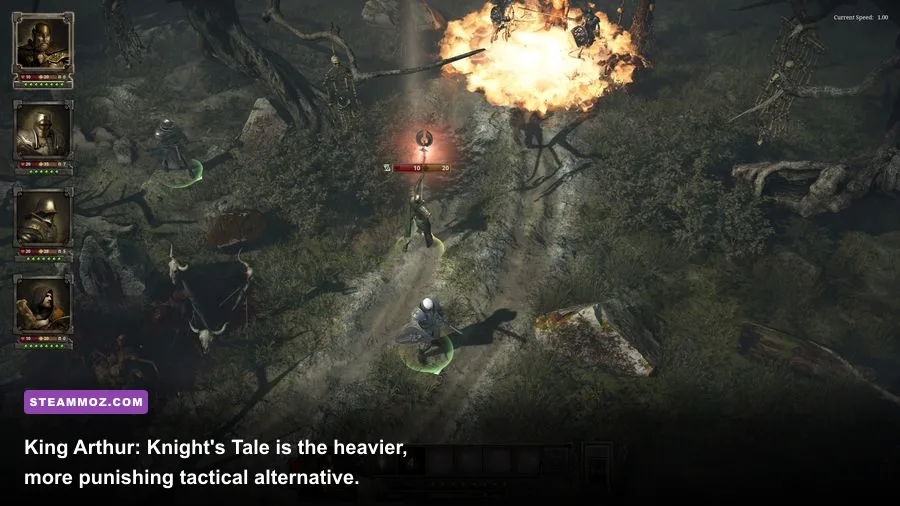
King Arthur: Knight's Tale is the pick for players who want Inkulinati's tactical foundation expanded into a full campaign RPG. You lead a roster of knights across Avalon, manage injuries and morality decisions, and fight on detailed maps built around cover, overwatch, opportunity attacks, and action-point efficiency. It is less whimsical, but its battles are consistently demanding.
Every hero's position matters because enemies punish careless movement. Step past a hostile melee unit and you can trigger an opportunity attack. Leave a knight exposed to ranged fire and armor may absorb the first hit, but repeated attacks will quickly create an injury that weakens the campaign outside combat. Cover reduces incoming ranged damage, while elevation and narrow spaces can turn a mediocre attack into a safe execution.
The campaign's class structure supports clear roles. Champions want to occupy enemies and control the front line. Marksmen need sightlines and enough distance to avoid melee engagement. Arcanists provide area damage or debuffs, while sages and support characters keep the party alive through long missions. Don't build five damage dealers and assume better gear will fix the composition. The game routinely creates battles where control, healing, and a safe retreat route are more valuable than one extra attack.
Its morality system also changes how the adventure feels. Decisions can push Arthur toward Tyranny or Rightful, while Mordred's route and companion relationships influence which options remain open. That makes it a strong follow-up for players who enjoyed Inkulinati's campaign layer rather than just its individual encounters. You can find the game on the official Steam store page.
Which Inkulinati Alternative Should You Play First?
Choose Fae Tactics if you want colorful creatures, summons, and approachable grid battles. Choose The Last Spell if your favorite Inkulinati moments involved manipulating space, controlling crowds, and surviving with one action left. Pick Wildermyth for the illustrated storybook atmosphere and memorable party members. Go with Darkest Dungeon if you want stress, attrition, and consequences that stay brutal from the first expedition to the last. Finally, choose King Arthur: Knight's Tale when you want a larger, heavier tactical RPG with equipment, injuries, and moral decisions.
My 2026 play order is Fae Tactics first, The Last Spell second, and Wildermyth third. That sequence preserves Inkulinati's playful experimentation before gradually increasing the pressure and campaign complexity. Darkest Dungeon is the best test of patience, while King Arthur is the best choice for a long-form tactical RPG marathon.
None of these games reproduces Inkulinati's exact combination of medieval drawings, Beasties, and Hand actions. That's precisely why they work. They isolate the ingredients that made it special and push each one further: Fae Tactics makes summons sing, The Last Spell makes positioning exhausting in the best way, Wildermyth makes the art feel alive, Darkest Dungeon weaponizes risk, and King Arthur turns every tactical mistake into a campaign problem.