For a first run through the Dungeon Siege Collection, start with a shield-and-one-handed melee lead, add a ranged attacker, and make Nature Magic your first support discipline. Put most early points into melee survivability, keep a bow user behind the frontline, and avoid spreading every character across three damage types. That setup works in Dungeon Siege, scales cleanly into Dungeon Siege 2, and teaches the party-control habits that matter more than raw damage.
The collection covers games with very different systems, so there isn't one universal character sheet. The original Dungeon Siege lets characters improve skills through repeated use, while Dungeon Siege 2 gives you clearer class trees and party roles. Dungeon Siege 3 is more character-driven and uses fixed heroes. This guide focuses on the first two games because they offer the most freedom and the most opportunities for a beginner to build inefficiently.
Before starting, check the Dungeon Siege Collection Steam listing for the exact games included in your edition. If you want a broader action-RPG comparison after finishing the campaign, our guide to Blackguards beginner builds covers a much more turn-based approach to party planning.

Pick the Right Opening Role
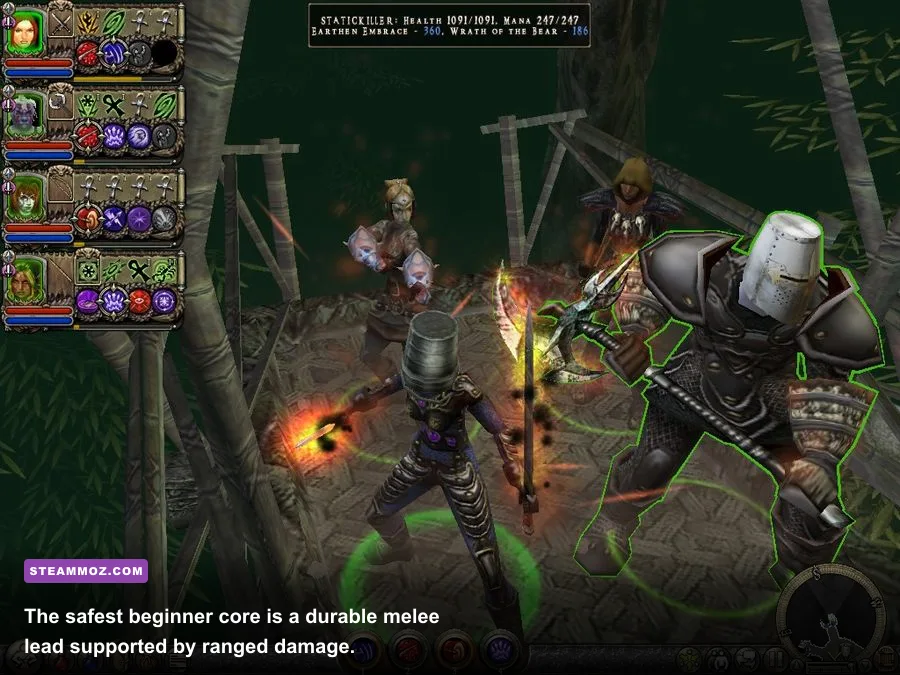
Your first character should be the party's anchor, not its most stylish damage dealer. In the original game, a shield fighter has three huge advantages: high survivability, simple positioning, and consistent skill growth. You can stand in a doorway, hold enemy attention, and let the rest of the group attack safely. That matters because Dungeon Siege frequently throws wolves, goblins, undead, and ranged enemies into the same cramped arena.
Use a one-handed weapon and shield for the opening hours. A sword, mace, or axe is fine; the important part is that the weapon has a useful damage rating and the shield provides solid armor. Two-handed weapons hit harder, but they remove the defensive buffer that lets a beginner recover from a bad pull. Save two-handed gear for a secondary melee character once your party has a dedicated healer or Nature Mage.
In Dungeon Siege 2, choose a Melee Combat lead and spend early skill points on Armor, Toughness, and your preferred weapon specialization. Dual Wield is excellent later, but it is not the safest opening investment because it sacrifices the shield and asks you to solve defense with gear, Dodge, and careful micro-management. A two-handed build is stronger when you already understand enemy spacing and can reliably interrupt dangerous casters.
| Opening Role | Early Investment | Strength | Beginner Risk |
|---|---|---|---|
| Shield Melee | Armor, Toughness, one-handed weapon | Reliable tanking and easy positioning | Lower burst damage |
| Two-Handed Melee | Weapon damage, Critical Strike, Armor | Excellent front-line damage | Can collapse under focused fire |
| Dual Wield | Dual Wield, weapon specialization, Dodge | Fast damage and strong late-game scaling | Needs better gear and control |
| Ranged Lead | Ranged Combat, Dexterity-focused gear | Safe damage against slow targets | Very vulnerable when surrounded |
For a first playthrough, the shield build wins because it gives you more time to learn the interface. Dungeon Siege is not a twitch game, but its auto-attacks and party AI can make a fight look deceptively calm right before a shaman, archer, or poison monster deletes an exposed character.
🎮 Dungeon Siege Collection
Looking to experience this game? Grab your digital key directly on our store for $2.79.
View on Steammoz Store →The Core Beginner Build for Dungeon Siege
Build the lead around three priorities: health, armor, and dependable melee damage. In the original Dungeon Siege, you do not spend conventional level-up points in the same way as a modern RPG. Characters improve the skills they use, so your practical “build” comes from weapon choice, spell usage, equipment, and party composition. Keep the main character fighting in melee rather than swapping constantly between sword, bow, and magic.
Use the strongest one-handed weapon available, but don't blindly equip every item with a higher displayed damage value. A slightly weaker weapon with better elemental resistance, attack speed, or a useful enchantment can be superior during long dungeon sections. Check armor slots often, especially after clearing a named enemy or opening a locked chest. Armor is not glamorous, but replacing five weak pieces with current-level gear dramatically reduces the number of emergency healing potions you burn.
Your ideal opening party is a melee lead, one ranged attacker, one Combat Magic user, and one Nature Magic user. That four-person core handles most encounters without demanding perfect micromanagement. When you recruit additional allies, keep the roles distinct instead of creating five characters who all compete for the same swords, staves, and intelligence-based equipment.
| Party Slot | Recommended Role | Gear Priority | Combat Job |
|---|---|---|---|
| Lead | Shield Melee | Armor, health, one-handed damage | Pull enemies and hold the front |
| Second | Ranged Combat | Bow damage, Dexterity, attack speed | Focus archers, casters, and fleeing targets |
| Third | Combat Magic | Staff, Intelligence, mana | Area damage and elemental pressure |
| Fourth | Nature Magic | Staff, Intelligence, mana regeneration | Healing, summons, and support |
Don't overfill the active party just because the game allows more recruits. A larger group gives you more damage, but it also creates a larger equipment burden and makes formations harder to control. Four active characters are comfortable for learning; expand when the campaign hands you a role you genuinely need.
Dungeon Siege 2 Skill Priorities That Actually Work
Dungeon Siege 2 is where beginners most often waste their progression. The game rewards specialization: invest in a small number of abilities that reinforce your role instead of taking one point in every attractive icon. The shield fighter should begin with Armor and Toughness, then improve the chosen weapon path. Critical Strike is valuable after your defense is stable, because extra damage means less time exposed to enemy attacks.
If you prefer a more aggressive version, move into Dual Wield after the first major stretch of the campaign. Dual wielding becomes much better when you have a Nature Mage providing healing and when your ranged character can remove enemy archers quickly. Until then, a shield lets you survive the exact mistakes new players make: clicking too far into a room, losing track of a healer, or accidentally pulling a second group.
For the ranged character, prioritize Ranged Combat and use a bow consistently. Don't switch to a melee weapon simply because an enemy reaches the back line. Move the character with a short retreat command, let the tank regain threat, and continue firing. Ranged characters are strongest when they focus one dangerous target at a time rather than scattering damage across ten enemies.
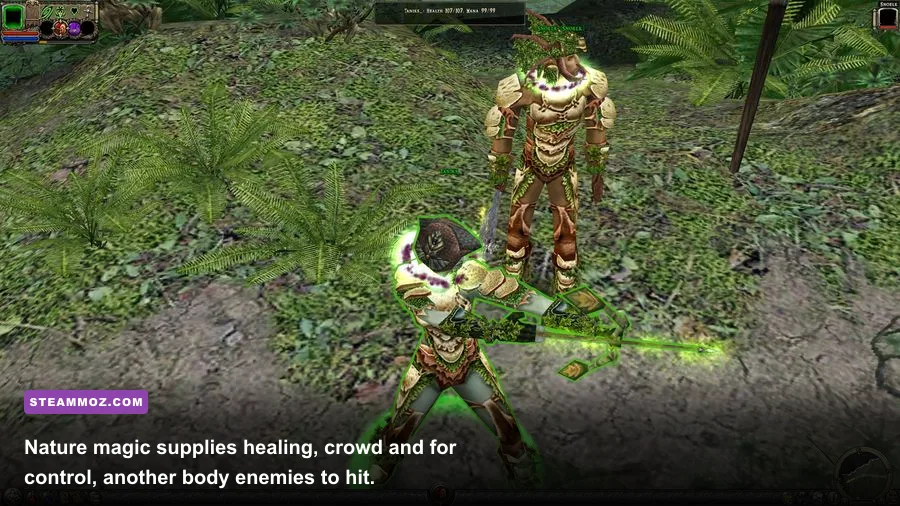
Combat Magic should emphasize a clear damage identity. Fire, ice, and lightning spells are all useful, but an early caster does not need every spell school. Carry area-of-effect spells for clustered weak enemies and a cheaper single-target spell for ordinary fights. Nature Magic is more forgiving: healing, support spells, and summoned creatures provide value even when direct damage falls behind.
| Build Path | First Priorities | Second Priorities | When to Expand |
|---|---|---|---|
| Shield Melee | Armor, Toughness, weapon skill | Critical Strike, Dodge or utility | After defense feels comfortable |
| Dual-Wield Melee | Dual Wield, weapon skill | Critical Strike, Toughness | Once healing and armor improve |
| Ranged Damage | Ranged Combat, bow specialization | Critical Strike, Dexterity gear | When back-line survival is consistent |
| Nature Magic | Healing and summon support | Mana efficiency, defensive utility | When the party can survive basic pulls |
Save before experimenting with a major skill direction. Dungeon Siege 2 offers more flexibility than the original, but a scattered build still feels weak for several levels. For another party-focused progression example, compare the resource planning in our Banners of Ruin leveling guide.
Combat Rotation and Party Control

The best Dungeon Siege beginners don't win by clicking faster. They win by starting every fight on their terms. Select the melee lead, move just far enough to reveal the next group, then immediately pull back toward open ground. This “peek and retreat” habit prevents a patrol from surrounding your healer and gives the ranged characters a clean firing lane.
Use the tank to pin the nearest melee enemy while the ranged attacker targets archers and casters. Those back-line enemies are usually the real danger. A weak goblin swinging at your shield can wait; a shaman healing that goblin or an archer firing uninterrupted cannot. Combat Magic should use area damage when enemies overlap, while Nature Magic should heal before the health bar becomes critical.
Pause frequently in Dungeon Siege 2 when a fight contains several enemy types. Queue a focus target, reposition the healer, and check whether the tank has wandered into a second pack. The party AI is useful, but it won't understand your priorities. If a character gets stuck behind scenery, stop the fight and manually regroup rather than letting the formation unravel.
Potions are not precious enough to hoard forever. Use health potions when a character drops into danger, and carry enough mana potions for the caster to maintain healing and crowd control. The real waste is letting a character die because you were saving consumables for a hypothetical boss. Death costs time, breaks formation, and can force a retreat through enemies you already cleared.
| Threat | Telegraph | Counter | Best Tool |
|---|---|---|---|
| Archers | Back-line firing from open space | Send the tank around the pack or focus-fire | Ranged attacks and direct movement |
| Casters | Spell animation and distant targeting | Interrupt pressure or eliminate first | Fast melee target switch |
| Large melee enemy | Slow approach and heavy swing | Keep tank facing it; avoid crowding | Shield lead and healing |
| Swarm | Multiple small enemies closing together | Back into open ground and use area damage | Combat Magic and chokepoints |
These habits carry into other classic RPGs. If you enjoy games where positioning matters more than reflexes, Steamoz's vampire RPG recommendations are a good next stop.
Gear, Inventory, and Respecialization Rules
Inventory discipline is a hidden part of the best starting build. Keep upgrades for your active roles and sell duplicates quickly. In the original game, a character can become overloaded while the rest of the party still has room, so distribute healing and mana potions rather than dumping everything onto the lead. A full pack is also a warning that you've probably carried obsolete weapons too long.
Use weapon damage as the first filter, then inspect armor and resistances. For the tank, physical protection and health are the baseline. For casters, staff bonuses, Intelligence, and mana matter more than armor unless the character regularly gets caught in melee. Ranged characters want bows with consistent damage and enough attack speed to keep pressure on priority targets.
Don't chase a perfect enchantment at the beginning. Dungeon Siege's campaign constantly replaces equipment, and a current-level plain weapon generally beats an old item with one flashy bonus. Save your attention for unique or named equipment, especially pieces that improve a role without forcing you to sacrifice every other stat.
In Dungeon Siege 2, use the game's skill flexibility to correct a small mistake, not to rebuild the entire party every hour. If your melee character has enough defense, adding damage is sensible. If your healer cannot keep up, move more support investment into Nature Magic rather than trying to solve the problem with potions alone.
Performance Settings for the Collection
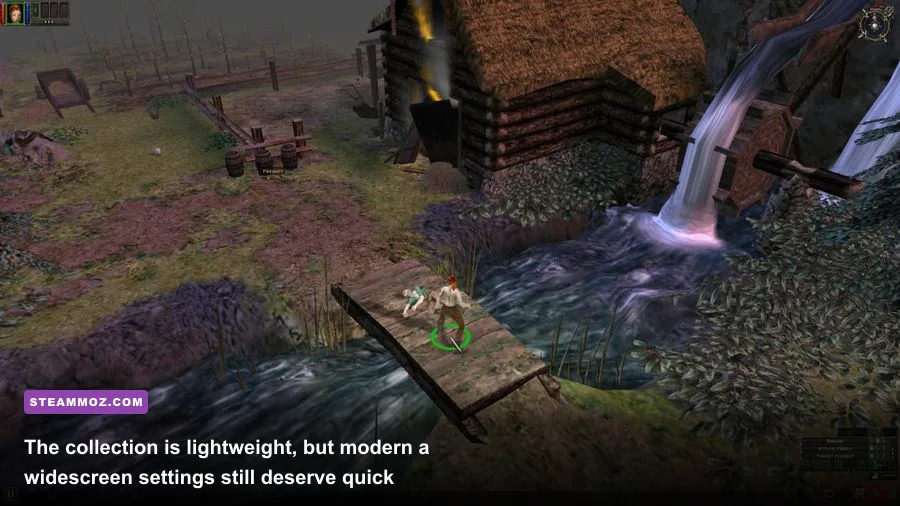
These games are old enough to run comfortably on modern hardware, but the collection can behave oddly on high-refresh monitors, ultrawide displays, and newer Windows versions. Start at 1920x1080, enable the highest texture and effects options available, and test the first outdoor area before changing anything else. The original Dungeon Siege may need compatibility tweaks or community fixes if it refuses to launch correctly.
| Setting or Fix | Recommended Value | Performance Impact | Visual Note |
|---|---|---|---|
| Resolution | 1920x1080 or native display | Low on modern GPUs | Sharper interface and world detail |
| Texture Quality | Highest available | Minimal | Improves terrain and character surfaces |
| Shadows | High, lower only if needed | Moderate in crowded scenes | Large visual benefit outdoors |
| V-Sync | Use if tearing appears | May add slight input latency | Stabilizes presentation on fixed-refresh screens |
| Compatibility Mode | Test Windows XP SP3 only if required | None when working | Can fix startup problems on older releases |
For troubleshooting, consult the official Dungeon Siege Steam page and Dungeon Siege 2 Steam page for current platform information. The Steam Community discussions are also useful for legacy widescreen and launch fixes, while the GOG collection page can help compare older compatibility notes.
The Simple Rules That Carry You to the End
Keep the main character specialized, maintain a four-role party, and upgrade survivability before chasing spectacular damage numbers. Pull enemies backward, kill ranged threats first, and make the healer's position a deliberate choice rather than an accident. Those rules sound basic, but they solve most beginner wipes across both Dungeon Siege and Dungeon Siege 2.
If you eventually want to turn the safe shield lead into a damage-focused dual-wielder, do it after your party has reliable healing and enough armor to survive mistakes. Until then, the shield is doing more than blocking attacks: it's buying time for every other character to perform. That is why it remains the best starting build in the Dungeon Siege Collection, especially for a first campaign played without a veteran friend calling every pull.
And when you move on to a more demanding classic RPG, our guide to Bug Fables' best gear is worth bookmarking. The systems differ, but the lesson is identical: a focused build with a clear job beats a supposedly flexible character who is mediocre at everything.