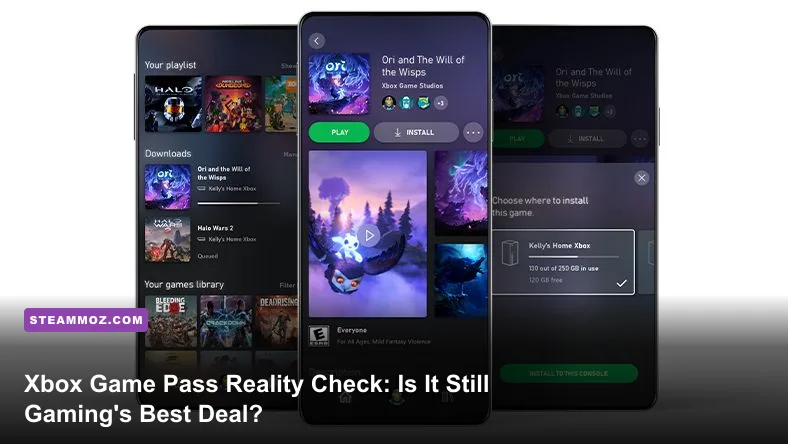
If you play at least three marquee $70 releases a year, Xbox Game Pass Ultimate remains the absolute undisputed heavyweight champion of gaming value—even after aggressive price hikes and sweeping tier restructuring. However, if your gaming year revolves around free-to-play juggernauts like Fortnite and Counter-Strike 2, or if you prefer marathoning a single massive live-service title for months on end, Microsoft’s flagship service has transformed from an automatic no-brainer into a potential monthly cash leak. The blanket recommendation days are officially dead; deciding whether the service makes financial sense demands a cold look at the tiers, your actual playtime, and Microsoft's shifting release pipeline.
The New Tier Hierarchy: What You Actually Pay and Get
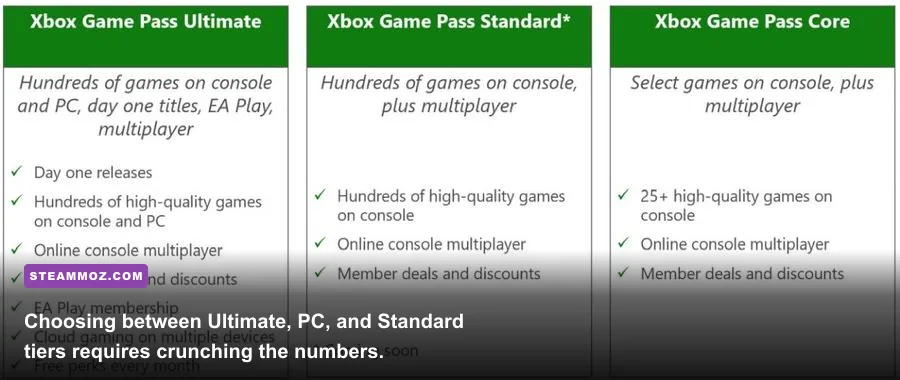
Microsoft fundamentally altered the subscription landscape by splintering Game Pass into four distinct tiers, introducing structural shifts that eliminated Day One releases from console entry points while adjusting price points across the board. Navigating this pricing matrix requires understanding that "Game Pass" is no longer a monolithic product. What works for a multi-device enthusiast on an OLED monitor offers disastrously poor value for a casual console user.
At the top sits Game Pass Ultimate at $19.99 per month. It remains the all-inclusive behemoth, bundling Day One first-party releases, EA Play integration, online console multiplayer, Cloud Gaming, and dual access across Xbox consoles and Windows PCs. Below that, PC Game Pass has held firm as the undisputed value sweetheart at $11.99 per month, preserving Day One blockbusters and EA Play without forcing PC players to pay for console network infrastructure they never touch.
The controversy lands squarely on the shoulders of Game Pass Standard ($14.99 per month). This tier replaced the venerable Console tier, retaining online multiplayer and a rotating backlog of older titles while completely stripping out Day One first-party releases. Meanwhile, Game Pass Core ($9.99 per month or $59.99 annually) functions as the direct legacy successor to Xbox Live Gold, offering essential console multiplayer backed by a static, curated playlist of roughly 25 legacy games.
| Tier | Monthly Price | Day One Releases | Library Scope | Multiplayer Included | Cloud Streaming |
|---|---|---|---|---|---|
| Game Pass Ultimate | $19.99 | Yes (Full Access) | 500+ Console, PC, EA Play | Yes (Console & PC) | Yes (1080p/60fps) |
| PC Game Pass | $11.99 | Yes (Full Access) | 450+ PC Titles + EA Play | Native Free PC Online | No (Download Only) |
| Game Pass Standard | $14.99 | No (Backlog Only) | 300+ Legacy Console Titles | Yes (Console Only) | No (Download Only) |
| Game Pass Core | $9.99 ($60/yr) | No | 25 Curated Legacy Games | Yes (Console Only) | No (Download Only) |
For console gamers, the elimination of Day One launches from the Standard tier fundamentally changes the math. If you want brand-new internal studio titles on your Xbox Series X on launch morning, you are funneled straight into the $19.99 Ultimate bracket. That works out to roughly $240 before taxes annually—a sum that requires serious software consumption to justify over outright retail ownership on storefronts like the Steam Store catalog.
The Blockbuster Math: Does Day One Still Justify the Monthly Cost?
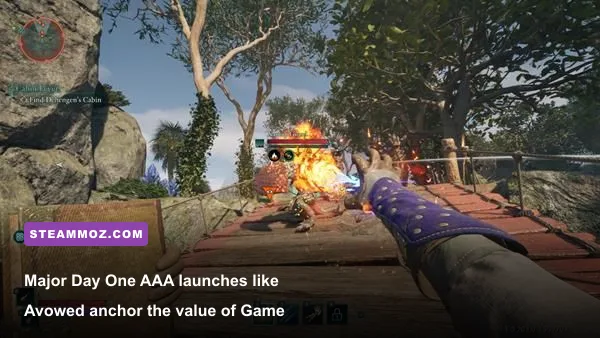
The mathematical bedrock of Game Pass has always been the retail price of standalone video games. Standard editions of premium modern releases command a baseline price of $69.99. When factoring in Microsoft’s unified first-party stable—spanning Xbox Game Studios, Bethesda Softworks, and Activision Blizzard—the theoretical savings accumulate with staggering speed if you actively keep up with the industry's release calendar.
Consider a standard yearly release cadence featuring heavy hitters like Call of Duty: Black Ops 6, Obsidian's ambitious fantasy RPG Avowed, MachineGames' cinematic adventure Indiana Jones and the Great Circle, and id Software's blistering Doom: The Dark Ages. Purchasing those four retail titles outright on digital storefronts requires a direct expenditure of $279.96 plus applicable taxes. An entire uninterrupted year of Game Pass Ultimate runs $239.88, while an equivalent year of PC Game Pass totals an astonishingly low $143.88.
Under this specific framework, PC Game Pass saves you $136 straight out of the gate on day-one purchases alone, completely disregarding the hundreds of other games included in the catalog. Even on Ultimate, you come out $40 ahead while picking up bundled perks like an EA Play membership (providing titles like Dead Space, Star Wars Jedi: Survivor, and annual sports entries) alongside recurring developer perks.
However, this equation falls apart completely the moment you examine your actual completion rate. Heavyweight role-playing games demand massive time investments. Diving into deep progression trees—much like configuring specialized loadouts in our Far Cry 6 beginner build breakdown—can tie you to a single title for upwards of 80 hours. If you spend three months picking through every corner of an enormous RPG, you have paid $60 in Ultimate subscription fees for a single game you still do not permanently own. If you stop subscribing, your access vanishes instantly.
PC Game Pass vs. Ultimate: Unmasking the Platform Sweet Spot
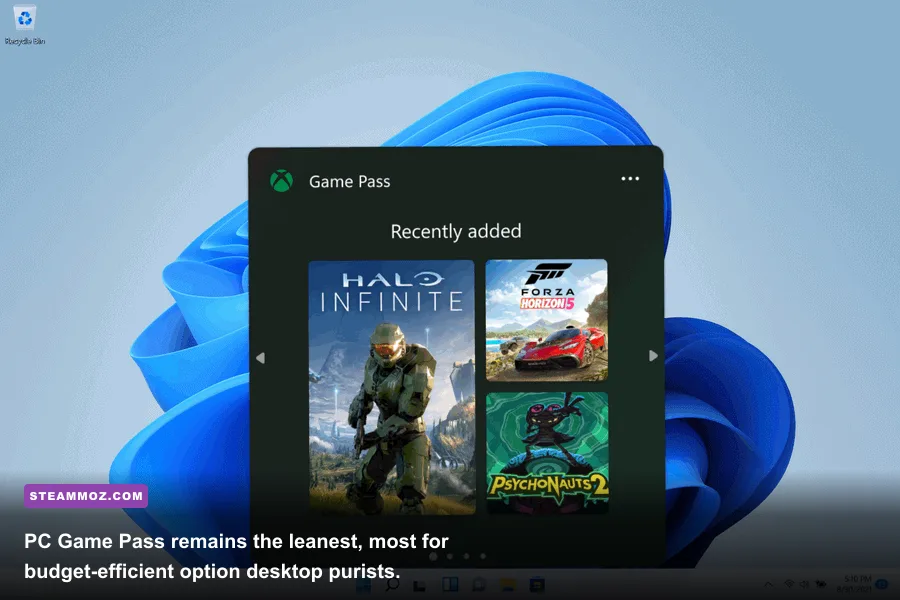
For desktop gamers, PC Game Pass remains arguably the most lopsided value proposition across all modern digital entertainment. Unlike the console environment, where multiplayer access has historically been locked behind paywalled network gates, PC gaming takes free online play for granted. Consequently, Microsoft cannot leverage online access to inflate the price of the PC-focused tier.
At $11.99 per month, PC Game Pass retains day-one releases that were stripped out of Console Standard. Furthermore, desktop players receive full integration with EA Play, access to Xbox Game Studios games natively compiled for Windows, and exclusive cross-title perks such as unlocked characters in Riot Games' Valorant and League of Legends. When paired with high-performance hardware tuning—such as dialing in custom graphics profiles like those seen in our Far Cry 6 GOTY settings guide or monitoring hardware benchmarks via our Fatal Fury City of the Wolves PC specs breakdown—the platform offers visual fidelity and frame rates that consoles simply cannot replicate.
The only compromises on PC relate to software distribution. The Windows Xbox App has improved drastically since its notoriously unstable early years, yet it remains more cumbersome than Steam. File structures for Game Pass titles are frequently protected or locked inside encrypted WindowsApps folders, making community modding complicated or outright impossible for certain titles. If you are a player who thrives on overhaul mods, custom shaders, and community script extensions, buying the standalone release on Steam during seasonal sales remains the superior long-term path.
Legacy titles also encounter occasional quirks through the Xbox App wrapper. While lightweight retro games run effortlessly—reminiscent of the modest hardware demands detailed in our Far Cry 2 PC specs overview—complex modern titles with aggressive anti-cheat systems can occasionally present permissions conflicts that demand troubleshooting.
The Indie Backlog Engine and the Hidden Cost of Rotating Games
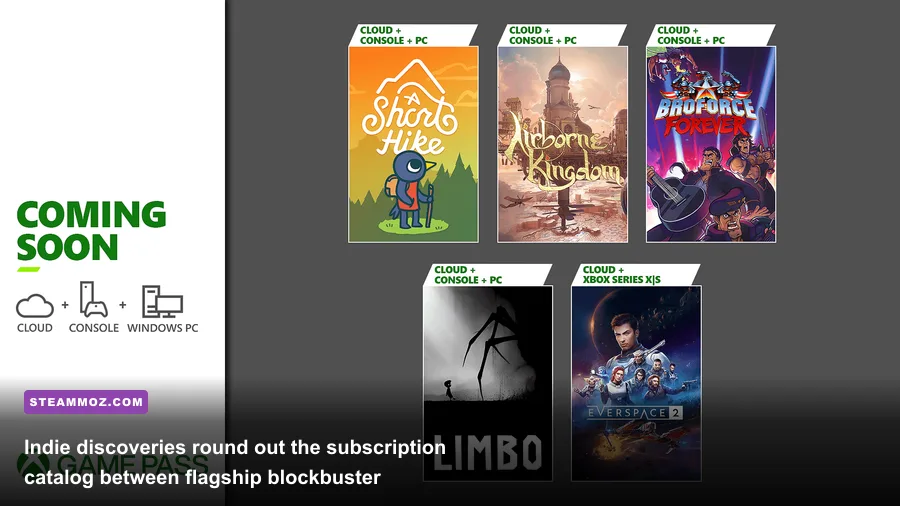
Focusing purely on massive AAA headliners ignores the real lifeblood of the service: the indie discovery catalog. Game Pass functions as a curated digital festival, consistently spotlighting critically acclaimed independent gems like Sea of Stars, Cocoon, Chained Echoes, and breakthrough survival sensations like Palworld and Manor Lords during their developmental preview cycles.
For gamers whose tastes run toward rich atmospheric exploration—mirroring the thrill of hunting hidden environments found in our Eternal Destiny secret locations guide or chasing deep-space loot caches in our Everspace 2 hidden rewards walkthrough—the service provides low-risk entry points into experimental genres. You never face the buyer's remorse of spending $30 on a stylized rogue-like or isometric tactics title only to abandon it after two hours. You simply install it, play it, and move on.
Yet this revolving door brings its own distinct friction: the backlog tax. Games outside of Microsoft’s first-party ownership do not live on the service indefinitely. Third-party contracts typically run between six and eighteen months. Microsoft announces departures roughly two weeks before games exit the catalog, offering a 20% purchase discount to subscribers looking to retain ownership.
This creates genuine tension for expansive 100-hour titles. If a massive third-party JRPG or intricate management sim leaves the service before you finish it, you are forced into an unplanned purchase or left with orphaned save files. Subscribing to Game Pass does not build a permanent digital library; it buys access to a streaming museum where third-party exhibits rotate out without much warning.
Cloud Streaming Reality Check: Hardware Freedom or Input Latency Trap?

The inclusion of Xbox Cloud Gaming (xCloud) remains one of Game Pass Ultimate's banner selling points, promising instantaneous access to hundreds of high-fidelity console games across Samsung Smart TVs, budget laptops, Android tablets, and dedicated handhelds like the Steam Deck and ASUS ROG Ally. The official platform architecture detailed via Xbox Game Pass official tier overview relies on custom Xbox Series X server blades delivering remote game instances directly to your browser or client application.
The technical reality, however, is heavily dependent on real-world networking constraints. Under ideal fiber-optic Wi-Fi 6 or hardwired Ethernet conditions, cloud streaming runs at a capped 1080p resolution at 60 frames per second. For turn-based strategy titles, narrative adventures, and slower RPGs, the experience feels near-magical. You bypass 100GB installation downloads entirely, launching games within forty seconds.
The moment you pivot to twitch-reflex competitive shooters or precise action titles, the cloud illusion fractures. Even with low packet loss, the physical realities of encode/decode overhead introduce baseline input latency ranging between 35ms and 75ms. In precision fighters or high-speed dogfights, this input latency can turn tight evasion windows into frustrating misses.
Furthermore, if your local setup suffers from micro-stuttering or variable network bandwidth, cloud gaming magnifies the problem ten-fold. When running locally on native hardware, players can deploy targeted performance tweaks—such as resolving stuttering loops using methods outlined in our Elex PC crash and FPS fixes or patching client-side dropouts through our EscapeVR The Basement low FPS guide. Over the cloud, you possess zero low-level driver or rendering control; if the streaming bitstream degrades, your only recourse is rebooting the session.
| Gamer Profile | Optimal Subscription Strategy | Estimated Yearly Cost | Annual Value Verdict |
|---|---|---|---|
| The Day-One Blockbuster Chaser | PC Game Pass or GP Ultimate | $143.88 – $239.88 | Massive Value: Saves hundreds over buying 4+ AAA games at $70 retail. |
| The Single-Game Specialist | Standalone Retail Purchases | $70.00 – $140.00 | Terrible Value: Subscribing monthly while playing one game wastes cash. |
| The Dedicated PC Purist | PC Game Pass Exclusively | $143.88 | Best in Industry: Retains Day One releases without paying for console features. |
| The Indie Backlog Explorer | Intermittent Game Pass Ultimate | $79.96 (4 active months) | High Value: Subscribing seasonally clears out backlogs at fraction of cost. |
| The Casual Console Multiplayer Gamer | Game Pass Core (Annual) | $59.99 | Pragmatic Choice: Unlocks online console play without the $240 Ultimate tax. |
To extract the absolute maximum value from Microsoft’s ecosystem, the smartest players avoid keeping active twelve-month recurring billing cycles altogether. Unless you are playing online multiplayer daily on an Xbox console, treat Game Pass like an on-demand video streaming service. Subscribe for two months when major tentpole releases like an internal Bethesda RPG or a landmark Activision drop arrive, binge the titles to completion, sample the latest wave of high-scoring indie games, and immediately cancel your subscription until the next production wave hits the catalog.
Track your personal gaming habits with clear eyes. If your annual gaming diet consists of three or more brand-new $70 titles peppered with indie variety, Game Pass—particularly the PC tier—remains one of the greatest economic bargains in video game history. If your time is monopolized by long-term live-service grinds, step away from the subscription carousel and buy your games outright. The value of the service is real, but only if you actually take the ride.