
Short answer: don't buy the Borderlands 4 Super Deluxe Edition blindly in 2026. The premium version is only worth choosing if Gearbox clearly bundles meaningful post-launch expansions, usable cosmetics, and a stable PC build; the name alone is not enough. More importantly, the Super Deluxe Edition has not been fully documented in the official information currently available to verify, so any review claiming exact weapon bonuses, Vault Hunter skills, season-pass contents, or performance numbers is guessing.
That may sound cautious for a Borderlands 4 review, but it is the honest position. Gearbox announced Borderlands 4 at Gamescom Opening Night Live in 2024, confirming a new mainline loot shooter and a 2025 release window. The announcement established the game's identity and platforms, but it did not provide a complete, verifiable breakdown of a Super Deluxe package. By 2026, the decision should be based on the actual bundle sold on Steam or console storefronts, not retailer placeholders or fan speculation.

What the Super Deluxe Edition must prove
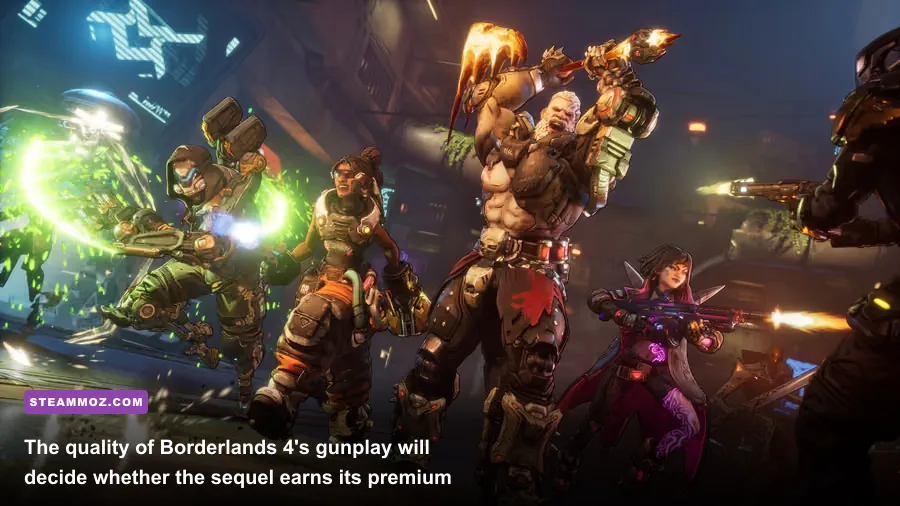
Borderlands has always lived or died by its loot loop. A premium edition cannot fix weak weapons, repetitive mission design, or a flat endgame. It can, however, be a reasonable purchase when it funds substantial expansions and gives committed players a clean route into the game's first year.
The key distinction is between content and access. A season pass that merely grants four cosmetic packs is not equivalent to two story expansions with new maps, bosses, skill interactions, and legendary loot. Early access is also a poor reason to spend more unless the launch build is stable and the extra days do not put solo players at a matchmaking disadvantage.
Before buying, open the official store listing and check five things: the number of story expansions, whether future DLC is included automatically, the exact cosmetic items, whether the package includes currency, and whether the contents can be purchased separately. The Steam storefront is particularly useful because its DLC list normally reveals whether a season pass has real named products or vague marketing language.
| Premium Feature | Worth Paying For | Reason to Skip | My 2026 Verdict |
|---|---|---|---|
| Two or more story expansions | New maps, bosses, missions, and loot | Only cosmetic packs are named | Strong value if confirmed |
| Cosmetic bundle | You already love the art style | Skins are the main selling point | Optional, never essential |
| Early access | You want a launch-weekend co-op run | Review coverage is restricted | Low-value bonus |
| In-game currency | Rarely useful for core progression | May encourage store spending | Do not pay extra for it |
| Future DLC pass | Includes clearly named gameplay expansions | Vague roadmap language | Wait for the contents list |
This is the same rule I use when evaluating other long-lived games: buy the edition for the playable content, not for digital clutter. Our Everspace Deluxe upgrade analysis makes a similar point: premium value depends on whether the extra purchase changes the actual experience.

🎮 Borderlands 4 Super Deluxe Edition
Looking to experience this game? Grab your digital key directly on our store for $64.99.
View on Steammoz Store →Why Borderlands 4 could still be worth playing
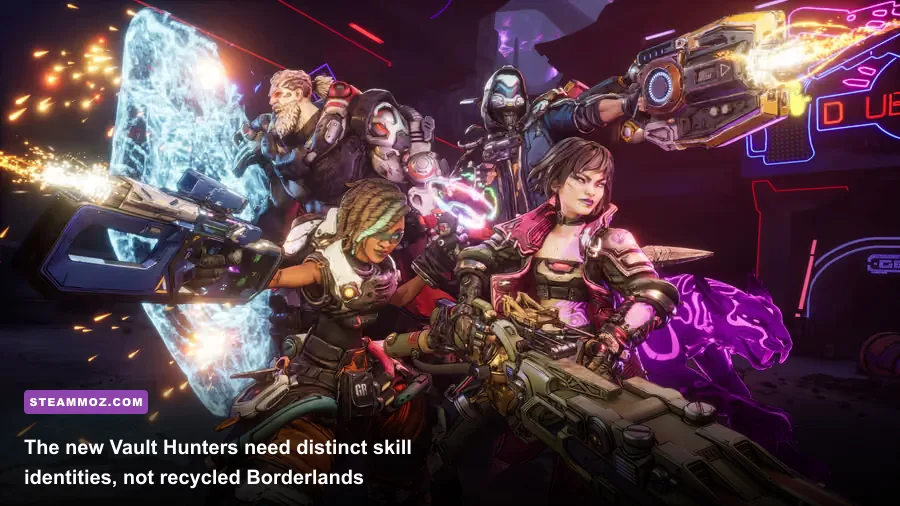
The case for Borderlands 4 is straightforward. The series has an unusually strong multiplayer foundation: four-player co-op, readable class roles, absurd weapon variety, and a damage system built around experimentation. If Gearbox improves the formula rather than simply inflating enemy health, the sequel could be the best social looter-shooter on the market in 2026.
Borderlands 4 also has room to correct the biggest problems of Borderlands 3. That game had excellent shooting and fast movement, but its story pacing was uneven, its villains were divisive, and the launch experience suffered from performance complaints on several PC configurations. A sequel with a tighter campaign, more purposeful side missions, and a cleaner endgame would have a strong foundation even before DLC arrives.
Still, the official material available for Borderlands 4 does not yet verify the exact names of the playable Vault Hunters, their skill trees, their action skills, or the game's final weapon manufacturers and stat scaling. That matters because those systems are not decorative details. In Borderlands, the difference between a memorable character and a forgettable one comes from how skills interact with elemental chance, critical-hit multipliers, cooldowns, shield capacity, and gear rarity.
For example, a strong character kit should offer at least two viable combat loops: a burst setup for bosses and a sustainable setup for mobbing. It should also reward deliberate gear choices rather than making every build collapse into the same critical-hit or grenade strategy. Until reviewers can test those systems, claims about the best class, best legendary weapon, or optimal skill rotation should be treated as unverified.
That uncertainty does not mean Borderlands 4 will be bad. It means the Super Deluxe Edition should not be used as a speculative investment. Start with the standard edition if the core campaign reviews well, then upgrade only when the expansion roadmap proves itself.
Performance is the real premium-edition test

On PC, Borderlands 4's technical condition should influence your purchase more than a handful of launch cosmetics. The game is expected to target current-generation hardware, but exact minimum and recommended specifications, graphics options, frame-rate caps, and upscaling support must be checked against the final Steam listing and launch patches.
The practical target for a loot shooter is not simply a high average frame rate. Borderlands firefights produce explosions, elemental effects, physics objects, damage numbers, and multiple AI behaviors at once. A system that reports 100 frames per second in an empty corridor can still feel rough when a four-player squad triggers simultaneous status effects.
Look for consistent frame pacing, a shader-compilation solution, adjustable volumetric effects, and separate settings for effects quality, foliage, shadows, and view distance. If the game includes DLSS, FSR, or XeSS, test each mode at native 1440p before choosing a preset. Upscaling can rescue performance, but aggressive sharpening and unstable reconstruction are particularly distracting when aiming at distant targets.
| PC Profile | Target | Settings to Prioritize | What to Watch |
|---|---|---|---|
| Entry-level 1080p | 60 FPS target | Medium shadows, effects, and foliage | Stutter during elemental-heavy fights |
| 1440p mainstream | 60–90 FPS target | High textures, medium volumetrics | GPU usage during co-op chaos |
| High-end 1440p | 100 FPS or higher | High settings with quality upscaling | Frame-time spikes, not average FPS |
| 4K enthusiast | 60 FPS target | High textures, optimized shadows | VRAM consumption and reconstruction |
For a useful comparison point, see our Dragonkin PC settings guide and ELEX crash and FPS troubleshooting guide. The same habits apply: update the GPU driver, let shaders finish compiling, disable unnecessary overlays, and benchmark a busy combat area rather than a quiet hub.
What to test before committing to DLC
Once Borderlands 4 is available, spend your first ten hours testing the systems that determine long-term value. Do not rush directly toward the campaign finale while assuming the endgame will solve every problem. Check how quickly new weapons replace old ones, whether elemental damage has clear tactical purpose, and whether side missions introduce mechanics instead of padding the map.
Pay close attention to enemy telegraphs. Good Borderlands combat lets you read a heavy attack, identify an armor or shield weakness, and make a meaningful response. If bosses simply become damage sponges with larger health bars, a Super Deluxe purchase becomes harder to justify. A satisfying boss should force movement, target priority, weapon swapping, or cooldown management without turning every encounter into a ten-minute ammunition check.
Co-op scaling deserves equal scrutiny. Does a friend joining your session make enemies tougher without making them bulletproof? Can players at different story stages contribute usefully? Are legendary drops instanced, and can loot filters prevent inventory management from swallowing the evening? These quality-of-life details determine whether the game remains fun after the novelty of the first new planet wears off.
| System | Healthy Result | Warning Sign | Why It Matters |
|---|---|---|---|
| Weapon progression | New guns change tactics | Only level numbers improve | Prevents loot fatigue |
| Elemental damage | Resistances create choices | One element dominates | Keeps loadouts flexible |
| Boss design | Readable attacks and phases | Huge health pools | Separates skill from attrition |
| Co-op scaling | Harder but still readable fights | Enemies become bullet sponges | Protects multiplayer pacing |
| Inventory tools | Fast sorting and comparison | Constant menu interruptions | Supports the loot loop |
These tests are more revealing than a collector's statue, exclusive head, or temporary boost. If the foundation works, additional story zones can extend a great shooter. If the foundation fails, extra cosmetics only make the disappointment more expensive.
Final verdict for Borderlands 4 in 2026
My verdict is buy the standard edition first, and upgrade later if the Super Deluxe contents are substantial. Borderlands 4 is absolutely worth watching because its co-op gunplay, build experimentation, and new setting could deliver the series' strongest sequel yet. But there is not enough officially verified information to recommend paying a premium for an edition whose exact expansion list, bonuses, and technical performance may vary by platform.
If the final package includes two substantial story expansions, a complete first-year pass, and a stable launch build, the Super Deluxe Edition becomes a sensible buy for players who already know they'll spend dozens of hours farming gear with friends. If it mainly contains cosmetics, currency, early access, and vague future promises, skip it. The base game will provide the actual campaign, combat, and progression systems that decide whether Borderlands 4 deserves your time.
Watch the official Borderlands website, Gearbox announcements, the final Steam product page, and independent launch benchmarks before purchasing. Our Dungeon Siege retrospective is a useful reminder that longevity comes from systems and replayability, not from the most expensive box on the store page.
Bottom line: Borderlands 4 may be worth playing in 2026, but the Super Deluxe Edition is only worth buying when its playable DLC, final performance, and post-launch support are proven. Until then, keep your Eridium—and your wallet—safe.