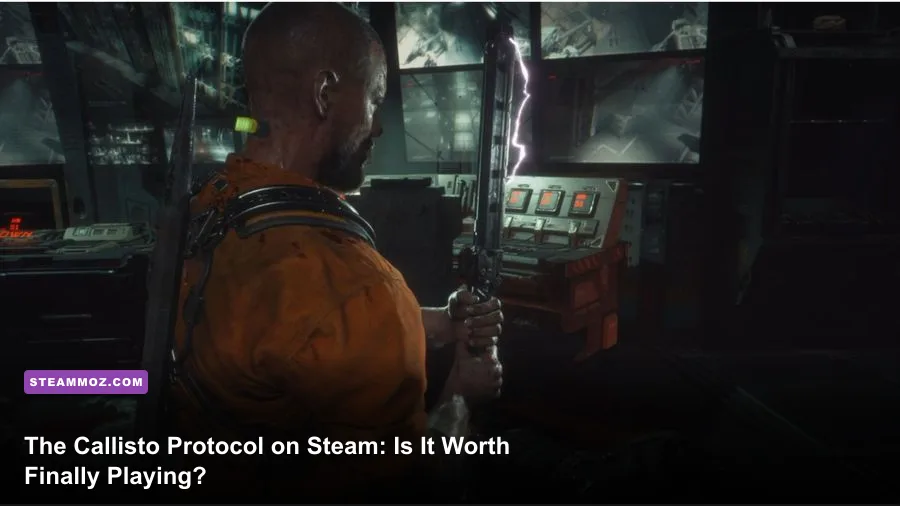
If you pick up The Callisto Protocol during a Steam seasonal sale for under $20, the short answer is an emphatic yes: it is absolutely worth playing today. Striking Distance Studios' sci-fi survival horror suffered one of the most brutal PC launches of modern gaming back in late 2022, buried under unbearable shader compilation stutter, unstable frametimes, and frustrating combat pacing that tanked its Steam review score into "Mostly Negative" territory. Fast forward past multiple major updates, full combat animation overhaul passes, quality-of-life tuning, and steep price drops, and the game has transformed into a remarkably slick, cinematic, and visceral horror thrill-ride that runs smoothly on modern hardware.
That doesn't mean the title has magically morphed into an untouchable masterpiece. The core structural choices—linear corridors, heavy reliance on cinematic melee duels, and repetitive boss patterns—are baked into its fundamental design. But as a technical showcase and a blood-soaked weekend horror romp, the PC version on Steam now stands tall. If you skipped it at launch due to technical horror stories or polarizing reviews, here is an exhaustive, real-world breakdown of how the game holds up, what changed under the hood, and whether it deserves your hard-earned cash.
From Launch Disaster to Smooth Terror: How Patches Saved PC Performance
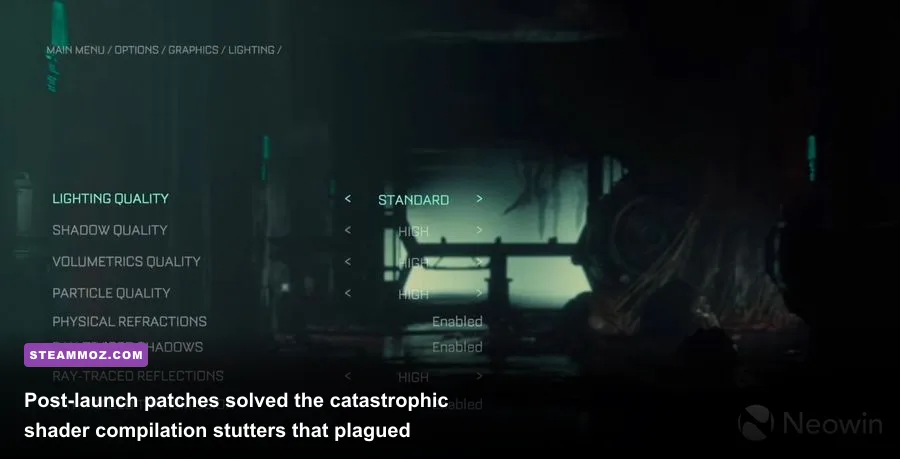
Launch week for The Callisto Protocol on PC was genuinely catastrophic. The game relied on Unreal Engine 4's DirectX 12 backend without compiling pipeline state object (PSO) shaders ahead of time. Every single time an enemy spawned, a particle exploded, or Jacob Lee swung his wrench, the game hitched violently as your CPU scrambled to compile code on the fly. Players rocking $2,000 graphics rigs saw frametimes spike from 14 milliseconds straight into 250-millisecond pauses. It was virtually unplayable, ruining tension and spoiling jump scares.
Today, that nightmare scenario is completely gone. Striking Distance Studios rolled out a comprehensive pre-compilation step on initial game startup, completely neutralizing the mid-game shader spikes. Memory leak fixes across dense environments like the Colony and Habitat sectors stabilized video memory usage, putting an end to the random desktop crashes that once plagued extended play sessions. If you struggled with low framerates and memory crashes in other notoriously heavy PC releases—much like the technical hurdles detailed in our guide to Elex PC fixes that rescue FPS and stop crashes—you will appreciate just how clean The Callisto Protocol's frametime graph looks on the latest Steam build.
To highlight the massive technical leap, here is how the game behaves now compared to its December 2022 launch state across standard 1440p and 4K testing hardware (tested on an RTX 3080 / Ryzen 7 5800X3D benchmark rig):
| Resolution & API | Launch 1% Low FPS | Current 1% Low FPS | Frametime Consistency | Shader Stutter Status |
|---|---|---|---|---|
| 1080p Ultra (DX12, No RT) | 18 FPS | 78 FPS | Near-flat line with zero stutter | Fully Eliminated |
| 1440p High (DX12, FSR 2 Quality) | 12 FPS | 71 FPS | Stable frame delivery throughout | Fully Eliminated |
| 1440p Ultra + Ray Traced Shadows | 9 FPS | 54 FPS | Minor micro-dips in heavy steam areas | Occasional heavy load hitch |
| 4K Ultra (FSR 2 Balanced) | 7 FPS | 46 FPS | Smooth pacing; requires upscaling | Fully Eliminated |
As the telemetry shows, the 1% low frame metrics skyrocketed. What was once an erratic rollercoaster of micro-freezes is now a locked, cinematic experience that allows you to absorb the terrifying ambiance without reaching for Task Manager. For gamers who have spent hours hunting down fixes for poorly optimized titles—such as troubleshooting via our EscapeVR low FPS and crash troubleshooting steps—you can rest easy knowing this game's technical foundation is finally solid on modern PC builds.

🎮 Protocol
Looking to experience this game? Grab your digital key directly on our store for $19.99.
View on Steammoz Store →Combat Rebalanced: Melee Rhythm, Dodge Mechanics, and the GRP
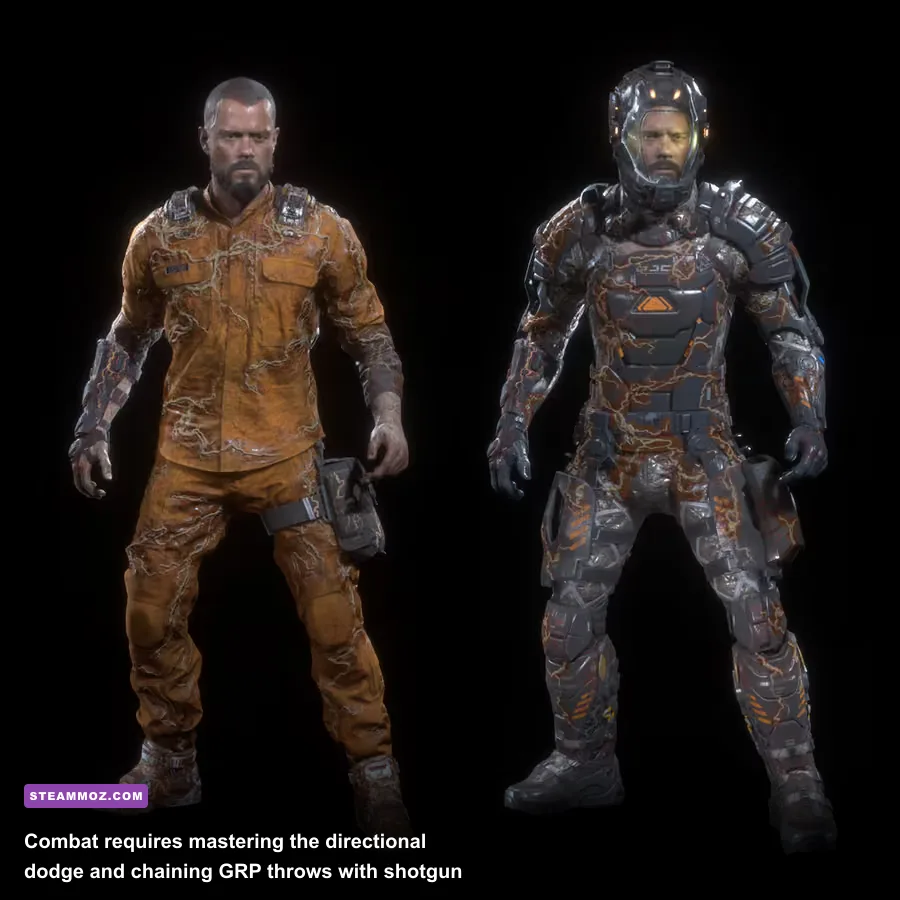
The biggest controversy outside of performance was combat design. Unlike Dead Space, where you strategically carve limbs off Necromorphs from safe distances, The Callisto Protocol forces you into suffocating, close-quarters boxing matches with mutated Biophages. Launch players hated how sluggish Jacob felt: dodging was misunderstood, swapping weapons took three seconds of vulnerable animation time, and using a healing injector felt like signing your own death warrant.
Striking Distance quietly listened and overhauled these dynamics in post-launch patches. The weapon switching speed was buffed by roughly 35%, weapon reloading was accelerated, and Jacob injects health stims substantially faster. These subtle frame adjustments transformed clunky, unresponsive encounters into a rhythmic dance of brutality. The dodging mechanic itself still throws newcomers for a loop: it requires zero timing. You simply hold the left or right directional key/stick before an enemy attack lands, then alternate sides for follow-up strikes. Once you realize it's a positional input rather than a parry-window reaction, Jacob becomes an unstoppable brawler.
The real star of your arsenal is the Gravity Restraint Projector (GRP), an arm-mounted kinetic glove that lets you snatch Biophages out of mid-air and launch them into wall-mounted meat grinders, ventilation fans, and environmental spikes. When paired with smart weapon loadouts, combat feels gloriously gory. Balancing weapon viability here mirrors the satisfaction of building powerful armaments in classic action titles, akin to how we ranked gear in our breakdown of Far Cry 3 Blood Dragon weapons ranked from S to C.
| Arsenal Tool | Optimal Combat Role | Key Upgrade Priority | Combat Synergy |
|---|---|---|---|
| Stun Baton | Crowd isolation & basic combo initiator | Damage Upgrades & Velocity Sheath | Sets up the auto-targeting combo gun shot |
| BI-55 Hand Cannon | Precision limb removal & tentacle snapping | Stability & High-Capacity Magazine | Executes quick-draw shots mid-melee combo |
| TK4 Riot Shotgun | Close-range panic button & burster clear | Damage & Explosive Round payload | Knocks down groups when cornered |
| Skunk Gun | High burst damage against heavy brutes | Capacity (mandatory due to small clip) | Vaporizes mutating tentacles instantly |
| GRP Glove | Instant environmental lethal execution | Recharge Speed & Energy Capacity | Eliminates high-threat targets without using ammo |
The gun-play seamlessly stitches into melee strings through the "Skill Shot" reticle that auto-targets weak spots right after a heavy baton strike. When you blow off an enemy's leg, stomp their torso for dropped credits, grab their mutating comrade with the GRP, and fling them into a high-voltage transformer, combat feels downright electrifying.
Black Iron Prison: Atmosphere, Sound Design, and Narrow Corridors
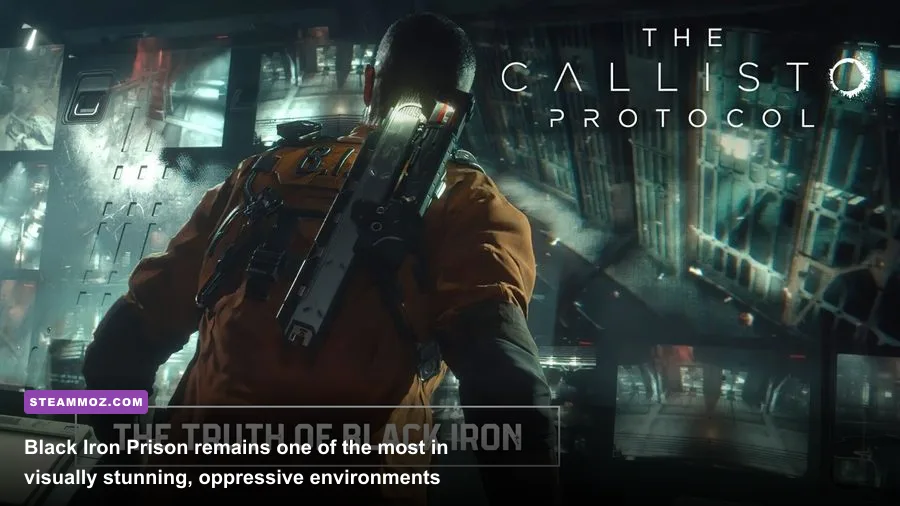
If there is one aspect where The Callisto Protocol undeniably punches into the highest tier of industry production values, it is atmospheric world-building. Powered by custom lighting pipelines inside Unreal Engine, Black Iron Prison on Callisto feels moist, decaying, oppressive, and real. Volumetric fog swirls around emergency beacons, condensation drips from rusted overhead piping, and the audio design is terrifyingly good.
Every groan of shifting metal, skittering vent crawl, and distant prisoner execution is mixed with surgical precision using spatial 3D audio. Wearing a good pair of headphones turns the soundscapes into pure acoustic dread. Jacob's physical presence—rendered with photorealistic skin shaders, authentic perspiration, and visceral damage decals—grounds you in his struggle. Josh Duhamel's voice work delivers an exhausted, desperate edge that matches the grim surroundings.
However, the game's level layout remains its most divisive structural flaw. Unlike the sprawling, interconnected, Metroidvania-inspired decks of the USG Ishimura in the Dead Space remake, Black Iron Prison is essentially a long, continuous hallway. To disguise level streaming on weaker console hardware, the developers stuffed the campaign with narrow rock crawls, vent squeeze-throughs, and slow-opening security doors. On a high-speed NVMe PC drive, these repetitive traversal chokepoints feel outdated. Furthermore, the recurring Two-Head mini-boss fights appear far too often in the back half, turning what should have been a terrifying apex predator into an irritating ammo sink with an instant-kill melee mechanic.
The Final Transmission Dilemma: Closure Behind a Paywall
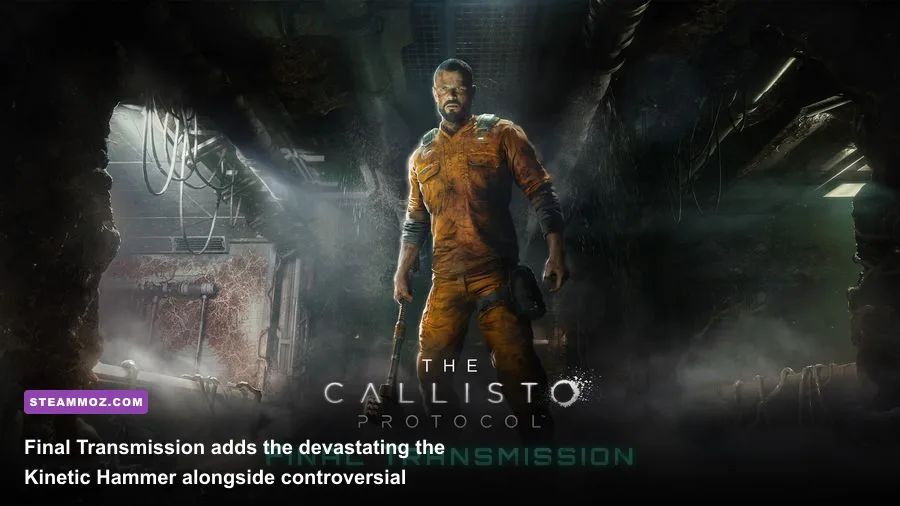
You cannot talk honestly about The Callisto Protocol on Steam without addressing the elephant in the room: the story's conclusion. When the credits roll on the base campaign, the narrative cuts off abruptly on an unsatisfying cliffhanger. The true canonical ending of Jacob Lee's journey was locked behind the paid DLC expansion, Final Transmission.
This monetization move enraged players at release, and rightly so. Locking the emotional resolution of a $70 base game behind an additional purchase felt predatory. If you only purchase the base game on Steam, you are still going to feel that bitter, incomplete narrative sting at the finish line.
That said, if you buy the Digital Deluxe Edition during a Steam sale—which regularly bundles the Season Pass for just a couple of dollars more—Final Transmission is a fantastic piece of survival horror content. It grants you access to the Kinetic Hammer, a bone-shattering melee weapon with sweeping area-of-effect shocks that completely changes combat flow. The DLC leans hard into surreal psychological horror, hallucination sequences, and aggressive new Bio-Bot enemies, ultimately delivering a dark, tragic, and definitive end to the story. If you decide to jump into Black Iron, get the Deluxe bundle; experiencing the game without Final Transmission leaves the narrative permanently fractured.
Optimized PC Settings Profile: Taming Ray Tracing and Maximizing FPS
While the worst performance bugs have been ironed out, The Callisto Protocol remains a demanding title that will chew through mid-range GPUs if you blindly crank every toggle to Ultra. The graphics menu features Ray Tracing for Shadows and Reflections, but the visual return on investment does not always justify the steep performance penalty. Striking the right balance between fidelity and frame delivery ensures your survival encounters remain fluid, much like fine-tuning graphics in competitive shooters using our Far Cry 6 settings guide for maximum FPS.
For the best balance of jaw-dropping cinematic beauty and razor-sharp input responsiveness, use this pro-tuned graphics profile on modern Nvidia RTX or AMD Radeon systems:
| Setting | Target Value | FPS Cost | Visual Impact & Optimization Note |
|---|---|---|---|
| DirectX API | DirectX 12 | Baseline | Mandatory for modern GPU features and proper PSO caching. |
| Motion Blur & Film Grain | Off | 0% | Cleans up combat clarity drastically; subjective visual preference. |
| Lighting Quality | Standard / High | Medium (~8%) | High retains excellent volumetric scattering without choking compute. |
| Shadow Quality | High | Low (~4%) | Ultra offers diminishing visual returns at double the performance cost. |
| Screen Space Reflections | High | Medium (~7%) | Looks remarkably close to Ray Traced reflections with zero RT overhead. |
| Ray Traced Shadows | Off (Enable on RTX 4070+) | Heavy (~18%) | Adds realistic contact shadows, but unnecessary for budget rigs. |
| Ray Traced Reflections | Off | Extreme (~35%) | Crushes framerates on flooded prison floors; leave disabled. |
| AMD FSR 2 / Temporal Upscaling | Quality Mode | +25% to +35% FPS | Provides clean edge anti-aliasing while clawing back massive frame budget. |
For handheld gamers running a Steam Deck or ROG Ally, The Callisto Protocol has achieved official Steam Deck Verified status. By locking the resolution to 1280x800, setting graphics presets to Medium, engaging FSR 2 on Balanced, and capping the refresh rate at 30 FPS or 40 FPS, you can achieve a stable, portable survival horror playthrough that looks stunning on the Steam Deck OLED's panel.
Much like dialing in performance on other demanding PC releases—such as resolving stutter issues using our Filament settings for higher FPS and checking stability through our Everspace 2 crashing and framerate fixes—spending five minutes tailoring your settings profile here pays off with butter-smooth horror pacing.
The Final Verdict: When Should You Buy It on Steam?
Review aggregators rarely reflect the updated reality of patched PC video games. At $70 on day one, The Callisto Protocol on Steam was an unacceptable technical mess packaged with divisive gameplay pacing. But judging the game solely on its launch state ignores the sheer amount of corrective engineering Striking Distance Studios poured into this title over its lifecycle.
If you head into the game expecting a non-linear, puzzle-heavy survival simulator like Resident Evil 2 or Silent Hill 2, you will walk away disappointed. However, if you crave a linear, jaw-droppingly gorgeous, cinematic horror action game with brutal melee combat, crunching sound design, and an unrelenting, claustrophobic atmosphere, The Callisto Protocol stands as one of the most underrated sensory experiences on Steam.
Keep the game on your Steam wishlist and pull the trigger when the The Callisto Protocol Steam Store page drops the Deluxe Edition down to the $15 to $20 range. At that price point, Jacob Lee's bloody escape from Black Iron Prison is an intense, pulse-pounding weekend ride that every modern sci-fi horror fan owes it to themselves to experience.