
The worst Subway Surfers mistakes are wasting Hoverboards and Keys, chasing every coin, ignoring missions, jumping without a landing plan, and reacting too late to three-lane obstacle patterns. Avoid those habits, upgrade the right power-ups, and build your score multiplier toward x30 before attempting serious high-score runs.
Subway Surfers looks simple because its controls are limited to swipes: left, right, up, and down. The difficulty comes from making the correct decision several seconds before a train, barrier, tunnel, or ramp reaches your lane. The game also mixes score optimization with resource management. Coins, Keys, board abilities, character bonuses, Mystery Boxes, daily objectives, and event rewards all matter, but only if you spend them with a plan.
This guide focuses on the costly errors that hold players back on Android and iOS. For official news, locations, and event information, check the official Subway Surfers website and SYBO Games. If your phone struggles during runs, our guides to optimizing mobile games on Android and fixing lag and low FPS cover useful device-level improvements.
1. Chasing Every Coin and Power-Up
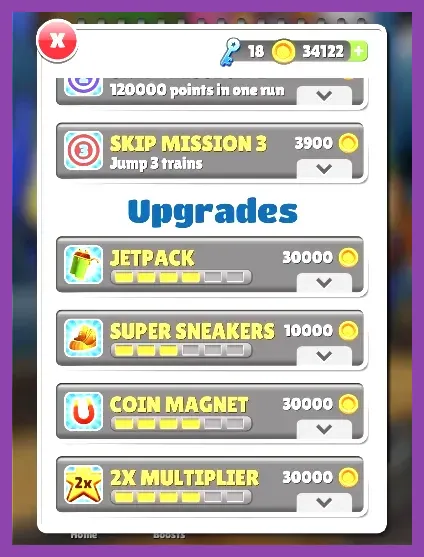
The most common beginner mistake is treating every coin line, power-up, and Mystery Box as mandatory. It is not. A coin has value, but a collision ends the run, breaks your rhythm, and may force you to spend a Key. If a coin trail sends you toward an occupied lane or a low barrier with no safe landing, skip it immediately.
Use a simple priority order:
- Safety first: choose the lane with a clear landing and a visible escape route.
- Active power-up second: take a Jetpack, 2x Multiplier, Coin Magnet, or Super Sneakers when it does not require a reckless lane change.
- Coin lines third: collect coins only when the route remains predictable.
The Jetpack is especially valuable because it removes ground-level train and barrier threats for its duration. Do not waste its flight by steering aggressively toward a difficult coin cluster. Let the Jetpack collect the obvious line, then prepare for the landing before the fuel runs out. The Coin Magnet is safer than manual collection because it pulls nearby coins across lanes, while the 2x Multiplier directly improves score gain and deserves priority during a score attempt.
Super Sneakers can create another trap. The higher jump changes your timing and can send you over a coin line into an obstacle. When the effect activates, stop making automatic jump swipes. Look at the landing lane first, especially near trains and red-and-white barriers. You can also swipe down to cancel a jump early and land sooner. The goal is not to collect the maximum number of objects; it is to remain alive while collecting high-value objects consistently.
2. Saving Hoverboards Until It Is Too Late
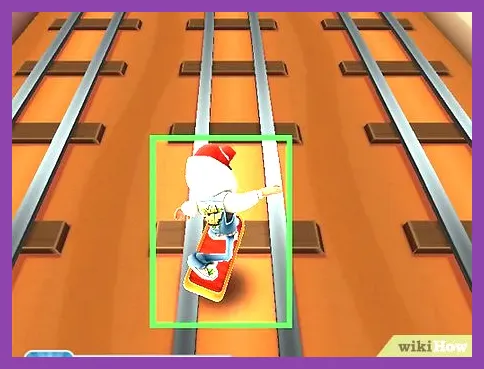
Many players hoard Hoverboards because they fear running out, then activate one only after a train is already touching their character. That timing is unreliable. A Hoverboard should be used before a high-risk sequence, not as a desperate reaction to an obstacle that your swipe has already failed to avoid.
Activating a Hoverboard gives you a temporary crash buffer. If you hit an obstacle while it is active, the board breaks and the run continues instead of ending immediately. The board does not make you invincible forever, however. A second mistake after the board breaks can still finish the run, and the activation animation itself must be completed before the protection is useful.
Use boards in three situations:
- Before a compressed obstacle section: activate when trains, barriers, and narrow lane changes appear together.
- Before a risky power-up route: a board lets you take a calculated line toward a Jetpack or 2x Multiplier without risking the entire run.
- During a record attempt: use one whenever your concentration drops or the speed makes visual reading difficult.
Do not burn a board simply because you are entering a straight, open section. Keep some available for late-run pressure, when the increasing speed leaves less time to recover. If you own boards with special abilities, test their descriptions in ordinary runs before using them for a record. Effects such as Smooth Drift or Super Jump can change how the character handles, and unfamiliar movement is itself a danger.
A related error is assuming a board replaces lane discipline. It does not. After a board absorbs a crash, immediately move away from the obstacle and identify the next safe lane. Standing in the same lane can produce a second collision with another train or barrier.
3. Ignoring Missions and the x30 Multiplier

Coins look like progress, but missions determine the score multiplier that gives every later action more value. Subway Surfers missions gradually raise your multiplier, with the standard progression reaching x30. A run with a large coin total but a weak multiplier can score less than a shorter, cleaner run completed after your mission objectives are finished.
Open the mission panel before starting a focused session. Objectives commonly ask you to collect a number of coins, jump a specific number of times, use power-ups, or complete actions such as rolling. The exact tasks change, so do not assume that playing normally will finish all of them efficiently. If a mission asks for 30 Super Sneakers uses, for example, prioritize safe opportunities to collect that power-up rather than forcing a dangerous route for coins.
Break difficult objectives into separate runs. Trying to complete a distance target, a coin target, a power-up target, and a score target simultaneously encourages reckless play. Finish the easy movement mission first, then use the increased multiplier for the score objective. This is also why daily missions and event tasks should not distract you from the main multiplier path when you are attempting a personal best.
Score boosters multiply the value of this preparation. A 2x Multiplier power-up combines with your current mission multiplier, so collecting it during an x30 run is far more valuable than collecting it at x5. If you use a Score Booster from your inventory, activate it at the start of a planned record attempt rather than during a casual run where you are likely to crash early.
Players who enjoy optimizing progression can apply the same resource-first thinking to other games, such as our guides to farming Mora efficiently and farming money in Armored Core 6. In Subway Surfers, the equivalent of an efficient farm is completing missions before investing serious time in high-score attempts.
4. Jumping Without Planning the Landing

Jumping is not automatically safer than running. A blind upward swipe can put Jake, Tricky, Fresh, or any other character directly onto the roof of a train, into a suspended barrier, or back into an occupied lane. The correct question is not “Can I jump over this?” It is “Where will I land, and what can I do immediately afterward?”
Before swiping up, scan the landing area. A standard jump can clear a low barrier, but it does not solve every overhead threat. A train roof may be safe for a moment and then force a jump into a second train. If the route has two trains side by side, jumping onto one roof can remove your escape options. In those cases, a lane change or roll may be better than a jump.
Rolling has two important uses. Swipe down to pass under overhead barriers and to cancel a jump early. Cancelling is particularly useful after collecting Super Sneakers, because the altered jump height can otherwise carry you too far. Practice alternating jump and roll inputs in a quiet section so your fingers do not freeze when the game combines a barrier with a low overhead obstruction.
Do not chain swipes just because the camera is moving quickly. Each input should answer a visible threat. Repeated left-right movement is a major cause of accidental lane changes, especially when the character is already aligned with a safe coin line. Keep your thumb near the center of the screen, make one deliberate swipe, and wait for the character to complete the movement before issuing another command.
Character choice does not remove this requirement. Jake, Tricky, and Fresh have different appearances and unlock costs, but standard running survival is governed by the same lane-reading fundamentals. Focus on a character you control comfortably instead of spending Keys or event currency expecting a cosmetic change to fix poor timing.
5. Reacting to the Nearest Obstacle Only
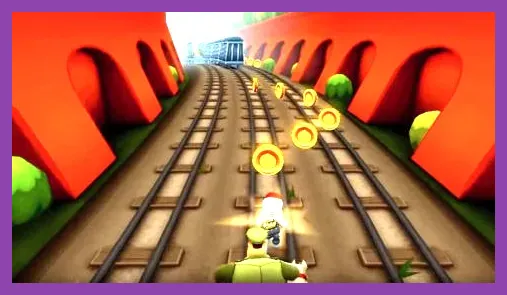
Subway Surfers becomes difficult when players look at the obstacle immediately in front of them instead of reading the next two or three lanes. The nearest train may be avoidable, but its position can funnel you into a barrier behind it. Start scanning beyond the current threat as soon as your character enters a new section.
Use this three-step method:
- Identify the current collision: decide whether to change lanes, jump, or roll.
- Check the landing lane: confirm that the destination is not occupied by a second train or barrier.
- Choose the next exit: keep one alternative lane available for the following obstacle.
When two trains create a narrow gap, do not force the gap unless the camera clearly shows a safe continuation. A moving train can hide the next hazard until it is too late. It is often better to move to an outer lane and sacrifice coins than to thread a central gap with no escape. At higher speeds, the safest route is usually the one with the fewest required inputs, not the one with the most collectibles.
Pay close attention to train roofs and ramps. A ramp can make a roof reachable, but landing on top of a train is only useful if the roof remains clear. If another train blocks the landing, stay on ground level or change lanes before the ramp. Likewise, never assume that a tunnel entrance is safe because it is visually dark; overhead barriers and trains can still occupy the approach.
For players using older phones, visual delay makes this mistake worse. Lower battery drain, close background apps, and use the most stable frame rate your device can maintain. A consistent 60 frames per second is preferable to unstable high graphics, but Subway Surfers should remain playable on modest hardware. If crashes or stuttering affect your runs, our crash troubleshooting guide and low-FPS guide provide general diagnostic steps that also apply to mobile gaming habits.
6. Wasting Coins, Keys, and Mystery Boxes
Another expensive mistake is spending every resource as soon as it appears. Coins are useful for power-up upgrades and unlocks, while Keys are much rarer and should be reserved for meaningful saves or specific shop opportunities. A Key spent reviving a run at a low score is usually poor value, especially when you have not reached your x30 multiplier.
Use a Key when three conditions are met: the run has already reached a meaningful score, your mission multiplier is strong, and you have enough focus to continue. If you crash during the first minute, restart. A revive does not repair the habits that caused the collision, and repeated ad-based or Key-based continues can turn a casual mistake into wasted progression currency.
Mystery Boxes are also not a guaranteed shortcut to rare rewards. Open them when you have earned them naturally, but do not chase a dangerous box during a run. Track your actual inventory before buying anything: duplicate character tokens, board collections, and temporary rewards may be less useful than saving coins for a power-up upgrade. Upgrading the Jetpack, Coin Magnet, 2x Multiplier, and Super Sneakers improves future runs more reliably than repeatedly buying cosmetic items.
Keep event currencies separate in your planning. Subway Surfers rotates cities, characters, boards, and limited-time hunts, so a purchase that looks attractive today may prevent an event unlock later. Check the current shop and event objectives before spending. The official Google Play listing and official App Store listing are also useful for verifying the current game version and update availability.
A Safer High-Score Routine
Build high scores in phases instead of demanding a perfect run immediately. First, complete missions until the multiplier approaches x30. Second, run without spending resources and practice reading three obstacles ahead. Third, begin a record attempt with a Score Booster, several Hoverboards, and a clear objective for power-up timing.
During the attempt, protect the run more aggressively as the score rises. Skip unsafe coin lines, activate a board before a compressed section, and prioritize a 2x Multiplier over a small group of coins. Use Jetpacks for safe collection, cancel Super Sneakers jumps when the landing becomes unclear, and reserve at least one Key for a genuinely valuable late-run continuation.
After every collision, identify the exact mistake: late lane change, blind jump, greedy coin route, missed landing, or poor board timing. Correcting one repeatable error is more valuable than simply playing another dozen unfocused runs. Subway Surfers rewards calm anticipation, not frantic swiping. Avoid these mistakes and your resources, multiplier, and survival time will all improve together.