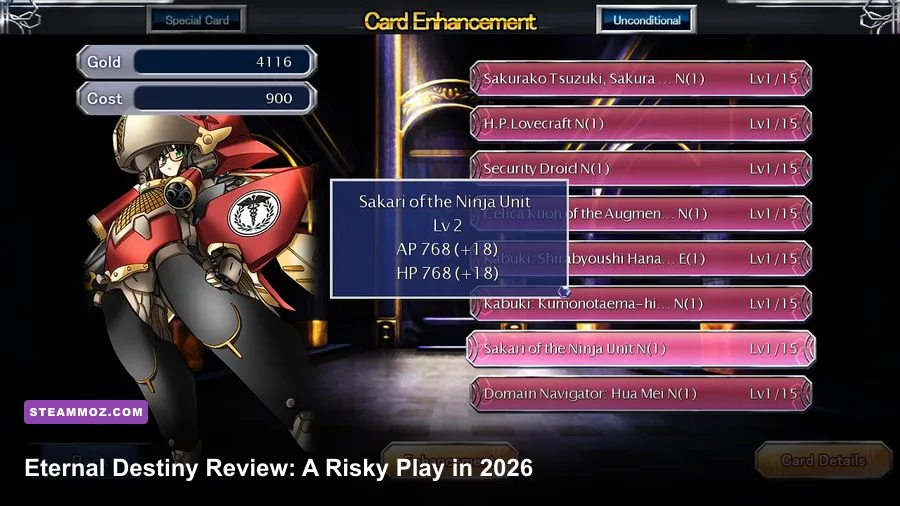
Short answer: Eternal Destiny is only worth playing in 2026 if you want a low-commitment free-to-play RPG and can tolerate uncertainty around its support, monetization, and long-term content. It may provide a few enjoyable sessions, but I can't recommend spending money on it until the developer publishes a stable official roadmap, transparent rates, and dependable patch history.
That cautious verdict needs explaining, because Eternal Destiny is unusually difficult to assess. The name is used across mobile storefront listings, promotional videos, and similarly titled fantasy projects, while publicly available information does not consistently identify one authoritative version. That is not a minor editorial headache. For a live-service RPG, the official store page, version number, developer identity, privacy policy, and patch notes are part of the product.
Before installing, compare the listing you see with the official Steam search results and the matching Google Play search results. iPhone users should also verify the publisher through the official App Store search. If the developer name, screenshots, and description do not line up, stop there. You may be looking at a clone or an unrelated title.
What Eternal Destiny Actually Offers

The safest way to describe Eternal Destiny is as a mobile-first fantasy RPG experience built around short battles, character collection, repeated upgrades, and daily engagement. The appeal is familiar: assemble a party, improve its power, clear increasingly difficult encounters, and return for event rewards. That loop can be satisfying when the game gives you meaningful decisions between runs. It becomes exhausting when progress is mostly a sequence of taps through upgrade screens.
That distinction is important because the publicly visible material does not provide a dependable mechanical reference sheet. There is no consistently maintained official database confirming character statistics, skill coefficients, elemental multipliers, equipment caps, or a complete enemy catalogue. Consequently, claims about exact damage values or a supposedly dominant character tier list should be treated skeptically unless they can be reproduced in the current client.
| Review Area | 2026 Assessment | Why It Matters |
|---|---|---|
| Core loop | Potentially enjoyable | Short battles and routine upgrades suit casual sessions. |
| Combat depth | Unclear | Public materials do not verify detailed skill scaling or counters. |
| Progression | Likely grind-heavy | Collection RPGs usually place daily tasks at the center of advancement. |
| Long-term support | Unproven | A sparse patch record makes future events and balance support difficult to judge. |
| Monetization | High caution | Do not assume advertised summons or bundles offer fair value. |
In other words, Eternal Destiny's most attractive feature is accessibility, not proven originality. You can probably understand its basic loop quickly. The harder question is whether there is enough tactical variety underneath that loop to justify weeks of daily play.

🎮 Eternal Destiny
Looking to experience this game? Grab your digital key directly on our store for $1.99.
View on Steammoz Store →Combat Feels Better When You Treat It as a Puzzle

If you decide to try it, do not judge the combat solely by how quickly the first battles disappear. Early free-to-play stages are often designed to make every new character and upgrade feel powerful. The real test arrives when enemies survive your opening rotation and force you to manage healing, crowd control, turn order, or defensive cooldowns.
Start by recording what each ability actually does instead of trusting its rarity color. A lower-rarity support character with a reliable heal, cleanse, shield, or defense reduction can outperform a flashy damage dealer when content becomes difficult. Watch for three practical signals: whether an ability targets one enemy or the whole team, whether its effect lasts one turn or several, and whether the game calculates damage before or after armor reduction. Those details matter more than a large attack number on a character card.
Party construction should also follow function rather than collection status. A sensible early team usually needs a front-line damage sponge, a consistent damage source, and at least one support slot. The fourth position depends on the stage: add control against dangerous casters, burst damage against fragile bosses, or another defensive tool when survival is the bottleneck. Avoid building five characters at once. Split resources across a broad roster too early and you'll create a party that looks versatile but cannot clear the next power gate.
| Combat Problem | First Adjustment | What to Monitor | Common Mistake |
|---|---|---|---|
| Team dies before the second rotation | Improve health and defense on the front line | Enemy targeting and opening burst | Adding another glass-cannon attacker |
| Boss heals repeatedly | Use healing reduction or timed burst | Boss health thresholds | Wasting ultimate abilities before the heal |
| Damage falls off mid-campaign | Concentrate upgrades on one carry | Weapon level and skill scaling | Equipping every new character equally |
| Control effects miss | Raise accuracy or replace unreliable control | Resistance and hit chance | Assuming rarity guarantees consistency |
One warning: screenshots and launch trailers cannot prove that battles remain interactive. Look for footage of later chapters, event stages, and boss encounters. If every video shows the same auto-battle loop against low-level enemies, that is a sign to moderate expectations rather than a reason to spend immediately.
Progression Is the Real Make-or-Break Test
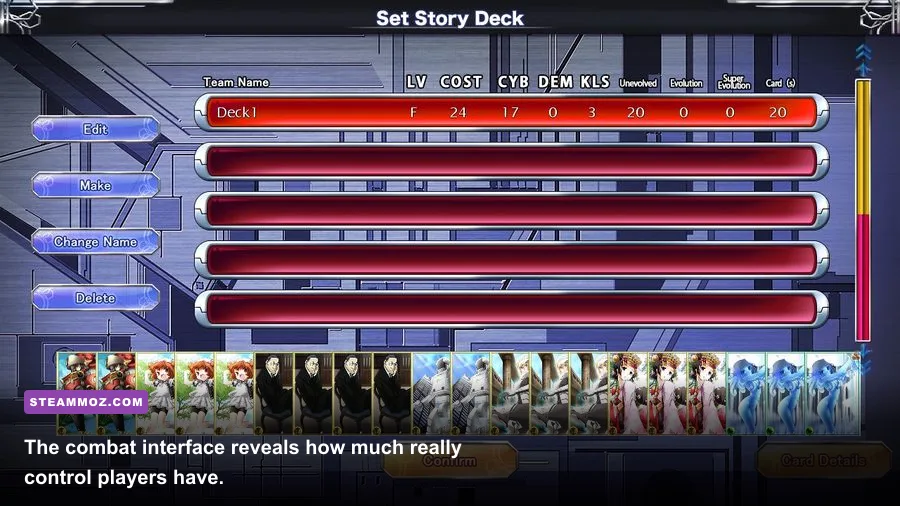
Eternal Destiny's progression should be judged by how often it lets you make a meaningful choice. A good upgrade system asks whether you want more survivability, faster ability cycling, stronger single-target damage, or improved control. A weak one simply raises a handful of numbers until the next locked stage opens.
Use the first few sessions as an economy test. Track how many upgrade materials you receive from normal play, how many resources are required for one meaningful improvement, and whether the game gives you a reliable way to target a needed character. Do not count login currency as sustainable income. Login rewards are front-loaded marketing; repeatable missions, weekly activities, and event shops determine whether a free player can keep up.
Also check whether duplicate characters have genuine utility. Duplicate systems can be reasonable when copies unlock optional specialization. They become punishing when a basic character requires several duplicates simply to reach competitive skill levels. The same applies to equipment: separate gear enhancement from gear acquisition whenever possible, and don't chase perfect substats before your main team is stable.
| Progression Signal | Healthy Design | Warning Sign |
|---|---|---|
| Daily playtime | Most rewards arrive within 20–30 focused minutes | Several separate timers and mandatory chores |
| Character access | Visible pity, selector, or repeatable target system | Unclear rates and no documented guarantee |
| Duplicate copies | Useful but optional improvements | Core skills locked behind multiple copies |
| Equipment | Farmable baseline gear with clear upgrade costs | Random gear layers stacked behind stamina limits |
| Events | Accessible rewards for non-spenders | Best rewards tied to short, expensive banners |
This is where Eternal Destiny falls short as a confident 2026 recommendation. Without a stable official record of rates, caps, and event schedules, players cannot properly calculate value. That uncertainty is especially damaging in a game whose entire structure depends on long-term investment.
Performance, Storage, and Privacy Deserve Attention

Don't assume a simple-looking RPG will run perfectly on every phone. Live-service clients frequently stream assets, rebuild shader caches, and download large event packages after the first launch. Test the game for at least 15 minutes on your actual device before deciding whether performance is acceptable.
Use the lowest preset first, then raise texture quality one step at a time. Frame-rate stability matters more than visual sharpness during automated battles, menu transitions, and effect-heavy ultimate attacks. If the phone becomes hot while the game is idle, lower effects and frame rate rather than sacrificing battery health for smoother animations.
| Setting or Check | Recommended Starting Point | Performance Impact | Visual Trade-Off |
|---|---|---|---|
| Frame rate | 30 FPS on older phones; 60 FPS if stable | Medium to high | Higher values improve animation feel but increase heat. |
| Effects quality | Medium | Medium | Reduces flashy skill particles first. |
| Texture quality | Medium or high if memory allows | Low to medium | Mostly affects character and environment sharpness. |
| Battery mode | Enabled for farming | Low | May reduce background activity and animation smoothness. |
| Permissions | Deny anything unrelated to play | None | Protects privacy without changing graphics. |
Check the developer name, support email, account deletion process, and permission list before linking a primary social account. A game with weak documentation should not receive more personal data than it needs. Save purchase receipts and avoid buying premium currency until you have confirmed that refunds, account recovery, and regional pricing are clearly explained.
Should You Play Eternal Destiny in 2026?
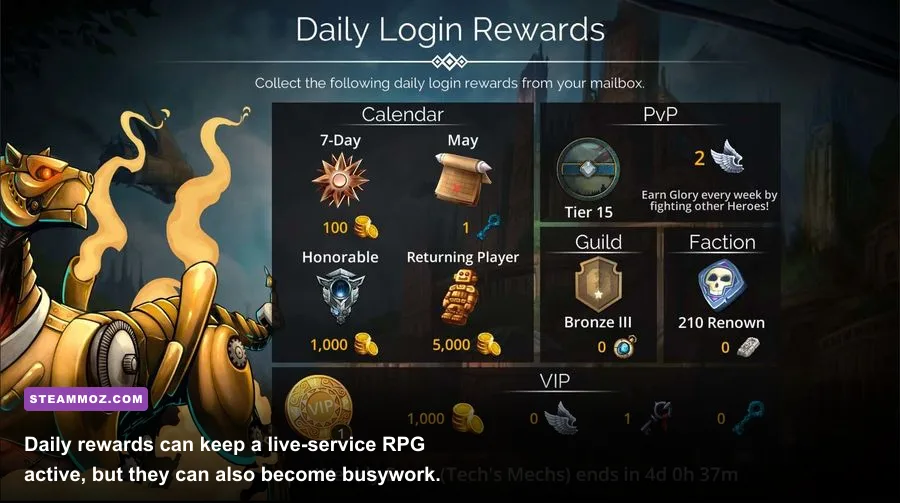
My recommendation is simple: try Eternal Destiny free, but approach it as a short trial rather than a new main game. Give it one evening to test the tutorial, combat controls, loading behavior, resource income, and account systems. Continue only if the battles ask you to make decisions and the upgrade economy feels understandable without a spreadsheet.
It is a reasonable fit for players who enjoy anime-style collection systems, short daily sessions, and the ritual of improving a favorite party. It is a poor fit for anyone looking for a substantial single-player campaign, transparent competitive balance, or a game that can be played comfortably without checking event timers.
For a more established alternative, our Borderlands 2 review covers a much more proven loot-driven progression model. Players who prefer tactical decision-making can also browse these Blackguards 2 campaign tips, while fans of fantasy gear builds may enjoy our Assassin's Creed Valhalla weapon rankings. If performance is your main concern, our AnKRa FPS settings guide offers the same practical graphics-first approach.
Final verdict: Eternal Destiny is worth downloading once, not blindly investing in. Its accessible fantasy RPG loop may land with casual players, but the lack of consistently verifiable systems, transparent monetization data, and a strong public support trail keeps it out of the must-play conversation for 2026. Treat the first session as due diligence. If the game earns your time after that test, keep playing; if it immediately pushes you toward purchases before explaining its economy, uninstalling is the smarter progression strategy.