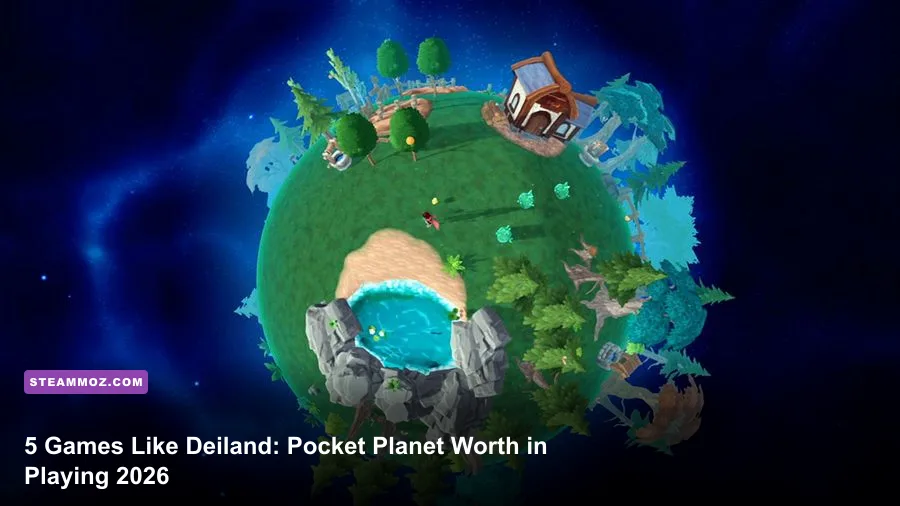
If you love Deiland: Pocket Planet for its tiny-world farming, light combat, crafting, and gentle RPG progression, start with Forager for the closest addictive resource loop, then move to Stardew Valley for richer farming and relationships. My Time at Portia, Littlewood, and Dragon Quest Builders 2 round out the best alternatives in 2026, each preserving a different part of Deiland's charm while adding more depth.
Deiland works because every action feeds the next one. You clear a patch of land, plant crops, mine ore, craft a better tool, complete a request, and return to a planet that feels visibly improved. The scale is miniature, but the loop is not. These recommendations are ranked around that exact appeal rather than simply throwing generic farming games into a list.
S-Tier alternatives for Deiland fans
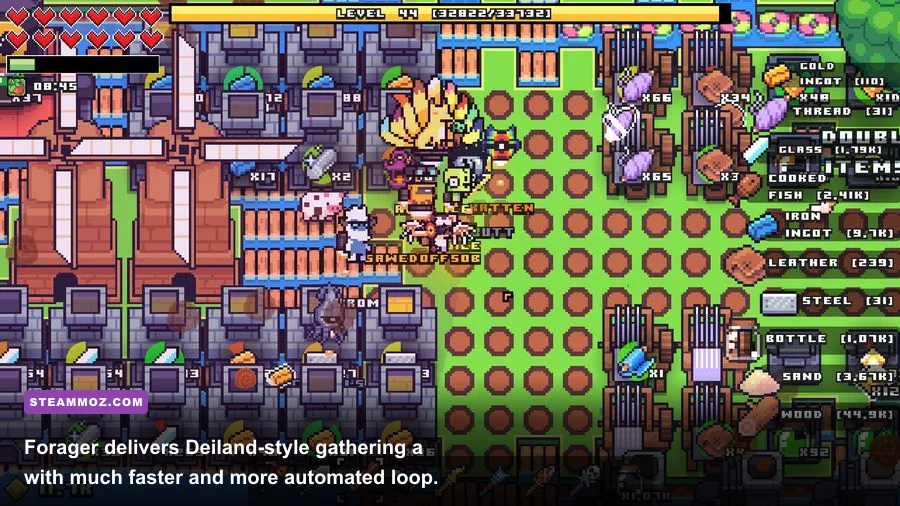
The best replacement depends on which Deiland system you want to preserve. Forager is the nearest mechanical match: gather resources, unlock land, automate production, and keep expanding until the screen is packed with useful machines. Stardew Valley is slower and more character-driven, but its calendar, stamina economy, crop quality, and relationship systems are dramatically deeper. Dragon Quest Builders 2 is the pick for players who want Deiland's construction and exploration pushed into a proper adventure.
| Game | Closest Deiland feature | Progression style | Best for |
|---|---|---|---|
| Forager | Gathering, crafting, tiny expansion zones | Fast, highly upgrade-driven | Players who want constant unlocks |
| Stardew Valley | Farming, fishing, quests, relationships | Calendar-based and gradual | Players who want a living community |
| Dragon Quest Builders 2 | Building, crops, islands, story quests | Chapter-based adventure | Players who want construction with purpose |
| My Time at Portia | Crafting, commissions, exploration | Workshop and town progression | Players who prefer 3D crafting RPGs |
| Littlewood | Relaxed gathering, decorating, town growth | Energy-managed daily planning | Players who want low-pressure comfort |
That ranking also explains why no single game perfectly replaces Deiland. Deiland compresses farming, survival, crafting, and combat into a compact planet. Stardew spends more time on people; Forager spends more time on production; Builders 2 spends more time on authored adventure. Pick the friction you want, not just the art style.
Why Forager is the closest mechanical match
Forager starts with a tiny patch of land and turns every resource into momentum. The first minutes are about collecting wood, stone, berries, and coal, but the skill tree quickly changes the pace. Industry improves furnace and production efficiency, while Automation unlocks structures that gather resources without constant manual input. That makes it feel like Deiland after removing most of the waiting.
The big difference is density. Forager's islands are compact, but each tile can contain a tree, ore deposit, animal, puzzle, or machine placement opportunity. The Mining Rod and later production buildings make resource chains easier to maintain, while experience from nearly every activity lets you buy skills at a satisfying rate. There is very little dead time. If Deiland's gathering feels charming but occasionally too slow, Forager fixes that problem aggressively.
Forager is also less forgiving of messy planning. Buildings occupy valuable space, furnaces need fuel, and early coins disappear quickly when buying new land. Prioritize the Industry, Economy, and Storage branches before chasing every combat upgrade. You want a stable supply of iron, steel, glass, and bottled materials before pushing into the game's later puzzles. The combat is functional rather than elegant, so this is primarily a production RPG, not a sword-and-shield adventure.
Its pixel-art presentation is flatter than Deiland's illustrated miniature planets, but the emotional rhythm is remarkably close: start with almost nothing, improve one corner of the world, then discover that your tiny project has become an efficient little civilization.

🎮 Deiland: Pocket Planet
Looking to experience this game? Grab your digital key directly on our store for $4.99.
View on Steammoz Store →The best farming-focused choice is Stardew Valley
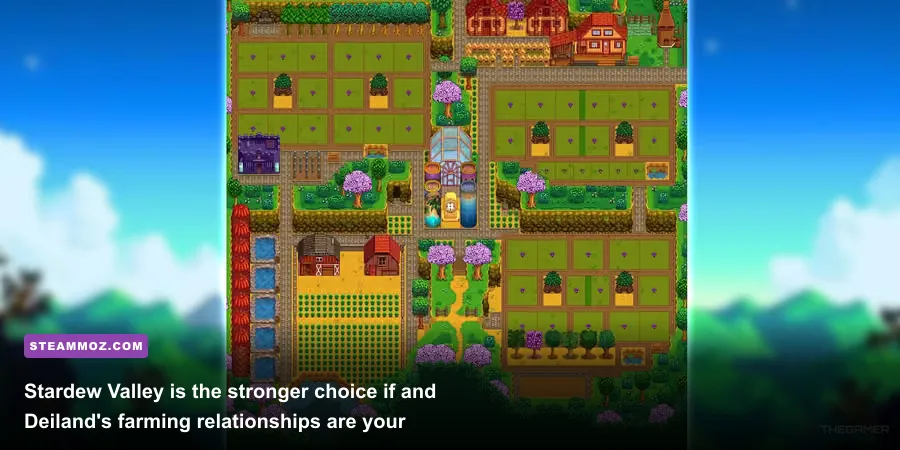
Choose Stardew Valley if the farming, fishing, cooking, and resident relationships are what kept you returning to Deiland. ConcernedApe's game gives every day a clear structure: wake up, check crops, spend stamina on a priority task, visit town, and get home before exhaustion or a late-night collapse becomes expensive.
The early progression curve is more deliberate than Forager's. On the standard farm, your first major target should be a basic sprinkler setup and a reliable cash crop rather than a huge field that consumes your entire morning. Strawberries are excellent after the Egg Festival, while Blueberries and Cranberries become strong multi-harvest options in summer and fall. The Quality Sprinkler waters the eight surrounding tiles, and the Iridium Sprinkler covers 24, making Farming Level 6 and Level 9 important long-term milestones.
Stardew's combat is also more readable than Deiland's light encounters. In the Mines, enemy behavior gives you a clear response window. Rock Crabs stay disguised until struck or approached, Serpents telegraph their horizontal rush, and Shadow Brutes walk directly toward you before attacking. The Galaxy Sword, unlocked by taking a Prismatic Shard to the Three Pillars in the Calico Desert, is a major late-game power spike, but a carefully upgraded weapon from the Adventurer's Guild is enough for the early mine floors.
The relationship system changes the entire tone. Villagers have schedules, favorite gifts, heart events, and seasonal routines, so the world feels less like a resource board and more like a place. Linus, Leah, and Willy are especially good targets for players who enjoy the outdoorsy side of Deiland. If you want the most complete all-rounder rather than the closest miniature-planet structure, Stardew Valley remains the safest recommendation.
| Stardew milestone | Unlock or target | Why it matters | Efficient approach |
|---|---|---|---|
| Spring Year 1 | Backpack upgrade and strawberries | More inventory and strong seasonal income | Save gold before the Egg Festival |
| Mining Level 5 | Miner or Geologist profession | Defines ore income or gem value | Choose Miner for heavy tool upgrading |
| Farming Level 6 | Quality Sprinkler recipe | Reduces daily watering time | Stockpile iron, gold, and refined quartz |
| Community Center | Bundles and seasonal planning | Unlocks major town improvements | Check the Traveling Cart every Friday and Sunday |
For more demanding RPG alternatives, Steamoz's Dungeon Siege review is worth reading, though it trades farming for traditional loot-driven adventuring.
My Time at Portia adds a bigger crafting adventure
My Time at Portia is the strongest choice if Deiland's crafting stations and requests are more important to you than its compact scale. You play as a new builder restoring your Pa's workshop, then take commissions from the town of Portia. Every request pushes you toward a new material, machine, ruin, or social connection.
The workshop is built around a clear production ladder. The Assembly Station creates large projects, while machines such as the Grinder, Cutter, and Civil Furnace process raw materials into components. Early on, keep multiple furnaces running with wood or power stones and avoid selling every ore you find. Copper, tin, stone, and hardwood are not just money; they are the backbone of commission chains and machine upgrades.
Portia's best system is the commission board. You can only accept a limited number of commissions each week, and higher-ranked jobs pay more but demand better machines. Take jobs that match your existing stock rather than blindly choosing the biggest reward. A commission that requires a bridge component may unlock new areas, while a simple set of wooden storage boxes can be more valuable when your workshop is still starved for time.
Combat takes place in locations such as the Abandoned Ruins and hazardous outdoor zones. Weapons include swords, spears, and fans, and equipment stats matter more than in Deiland. Stamina is also a critical resource because sprinting, gathering, and some activities compete for the same daily budget. Upgrade your pickaxe and axe early, but don't neglect inventory space. Portia's materials are bulky, and constant trips back to the workshop are the game's most common source of frustration.
The 3D camera and larger maps make Portia feel more like an adventure RPG than a pocket sandbox. Its schedule can be busier and its interface less immediate, but that extra complexity is exactly why it works for players who have already squeezed everything out of Deiland's smaller systems.
Littlewood is the calmest Deiland alternative
Littlewood is the recommendation for players who want gathering, decorating, and town growth without harsh survival pressure. The hero has already defeated the world-threatening villain, but their memory is gone. Your job is to rebuild a settlement, attract residents, and slowly reconstruct what happened. That premise flips the usual RPG structure from urgent crisis to gentle recovery.
Its key resource is energy, not a traditional stamina bar tied to real-time exertion. Every action consumes energy, and the day ends when your energy is gone. That makes planning more important than reflexes. Chop enough wood for a building project, mine until you have the ore needed for an upgrade, then spend the remaining energy fishing or bug-catching. Because there is no stamina penalty for moving around town, you can focus on routing rather than rushing.
Town placement is unusually meaningful. Residents have preferences for nearby decorations, water, trees, and structures, so the best settlement is not simply a grid of efficient buildings. Willow, Dalton, and other villagers provide quests and bonuses that gradually expand your options. The game rewards making a functional town that also looks intentional, which scratches the same creative itch as arranging buildings on Deiland's planet.
Littlewood's skill progression is divided among activities such as woodcutting, mining, fishing, farming, and bug catching. Rather than chasing a combat build, you are building a daily routine. That makes it less suitable if you specifically want Deiland's monster encounters, but it is excellent as a wind-down game. The absence of a punishing hunger meter or dangerous night cycle means you can experiment with layouts without losing a week of progress.
Its pixel-art scale is closer to Stardew Valley than Deiland, yet the town-building focus gives it a distinct identity. Think of it as the cozy management side of Deiland with the survival tension removed.
Dragon Quest Builders 2 has the deepest building loop
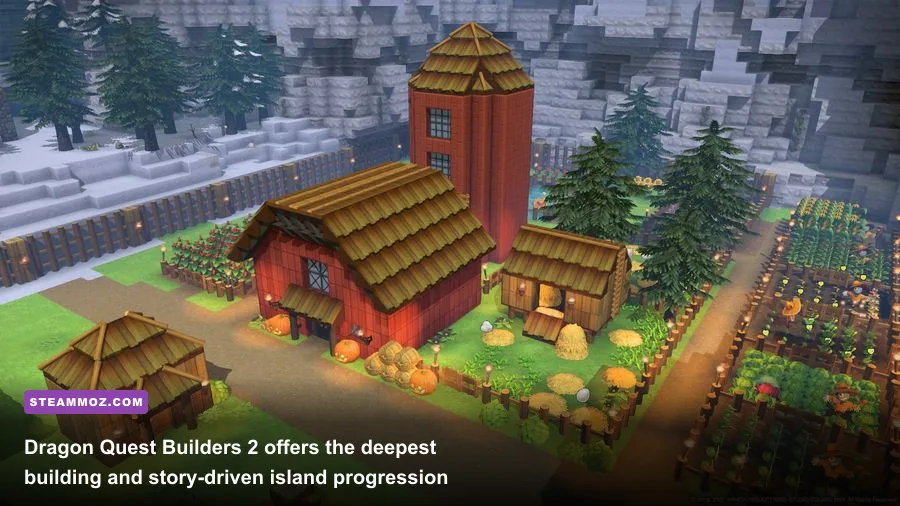
Dragon Quest Builders 2 is the premium pick when you want Deiland's island rebuilding fantasy expanded into a full story campaign. The game combines block construction, farming, exploration, combat, and Dragon Quest characters across several large chapters. It is less minimalist than Deiland, but every island gives building a clear narrative purpose.
The opening Isle of Awakening teaches the central loop: collect materials, build rooms, restore farmland, and satisfy the needs of the people who live there. On Furrowfield, farming is tied to the island's restoration. You learn to cultivate crops, use scarecrows to define fields, and eventually automate watering through irrigation. That cause-and-effect structure is one of the best examples of a crafting game making its construction systems feel meaningful.
Combat is more active than in most games on this list. Your weapon choice changes your attack range and damage, while companions help during larger encounters. Bosses are designed around readable arena mechanics rather than random survival damage. During major fights, focus on the objective the game gives you instead of trying to brute-force the boss with basic attacks. Building defensive walls, using the environment, and placing functional rooms can matter as much as weapon upgrades.
The Builder's Workbench and recipe progression keep the crafting chain moving. You will gather wood, stone, grass fibers, metals, and monster drops, then convert them into furniture, tools, weapons, and functional rooms. Room recipes recognize specific combinations of walls, lighting, furniture, and doors, so construction is not purely cosmetic. A well-designed village can generate food, recruit residents, and make each island easier to manage.
In multiplayer, the Isle of Awakening becomes a creative sandbox, but the story campaign is where the Deiland comparison lands hardest. You are not just decorating empty land; you are helping a damaged world become livable again. If Forager is the best alternative for numbers and Stardew is the best for routine, Builders 2 is the best for transformation.
| Building game | World scale | Combat depth | Farming depth | Creative freedom |
|---|---|---|---|---|
| Deiland: Pocket Planet | One compact planet | Light action RPG | Focused and simple | Moderate |
| Forager | Unlockable islands | Basic but fast | Production-focused | Moderate |
| Stardew Valley | Large seasonal map | Responsive dungeon combat | Very strong | High |
| My Time at Portia | 3D town and regions | Equipment-driven | Moderate | High workshop freedom |
| Dragon Quest Builders 2 | Multiple story islands | Adventure-focused | Strong and systemic | Very high |
Which game should you play first?
Start with Forager if your favorite Deiland moments involve mining, crafting, unlocking land, and watching a small base become an efficient machine. Choose Stardew Valley if you want stronger characters, seasonal planning, and a farm that evolves over several in-game years. Pick My Time at Portia for 3D exploration and commission-driven crafting, or Littlewood when you want the least stressful version of the formula.
Dragon Quest Builders 2 is the best long-term purchase for players who want a full campaign and genuinely meaningful construction. Its story chapters provide stronger direction than Deiland, while the Isle of Awakening gives you room to build after the main objectives are complete. It is also the easiest recommendation for a group of friends who want to create a shared project rather than simply compare farm layouts.
Before committing, check the platform and performance profile. Stardew Valley and Littlewood run comfortably on modest hardware, while Portia and Builders 2 benefit from an SSD, a modern quad-core CPU, and at least 8GB of RAM. Players troubleshooting demanding RPGs can also use Steamoz's ELEX PC fixes and Dragonkin settings guide for useful general optimization habits.
| What you want after Deiland | Best pick | Why | First priority |
|---|---|---|---|
| Fast crafting and constant unlocks | Forager | Every resource feeds a rapid upgrade loop | Invest in Industry and storage |
| Farming and relationships | Stardew Valley | Seasonal crops and villagers add long-term depth | Plan sprinkler and crop milestones |
| 3D commissions and workshop building | My Time at Portia | Machines and town requests drive progression | Keep furnaces operating |
| Relaxed town decoration | Littlewood | Energy planning replaces survival stress | Balance resident preferences and pathways |
| Story-led island restoration | Dragon Quest Builders 2 | Building directly advances the campaign | Follow Furrowfield's farming objectives |
For a different kind of long-form RPG, Steamoz's Everspace 2 secrets guide shows how much hidden exploration can add to a progression-driven game. But among cozy survival RPGs, these five remain the strongest answers to the search for the best games like Deiland: Pocket Planet in 2026.
Deiland's magic is its sense of scale: a whole adventure condensed onto one little planet. Forager preserves that compact obsession, Stardew deepens the daily life, Portia enlarges the workshop, Littlewood softens the pressure, and Builders 2 turns restoration into an epic. Try them in that order if you want the smoothest progression from familiar gathering to full-blown world building.