
The short answer is that Hop Step Sing! Happy People has no conventional secret-location collectible route. There are no hidden rooms, map markers, chest coordinates, or named rewards waiting behind an exploration puzzle. Happy People is a guided VR idol performance, so the “secrets” players often mention are replayable viewing options, cast-focused moments, and menu content that can look like unlockables when you first launch the title.
That distinction matters. A lot of search results treat Happy People like an exploration game and send players hunting through an imaginary stage for coins or hidden objects. Don’t waste time doing that. The useful approach is to verify the available performance scenes, check every playback option, and replay the show from each supported viewpoint. This guide separates genuine bonus content from features that are simply part of the presentation.
Does Happy People actually have secret locations?
No. The title does not present a traditional world map or a location-based collectible system. You won’t find a chapter called “Backstage,” a hidden rooftop, or an off-stage corridor that opens after a secret input. The stage is a controlled performance space, and the player’s interaction is focused on watching, positioning, and replaying the experience rather than navigating a 3D environment.
The confusion comes from the way VR content is presented. A performance can feel like a place, especially when you can look around the scene and notice background details. However, visual detail isn’t the same as explorable geography. If you can see a prop in the distance but cannot walk to it, interact with it, or trigger a separate scene from it, it is scenery—not a secret location.
That makes the verified secret-location count zero. The same applies to hidden map rewards. There is no confirmed collectible currency, equipment item, costume token, skill point, or gameplay upgrade tied to wandering around the Happy People stage.
| Feature | Available in Happy People? | What to do instead |
|---|---|---|
| Free-roaming map | No | Use the performance and viewpoint controls |
| Hidden rooms | No confirmed rooms | Replay the show and inspect the visible stage |
| Collectible items | No confirmed collectible set | Check menus and replay options |
| Secret costumes | No confirmed unlock route | Verify the installed version’s official content listing |
| Character-focused scenes | Yes, as performance viewing content | Replay while focusing on Niina, Shikimi, or Mikazuki |
For comparison, this is completely different from a game such as Journey to the Savage Planet’s secret locations, where exploration, map progression, and hidden rewards are core systems. Happy People simply doesn’t use that design.

🎮 Hop Step Sing! Happy People
Looking to experience this game? Grab your digital key directly on our store for $5.99.
View on Steammoz Store →Every genuine hidden reward and bonus worth checking
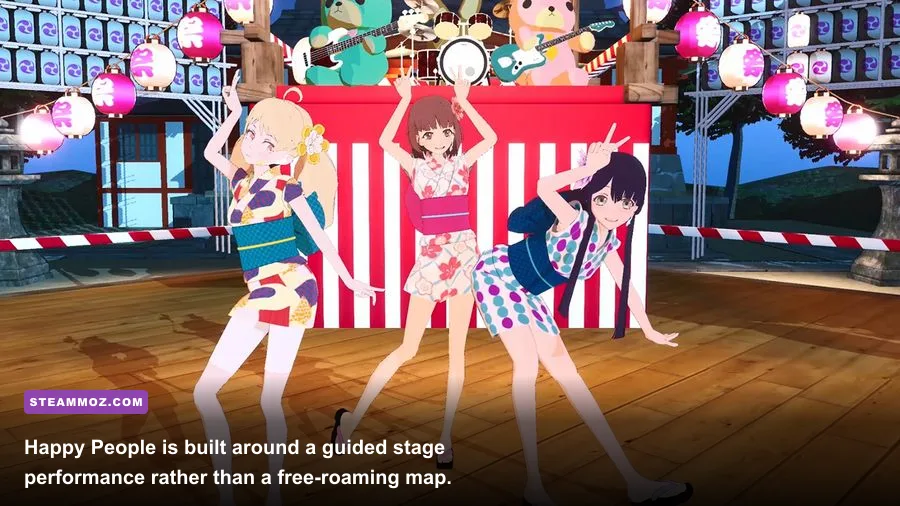
While there are no secret-location rewards, there are still a few pieces of content worth checking carefully. Think of them as presentation bonuses rather than progression rewards.
1. Alternate viewing and replay content
The most important “hidden” feature is replay value. After your first viewing, return to the title’s playback interface and inspect every available scene, camera, or viewpoint option. VR performance software often exposes these controls through icons rather than a large unlock notification. If an option is present in the menu, it is available content—not something you need to uncover on the stage.
Start with the default performance, then replay it without touching the camera. This gives you a baseline for identifying what actually changes when you select a different viewing position. A camera change is not a new location, but it can reveal character animation, choreography, and background details that are easy to miss from the initial angle.
2. Cast-focused viewing moments
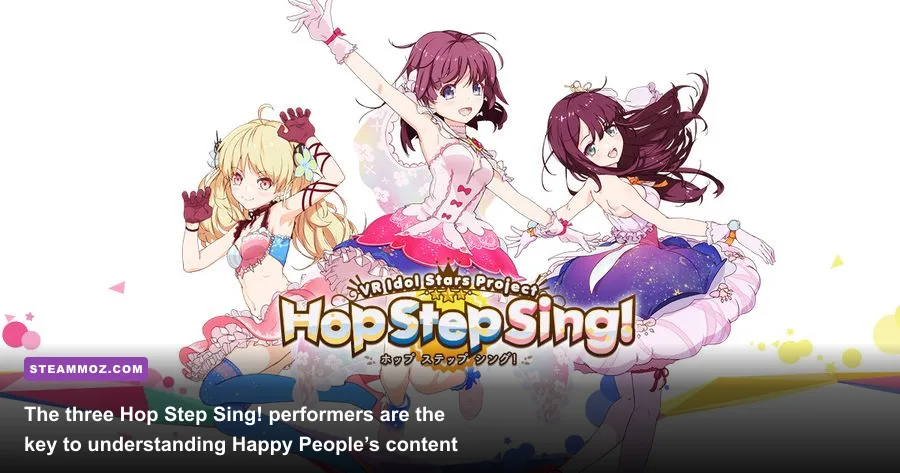
Happy People is connected to the Hop Step Sing! virtual idol project, whose central performers include Niina Nijikawa, Shikimi Shirafuji, and Mikazuki Tsukishiro. Replaying the show while focusing on each performer is the closest thing to a character-secret route. You may notice different gestures, facial animation, and choreography depending on where you look.
These moments are not separate rewards with inventory entries. There is no evidence that watching one idol for a specific number of seconds unlocks a costume or stage. Treat them as easy-to-miss performance details. If a guide promises an exact “Niina reward” for staring at a prop or waiting through a particular timer, be skeptical unless that route is documented by the developer or visible in the game’s own menus.
3. Credits and official project material
Credits, promotional art, and linked project material can feel like hidden bonuses because they may appear outside the main performance flow. Check the title screen, pause menu, and any information or extras section after launching the game. Do not assume that a locked-looking panel is a secret stage; some entries simply point to the broader Hop Step Sing! project.
The safest references are the official Steam search listing and the Hop Step Sing! project website. If a reward is not listed in the installed build, Steam description, or official project information, there is no reliable reason to call it a confirmed secret.
| Bonus type | How to access it | Reward category | Secret-location status |
|---|---|---|---|
| Performance replay | Return to the main playback menu | Replayable viewing content | Not a location |
| Alternate viewpoint | Select a different camera or viewing option if listed | Perspective change | Not a location |
| Idol-focused moments | Replay while watching each performer | Animation and choreography details | Not a collectible |
| Credits and project information | Check title, pause, and extras menus | Reference material | Menu content |
| Hidden costume or item | No verified unlock route | Unconfirmed | Do not treat rumors as facts |
How to perform a complete secret-content sweep

If you want to be certain you haven’t missed anything, use this five-pass method. It takes less time than blindly searching the stage and works even if the interface changes slightly between builds.
Pass one: record the default state
Launch Happy People and note every visible menu entry before starting the performance. Take a screenshot if necessary. Pay attention to buttons labelled Play, Replay, Camera, View, Options, Extras, or Credits. This gives you a clean record of what the build actually contains.
Pass two: watch without interacting
Let the complete performance play from beginning to end. Don’t skip ahead on this first run. Watch for scene transitions, performer entrances, lighting changes, and any menu prompt that appears after the final sequence. A new section that plays automatically is part of the normal show, not a hidden location.
Pass three: test every legal viewpoint
Replay the performance and cycle through each camera or viewing control the interface provides. In VR, move your head naturally rather than forcing extreme angles for long periods. If the game supports seated and standing play, test both positions, but remember that comfort settings alter presentation—not rewards or progression.
Pass four: inspect the menus again
Return to the title and pause screens after finishing a replay. Compare them with your initial screenshots. If a new option appears, record its exact label and test it. If nothing changes, that is useful confirmation: the build has no achievement-style secret route tied to completing the performance.
Pass five: verify the version
Check the Steam properties window, installed DLC list, and update history. User-created videos sometimes mix footage from different Hop Step Sing! releases or promotional experiences. A menu shown in an old trailer may not be part of Happy People’s current PC build. Version checking prevents you from chasing content that belongs to another title.
What not to waste time searching for

Several recurring rumors deserve a clear answer. There is no verified backstage chapter, no secret rooftop performance, and no documented reward for looking behind the stage. There is also no confirmed combination of headset movement, keyboard input, or repeated song playback that unlocks a hidden idol costume.
That doesn’t mean the stage lacks detail. VR games often use peripheral animation to make a scene feel alive. Background lighting, set dressing, and performer movement can reward careful observation, but they remain part of the show’s atmosphere. Calling every interesting background object a collectible creates a misleading guide and sends players searching for systems the game never designed.
The same warning applies to achievements. If Steam displays an achievement for viewing or completing content, that achievement is the reward. It does not automatically imply a secret area or an item unlock. Read the achievement description exactly, then test the simplest route first. Don’t invent a multi-step exploration puzzle around a straightforward viewing milestone.
Steamoz’s Neinzul Abyss secret-rewards guide is a good example of the opposite structure: that game has clearly defined reward logic and route-based objectives. Happy People should be approached as an interactive performance, not as a hidden-object adventure.
Best way to replay Happy People
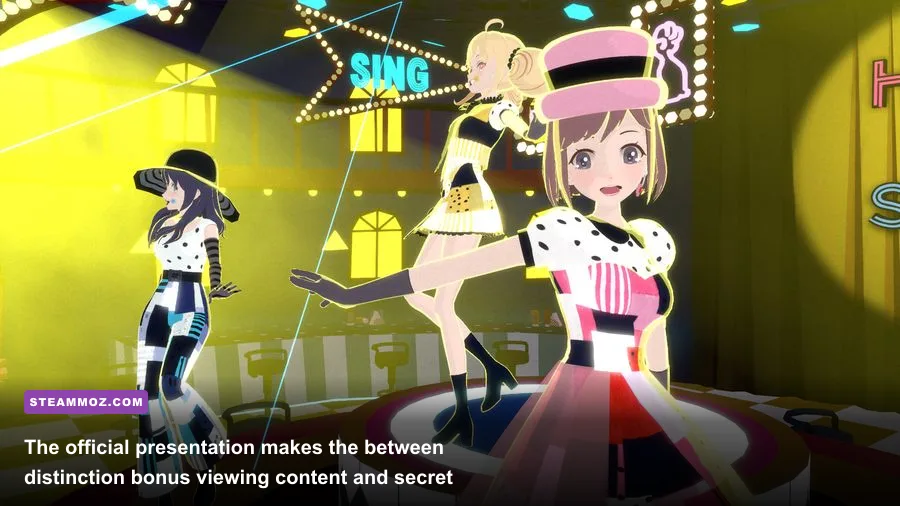
For the best experience, play the first run seated, keep the default viewpoint, and avoid searching for secrets while the performance is happening. Once you know the timing, replay standing if your room allows it, then focus on one performer at a time. Niina, Shikimi, and Mikazuki each occupy different parts of the visual composition, so a second viewing can reveal choreography that disappears when you watch the group as a whole.
Use a stable frame rate and comfortable headset position before experimenting with camera movement. Motion discomfort can make a normal viewpoint transition feel like a hidden scene trigger, and that leads to bad conclusions. If a viewing option causes discomfort, skip it; there is no confirmed reward worth pushing through VR sickness.
For broader technical reading, Steamoz also covers PC performance settings and hardware troubleshooting. Those guides concern much heavier games, but the basic lesson applies here: fix tracking, resolution, and frame pacing before diagnosing a nonexistent secret.
| Replay goal | Recommended approach | What you gain |
|---|---|---|
| Understand the full show | Default viewpoint, uninterrupted playback | Complete scene order and transitions |
| Study choreography | Replay while tracking one idol | Missed gestures and animation details |
| Inspect the environment | Look around during pauses and calm sections | Stage atmosphere and background detail |
| Check for real unlocks | Compare menus before and after replay | Confirmation of available bonus content |
Bottom line: Hop Step Sing! Happy People has no confirmed secret locations and no conventional hidden-reward route. The real extras are replayable performance content, alternate viewing possibilities, cast-focused moments, and any menu or achievement material included in your installed build. Verify those options directly, enjoy the stage for what it is, and ignore guides promising treasure behind scenery that the game never lets you reach.
For official updates and project information, consult the official Hop Step Sing! video channel alongside the Steam listing. Those sources are far more reliable than unverified claims about secret rooms, hidden costumes, or idol-specific unlock codes.