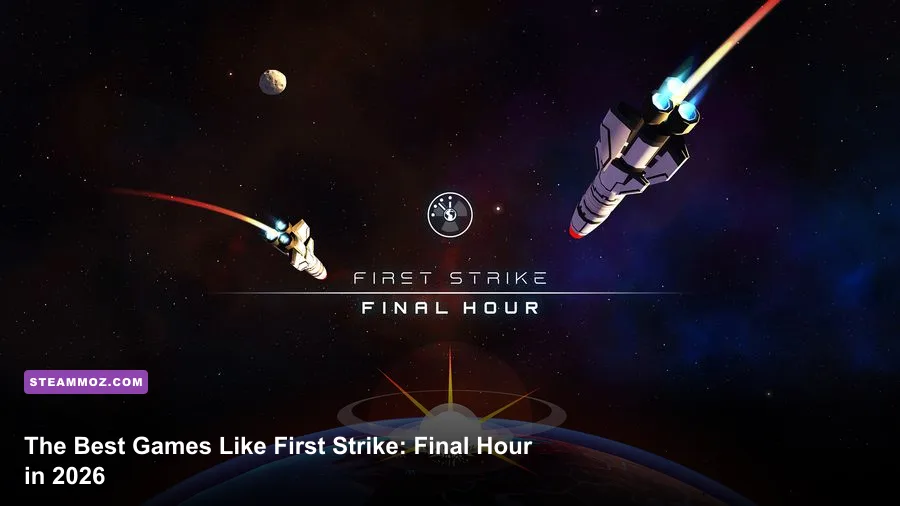
If First Strike: Final Hour hooked you with its minimalist globe, instant strategic decisions, and terrifying nuclear escalation, start with DEFCON. It is the closest emotional and mechanical match, while Radio Commander, IXION, AI War 2, and Beyond All Reason each preserve a different part of the experience: uncertainty, crisis management, asymmetrical strategy, or real-time warfare.
First Strike: Final Hour works because it strips nuclear conflict down to a handful of readable decisions. You expand across a stylized map, protect launch sites, watch warning indicators, and decide whether an incoming threat deserves a response. There is no sprawling tech tree to hide behind. A single misread radar contact can turn a quiet match into a global exchange in seconds.
That makes choosing a substitute surprisingly difficult. Many strategy games include missiles, factions, or apocalyptic stakes, but far fewer create the same combination of short sessions, clear information, and irreversible consequences. The recommendations below are ranked by how well they capture that specific tension, not simply by whether they feature explosions.
S-Tier alternatives that understand the tension
1. DEFCON
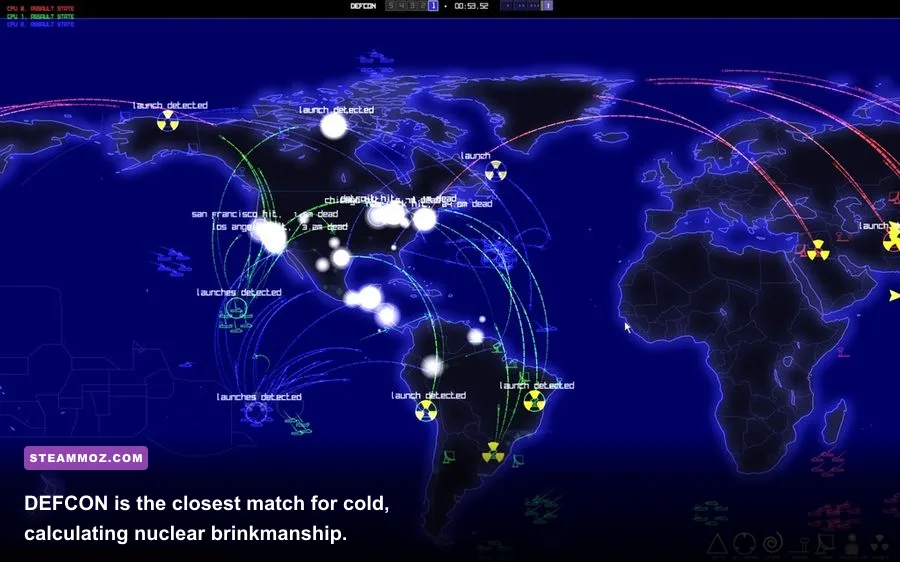
DEFCON remains the obvious S-Tier choice, and not just because its subject matter overlaps. Introversion Software’s game turns the entire world into a clean vector map divided into six regions: North America, South America, Europe, Africa, Russia, and Asia. You place silos, radar stations, airbases, fleets, and cities before the DEFCON countdown reaches the next stage.
The critical difference is that DEFCON makes every weapon a commitment. Radar stations reveal hostile launches, but they do not magically solve the problem. Anti-ballistic-missile silos have limited ammunition and must be positioned carefully. Airbases provide bombers and fighters, while submarines can sneak close to enemy coastlines and launch from unexpected angles. A player who fires too early may win the first exchange and lose the war.
Its scoring system also changes the fantasy. You are not trying to conquer territory. You are trying to inflict more population loss than you suffer, often while keeping enough weapons in reserve to deter a late attack. That strange arithmetic creates the same dread as Final Hour: victory never feels clean.
DEFCON’s pacing is faster and more multiplayer-focused than First Strike: Final Hour. The standard match can become a frantic calculation once the global timer reaches DEFCON 1, but the UI remains readable even when dozens of missile trails cross the map. Try the official DEFCON Steam page for the current version and multiplayer details.
2. Radio Commander
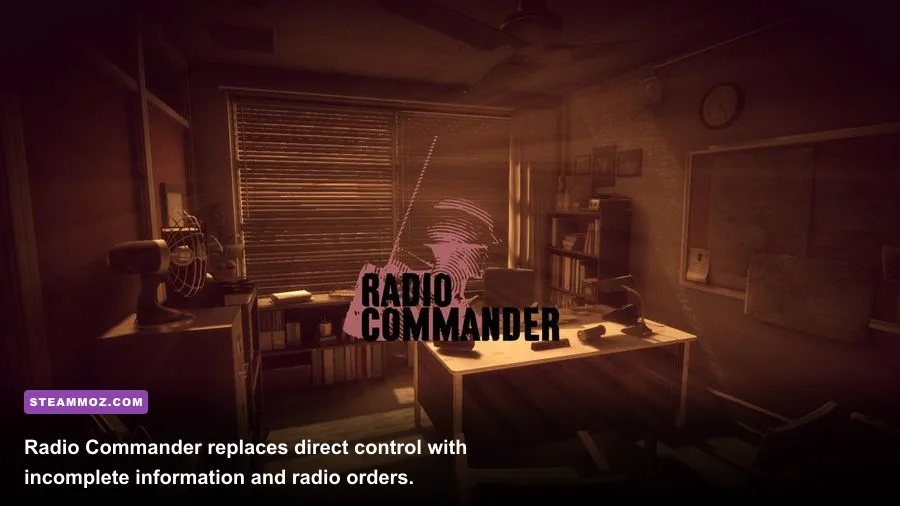
Radio Commander is a more deliberate, awkward, and fascinating recommendation. Set during the Vietnam War, it places you in a command bunker rather than directly on the battlefield. You issue orders over radio, interpret reports from squads, and deal with delayed or incomplete information. There is no comfortable omniscient camera hovering above every unit.
That perspective matches First Strike’s best idea: the player is powerful only within the limits of their information. You may order a squad to move toward a landing zone, but weather, terrain, enemy fire, and reporting delays can make the map outdated before the instruction arrives. The game’s challenge comes from building a mental model of the battlefield, then accepting that your model is probably wrong.
It is not a nuclear-war simulator, and its campaign missions can feel slower than Final Hour’s compact matches. Still, it is the best pick if your favorite moment was not the launch itself but the seconds before it, when you had to interpret warning data and act without certainty.
| Game | Closest First Strike Element | Typical Session | Best For |
|---|---|---|---|
| DEFCON | Nuclear deterrence and global launches | 20–60 minutes | Direct mechanical replacement |
| Radio Commander | Fog of war and delayed information | 30–90 minutes | Players who enjoy command pressure |
| First Strike: Final Hour | Fast globe-based escalation | 10–30 minutes | Short, high-stakes strategy sessions |

🎮 First Strike: Final Hour
Looking to experience this game? Grab your digital key directly on our store for $2.99.
View on Steammoz Store →A-Tier games for bigger strategic pressure
IXION
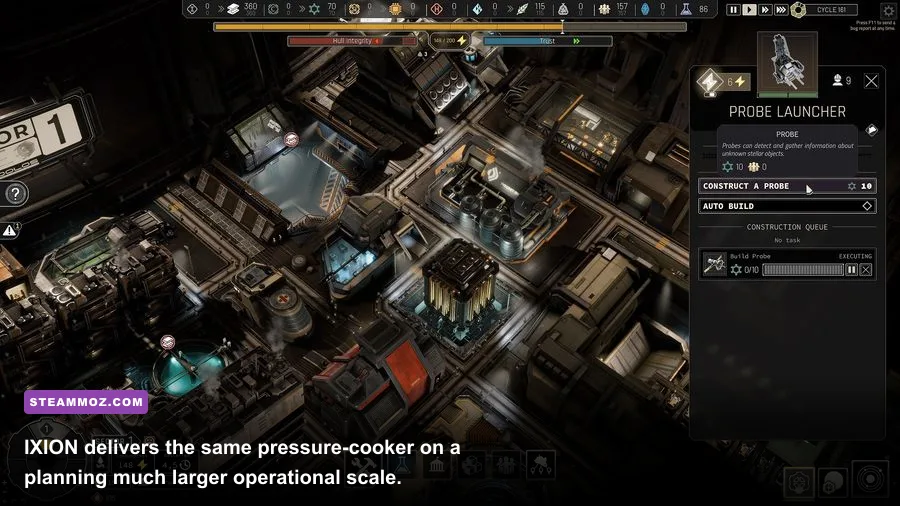
IXION shifts the disaster from a nuclear globe to a failing space station, but the underlying rhythm is remarkably familiar. You operate the Tiqqun, a giant colony vessel divided into six sectors. Every decision competes for the same limited resources: alloys, polymers, electronics, food, power, workers, and housing capacity.
The connection to Final Hour is crisis triage. In IXION, a damaged hull section may demand alloys, a food shortage can trigger starvation, and a power failure can shut down life-support infrastructure. You cannot repair everything immediately. You decide which failure is survivable and which one will cascade into a colony-wide emergency.
Research projects such as Improved Hull Coating, Waste Recycling, and Structural Analysis matter because they change the station’s long-term efficiency, not because they unlock flashy combat units. Early on, prioritize stable food production and a reliable power grid before chasing ambitious expansion. The Exoskeleton technology line is useful, but it will not save a colony that cannot feed its population.
IXION is much longer than First Strike and has a more demanding resource economy. It also includes exploration through the solar system, where probes and expeditions reveal story events, wreckage, and new survival problems. Choose it if you want the same “one bad decision becomes five problems” feeling stretched across a 20-to-30-hour campaign. Steamoz’s IXION equipment breakdown is useful if you want to understand how its more specialized systems compare with traditional strategy-game arsenals.
AI War 2
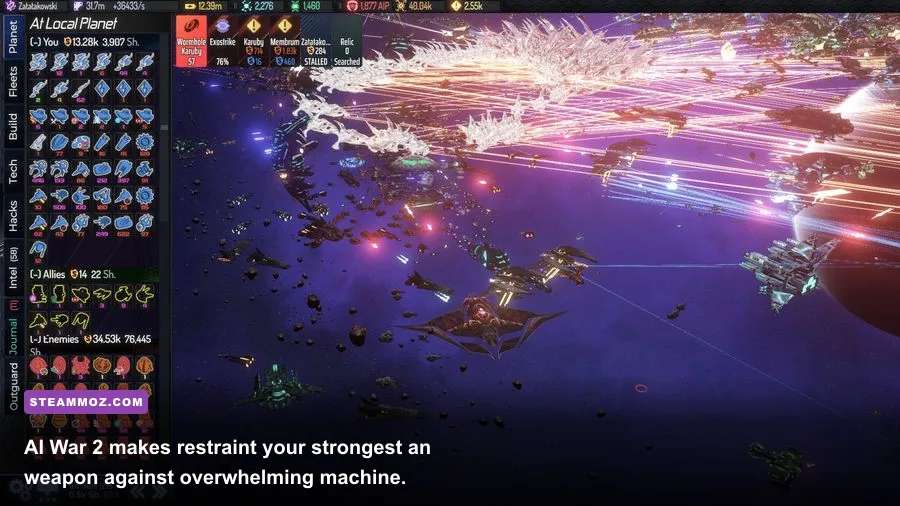
AI War 2 is the most intellectually demanding game on this list. Its galaxy is ruled by an AI that is vastly stronger than you, and the intended solution is not to destroy everything at once. You capture planets, build fleets, raid infrastructure, and manage the AI’s attention while trying not to provoke a response you cannot survive.
That asymmetry gives it a powerful relationship with First Strike’s deterrence model. In both games, restraint matters. Launching every available weapon may feel aggressive, but it can expose your position, waste your reserve, or trigger a counterattack. AI War 2 turns this into a full strategic language: steal resources, choose targets carefully, and avoid making yourself look like the biggest threat in the galaxy.
Its unit roster is enormous compared with Final Hour. Ships such as hackers, guardians, command stations, and assault frigates all fill distinct roles, while planet defenses and AI reactions vary from campaign to campaign. The learning curve is steep, but the game rewards the same mindset that makes a strong First Strike player: observe first, identify the dangerous variable, and only then commit.
For a deeper look at this style of tactical restraint, Steamoz’s AI War 2 Neinzul Abyss guide covers the sort of hidden rewards and faction decisions that can reshape a campaign.
| Game | Scale | Main Failure State | Why It Fits |
|---|---|---|---|
| IXION | One space station and nearby systems | Resource or population collapse | Excellent crisis prioritization |
| AI War 2 | Entire hostile galaxy | Provoking an unbeatable counterattack | Best asymmetrical strategy |
| First Strike: Final Hour | Global nuclear map | Escalation and strategic annihilation | Fastest decision cycle |
B-Tier picks that nail one crucial ingredient
Beyond All Reason
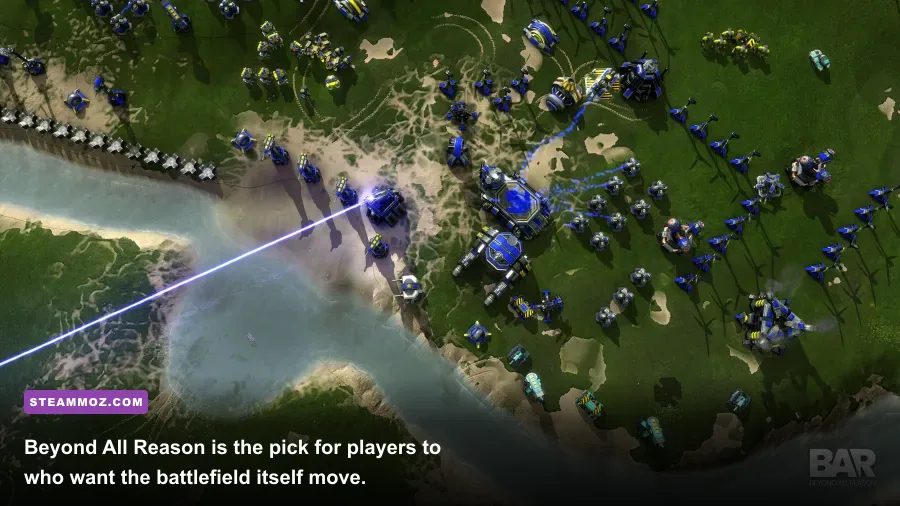
Beyond All Reason is free, open-source, and much more traditional than First Strike: Final Hour. It uses the Spring RTS engine to deliver large-scale real-time battles with factories, radar, artillery, aircraft, naval units, and resource production. The connection is not theme; it is information management under pressure.
Radar does not reveal everything, and artillery can punish an opponent who clusters defenses too tightly. Energy and metal income determine whether you can sustain production, while the economy can collapse if you expand faster than your extractors support. The commander unit is especially important: losing it ends the match, so aggressive pushes always carry a genuine strategic cost.
Start with the Cortex faction if you prefer direct, hard-hitting units, or choose Armada for a broader roster and flexible defenses. Keep radar coverage overlapping your front line, use construction aircraft to accelerate critical defenses, and avoid spending every resource on units before you have a stable economy. It does not replicate Final Hour’s nuclear dread, but it does reproduce the thrill of watching a plan break in real time.
DEFCON’s spiritual cousins
If DEFCON’s presentation grabs you but you want a different structure, several games are worth considering. Plague Inc: Evolved replaces missile timing with disease evolution, and its world map makes travel routes, climate, and government response the key variables. You are not firing weapons, but you are still managing a global system where visibility and delayed consequences matter.
Radio General uses a similar command-over-clarity idea, while Wargame: Red Dragon delivers much more detailed Cold War military operations. Red Dragon includes realistic unit categories, line-of-sight systems, and enormous battles, but it is considerably harder to read. It is a great next step if you want to move from abstract strategy to combined-arms warfare, not a direct replacement for a ten-minute Final Hour match.
World War 3: Black Gold and Terminal Conflict appeal to players who want geopolitics and logistics, although their pacing is slower and their interfaces are less immediately approachable. They reward planning over reflexes, but expect to spend time learning diplomacy, supply, and production systems.
| Game | Learning Curve | Combat Focus | Recommended Starting Approach |
|---|---|---|---|
| Beyond All Reason | Moderate | Large real-time armies | Practice economy and radar on skirmish maps |
| Plague Inc: Evolved | Low to moderate | Global biological escalation | Begin with Bacteria on Normal |
| Wargame: Red Dragon | Very high | Cold War combined arms | Use a tutorial deck before multiplayer |
| Terminal Conflict | High | Geopolitics and long-term conflict | Play a short scenario first |
Which game should you play first?
Choose DEFCON if what you want is the closest possible substitute. Its map is clean, its weapons are understandable, and its central question is identical: do you preserve your arsenal as a deterrent, or spend it before the opponent does?
Choose Radio Commander if the tension came from uncertainty. It is less explosive but more psychologically demanding, especially when reports conflict and your units are spread across difficult terrain.
Choose IXION if you want a campaign with character, construction, research, and a slow accumulation of emergencies. It provides far more room for optimization than Final Hour, but it retains the satisfaction of stabilizing a situation that looked doomed ten minutes earlier.
Choose AI War 2 if you want the deepest strategic challenge. It asks you to think like a saboteur rather than a conqueror, and its best victories come from manipulating the enemy’s attention instead of overpowering it.
Choose Beyond All Reason if direct control and battlefield spectacle matter most. It is the least similar thematically, but its free price, active community, and huge-scale combat make it an easy recommendation for strategy fans in 2026.
| Player Type | Best Pick | Reason | First Mode to Try |
|---|---|---|---|
| Wants the closest nuclear strategy match | DEFCON | Global map, silos, radar, submarines, deterrence | Diplomacy or Office mode |
| Enjoys fog of war | Radio Commander | Orders and reports replace direct unit control | Early campaign mission |
| Likes survival management | IXION | Food, power, hull integrity, and population interact | Normal campaign |
| Wants a brutal sandbox | AI War 2 | Weaker player versus adaptive superpower | Beginner galaxy setup |
| Prefers real-time battles | Beyond All Reason | Factories, artillery, radar, and large armies | AI skirmish |
How to get more from these strategy games
The biggest mistake First Strike players make when jumping into a larger strategy game is treating every system as equally urgent. They are not. Identify the timer that can actually kill you. In DEFCON, it is the launch window and the position of your remaining weapons. In IXION, it may be food production, hull integrity, or power. In AI War 2, it is the enemy’s threat response.
Pause whenever the game allows it, but do not pause only to queue more actions. Use the break to ask three practical questions: what changed, what can wait, and what information am I missing? That habit prevents the classic strategy-game spiral where a small problem becomes an emergency simply because you kept expanding.
For technical performance, these games are generally forgiving, but larger simulations still benefit from sensible settings. Keep the frame rate stable rather than chasing maximum effects. In Beyond All Reason, large unit counts can stress CPU simulation even when the GPU is barely working. In IXION, the station view is usually easy to render, while dense sectors and late-game population calculations can create heavier moments. DEFCON is light enough to run on almost any modern PC, so prioritize a responsive display and readable interface scaling.
| Game | CPU Priority | GPU Priority | Practical Setting Advice |
|---|---|---|---|
| DEFCON | Low | Very low | Use native resolution and maximize UI readability |
| Radio Commander | Low to moderate | Low | Keep effects moderate if the command map feels busy |
| IXION | Moderate | Moderate | Reduce shadows first on crowded station sectors |
| AI War 2 | High in huge battles | Low to moderate | Lower effects before sacrificing map visibility |
| Beyond All Reason | Very high in army-scale fights | Moderate to high | Lower shadows and effects; preserve unit readability |
Finally, do not judge these games by the first hour alone. Final Hour is immediately legible because its rules are compact. AI War 2 and IXION take longer to reveal their strongest patterns, while Radio Commander intentionally makes you feel under-informed. Give each game enough time to show the decision-making layer beneath its interface.
First Strike: Final Hour is still unusually good at turning a simple map into a nerve test. The best games like it do not merely copy the nuclear theme. They understand the real appeal: limited information, irreversible choices, and the awful knowledge that a quiet screen can become a catastrophe with one click. For the purest version of that formula, play DEFCON first. Then move to Radio Commander, IXION, AI War 2, or Beyond All Reason depending on which part of the pressure you want to keep.
Before buying, check the official First Strike Steam listing, the official DEFCON site, and the official IXION Steam page. If you are also exploring more demanding strategy sandboxes, Steamoz’s Bounty Train alternatives and Legend of Keepers starting-build guide are solid next stops.