If you want every secret location and hidden reward in Dungeons, stop following the objective arrow like it is a treasure map. The most valuable discoveries sit behind unmined side corridors, outside the hero path, or inside rooms you can only reach after unlocking the right dungeon tool. Sweep every dead end, break suspicious walls, rescue captured minions, and delay the final objective until the map is empty. That approach finds bonus gold, hidden chests, experience, prisoners, and the evilness needed to unlock the campaign’s strongest upgrades.
This guide focuses on the original 2011 PC game, developed by Realmforge Studios and published by Kalypso Media, rather than Dungeons 2 or Dungeons 3. Map layouts can shift slightly between campaign, skirmish, and difficulty settings, but the discovery rules remain consistent. Before starting, check the official Steam listing for the correct edition and patches.
How Secret Areas Work in Dungeons
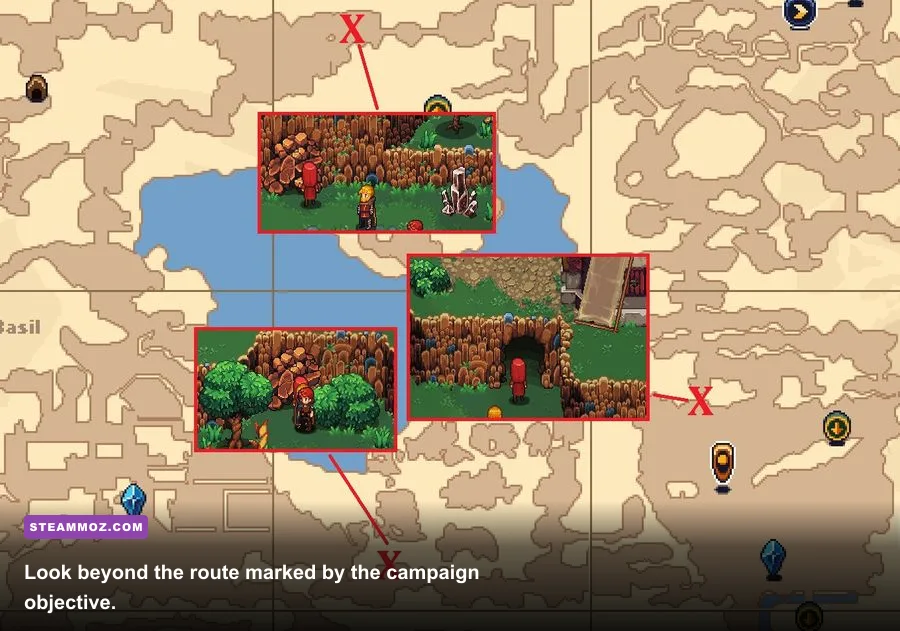
Secrets in Dungeons are less like scripted riddles and more like rewards for reading the map. The fog of war hides mineable walls, isolated platforms, treasure containers, and small rooms that do not matter to the primary objective. The game rarely announces that you have entered a secret area, so the minimap is your most reliable detective tool.
Watch for three clues. First, a corridor that ends one or two tiles before a large unexplored pocket is usually worth mining toward. Second, a neutral object or chest visible at the edge of the revealed area often indicates a side route. Third, hero patrols tend to use the obvious route between their entrance and objective. If a chamber is completely untouched by that traffic, it is a strong candidate for a hidden reward.
Use your Dungeon Lord to scout, but do not send him deep into darkness without a retreat route. Early heroes can overwhelm him when several arrive together, and the Dungeon Heart is often too far away to provide meaningful support. Reveal the area first, mine from a safe tile, and place a defensive room near any route that connects back to your core.
| Clue | What It Usually Indicates | Best Response | Risk |
|---|---|---|---|
| Unexplored pocket beside a corridor | Hidden chamber or chest | Mine the shortest safe connection | Medium |
| Chest visible behind fog | Bonus gold or treasure reward | Clear nearby monsters first | Low to medium |
| Isolated hero camp | Prisoner, experience, or optional encounter | Build a fallback room before attacking | High |
| Dead end beside rock veins | Secondary route or resource pocket | Use the Imp workforce efficiently | Low |

🎮 DUNGEONS
Looking to experience this game? Grab your digital key directly on our store for $0.99.
View on Steammoz Store →Campaign Secret Locations to Check First
The campaign teaches the basics through fairly direct layouts, but its maps still reward a full perimeter sweep. In the opening missions, mine around the outer edge of the playable area before committing to the hero entrance. The first easy-to-miss rewards are generally positioned away from the shortest path: isolated gold deposits, side chambers containing chests, and neutral creatures that can become useful targets for your dungeon’s attraction and control systems.
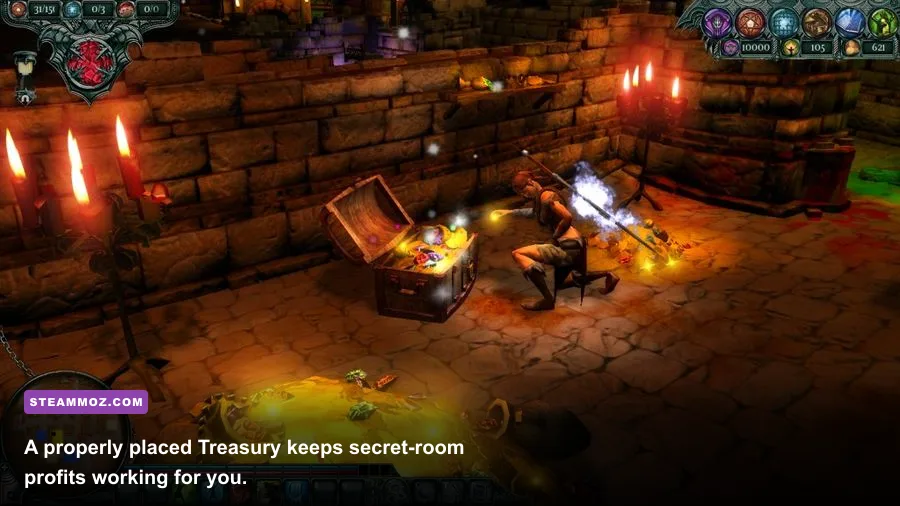
In the mid-campaign maps, prioritize side branches near hero entrances. These locations are dangerous because new waves can appear while your Imps are still mining. Build a small Treasury near the front only after securing the area, then place a Training Room or Arena behind it. That way, captured or recruited units have somewhere to improve without forcing your entire workforce to cross the map.
Late missions hide rewards behind longer detours rather than obvious single-tile walls. Do not assume the central route is the intended route. Split your dungeon into two lanes: one defensive lane aimed at the Dungeon Heart and one exploration lane used for mining, prisoners, and chests. Seal the exploration lane with doors when a hero wave arrives. A locked side route buys enough time for your creatures to regroup.
Some rewards only become worthwhile when you understand their purpose. Gold from a secret chest is not just spending money: it keeps room construction moving while your Treasury is still small. Captured heroes are not merely obstacles; the Torture Chamber converts them into evilness, which accelerates access to stronger rooms and powers. Optional monsters can also provide experience for your Dungeon Lord before the main boss encounter.
For a useful comparison, the same side-route logic appears in other exploration-heavy guides, including Steamoz’s Cossacks 3 hidden-reward guide and the Filament secret-location walkthrough. The difference here is that every detour must be balanced against hero pressure and room economy.
Hidden Rewards and Their Real Value
Not every chest deserves an immediate detour. The best rewards are the ones that improve your economy or accelerate your next power spike. Gold is strongest early, when one additional Treasury upgrade or room extension can change the pace of the entire map. Experience becomes more valuable before elite hero waves, because a higher-level Dungeon Lord can interrupt healers, isolate ranged attackers, and survive long enough for creatures to arrive.
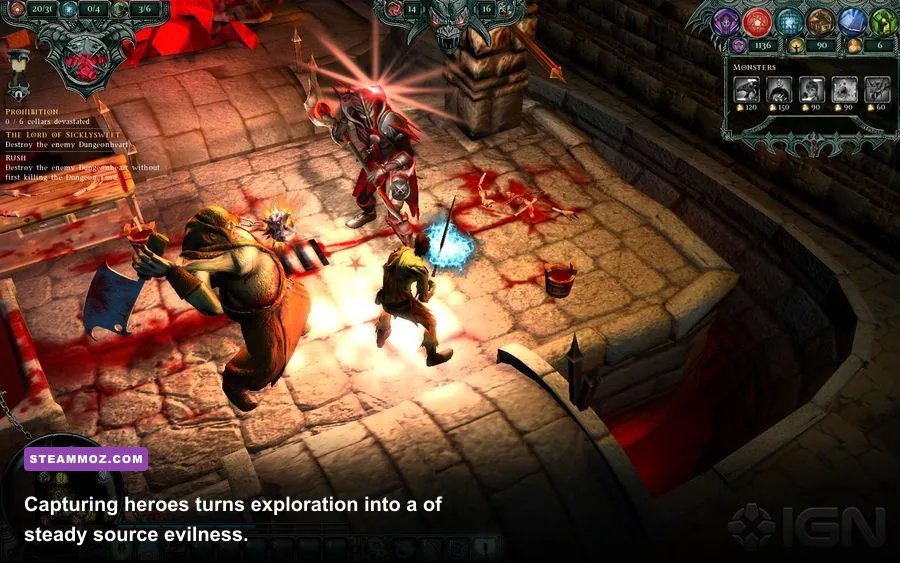
Prisoners are a particularly overlooked reward. Dragging a hero to the Torture Chamber takes time, and that time can be fatal if another wave is approaching. Capture them only after the nearby route is secure. Once inside, the prisoner generates evilness over time, making the chamber a strategic investment rather than a decorative room. Never leave the chamber exposed beside the main entrance; a rescued prisoner represents lost progress and a wasted combat opportunity.
| Hidden Reward | Best Timing | Why It Matters | Common Mistake |
|---|---|---|---|
| Gold chest | Opening and mid campaign | Funds rooms, doors, and emergency defenses | Mining into a wave without a retreat path |
| Experience encounter | Before elite hero waves | Improves Dungeon Lord survivability and abilities | Fighting while underleveled and unsupported |
| Captured hero | After securing the route | Feeds the Torture Chamber’s evilness output | Carrying the prisoner through active patrols |
| Optional monster group | After basic rooms are online | Provides combat practice and possible recruits | Pulling several groups into the Dungeon Heart |
The Best Room Setup for Secret Runs
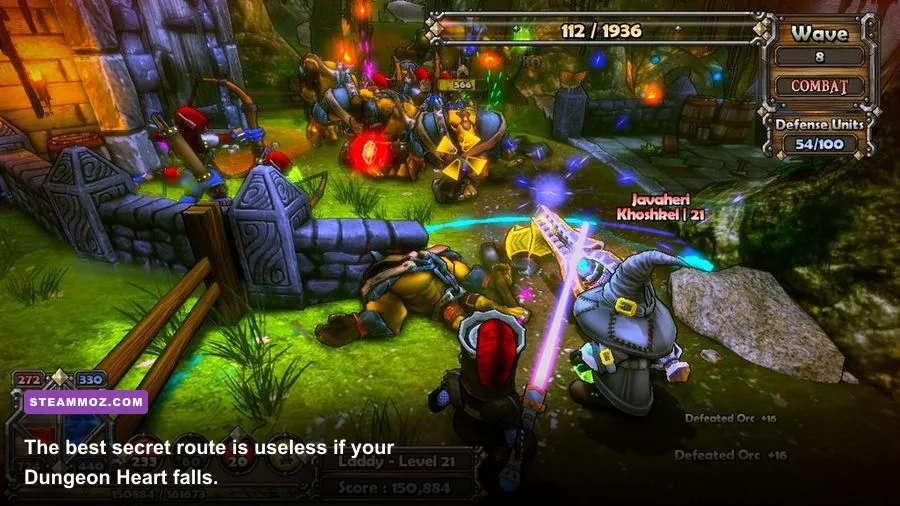
Exploration works best with a compact forward base. Place a Treasury close enough to the mining front that gold does not require a long walk, but keep it behind a door or narrow approach. Add a Training Room for creature development and an Arena once the map starts sending tougher heroes. The point is not to build every room immediately; it is to create a safe place where your army can recover while Imps continue clearing side passages.
Your Torture Chamber should sit near the creature core, not at the edge of the map. A captured hero has to travel there, and an exposed chamber can be disrupted by an invasion. Libraries are also worth placing centrally because their research output supports the whole dungeon. If a secret gives you a room resource or an evilness boost, spend it on infrastructure before chasing another optional fight.
Doors are essential for secret hunting. Put one at the junction between your main route and each unexplored branch. When the warning for an incoming hero wave appears, stop mining, close the branch, and pull the Dungeon Lord back. This simple habit prevents the classic failure where an enemy follows your Imps through an unfinished tunnel straight to the Dungeon Heart.
For additional performance advice when playing the game on modern hardware, Steamoz’s Dungeon Tycoon settings guide covers the same kind of crowded, simulation-heavy scenes. It is also worth reading the Dungeons review for a broader look at how the room-management loop holds up.
Step-by-Step Secret Sweep Before the Final Objective
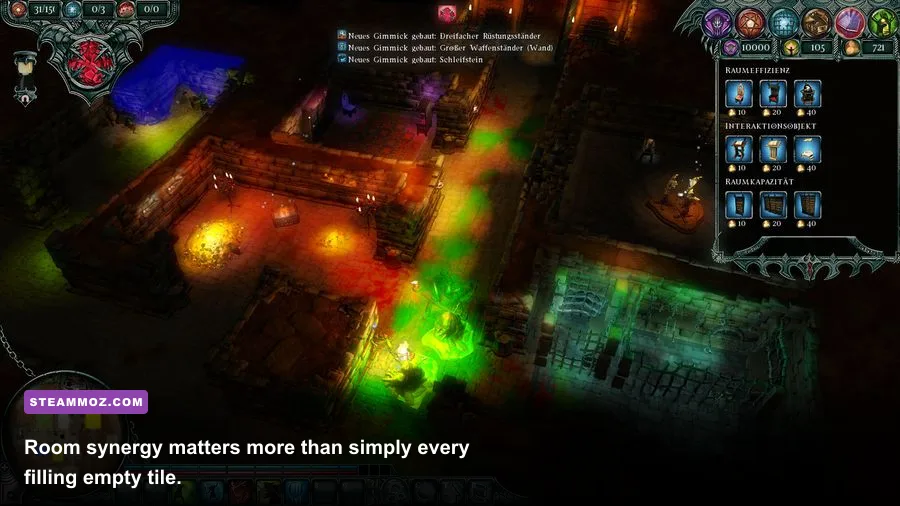
1. Reveal the perimeter
Before triggering the final objective, send Imps along every safe outer wall. Mine in short sections rather than opening a huge chamber. Short sections reduce pathfinding congestion and make it easier to seal an unexpected monster group.
2. Mark every unexplored pocket
Use the minimap and pause frequently. Any dark section beside a completed hallway should be treated as a possible secret. If the rock wall is only a few tiles thick, clear it before expanding your central rooms.
3. Secure the reward route
Build a door or defensive choke point before opening a prisoner cell or optional monster room. Place creatures behind the choke point, then let the Dungeon Lord trigger the encounter and retreat. Do not chase fleeing heroes into unrevealed territory.
4. Convert rewards immediately
Deposit gold, process prisoners in the Torture Chamber, and spend experience-based progression before the next wave. A reward sitting in an unsafe corridor is not helping your dungeon. If a chest is near an enemy camp, clear the camp first and collect the chest second.
5. Trigger the finale last
Only activate the final objective after the minimap shows no meaningful dark pockets and your main rooms are connected. The final sequence often removes your freedom to explore safely. Leaving secrets behind at this point usually means replaying the entire mission.
Combat Mistakes That Cost Hidden Rewards
The biggest mistake is treating the Dungeon Lord as a tank. He is your best scout and interrupter, but concentrated hero damage will punish reckless pulls. Use him to draw melee enemies through a doorway, then let creatures surround them. Against ranged heroes, attack from cover or force them into a narrow room where melee units can reach them quickly.
Do not spend all your evilness the moment a new upgrade appears. Keep enough flexibility to respond to the next wave and prioritize upgrades that strengthen the units already occupying your dungeon. A secret reward is valuable because it changes your timing; wasting it on a room you cannot defend creates more map than your economy can support.
| Threat | Telegraph | Counter | Best Tool |
|---|---|---|---|
| Hero wave | Warning message and entrance movement | Stop mining and close side branches | Door and choke point |
| Ranged hero group | Units hold distance behind melee allies | Pull around a corner and collapse from two sides | Dungeon Lord repositioning |
| Optional monster pack | Large unexplored chamber or isolated camp | Fight near your rooms, not in open darkness | Training Room and creature stack |
| Prisoner rescue attempt | Heroes divert toward the Torture Chamber | Close the route and intercept at the doorway | Door-controlled corridor |
The cleanest completion route is simple: explore in controlled slices, lock every branch, collect the reward, then return to your core before the next wave. Dungeons does not hide its best secrets behind cryptic puzzles; it hides them behind impatience. Treat the minimap as a checklist, protect your Imps, and postpone the finale. You will leave each campaign map with more gold, more evilness, better-trained creatures, and far fewer reasons to reload an old save.
For official background on the series and its developer, visit the Kalypso Media website and the Realmforge Studios site. The Dungeons Steam Community hub is also useful when comparing edition-specific fixes, display issues, and player-discovered map quirks.