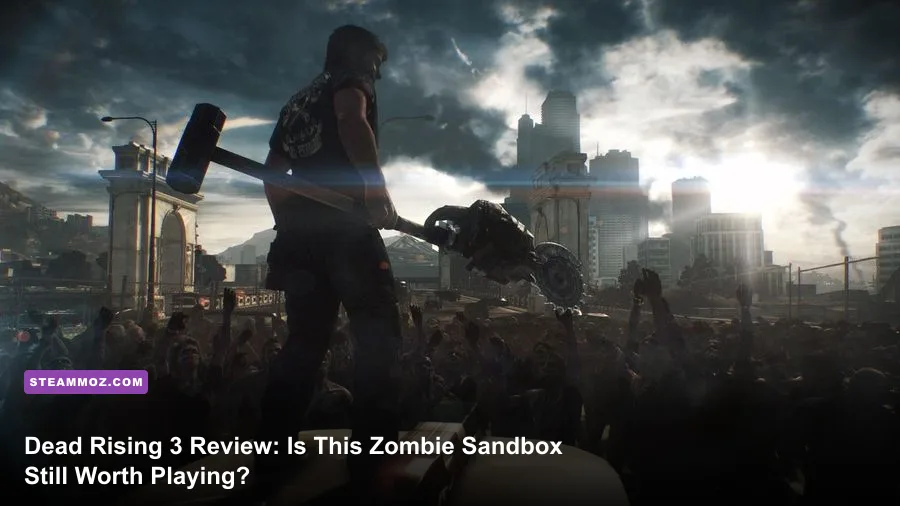
Yes, Dead Rising 3 Apocalypse Edition is still worth playing in 2026—but only if you want a chaotic open-world zombie sandbox, not a polished modern action game. Its enormous crowds, ridiculous combo weapons, four-player co-op, and generous DLC bundle remain genuinely entertaining. The rough PC performance, repetitive mission structure, dated driving, and occasionally clumsy boss design are harder to ignore now, so this is a strong buy on sale rather than an automatic recommendation at full price.
Released in 2014 for PC after its Xbox One debut, Dead Rising 3 puts you in the boots of Nick Ramos, a young mechanic trying to escape the quarantined city of Los Perdidos before a military strike. The story is pulpy, loud, and frequently silly, but the real star is the sandbox: nearly anything can become a weapon, vehicle, costume, or improvised solution to a zombie problem.

🎮 Get Dead Rising 3 Apocalypse Edition
Ready to dive in? Grab your copy today for just $5.99.
Check OfferWhat Dead Rising 3 still does better than newer zombie games
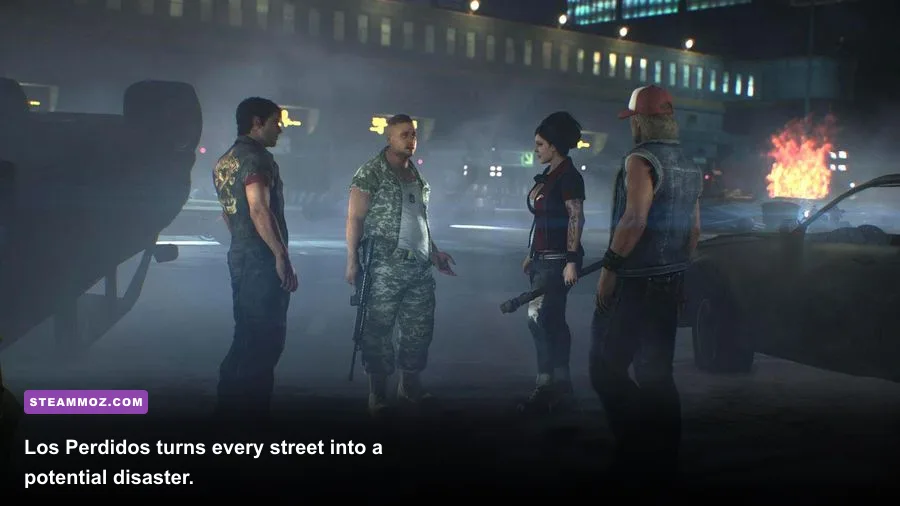
The biggest reason to revisit Dead Rising 3 is scale. Los Perdidos is divided into four broad districts, and the streets can hold huge zombie crowds that make even a short trip feel like a tactical decision. You can sprint through them, clear a path with a vehicle, climb onto a roof, or stop to build something absurd from nearby parts. Few zombie games capture that particular rhythm of panic, experimentation, and sudden overconfidence.
Nick’s mechanic background gives the game its signature toy-box identity. Workbenches let you combine weapons and vehicles, while blueprints scattered around the city unlock more elaborate creations. The Electric Staff, for example, combines a Sledge Hammer with a Battery and is one of the best crowd-control tools in the campaign. The Spiked Bat is cheap, reliable, and available early. Later, weapons such as the Ultimate Grim Reaper and Dragon Punch turn large groups into spectacular demolition projects.
The vehicle system is equally important. A regular car is useful, but combo vehicles such as the RollerHawg and Mobile Fry-Your-Burger offer much stronger crowd-clearing potential. The RollerHawg can chew through hordes while preserving your stamina, making it ideal for long-distance travel between missions. The downside is durability: vehicles are powerful but temporary, and you’ll constantly be looking for another ride once the current one starts smoking.
This freedom is why the game still feels distinct beside more serious survival-horror releases. Dead Rising 3 isn’t trying to make every encounter frightening. It wants you to laugh when a flaming sword, traffic cone, and motorcycle somehow solve a military checkpoint. That tone has aged better than its technical presentation.
The progression system rewards experimentation
Nick earns PP from kills, rescued survivors, missions, Psychopaths, and collectible discoveries. Leveling increases health, inventory space, attack power, speed, and other abilities through the skill menu. The skill tree is split across categories including Survival, Combat, Agility, and Smarts, so early choices shape how comfortable the campaign feels.
For a first playthrough, prioritize inventory expansion and health before chasing flashy combat upgrades. More weapon slots mean you can carry a melee weapon, firearm, healing item, blueprint ingredient, and emergency crowd-control option without constantly dropping something. If you enjoy aggressive melee combat, invest in the Combat branch and unlock stronger moves around Nick’s core melee abilities. If you prefer mobility, Agility makes escaping hordes and repositioning around Psychopaths much less frustrating.
| Build focus | Best early priorities | Recommended weapons | Best situation |
|---|---|---|---|
| Survivor | Health, inventory, food efficiency | Spiked Bat, Electric Staff | First playthrough and long explorations |
| Brawler | Combat damage, stamina, melee moves | Flaming Sword, Ultimate Grim Reaper | Psychopath fights and dense hordes |
| Engineer | Blueprint access, weapon durability, crafting flexibility | Combo weapons and vehicles | Players who constantly experiment |
| Runner | Agility, movement, stamina | Chainsaw, firearms, RollerHawg | Timed missions and fast district travel |
If you like games where discovering the best tool is part of the fun, Steamoz’s weapon tier list coverage is a useful companion read, even though Dustborn uses a very different combat system.
🎮 Dead Rising 3 Apocalypse Edition
Looking to experience this game? Grab your digital key directly on our store for $5.99.
View on Steammoz Store →Combat is hilarious, powerful, and occasionally awkward
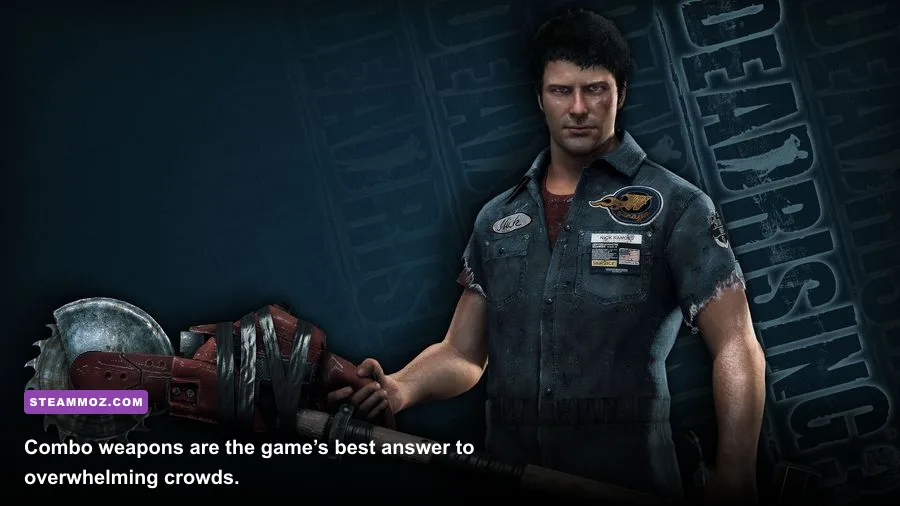
At its best, combat is about controlling space rather than carefully dueling every zombie. The game’s basic attacks have clear momentum, but Nick can still be interrupted when surrounded. That makes wide-swinging weapons more valuable than their raw damage numbers suggest. An Electric Staff or heavy two-handed weapon creates breathing room, while lighter tools such as the Spiked Bat let you keep moving and conserve durability.
Guns are useful, but ammunition is limited and firearms often feel less satisfying than melee combinations. The Tactical Handgun works well against isolated targets, while explosives can clear clustered zombies or damage Psychopaths from a safer distance. Don’t treat the firearm inventory as your primary build unless you’re comfortable scavenging constantly. The campaign generally gives you better results when guns support melee rather than replace it.
Psychopaths are the major exception to the crowd-clearing rhythm. These named bosses have oversized health bars, strong damage output, and attacks that punish button mashing. Their telegraphs are usually readable, but the camera and collision can work against you. Keep healing food ready, learn the arena, and avoid fighting with a nearly broken weapon. A weapon that destroys zombies may still be a poor choice against a mobile human boss.
How to handle the campaign’s toughest encounters
Approach Psychopath battles with a simple rotation: damage, reposition, heal, then re-enter. The game rewards patience more than it first appears to. Use vehicles or environmental hazards to reduce a boss’s health before committing to melee, and save a high-damage combo weapon for the final portion of the fight. If a boss enters an obvious charge or leap animation, dodge sideways rather than backward; retreating often leaves Nick trapped against scenery.
Timed missions create a different kind of pressure. The story’s case structure pushes you between districts, and side activities can consume hours if you explore without watching the clock. You don’t need to complete every rescue or collectible run on a first save. Pick up nearby survivors when they’re close to your route, but don’t cross the whole map for every optional objective unless you’re deliberately chasing completion.
Co-op changes the combat equation dramatically. Two players can split objectives, revive one another, and keep a horde occupied from opposite sides. It also makes experimentation more forgiving because a downed player can be revived. The campaign was built around spectacle, and co-op is arguably the best way to experience that spectacle—provided you can find someone willing to tolerate the game’s older matchmaking quirks.
| Encounter type | Main danger | Counter strategy | Optimal tool |
|---|---|---|---|
| Standard horde | Surrounding and weapon durability | Create a lane, keep moving, avoid corners | Electric Staff or RollerHawg |
| Fast infected | Sudden lunges and interrupted attacks | Use distance, dodge sideways, finish quickly | Firearm plus heavy melee weapon |
| Psychopath | High damage and long health bar | Study telegraphs, punish recovery windows | High-damage combo weapon and healing food |
| Military units | Ranged damage and armor | Use cover, explosives, or vehicles | Grenades, firearms, or armored vehicle |
The story and open world show their age in 2026

The campaign is functional rather than memorable. Nick is likable enough, and the supporting cast creates a steady stream of bizarre situations, but the writing leans heavily on broad character types and crude jokes. The outbreak mystery gives the chapters direction, yet the real narrative is the one you create by rescuing a stranded survivor, losing your favorite vehicle, discovering a new blueprint, and then improvising your way through the next district.
Los Perdidos is large, but it isn’t densely reactive in the way modern open worlds are. Buildings are mostly set dressing or mission spaces, and many side objectives repeat the same basic patterns: rescue survivors, defeat a named enemy, collect an item, or clear an area. After several hours, the structure becomes obvious. This isn’t a world that constantly surprises you; it’s a playground that gives you room to make your own chaos.
The save and mission systems also demand patience. The campaign uses manual save points, and a bad death can cost meaningful progress if you’ve been exploring for too long. Save before attempting a difficult Psychopath, especially when carrying rare weapons or a nearly full survivor group. It’s an old-school friction point that feels more annoying than challenging today.
The Apocalypse Edition does at least make the package substantial. It includes the base game and the four Untold Stories of Los Perdidos episodes: Operation Broken Eagle, Fallen Angel, Chaos Rising, and The Last Agent. These episodes follow different characters and add new weapons, missions, and perspectives on the outbreak. They don’t fix the base game’s repetition, but they’re worthwhile after the main campaign, especially if you enjoy seeing familiar districts from another angle.
Check the official Steam listing for current bundle contents and sale pricing. The DLC is a major reason to choose Apocalypse Edition over the base release.
PC performance is the biggest reason to hesitate
On modern hardware, Dead Rising 3 is much easier to run than it was at launch, but it still shows its age through stutter, inconsistent frame pacing, and heavy CPU usage in crowded areas. The city streets can be more demanding than indoor locations because the game is handling large zombie populations, vehicles, physics objects, and streaming scenery at once.
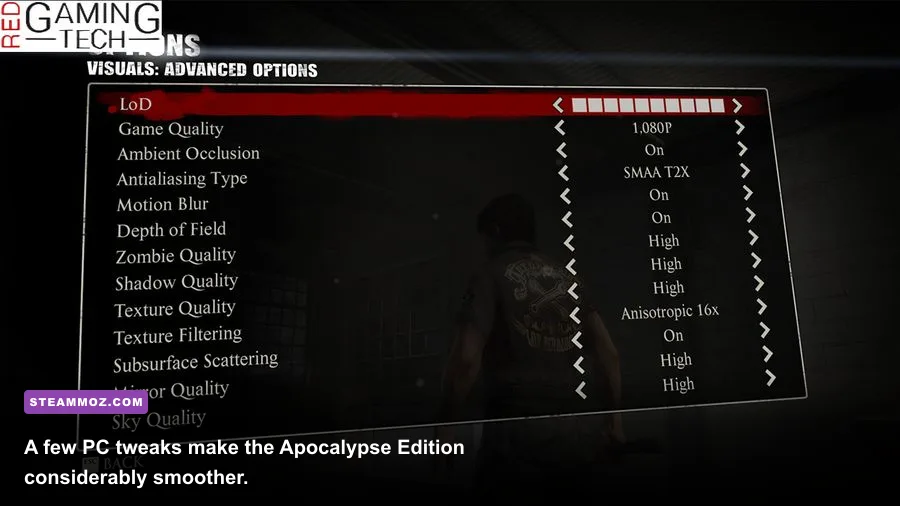
The PC version supports higher frame rates than the original console presentation, but a locked, consistent target is more valuable than chasing an unstable 120 fps. A sensible profile is 60 fps at 1080p with high textures, medium shadows, and reduced effects if your system struggles in dense crowds. On a Steam Deck or similar handheld, lower expectations: a stable 30 fps is the realistic goal, and battery drain can be noticeable during vehicle-heavy sections.
| Setting or target | Recommended value | Performance impact | Visual trade-off |
|---|---|---|---|
| Resolution | 1080p on mainstream PCs | High at 1440p and above | 1080p keeps crowd scenes steadier |
| Texture quality | High if VRAM allows | Moderate memory use | Worth keeping high for streets and interiors |
| Shadows | Medium | High CPU and GPU impact | Small loss during frantic combat |
| Effects | Medium to High | Moderate during explosions | Lower values reduce spectacle but improve consistency |
| Frame-rate target | Locked 60 fps or locked 30 fps | Depends on hardware | Consistency matters more than peak readings |
| Motion blur | Off if available through config or preference | Minimal FPS change | Sharper camera movement |
Before troubleshooting, compare your machine with the Steam system requirements. If you’re dealing with crashes or low FPS, Steamoz’s guides for crashing PC games and low-FPS troubleshooting cover the useful general fixes: update drivers, disable overlays, verify files, and test fullscreen modes.
Use the official Capcom support portal if a technical problem appears to be installation-related. Don’t expect modern patch support, though. Community fixes and sensible settings are often more practical than waiting for a developer update.
Should you play Dead Rising 3 Apocalypse Edition in 2026?
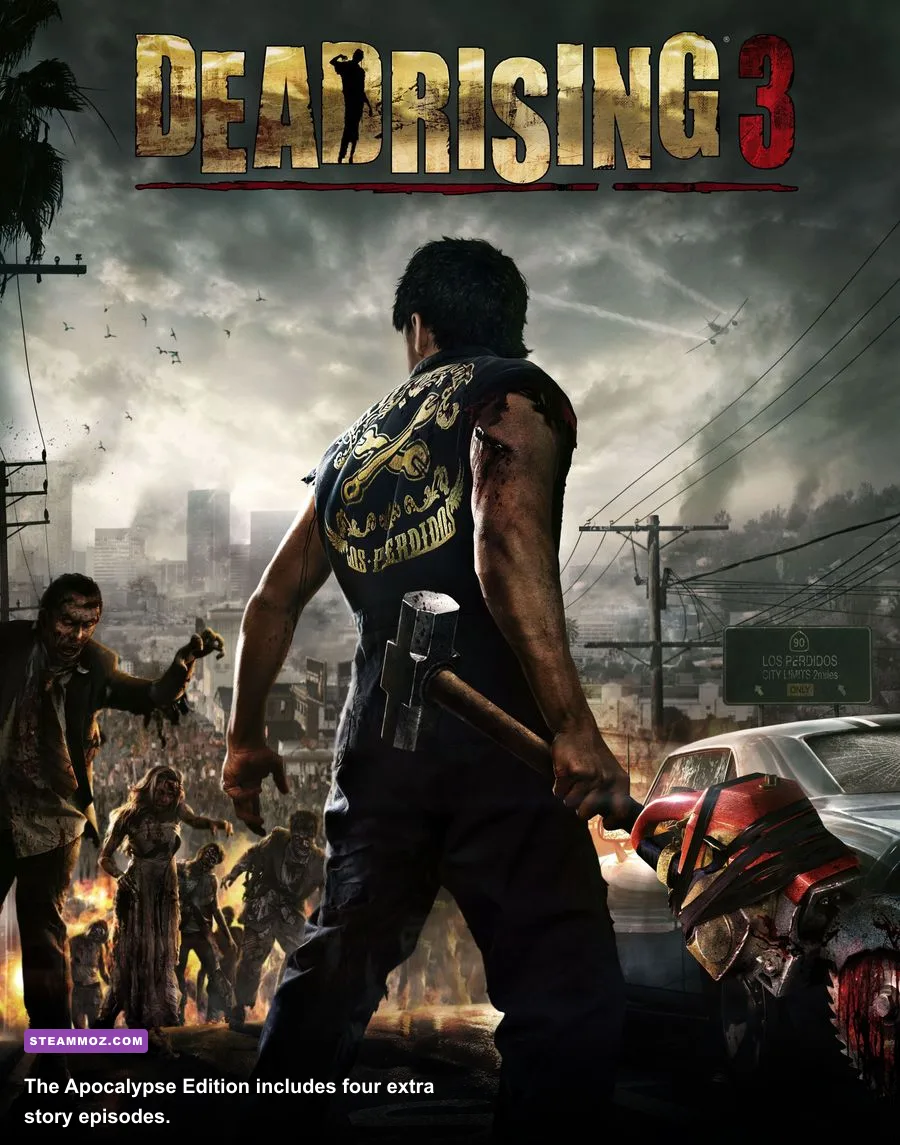
Dead Rising 3 Apocalypse Edition earns a recommendation for players who value systems, spectacle, and ridiculous emergent moments over refined storytelling. The combination of huge zombie populations, vehicle destruction, blueprint crafting, Psychopath battles, and four-player co-op still has a personality that many newer games lack. When the sandbox clicks, you’ll be laughing at your own terrible decisions—and immediately starting another run to try a different weapon route.
It’s a weaker recommendation if you want tight survival horror, modern stealth, deep character writing, or a seamless open world filled with meaningful side content. The mission clock can be stressful, the driving is awkward, and the PC version may require tuning before it feels good. The game’s age is visible in its animations, interface, enemy behavior, and repeated objectives.
| Player type | Verdict | Why |
|---|---|---|
| Zombie sandbox fan | Strong yes | Large hordes, creative weapons, vehicles, and co-op remain excellent |
| Story-first player | Maybe | The plot is serviceable, but the tone and dialogue are uneven |
| Completionist | Yes with patience | DLC, collectibles, survivors, and blueprints provide a long checklist |
| Competitive action player | Probably not | Combat lacks the precision and responsiveness of newer action games |
| Steam Deck owner | Cautious yes | Playable with a realistic 30 fps target and reduced settings |
My advice is simple: buy it during a deep Steam sale, start on a fresh save, and don’t rush to complete every side objective. Learn the blueprint system, carry a dependable healing supply, save before Psychopath encounters, and treat vehicles as expendable tools rather than precious possessions. If you approach it as a messy zombie toy box instead of a polished modern blockbuster, Dead Rising 3 Apocalypse Edition remains one of Capcom’s most entertaining open-world experiments—and absolutely worth playing in 2026.
For more performance-focused recommendations, Steamoz’s higher-FPS settings guides offer the same practical approach to getting older or demanding PC games running smoothly.