
There are no weapons in Cognition Game of the Year Edition, so a traditional firearm or equipment tier list would be misleading. Erica Reed never builds a combat loadout, spends skill points on damage, or clears rooms with guns. The best “equipment” is really a ranking of her psychic abilities, evidence-handling tools, and deduction options: Postcognition is S-Tier, Reconstruction is the best late-game power, and Mind Reading is useful but much more situational. If you want the strongest way to approach Phoenix Online Studios' four-episode adventure, prioritize information, inspect every object, and treat the inventory as a puzzle kit rather than a gear screen.
This distinction matters because search results often describe Cognition as a thriller and then push players toward the wrong kind of guide. The game has danger, murder investigations, and tense confrontations, but it is fundamentally a point-and-click adventure. Your victories come from connecting clues, revisiting memories, selecting dialogue, and using Erica's supernatural gifts at the right moment. There is no weapon damage, armor rating, ammo count, rarity color, or formal equipment upgrade path to optimize.
Does Cognition GOTY Edition actually have weapons?
No. Cognition: An Erica Reed Thriller is a narrative investigation game starring FBI agent Erica Reed. The Game of the Year Edition packages all four story episodes: The Hangman, The Wise Monkey, The Oracle, and The Cain Killer. Erica carries the practical gear you'd expect from an investigator, but the game does not turn those objects into combat equipment.
That means a weapon tier list with entries such as pistol, shotgun, knife, or taser would be fabricated. Erica's FBI background gives the story credibility, not a playable shooting system. You won't find a weapon wheel, combat encounters, enemy health bars, or a stat menu where Strength improves melee damage. When a scene becomes dangerous, the solution is usually a clue, a conversation choice, an environmental interaction, or a psychic sequence.
The equipment ranking below uses a more useful standard: how often an ability or item helps you make progress, how clearly the game signals its use, and how much backtracking it saves. These are editorial utility tiers, not hidden in-game statistics. Cognition has no official numeric DPS values or equipment ratings to quote.
| Rank | Tool or Ability | What It Does | Best Use |
|---|---|---|---|
| S-Tier | Postcognition | Reveals past events connected to people and objects | Finding hidden context at crime scenes |
| S-Tier | Evidence and inventory objects | Links clues, unlocks interactions, and advances deductions | Every investigation area |
| A-Tier | Reconstruction | Rebuilds or interprets fragmented events | Complex late-game mysteries |
| A-Tier | Mind Reading | Exposes thoughts and emotional information | Interrogations and suspicious witnesses |
| B-Tier | Dialogue choices | Shapes questioning and reveals character motives | Witness interviews |
| C-Tier | Conventional FBI gear | Supports the fiction but is not a combat system | Story context and scene interaction |
For a quick comparison with other gear-focused games, our Insurmountable equipment tier list covers a game where equipment genuinely changes survival odds. Cognition works differently: the strongest item is often the one that lets you understand what happened five minutes earlier.

🎮 Cognition Game of the Year Edition
Looking to experience this game? Grab your digital key directly on our store for $5.99.
View on Steammoz Store →S-Tier tools for solving Cognition's cases

Postcognition is the clear number-one ability
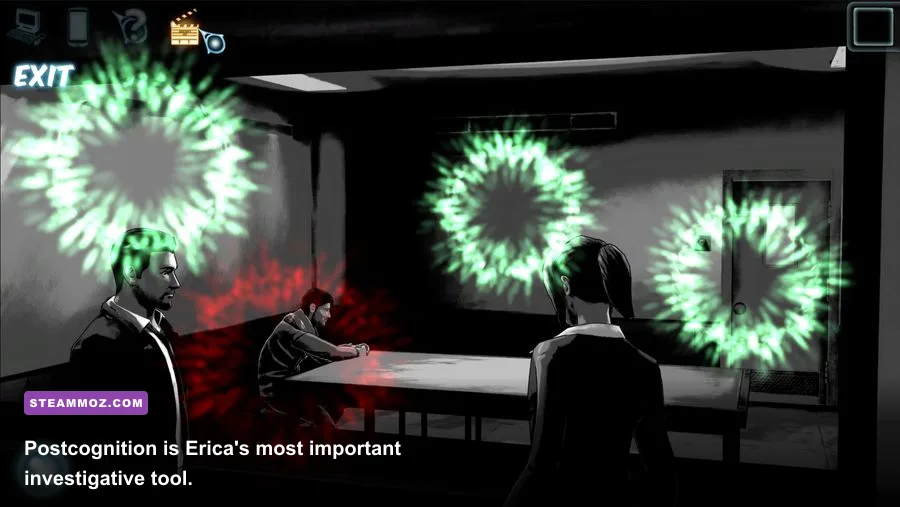
Postcognition is Erica's signature power and the closest thing Cognition has to a universal super-tool. By focusing on a person or object, Erica can experience impressions from its past. The ability doesn't simply hand you a solution. Instead, it turns a seemingly ordinary item into a source of context: who touched it, what happened nearby, or which detail the present scene is hiding.
Use it aggressively at every crime scene. Examine furniture, personal belongings, suspicious objects, and anything that looks deliberately placed. If Postcognition triggers, the game is telling you that the object matters. Pay attention to the sequence rather than waiting for a giant “clue found” notification. These visions often explain why a witness is lying or suggest which item should be combined with another clue.
Its biggest advantage is consistency. Mind Reading depends on a living target and a readable thought, while Postcognition can turn locations and objects into evidence. It also helps you build a mental timeline, which is essential when the story jumps between present investigation and traumatic memories. If you only master one ability, master this one.
Evidence deserves S-Tier status, even without equipment stats
Physical evidence is the backbone of progression. A document, photograph, personal object, or environmental detail may look like set dressing, but Cognition regularly uses ordinary objects to open new lines of deduction. Inspect items before clicking through dialogue, then revisit the area after an important conversation. New information can change how an object reads, and some scenes are designed around that shift.
Don't hoard items blindly. Read descriptions, test sensible combinations, and watch for changes in Erica's observations. The game rewards lateral thinking more than inventory volume. If an object has a strong emotional connection to a character, it is especially likely to matter to Postcognition or a later conversation.
The deduction interface is your real upgrade tree
Cognition's deductions function like a mental build system. You gather facts, connect related ideas, and use those connections to form a conclusion. There is no XP bar to grind, but the player's reasoning improves as the case structure becomes more complicated. A failed deduction usually means you missed an observation, not that Erica needs better gear.
When you hit a wall, stop clicking randomly and ask three questions: what changed in the scene, who benefits from the current story, and which clue has a past you haven't explored? That method is faster than exhaustively combining every inventory item.
A-Tier abilities that solve specific problems
Reconstruction becomes essential as the cases grow
Reconstruction ranks just below Postcognition because its value is concentrated in the later, more intricate sections. It helps Erica interpret broken sequences and assemble a more complete account of events. The power is particularly strong when the case presents contradictory testimony or a crime scene with missing context.
Its limitation is that it isn't always the first tool you should reach for. You need enough fragments before reconstruction can become meaningful. If you activate it too early, you may receive an incomplete picture and mistake that for the final answer. Gather surrounding evidence first, then use Reconstruction to organize the timeline.
This is also where patience pays off. Let the sequence play out, note who is present, and remember the order of actions. Cognition's supernatural scenes aren't reflex challenges, but they still test your ability to distinguish cause from coincidence.
Mind Reading is powerful, but never a universal lie detector
Mind Reading is an excellent interrogation tool. It gives Erica access to thoughts or emotional information that a witness may not say aloud, making it invaluable when a conversation appears evasive. It can expose fear, guilt, resentment, or a hidden connection, then point you toward the next question.
However, don't treat every thought as a literal confession. A person's fear does not automatically prove they're the killer, and a hostile reaction may reflect trauma rather than guilt. Read the emotional signal alongside physical evidence and Postcognition scenes. Mind Reading is strongest when it confirms a pattern already emerging from the case.
Its situational nature explains the A-Tier placement. It can completely change one conversation, but it can't replace scene exploration. If you use it as your only investigative method, you'll miss the physical clues needed to make the correct deduction.
Dialogue choices are tactical, not cosmetic
Dialogue is not equipment, but it deserves an A-Tier ranking for practical play. Erica's questioning style can determine whether a witness opens up, becomes defensive, or reveals a contradiction. Select questions based on the evidence you already have. Showing a relevant clue or pressing a point supported by Postcognition is usually more effective than choosing the most aggressive line.
Keep track of names, relationships, and repeated phrases. Cognition's characters often reveal themselves through inconsistencies rather than a single dramatic confession. A calm question can be more useful than an accusation, especially when the witness is frightened and withholding information for reasons unrelated to the central crime.
| Tool | Tier | Strength | Limitation |
|---|---|---|---|
| Postcognition | S | Works on key people and objects; creates timeline context | Visions still require interpretation |
| Evidence inspection | S | Drives deductions and unlocks new lines of inquiry | Important objects can blend into scenery |
| Reconstruction | A | Clarifies fragmented or contradictory events | Less useful before enough clues are collected |
| Mind Reading | A | Reveals emotional subtext during questioning | Thoughts are not always factual confessions |
| Dialogue pressure | A | Can expose contradictions and hidden motives | Depends on your evidence and question order |
| Standard FBI gear | C | Builds character authenticity | No combat, damage, or upgrade function |
B-Tier and C-Tier equipment you should not overvalue
Everyday objects are useful, but only in context
Keys, phones, papers, photographs, and other ordinary objects are best thought of as B-Tier equipment. They can be decisive in a specific puzzle, but their value depends entirely on the scene. A key isn't “better” than a photograph in the abstract. The correct object is the one that answers the current question or unlocks the next interaction.
That sounds obvious, but it prevents a common adventure-game mistake: assuming the biggest or most unusual item must be the answer. Cognition often hides important information in understated objects. Inspect the desk, wall, drawer, and background details before chasing the most obvious prop.
FBI credentials and procedural gear are flavor, not loadout pieces
Erica's badge and investigative identity matter to the story, but they don't function like armor or a progression item. Her authority affects how scenes are framed and why she can pursue the cases, yet you aren't selecting a badge level or upgrading forensic equipment.
This is the C-Tier category: objects that strengthen the fiction but don't materially improve puzzle-solving. Don't waste time looking for a hidden equipment menu or expecting a new weapon after completing an episode. The Game of the Year Edition expands the story content, not Erica's combat inventory.
Why a “weapon build” approach fails
A weapon-first mindset encourages the wrong habits. You may search for combat encounters, ignore environmental details, or assume a tense sequence requires quick inputs. Cognition instead asks you to slow down and read the scene. Its most valuable resource is attention.
There are also no damage numbers, enemy resistances, frame-rate breakpoints, or attack rotations to optimize. If you're comparing it with a true weapon game, our Iris and the Giant weapon tier list shows the kind of numerical build logic that Cognition deliberately avoids. Here, the equivalent of a perfect build is a complete evidence chain.
The best investigation route across all four episodes
Episode 1: The Hangman
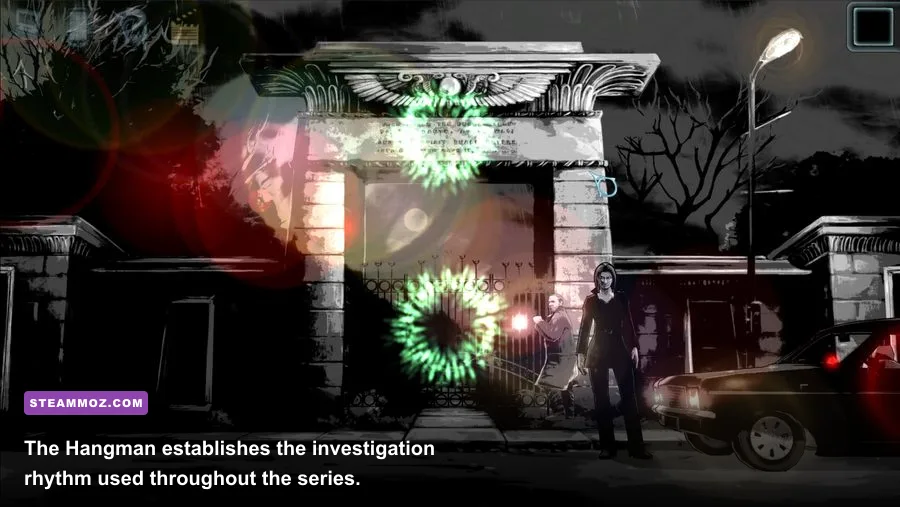
The Hangman teaches the basic loop: explore, inspect, use Erica's powers, question people, and connect the resulting clues. Don't rush past the tutorial-style interactions. They establish how the game communicates a meaningful object and how psychic scenes reveal information without directly solving the case.
Build the habit of scanning the entire location before leaving. If a room contains a personal object, test Postcognition early. Then speak to every available character and compare what they say with what the visions show. The first episode is the best place to learn that a witness's statement can be emotionally true while factually incomplete.
Episode 2: The Wise Monkey
The Wise Monkey expects more confidence with deductions and character relationships. This is where Mind Reading becomes more valuable because conversations carry additional layers of motive. Use it to identify pressure points, but return to the physical scene before committing to a conclusion.
When several clues appear related, write down the connection in plain language: object, person, action, and time. That simple structure keeps you from treating a dramatic vision as proof of identity. The best conclusions combine at least two independent sources of information.
Episode 3: The Oracle
The Oracle leans harder into the series' supernatural side and asks you to interpret information rather than merely collect it. Reconstruction earns its A-Tier position here because fragmented events become harder to understand in isolation. Watch for repeated imagery and compare it with what Erica learns from witnesses.
If progress stalls, revisit earlier locations and talk to characters again. Adventure-game flags often unlock after a specific discovery, not after a fixed number of clicks. You don't need to grind; you need to check whether a new piece of information changes an old question.
Episode 4: The Cain Killer
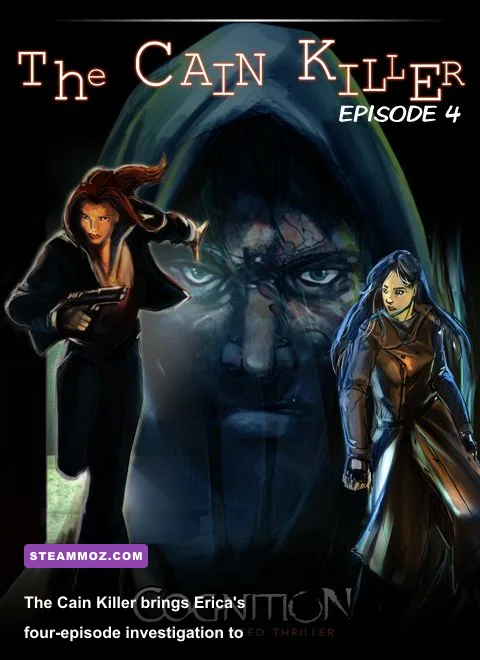
The Cain Killer is the payoff for the full investigation. By this stage, Postcognition should be second nature, and you should be comfortable separating evidence from inference. The danger in the finale is not a combat encounter; it's jumping to a conclusion because the narrative feels ready for one.
Before major confrontations, review the chain of facts you've established. Which details are directly observed? Which came from a person's thoughts? Which are your interpretation? That distinction helps you choose stronger dialogue and prevents a single misleading clue from controlling the entire scene.
| Progress Stage | Priority Tool | Player Action | Common Mistake |
|---|---|---|---|
| New crime scene | Evidence inspection | Examine every interactive object and person | Leaving after finding the obvious clue |
| Unclear object history | Postcognition | Read the vision for people, timing, and motive | Treating a vision as a complete solution |
| Evasive witness | Mind Reading | Compare thoughts with spoken answers | Assuming fear proves guilt |
| Contradictory timeline | Reconstruction | Collect more fragments, then assemble events | Reconstructing before gathering context |
| Major confrontation | Dialogue and deductions | Use evidence-backed questions and conclusions | Choosing the most aggressive response |
Performance, controls, and the best way to play on PC
Cognition is a lightweight 2D point-and-click adventure rather than a modern 3D action game. That means the weapon question has a second answer: you don't need a high-end gaming PC to run the investigation smoothly. The important setup choices are readability, reliable input, and avoiding accidental misclicks during item selection.
Use the highest supported resolution that keeps text and hotspot details comfortable to read. If the interface feels too small, lowering resolution is less useful than adjusting Windows scaling or sitting closer to the display. A mouse is the natural control method because precise cursor placement makes examining background objects much easier than using a controller.
Before troubleshooting, check the official Steam listing for the current package details and operating-system compatibility. You can also compare the game's modest demands with our Kholat graphics settings guide, although Cognition generally needs far less performance tuning.
| PC Setting | Recommended Choice | Why It Helps | Performance Impact |
|---|---|---|---|
| Display resolution | Native monitor resolution | Keeps text and clue details sharp | Low on modern systems |
| Input | Mouse and keyboard | Improves hotspot accuracy and inventory selection | None |
| Background apps | Close overlays if scenes stutter | Reduces compatibility conflicts | Can improve stability |
| Save management | Keep a manual save before major deductions | Protects against regrettable dialogue choices | None |
| Display scaling | Adjust OS scaling if text is tiny | Improves long-session readability | None |
For technical problems, don't apply fixes meant for unrelated action games. Our guides for Hakuoki: Edo Blossoms crashes and Koa and the Five Pirates of Mara PC issues are useful examples of general compatibility troubleshooting, but Cognition's first checks should be simpler: verify the installation, disable conflicting overlays, and relaunch the game.
Final verdict on the Cognition weapon tier list
Cognition Game of the Year Edition has no weapons to rank, and that's not a missing feature. Its entire design is built around investigation rather than combat. The strongest practical tier list is therefore straightforward: Postcognition and evidence inspection sit in S-Tier; Reconstruction, Mind Reading, and evidence-backed dialogue belong in A-Tier; ordinary inventory objects are useful in the right context; and FBI equipment is mostly narrative flavor.
If you're starting the full package, play the episodes in release order: The Hangman, The Wise Monkey, The Oracle, then The Cain Killer. Examine everything, revisit locations after revelations, and never confuse a powerful emotional vision with conclusive proof. Erica's best loadout is curiosity, patience, and a willingness to question the first answer that looks right.
For official background, visit Phoenix Online Studios and the Cognition Steam page. And if what you really wanted was a conventional gear ranking, check Steamoz's Happy Game weapon tier list instead. In Cognition, though, the winning weapon is the clue you nearly walked past.