Insurmountable has no weapons, so the winning tier list is built around equipment that protects oxygen, warmth, stability, and energy. Treat those four survival stats as your real loadout, then rank every pickup by the problem it solves on the current mountain. Stability and oxygen usually deserve S-Tier status, while warmth and energy become equally valuable when nightfall, altitude, or a long final ascent starts draining the run.
That distinction matters because Insurmountable is a roguelike mountain expedition, not a combat game with swords hidden in the inventory. You fight the mountain itself: steep tiles, bad weather, altitude sickness, fatigue, exposure, and the cruel temptation to take one more shortcut. This ranking covers the practical equipment families, explains what their stats actually do, and gives you a route-based method for deciding whether a new item is an upgrade.
The real Insurmountable tier list
The strongest equipment is not always the item with the biggest green number. A pair of crampons with excellent stability can be worse than warmer boots if your route is a long night section through freezing terrain. Likewise, oxygen gear looks unbeatable on high peaks, but it won't rescue a run if every steep tile consumes your energy and pushes you into exhaustion.
For a general expedition, prioritize stability first, oxygen second, warmth third, and energy fourth. That is the safest baseline for the game's early and mid-mountain sections. On a very cold map, move warmth into the top two. On a high-altitude summit push, oxygen becomes the stat you protect at almost any cost.
| Tier | Equipment priority | Why it ranks here | Best use case |
|---|---|---|---|
| S-Tier | Stability gear | Reduces the danger and cost of steep terrain | Rocky routes, exposed ridges, shortcut-heavy climbs |
| S-Tier | Oxygen gear | Extends your safe operating range at altitude | High peaks and summit approaches |
| A-Tier | Warmth gear | Prevents cold exposure from compounding other losses | Night climbs, blizzards, snowy maps |
| A-Tier | Energy gear | Improves pace and gives more room for mistakes | Long routes with repeated steep tiles |
| B-Tier | Balanced mixed-stat gear | Reliable, but rarely solves a crisis completely | Early game and unknown routes |
| C-Tier | Single-stat upgrades that ignore the route | Can look powerful while creating a dangerous weakness | Only useful when the mountain strongly favors that stat |
Think of this as a decision-making tier list rather than a permanent best-in-slot chart. Insurmountable's procedural routes make fixed rankings less useful than they would be in a conventional RPG. A high-stability item is usually a fantastic pickup, but the correct answer changes when your next objective is a freezing night tile or an oxygen-starved summit zone.

🎮 Insurmountable
Looking to experience this game? Grab your digital key directly on our store for $2.49.
View on Steammoz Store →S-Tier stability gear wins difficult routes
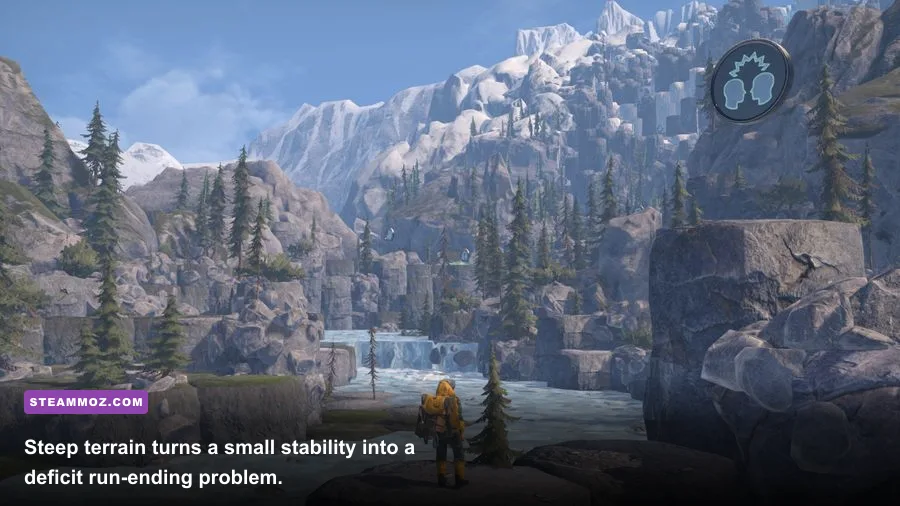
Stability is the stat that quietly saves the most runs. It helps you handle the mountain's steep terrain without converting every aggressive move into a huge energy bill. When you inspect a route, look for long chains of dark or high-gradient tiles, exposed passes, and alternate paths that trade distance for slope. Those are the situations where stability gear pays for itself.
Climbing-focused items such as crampons, climbing shoes, and ice-axe-style equipment should be judged primarily by their stability contribution. The exact item values can vary with the generated expedition and game version, so don't memorize one universal number. Instead, compare the replacement item against the next three route segments. If the upgrade lets you cross several steep tiles while preserving energy, its practical value is much higher than the inventory screen suggests.
Stability also improves flexibility. A stable climber can detour around a dangerous event, collect a useful supply, or reach a rest point without paying the full cost of a desperate shortcut. That matters more than shaving a few movement points from a gentle slope. The best players aren't simply moving uphill quickly; they're preserving enough resources to react when the route stops being friendly.
How to spot an S-Tier stability pickup
Choose the stability item when three conditions line up: the route contains multiple steep tiles, your current energy is already mediocre, and the alternative path is substantially longer. Don't automatically equip it for a flat opening section. A lighter balanced item can be better early, especially if you expect to replace it before the mountain turns vertical.
Stability is also the stat that makes risky route planning less punishing. If you enjoy taking the shortest path through difficult terrain, it should be the first equipment category you improve. For a broader look at route discipline and resource planning, Steamoz's new-player survival tips cover the same valuable habit: spend resources to create options, not just to move faster.
Oxygen gear is mandatory for summit pushes

Oxygen gear becomes S-Tier as soon as altitude, thin air, or a lengthy summit approach starts dominating the expedition. Its value is not merely extra breathing room. Better oxygen management lets you stay at altitude longer before needing a safer route, a rest opportunity, or a consumable. That turns an impossible-looking final section into a controlled sequence of manageable moves.
Oxygen should rise above stability when the route is relatively gentle but extremely high. A common mistake is wearing a stability-heavy setup because the tiles look intimidating, then discovering that the actual failure comes from altitude depletion. Read the terrain and the environment separately. Slope tells you how much stability you need; elevation and exposure tell you how much oxygen you need.
Never wait until the oxygen warning is flashing before changing equipment. By that point, your route options may already be gone. Swap into oxygen-focused gear before the high-altitude section, even if the item has weaker warmth or energy values. If the next rest point is close, the trade can be temporary. Insurmountable rewards players who plan around thresholds instead of reacting after a stat reaches zero.
| Route problem | Primary stat | Secondary stat | Equipment decision |
|---|---|---|---|
| Long steep ascent | Stability | Energy | Use climbing-focused equipment and preserve a recovery option |
| High-altitude plateau | Oxygen | Warmth | Accept lower stability if the surface is comparatively gentle |
| Nighttime snowfield | Warmth | Energy | Equip insulated clothing before exposure begins |
| Mixed unknown route | Balanced stats | Stability | Keep flexibility until the next landmark reveals the terrain |
| Emergency shortcut | Stability | Oxygen | Take the best immediate survival bonus, not the highest total score |
A-Tier warmth gear prevents death by attrition
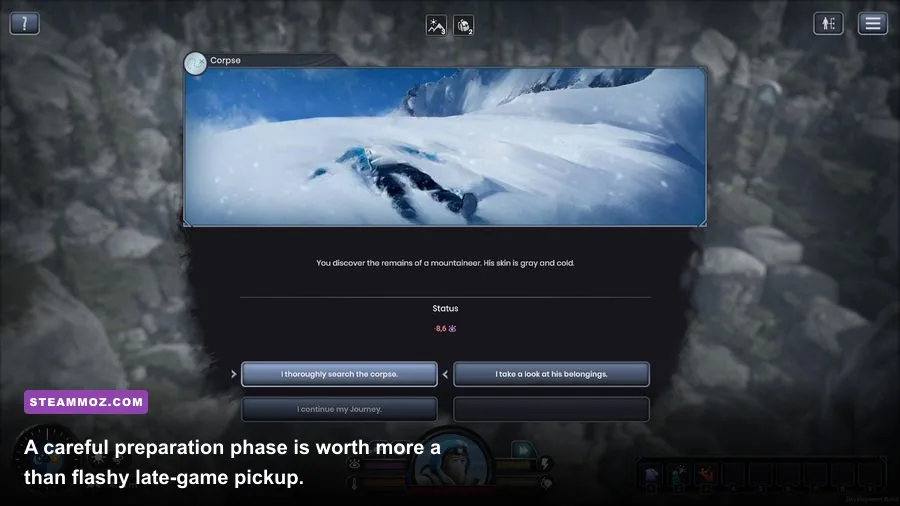
Warmth can feel less exciting than oxygen or stability because it rarely produces an obvious movement advantage. That is a trap. Cold exposure is dangerous precisely because it compounds with everything else. If warmth falls during a night climb, your energy recovery suffers, your route becomes harder to traverse, and a previously affordable detour can become fatal.
Insulated jackets, gloves, trousers, and other cold-weather equipment belong in A-Tier overall, but they become S-Tier on snowy maps or any expedition where the daylight cycle will carry you into a freezing section. The best time to equip warmth gear is before nightfall, not after the warning appears. Replacing gear mid-crisis often means spending movement or exposing yourself to another harmful tile.
Warmth is also a strong reason to avoid tunnel vision around summit distance. The shortest path can be the worst path if it crosses exposed snow while your warmth is low. A longer route through safer terrain may cost additional energy but preserve the stat that keeps your character functional. Compare the whole route, not just the number of tiles.
Don't overbuild warmth on a mild, fast expedition. If the route is short and the weather is kind, balanced equipment can create more value. Warmth is a situational multiplier: mediocre in a comfortable daytime stretch, priceless when the mountain turns hostile.
A-Tier energy equipment keeps your plan alive

Energy is the stat that gives you permission to make mistakes. It lets you climb one more steep tile, recover from an unfortunate event, or take a detour without immediately entering a downward spiral. Energy-focused gear is therefore A-Tier, especially for newer players who haven't yet learned which routes are safe to ignore.
Its weakness is that energy cannot solve every problem. A large energy reserve won't protect you from severe altitude exposure or prolonged cold. That's why a pure energy setup usually loses to a strong stability or oxygen setup on specialized mountains. Use energy gear as the glue in a balanced build, not as an excuse to ignore the mountain's dominant threat.
Energy is particularly valuable with characters or progression choices that already favor efficient movement. If your character has strong baseline climbing performance, energy bonuses extend that advantage. If your character is fragile in cold or altitude, use energy as a secondary stat and fix the actual weakness first.
B-Tier balanced equipment is best early
Balanced items are easy to underrate because they rarely top a single category. Early in an expedition, though, they are often the smartest choice. You don't yet know whether the next section will be steep, cold, or high, and a balanced loadout prevents one bad reveal from wrecking the run.
Use mixed-stat equipment while exploring the lower mountain, then specialize once the route gives you information. This is the same logic behind carrying adaptable builds in other roguelikes. Steamoz's Fated Souls weapon rankings make a similar point from a combat angle: consistency often beats a flashy item that only works under perfect conditions.
The moment a balanced item falls into C-Tier is when it prevents you from meeting a specific survival threshold. If you are about to cross a high-altitude zone and your oxygen is already poor, an item that adds small amounts to four stats may be inferior to one that heavily improves oxygen. Versatility is valuable only while the situation remains uncertain.
Character choice changes the ranking
Equipment cannot be ranked separately from the character you selected. Insurmountable's playable climbers have different strengths, and the best gear usually reinforces a character's natural advantage or patches their most dangerous weakness. A stability-heavy climber can afford to chase oxygen earlier. A character that already handles altitude well may gain more from warmth and energy.
Before starting the ascent, inspect the character summary and identify the stat you cannot afford to lose. Then check the mountain's visual and mechanical clues. A route with heavy snow calls for warmth even if your character is already comfortable at altitude. A steep rocky mountain asks for stability even when the forecast looks pleasant.
| Character situation | First gear target | Second target | Why |
|---|---|---|---|
| Strong stability baseline | Oxygen | Warmth | Turns reliable climbing into a safer summit push |
| Weak stability baseline | Stability | Energy | Stops steep terrain from draining the run too early |
| Cold-vulnerable character | Warmth | Energy | Prevents exposure from becoming a chain reaction |
| High-altitude specialist | Stability | Warmth | Uses the altitude advantage while covering terrain and weather |
| First-time player | Balanced equipment | Stability | Provides forgiveness while learning event and route patterns |
How to upgrade equipment without throwing away a run
Compare new equipment against the next danger, not your current location. A pickup that looks worse in town may be the correct choice because the mountain ahead is a cold, steep, high-altitude climb. Open the route view, identify the next landmark or rest opportunity, and ask which stat will be tested before you can safely change gear again.
Don't constantly swap equipment for tiny gains. Every decision should have a purpose: crossing a steep chain, surviving a night, reaching an oxygen threshold, or preserving enough energy for the summit. Micro-optimizing every tile makes the climb slower and can distract you from the more important question of whether the route itself is safe.
Consumables and recovery options should influence your ranking too. If you have a reliable way to restore energy, an energy penalty may be acceptable. If your inventory is empty, energy gear rises sharply. The same item can move from B-Tier to S-Tier based on what you are carrying and how far the next safe pause is.
For performance and stability advice across demanding PC games, Steamoz's smooth FPS settings guide is useful background, although Insurmountable's minimalist presentation generally makes it easy to run. The official Insurmountable Steam page remains the best place to check current platform details, patches, and edition information.
The best practical loadouts by expedition type
There is no single god-roll setup, but three loadout patterns cover most climbs. The safe generalist uses balanced equipment with a clear stability lean. It is the best starting point because it handles unknown routes without creating a catastrophic weakness. The high-altitude specialist stacks oxygen, then adds enough stability to avoid wasting the reserve on steep terrain. The winter climber prioritizes warmth and energy, using stability as the tie-breaker when two items are otherwise close.
For speed attempts, don't simply equip the lightest-looking items. Speed comes from maintaining momentum without stopping to recover from preventable losses. Energy and stability usually outperform a fragile movement-focused setup because they reduce the number of forced pauses. A fast route that leaves you exhausted before the summit is not a speedrun; it's an early retreat with better marketing.
For a more combat-focused comparison of how to read item rankings, see Steamoz's Enemy Front weapon tier list. Insurmountable asks a different question, but the principle is identical: rank an item by the situations where it wins, not by its headline stat alone.
Final ranking and the rule that matters most
S-Tier: stability and oxygen gear when the route demands them. A-Tier: warmth and energy, with warmth rising to S-Tier in severe winter conditions. B-Tier: balanced equipment for the early expedition and uncertain routes. C-Tier: specialized items equipped without regard for the mountain ahead.
The best equipment in Insurmountable is the piece that protects your next irreversible decision. Before you equip anything, scan the next section, identify its dominant threat, and choose the stat that keeps your options open. That habit beats chasing a universal best item, and it is why a supposedly modest pair of climbing shoes can outperform a rare oxygen item on the right mountain.
For official background on the game's development and updates, check the ByteRockers' official site and the publisher's Daedalic Entertainment website. Keep the route in view, specialize before the danger arrives, and remember the golden rule: in Insurmountable, surviving the next ten tiles is worth more than owning the most impressive item in your backpack.