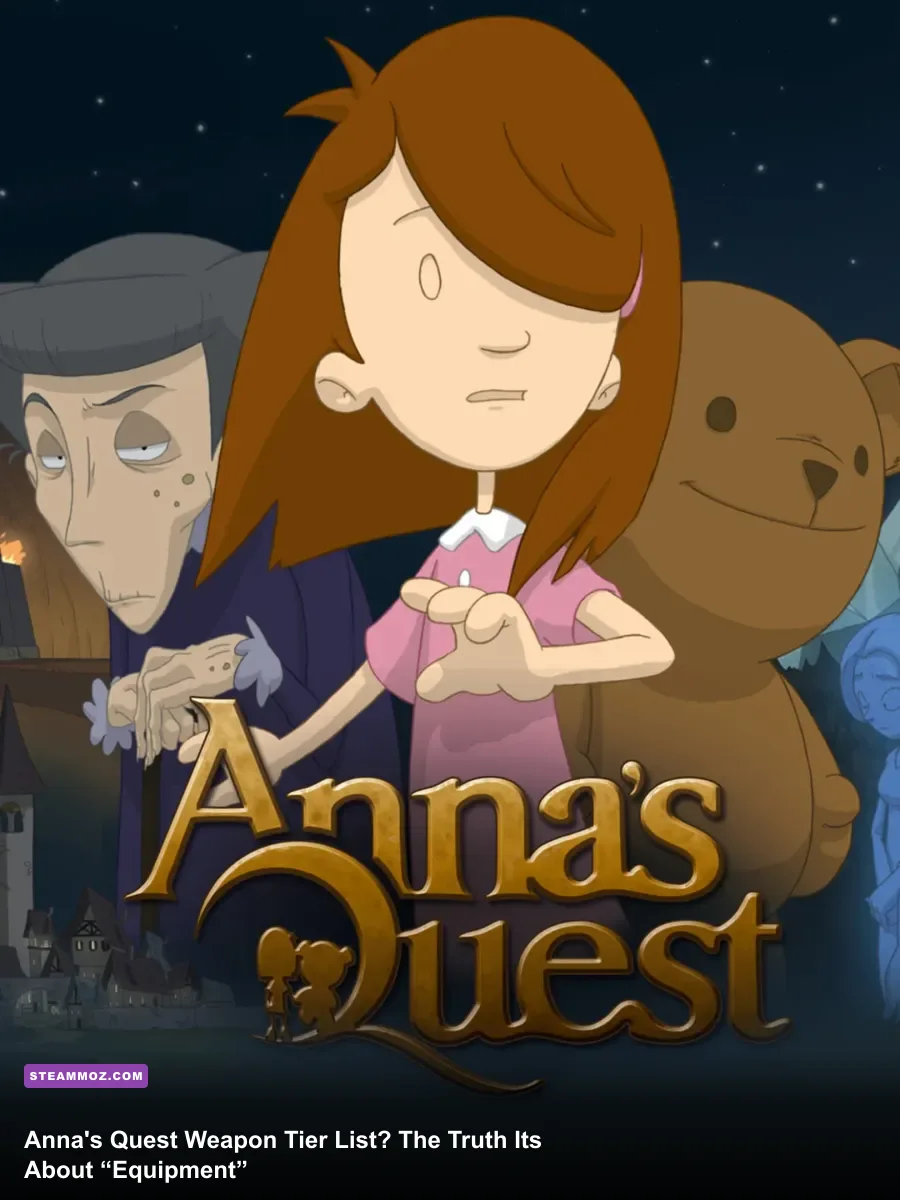
Anna's Quest has no weapons, armor, gear scores, or conventional equipment tiers. The best “equipment” is whichever inventory item advances the current puzzle, while Anna's telekinesis is the game's most reliable ability. So the honest weapon tier list is a correction: S-Tier goes to telekinesis and key story items, A-Tier to versatile puzzle tools, and everything else ranks by immediate usefulness—not damage.
That distinction matters because Anna's Quest is a hand-drawn point-and-click adventure from Daedalic Entertainment, not an action RPG hiding a secret loadout system. There are no swords to upgrade, no ranged weapons to compare, no stat scaling, and no boss fights where an optimized build saves the day. If you're searching for an Anna's Quest weapon tier list and best equipment ranking, you're really looking for a guide to the game's interactive objects, supernatural powers, and puzzle-solving priorities.
Does Anna's Quest have weapons or equipment?
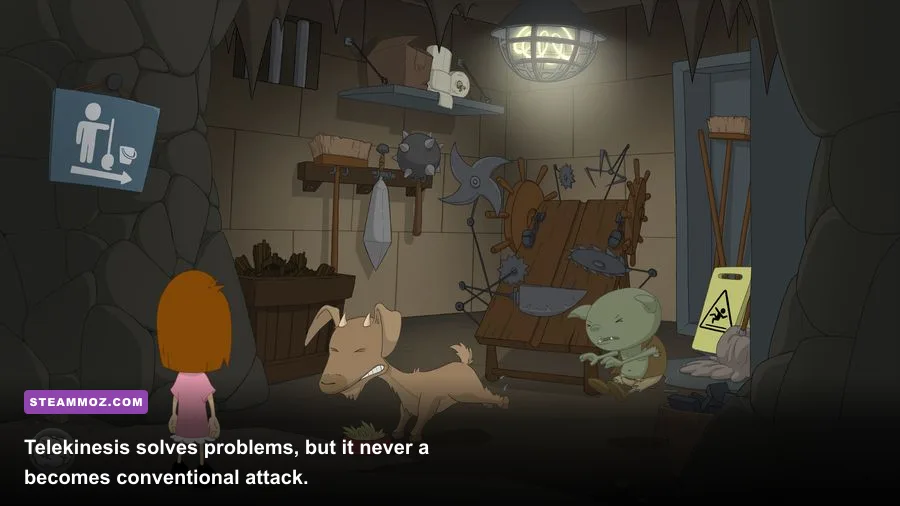
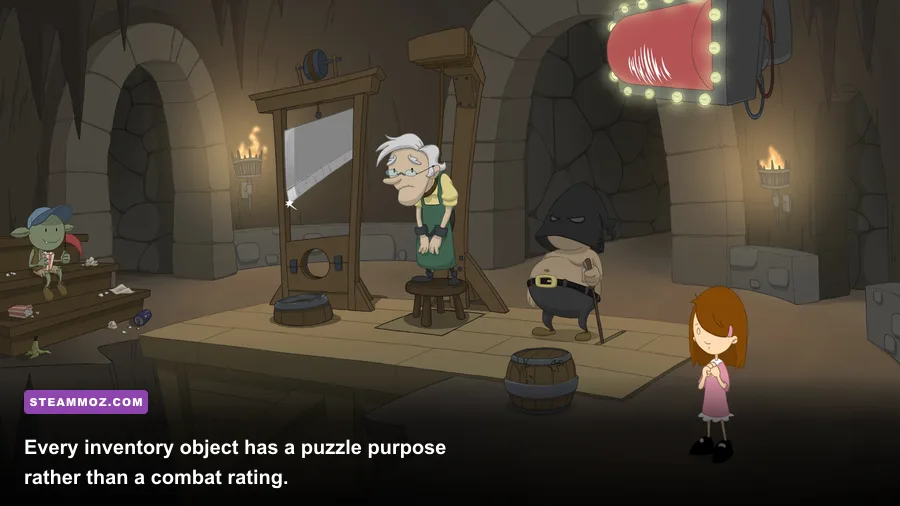
No. Anna cannot equip weapons, swap armor, distribute attributes, or improve damage. Her inventory is a classic adventure-game toolkit: objects are collected, examined, combined, and used on the world. The interface doesn't present attack power, durability, rarity, level requirements, or upgrade slots.
Anna's signature power is telekinesis, gained through the story's unsettling experiments. It lets her manipulate distant objects and interact with obstacles that would otherwise be unreachable. Even so, the ability isn't a combat skill tree. You don't unlock stronger versions, spend points on range, or select a cooldown reduction. Its value comes from recognizing where the environment wants you to use it.
The game's official Steam page for Anna's Quest describes the experience around exploration, puzzles, and Anna's supernatural abilities rather than combat progression. That makes any conventional weapon ranking misleading. For comparison, our Children of Silentown guide covers the same trap: not every adventure game benefits from an RPG-style tier list.
| Category | What Anna's Quest actually offers | Tier-list verdict |
|---|---|---|
| Weapons | No swords, guns, bows, or attack tools | Not applicable |
| Armor | No defensive clothing or armor slots | Not applicable |
| Stats | No strength, health, damage, or equipment scaling | Not applicable |
| Telekinesis | Story-given environmental interaction ability | S-Tier utility |
| Inventory items | Contextual puzzle objects and combinations | Ranked by usefulness |

🎮 Anna's Quest
Looking to experience this game? Grab your digital key directly on our store for $1.99.
View on Steammoz Store →Anna's Quest “equipment” tier list
This ranking uses the only standard that makes sense in Anna's Quest: how broadly an ability or item helps you solve obstacles. A top-tier tool isn't powerful because it deals damage. It ranks highly because it opens multiple lines of interaction, appears at important moments, or works alongside Anna's telekinesis.
S-Tier: Telekinesis and story-critical objects
Telekinesis is the clear S-Tier entry. It can reach, pull, move, or activate objects that Anna can't handle normally, and it frequently changes how you read a room. Before clicking randomly, scan for distant switches, loose objects, blocked paths, and anything positioned just beyond ordinary interaction range. The game often expects the player to combine physical inspection with supernatural manipulation.
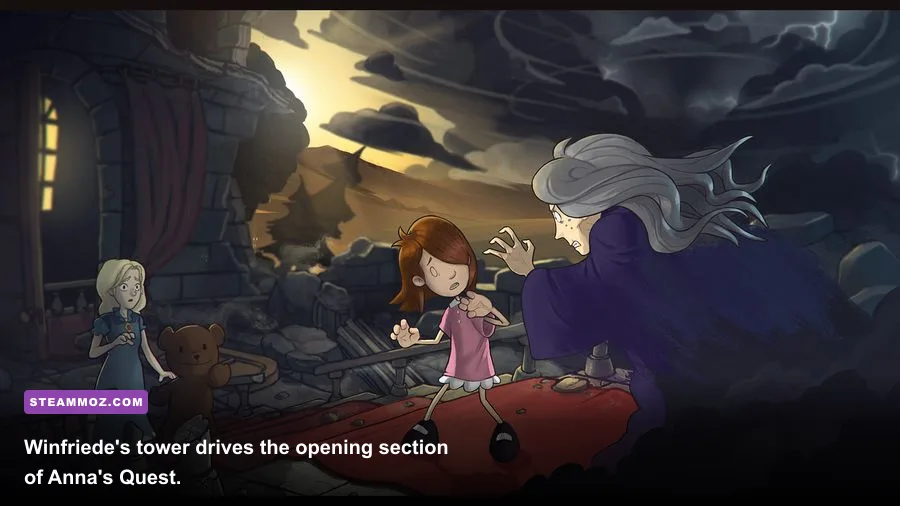
Story-critical objects also belong in S-Tier, but only while their related puzzle is active. These include items tied directly to Anna's escape, her grandfather's situation, and the obstacles created by Witch Winfriede. Their power is temporary and contextual, yet selling, discarding, or overlooking one can stall progress. The practical rule is simple: if an object has a distinctive description or clearly belongs to a current mystery, keep investigating before moving on.
A-Tier: Multi-purpose puzzle tools
A-Tier is reserved for objects that interact with more than one clue or help bridge a puzzle's steps. Consumable-looking items, containers, keys, and objects that can be combined with something else are usually more valuable than decorative props. Their value comes from flexibility, not a hidden statistic.
Pay attention to item descriptions and reactions. Anna's comments are often the game's soft hint system. If she says an object is too heavy, too far away, useless by itself, or missing a component, that line is information—not flavor text. Try telekinesis, inspect nearby scenery, then test combinations only when the logic is visible.
B-Tier: Single-purpose items and temporary clues
B-Tier objects solve one narrow problem and then leave your inventory or become irrelevant. They aren't bad; adventure games simply assign them a short lifespan. A key that opens one lock may be essential for two minutes and worthless afterward. Don't judge these objects by how ordinary they look.
C-Tier: Background props and red-herring interactions
Anna's Quest contains plenty of things that look interactive because the world is richly illustrated. Some clicks produce amusing dialogue, but not every object is a puzzle component. C-Tier means “low practical value,” not “mistake.” Those optional observations help establish the game's strange fairy-tale tone and can occasionally reveal character details.
| Rank | Ability or item type | Why it ranks here | Best use |
|---|---|---|---|
| S-Tier | Telekinesis | Broad environmental utility and frequent story relevance | Reach distant objects, trigger mechanisms, bypass obstacles |
| S-Tier | Story-critical objects | Directly unlock major puzzle steps | Advance escape, rescue, and investigation sequences |
| A-Tier | Combinable puzzle tools | Useful across multi-step interactions | Combine, inspect, and apply to the correct scene |
| B-Tier | Single-use keys and props | Strong in one location, limited afterward | Resolve a specific lock or environmental blocker |
| C-Tier | Flavor objects | Mostly optional dialogue or atmosphere | Inspect for hints, humor, and world-building |
Why telekinesis is Anna's best “weapon”
Telekinesis wins because it changes the game's interaction rules. A normal point-and-click protagonist can inspect, pick up, talk, and use. Anna adds distance manipulation to that loop. That extra layer is the closest thing the game has to a combat advantage, although calling it a weapon undersells what it does.
Use the ability in three passes. First, scan the entire screen for objects that look reachable but physically inconvenient. Second, test telekinesis on distant mechanisms or loose props before exhausting dialogue options. Third, inspect what changed. Many puzzles are not solved by the first supernatural action; they're solved by noticing the new state it creates.
Telekinesis also keeps Anna's puzzle design from becoming a pure pixel hunt. If an object is visibly important but inaccessible, the answer may be her power rather than a missing inventory item. That distinction saves time. You don't need to wander through every previous location searching for a key when the intended solution is already on screen.
There are no mana costs, cooldowns, damage frames, or accuracy checks to optimize. The performance question is mental, not mechanical: how quickly can you connect the ability with the environmental clue? Players coming from weapon-heavy adventures such as Crossing Souls should reset expectations before treating Anna's power like an attack button.
Best inventory strategy for every chapter
1. Inspect before combining
Inventory combinations are easiest when each object has a clear job. Examine new items and listen to Anna's wording. If she identifies a missing part, an unusual texture, or an obvious intended use, follow that clue first. Blindly combining everything creates noise and can hide the simple answer.
2. Revisit rooms with a new ability
When Anna gains access to a new interaction, mentally revisit earlier obstacles. The game uses environmental logic: an inaccessible object that mattered before may now be reachable, while a previously decorative mechanism may become relevant. Don't assume every screen is permanently solved after one visit.
3. Track characters as carefully as objects
Conversation is part of the equipment system. Characters including Anna, her grandfather, and the people caught in the witch's story provide information that functions like a key. Talk to someone again after changing the environment. New dialogue can reveal what an item is for or point toward the next location without handing you a glowing objective marker.
4. Keep a short clue list
Write down blocked doors, suspicious mechanisms, unusual requests, and objects Anna says she can't use yet. This is more useful than any imagined DPS ranking. When you obtain a new item or discover a new telekinesis interaction, check the list. Adventure-game backtracking becomes manageable when you return with a reason, not just hope.
| Situation | First action | Second action | Common mistake |
|---|---|---|---|
| Object is visible but distant | Try telekinesis | Inspect the resulting change | Searching for a key in another area |
| Item seems useless | Examine its description | Check nearby environmental clues | Combining it with every inventory item |
| NPC repeats a request | Change the scene state | Speak to the NPC again | Assuming dialogue is permanently exhausted |
| Room appears solved | Scan for new interactions | Return after story progress | Never revisiting earlier locations |
What actually makes progress faster?
There is no optimal build, but there is an optimal rhythm. Explore every visible hotspot once, read Anna's reaction, identify the obstacle, and then test the smallest logical interaction. If an action produces a strong response—an animation, a changed object, or new dialogue—follow that thread immediately.
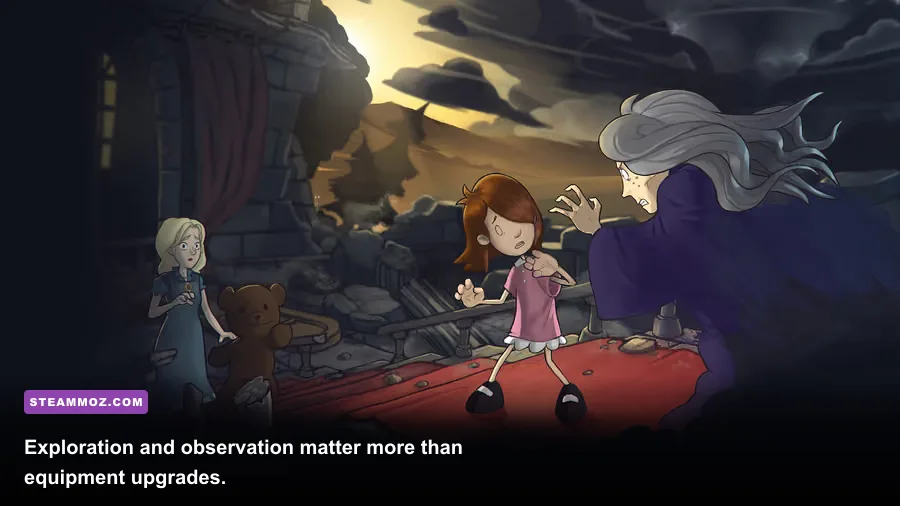
Don't waste time trying to force combat solutions onto peaceful adventure-game scenarios. Anna's Quest is built around tension, escape, mystery, and dark fairy-tale storytelling. The witch Winfriede is threatening because of the situation and narrative stakes, not because you need a higher-rated blade to survive her. The game's challenge comes from connecting clues and understanding character motives.
That also explains why “best equipment” rankings from action games don't transfer here. In Dead in Antares, gear selection can define survival. In Anna's Quest, the equivalent decision is whether an item belongs to the current chain of clues. The strongest player is not the one with the rarest object; it's the one who notices why the ordinary object is on screen.
For a reliable reference point, check Daedalic's official Anna's Quest page and the publisher's official Daedalic website. Neither presents a weapon progression system, because there isn't one. That absence is intentional and central to the game's identity.
Final ranking: the best tools in Anna's Quest
If you want the shortest possible verdict, rank Anna's tools by puzzle impact. Telekinesis is S-Tier because it expands the interaction system. Story-critical items are also S-Tier while active. Multi-purpose inventory objects earn A-Tier because they connect several clues. Single-use keys and narrow props sit in B-Tier, and optional flavor objects land in C-Tier.
There are no weapons to upgrade and no equipment screen to perfect. The best strategy is to inspect carefully, use telekinesis whenever distance or access looks suspicious, revisit locations after major story changes, and treat dialogue as actionable evidence. Once you stop searching for damage numbers, Anna's Quest becomes much easier to read—and much more satisfying to solve.
For another guide built around understanding a game's actual systems instead of forcing an RPG template onto it, see Steamoz's Brothers: A Tale of Two Sons tips. The same principle applies here: learn what the game truly rewards, then play to that strength.