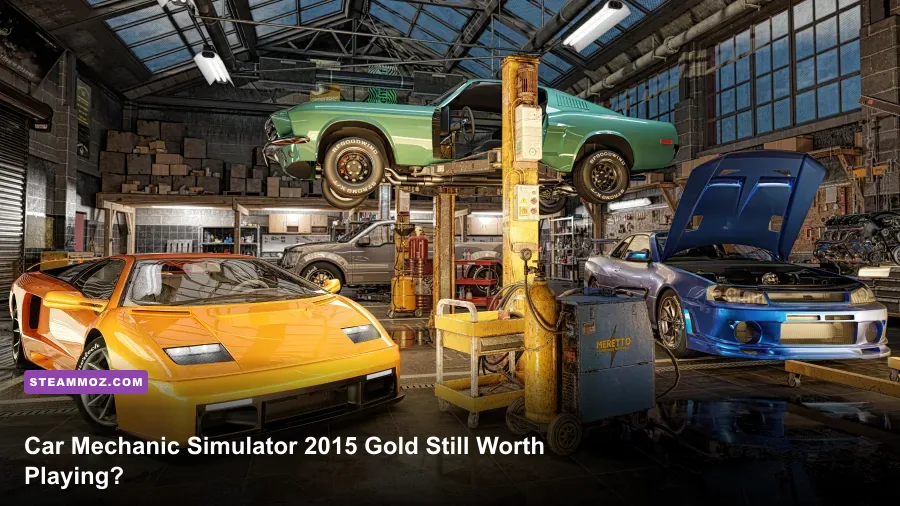
Yes, Car Mechanic Simulator 2015 Gold Edition is still worth playing in 2026—but only if you enjoy methodical repair work more than flashy driving. Its inspection, disassembly, parts-ordering, painting, and rebuilding loop remains unusually satisfying, while the old visuals, awkward controls, and limited vehicle handling make it a poor choice for anyone expecting a modern racing game. At a deep discount, Gold Edition is a charming, focused garage sandbox; at full price, newer entries are easier to recommend.
What Gold Edition actually delivers
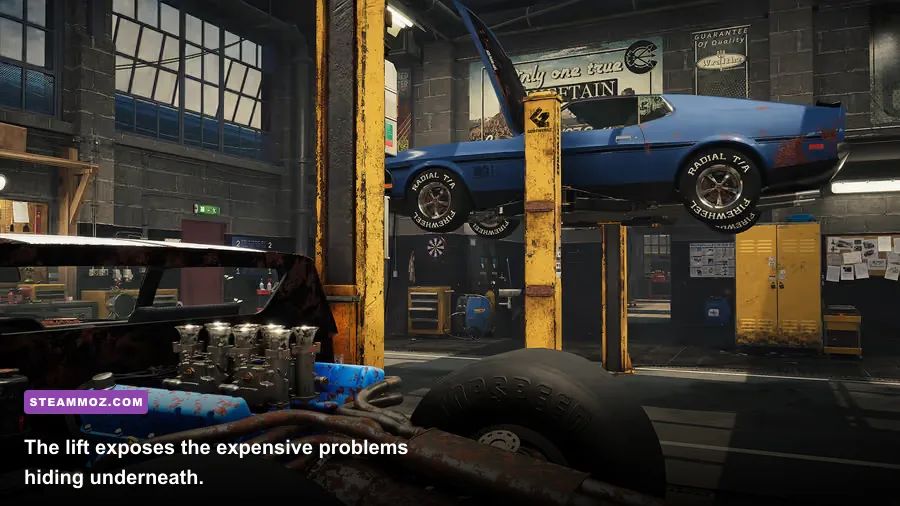
Car Mechanic Simulator 2015 is built around a small workshop rather than an open world. You accept jobs, identify defective components, buy replacements, install them, and return the vehicle for payment. The campaign gradually unlocks garage equipment and repair abilities through experience levels, so the first jobs feel deliberately narrow: oil changes, brake work, filters, and simple suspension repairs. Later contracts ask for engine rebuilding, bodywork, painting, and performance upgrades.
The Gold Edition is best understood as the complete 2015 package, bundling the base game with its available additional car content rather than transforming the core systems. That matters because the extra vehicles add variety to the same repair framework; they don't provide a new career mode or radically different mechanics. The official Steam store page is worth checking before buying, since regional bundles and included DLC can change over time.
Its strongest feature is the physical logic of the workshop. A worn brake disc isn't just a menu icon. You locate it, remove surrounding parts, replace it, and put the assembly back together. That sequence creates a tactile rhythm many management games never quite capture. The downside is repetition: once you've learned where the common components live, routine contracts become a checklist with very little surprise.

🎮 Car Mechanic Simulator 2015 Gold Edition
Looking to experience this game? Grab your digital key directly on our store for $2.49.
View on Steammoz Store →The repair loop still feels surprisingly good
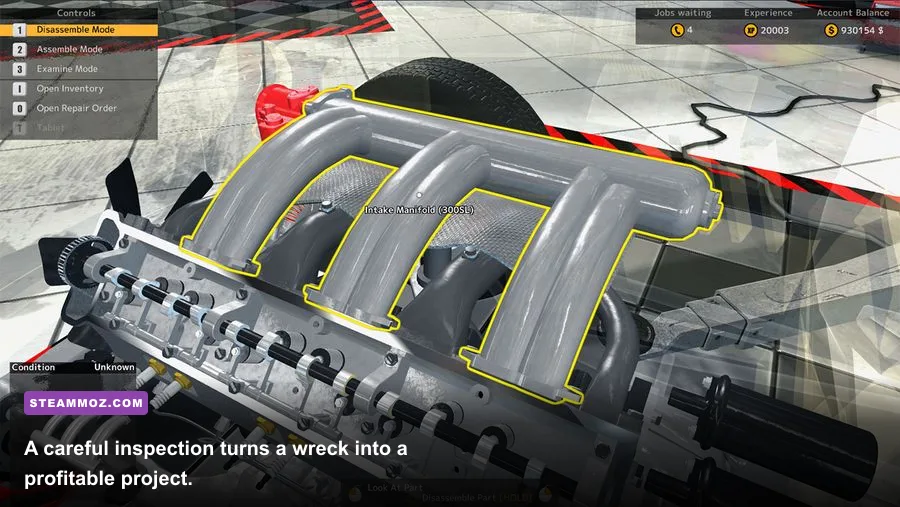
The core loop has four distinct stages. First comes diagnosis. Use the inspection mode and test equipment to identify problems, then move around the vehicle looking for worn parts. Second is teardown, where access matters: removing a wheel may be necessary before reaching the brake assembly, while engine components often need several layers stripped away. Third is procurement through the tablet. Finally, you install, test, paint, or sell the finished car.
The game rewards players who resist buying everything immediately. Inspection tools expose many failed parts before you spend money, and that difference is crucial early in the career. A job's payout can evaporate if you replace healthy components or order premium parts unnecessarily. The smart approach is to inspect first, write down the damaged assemblies, then purchase only what the contract requires.
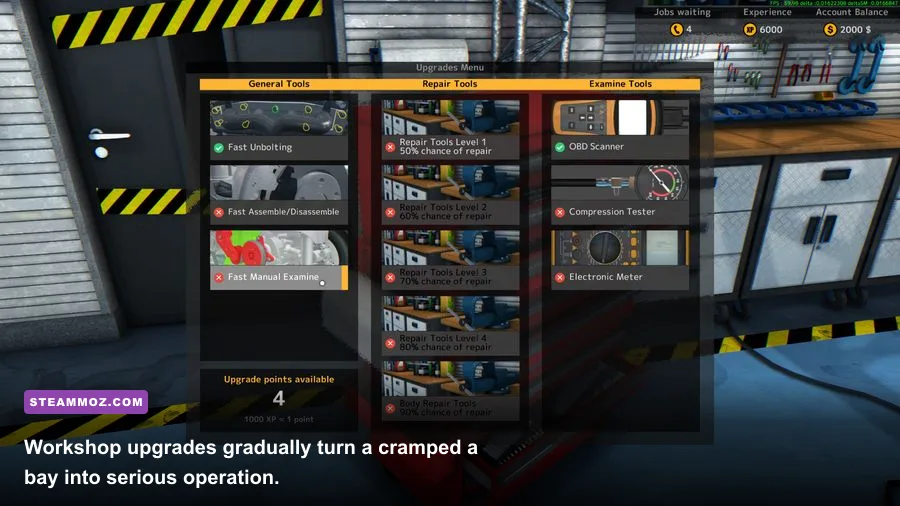
Experience levels unlock useful abilities and equipment, including more effective diagnostic options and access to broader workshop functions. That progression is not deep by RPG standards, but it changes the pace of work. A new player spends time hunting for faults; an experienced mechanic can identify an entire system, strip it quickly, and finish several jobs in one session.
| Workshop activity | What you do | Why it matters | Common mistake |
|---|---|---|---|
| Inspection | Use diagnostic modes to locate worn parts | Protects your profit margin | Buying parts before checking condition |
| Disassembly | Remove access components in the correct order | Reaches hidden engine and suspension parts | Forgetting a surrounding component |
| Shopping | Order replacement components through the tablet | Controls job cost and cash flow | Choosing expensive parts for a basic contract |
| Reassembly | Install parts and complete the vehicle system | Determines whether the job passes | Leaving one damaged item untouched |
This is also where the game separates itself from lighter repair titles. It expects you to remember assemblies: a suspension arm, rubber bushing, spring, shock absorber, and wheel-related hardware are separate jobs, not one abstract “suspension” stat. For players who enjoy the logic of a hands-on simulation, that specificity is the main attraction.
Career progression is satisfying, but grindy
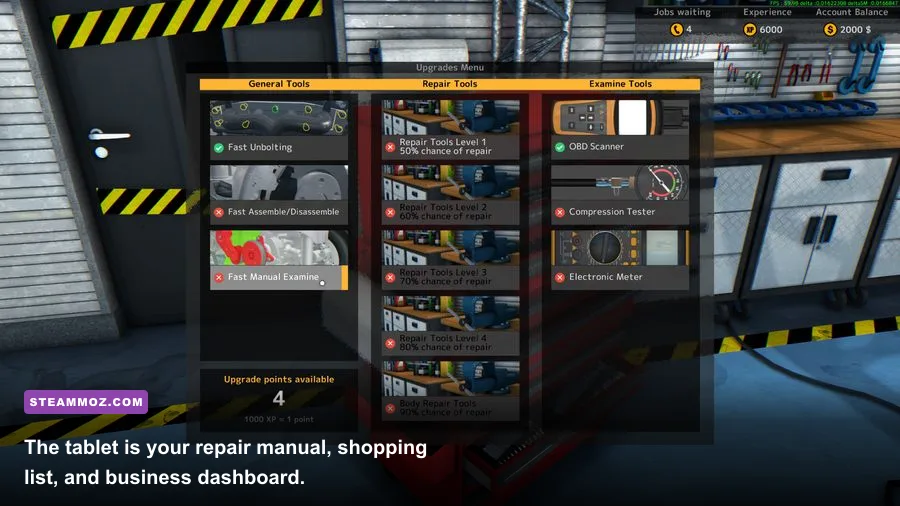
Career mode starts slowly and deliberately. You earn money from customer orders, spend it on replacement parts and equipment, and accumulate experience toward new tools. Early cash flow is tight, so completing straightforward jobs efficiently is more valuable than chasing ambitious rebuilds. The game doesn't hand you a generous safety net; a careless parts order can delay the next upgrade.
Random jobs are the backbone of progression, but their structure can become predictable. A contract may ask for a list of faulty components, an engine repair, or a full restoration. The work is mechanically engaging the first few times, yet repeated requests can feel like administrative labor once your workshop is familiar. The campaign is strongest in short sessions, where one or two completed cars feel like a proper evening's progress.
Restoration projects offer a better long-term hook. Finding a barn or junkyard vehicle, stripping it down, replacing damaged systems, applying bodywork, and selling it for a margin gives the game a genuine before-and-after payoff. However, these projects demand capital and patience. They aren't an instant money exploit. Treat them as investments after your customer work has stabilized the business.
| Progression stage | Best focus | Financial risk | Player experience |
|---|---|---|---|
| Early career | Brake, filter, oil, and basic suspension jobs | High if you over-order parts | Learning inspection and access order |
| Mid career | Engine work and larger customer contracts | Moderate | Faster diagnosis and more workshop freedom |
| Restoration phase | Barn finds, junkyard cars, painting, resale | High upfront investment | Most rewarding visual transformation |
| Late play | Completion projects and personal builds | Low if cash is established | Relaxing sandbox, but repetitive |
There are no dramatic boss encounters or complex skill rotations here. The challenge is economic and procedural: can you diagnose accurately, avoid wasted purchases, and choose jobs that match your current tools? If you prefer strategic progression with tougher combat encounters, this is a very different flavor of game from something like Hell Is Us.
Cars, customization, and the driving problem
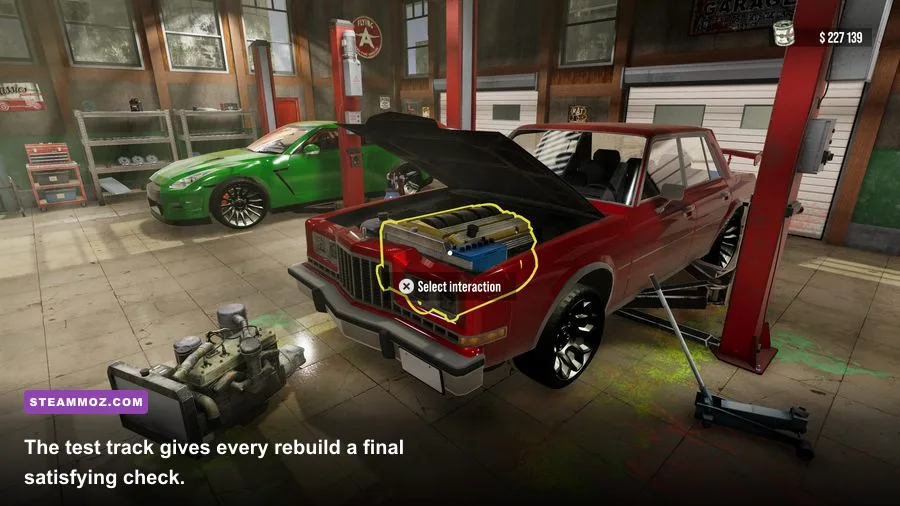
The vehicle roster is the Gold Edition's biggest content advantage. Licensed and fictionalized cars provide recognizable layouts, different engine bays, varied body styles, and more reasons to keep restoring. The exact roster depends on the edition and DLC included, but the important point is mechanical variety rather than a massive garage count. A front-engine muscle car doesn't feel identical to every other project once you are working through its access points and component list.
Customization covers replacement parts, rims, paint, body components, and performance-oriented upgrades. You can build a car that looks dramatically better than its starting condition, and that visual transformation is more meaningful because you performed the work yourself. The painting and parts systems are straightforward rather than creative powerhouses, though. Don't expect the deep livery editors or tuning telemetry found in dedicated racing games.
Driving is the weak link. The test track exists mainly to confirm that a restoration is drivable and to give you a brief reward after a long repair. Steering, camera behavior, and vehicle feel are dated, and the track itself lacks the depth needed to make driving a second game. Think of it as a victory lap, not a hidden racing mode.
That distinction should guide your purchase. If your dream is rebuilding an engine and seeing the finished car roll out of the garage, CMS 2015 works. If you want realistic acceleration, detailed tire behavior, or competitive racing, spend your money elsewhere. The official developer and publisher information can help confirm the edition's current availability, while the Steam community hub remains useful for compatibility notes and player-made fixes.
2026 PC performance and settings
By 2026 standards, Car Mechanic Simulator 2015 is lightweight. Its older renderer should run comfortably on almost any modern gaming PC, but compatibility is not the same as polish. Expect dated shadow quality, basic reflections, and occasional camera or interface quirks. The game targets a stable experience at 1080p far more easily than newer simulation releases, and an SSD mainly improves loading rather than frame rate.
| Setting or component | Minimum-era target | Recommended 2026 profile | Performance note |
|---|---|---|---|
| CPU | Dual-core 2.0 GHz class | Modern 4-core or better | Little CPU pressure outside busy workshop scenes |
| Memory | 4 GB RAM | 8 GB RAM | Extra memory helps background apps, not raw FPS |
| GPU | GTX 560-class hardware | Any modern entry-level gaming GPU | High settings are usually inexpensive |
| Resolution | 1280×720-era target | 1920×1080 | Ultrawide and high-resolution UI scaling may feel dated |
| Shadows and reflections | Low or medium | High, then reduce if stuttering appears | Largest visual-performance trade-off |
For the best 2026 setup, start at 1080p with high textures and medium-to-high shadows. Disable unnecessary post-processing if the image looks muddy, and use a frame-rate cap if your system produces inconsistent pacing. The game doesn't need aggressive optimization, but windowed-borderless mode can be preferable on modern desktops when exclusive fullscreen behaves badly. If you're troubleshooting older PC software, our crashing and stutter fixes cover several broadly useful steps.
Verdict: buy it for the garage, not the road
Car Mechanic Simulator 2015 Gold Edition remains worth playing in 2026 because its central fantasy still lands. Diagnosing a failing car, ordering exactly the needed components, rebuilding the assembly, and watching a wreck become presentable creates a reward loop that newer games sometimes bury beneath menus. It is calm, tactile, and unusually good at making small mechanical decisions feel important.
Its age is impossible to ignore. The graphics are plain, the driving is barely more than a bonus, the career can grind, and the interface occasionally makes simple actions feel fussier than they should. Gold Edition also doesn't magically fix those limitations; it mainly gives you more vehicles and content inside the same old framework.
Buy it during a sale if you like restoration, workshop management, or quiet simulation games. It is especially easy to recommend to players who want a focused alternative to open-world driving. Skip it if you need modern presentation, realistic driving physics, or a campaign with constant variety. For a broader look at games built around equipment and progression, compare its approach with our PC performance coverage—the contrast makes CMS 2015's modest hardware demands especially clear.
Final score: 7/10. The workshop loop is still excellent, the content is generous in Gold Edition, and the low system requirements make it accessible. Just understand the pitch: this is a patient car-repair sandbox with a test track attached, not a racing game pretending to be a simulator.