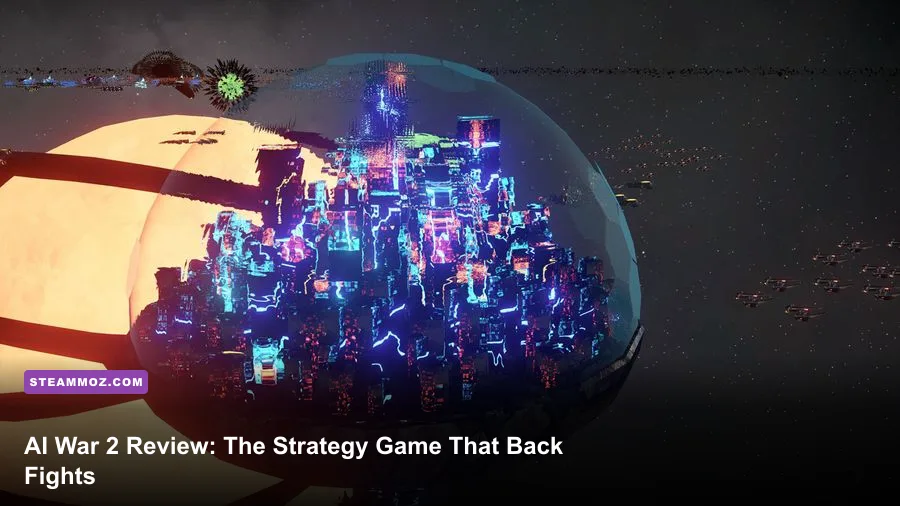
AI War 2 is absolutely worth playing in 2026 if you want a real-time strategy game where the enemy adapts to your behavior, mistakes actually matter, and victory comes from controlling escalation rather than flattening every target on the map. It isn't a relaxing 4X sandbox or a conventional StarCraft-style rush game. AI War 2 is a tense, systems-heavy campaign about poking an overwhelmingly powerful machine empire without waking it up too quickly.
That distinction explains both its brilliance and its steep learning curve. Arcen Games built a strategy game that rewards restraint, reconnaissance, calculated losses, and clever asymmetry. You don't conquer the galaxy because your economy snowballs harder than the AI's. You win by identifying the command structure, exploiting weak sectors, and making every attack increase your options instead of your body count.
For the current Steam version, the game remains one of the most distinctive choices on PC. Its pixel-art presentation is dated, the interface can feel hostile, and the opening hours are demanding. But beneath that rough exterior is a campaign engine with remarkable replay value. If you enjoy watching a plan evolve under pressure, this is still a special game.
What Makes AI War 2 Different From Traditional RTS Games?
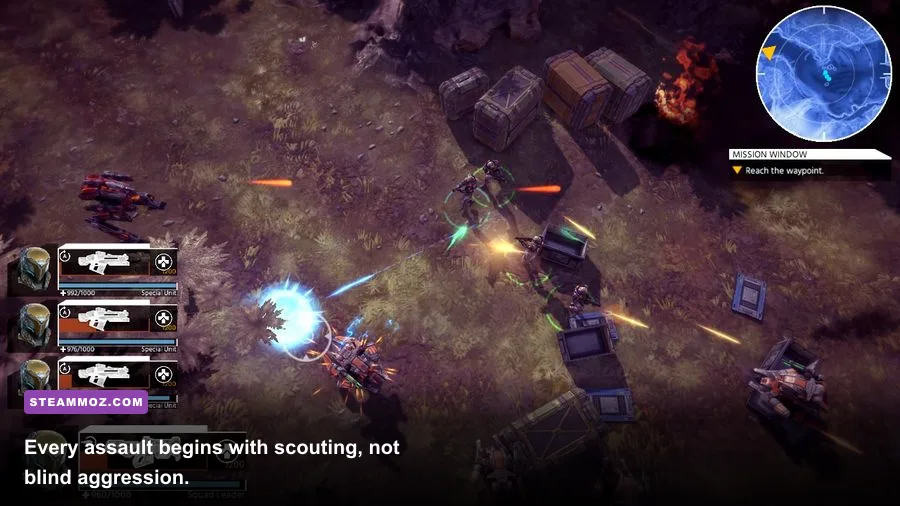
AI War 2 begins with an intentionally unfair premise: the AI already controls most of the galaxy, and your human forces are the underdog. The objective is not to destroy every enemy unit. Instead, you must capture enough key planets, defeat the AI's command infrastructure, and eventually reach the conditions needed to destroy its central fortresses. The map is a living network of threats, routes, economic nodes, and traps.
The most important mechanic is the AI's threat level. Attacking, capturing planets, destroying high-value structures, and using certain strategic tools can increase the attention you receive. A little pressure is useful because it opens routes and weakens defenses. Too much pressure creates stronger counterattacks, more dangerous patrols, and a campaign that can collapse before your economy is ready.
This produces an unusual rhythm. You might spend ten minutes building a fleet, then another fifteen scouting three neighboring systems without firing a shot. A planet can be strategically valuable but still not worth taking yet. A powerful enemy ship may be better left alive if killing it would spike the AI's attention. That sounds passive on paper, but in play it creates delicious tension: every target has a political cost as well as a military one.
The official Steam page for AI War 2 lists the core game and its expansions, while the Arcen Games AI War site provides developer background and support information. This is a game designed for players who enjoy learning systems, not players looking for instant spectacle.
| Feature | AI War 2 | Traditional RTS |
|---|---|---|
| Main objective | Break a superior AI network | Destroy the opposing base |
| Economy | Limited, strategic, and map-dependent | Often designed for steady expansion |
| Combat philosophy | Asymmetric raids and selective fights | Direct army engagements |
| Failure state | Campaign can unravel gradually | Usually decided in one final battle |

🎮 AI War 2
Looking to experience this game? Grab your digital key directly on our store for $4.99.
View on Steammoz Store →How the AI, Threat System, and Galaxy Map Work
The AI is not simply cheating with extra resources. Its real advantage is structural: it starts with a massive network, powerful defensive installations, and information about your strategic footprint. That network means the game is constantly asking whether your next move exposes a flank, activates a dangerous route, or leaves a captured planet impossible to defend.
Threat management is the skill that separates a promising first campaign from a doomed one. You should think of every operation as having three values: what it gains, what it costs in threat, and what it exposes afterward. Capturing a lightly defended world may provide a forward base, but if the planet sits beside an AI-controlled highway, the counterattack can arrive faster than your reinforcements.
Scouting is handled through more than simple line of sight. Reconnaissance ships, cloaked units, sensor structures, and disposable raiders can reveal the layout of a system before you commit your main fleet. Use cheap units to identify command stations, guard posts, dangerous shipyards, and planet connections. A successful scout run often saves more resources than an extra combat ship ever could.
The galaxy map also creates a natural progression curve. Early systems tend to teach you how to exploit local weaknesses, while later sectors punish sloppy logistics. Reinforcement range, jump routes, command limits, and repair access all matter. A fleet that looks unbeatable in one system can become stranded and useless after crossing into a sector with no safe repair point.
My biggest 2026 warning is simple: don't restart every time the opening goes badly. AI War 2 is built around recoverable damage. Losing a small fleet can teach you which planet was a trap, which enemy structure was generating pressure, and which route the AI uses for reinforcements. Restart only when your strategic position is irrecoverable, not merely uncomfortable.
| Strategic Priority | Why It Matters | Common Mistake | Better Approach |
|---|---|---|---|
| Scout | Reveals threats before fleet commitment | Sending the main army first | Use cheap reconnaissance and raiders |
| Threat control | Limits escalation and counterattacks | Capturing every nearby planet | Take only systems that improve your route |
| Logistics | Keeps fleets supplied and repairable | Advancing beyond support range | Secure staging planets before pushing |
| Retreat timing | Preserves experienced units | Fighting until total destruction | Withdraw when the objective is complete |
Best Beginner Approach, Fleet Composition, and Upgrades
Your first campaign should be about learning the information layer, not chasing the most aggressive build. Start with the standard Human faction and choose a lower difficulty setting while you learn the campaign economy. The game offers many faction combinations, difficulty modifiers, and map options, but adding every complication immediately makes it harder to understand why a plan failed.
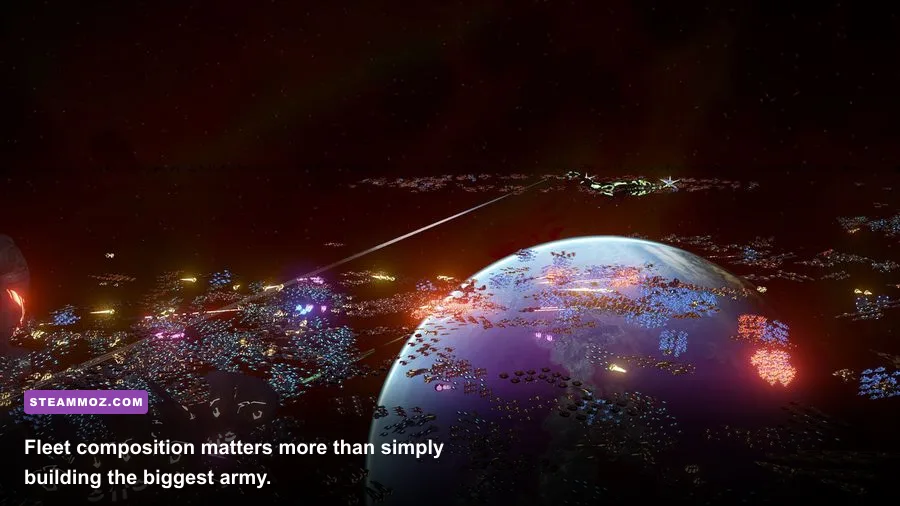
A balanced early fleet usually needs four jobs: durable frontline ships, ranged damage, anti-heavy tools, and utility. Human ships such as frigates and destroyers can handle routine patrols, while cruisers and larger command ships provide the durability needed for more serious assaults. Don't treat a large hull as an automatic upgrade. Bigger ships consume more command and economic capacity, and losing one can hurt far more than losing several inexpensive escorts.
Support ships are often the difference between a clean operation and a catastrophe. Repair capability, defensive buffs, fleet movement tools, and anti-jamming options can be more valuable than another damage dealer. A fleet with slightly lower paper damage but reliable repairs can remain in the field long enough to capture a strategic objective and escape before the AI mobilizes.
Upgrades should follow the problem in front of you. If enemy fighters are shredding your expensive ships, invest in anti-fighter coverage. If armored targets are absorbing your volleys, add armor-piercing or high-damage specialist units. If you are repeatedly losing to range, improve scouting and engagement control instead of merely adding slower artillery. AI War 2's best answer is usually a specific counter, not a universally stronger unit.
| Fleet Role | Recommended Early Choice | What It Solves | Deployment Tip |
|---|---|---|---|
| Frontline | Frigates and durable destroyers | Absorbs routine fire | Keep them between support ships and threats |
| Ranged damage | Long-range destroyers or cruisers | Softens static defenses | Focus one target instead of splitting fire |
| Anti-heavy | Specialist armor-piercing units | Defeats high-health ships | Protect them from escorts and fighters |
| Utility | Repair, scouting, and electronic support | Extends campaign endurance | Never leave utility ships unguarded |
For a deeper look at the game's hidden content, Steamoz's Neinzul Abyss secret rewards guide is a useful companion once you move beyond the beginner campaign. It also illustrates why the expansions are best approached after you understand the base game's threat economy.
Combat Tips That Stop Expensive Fleet Wipeouts
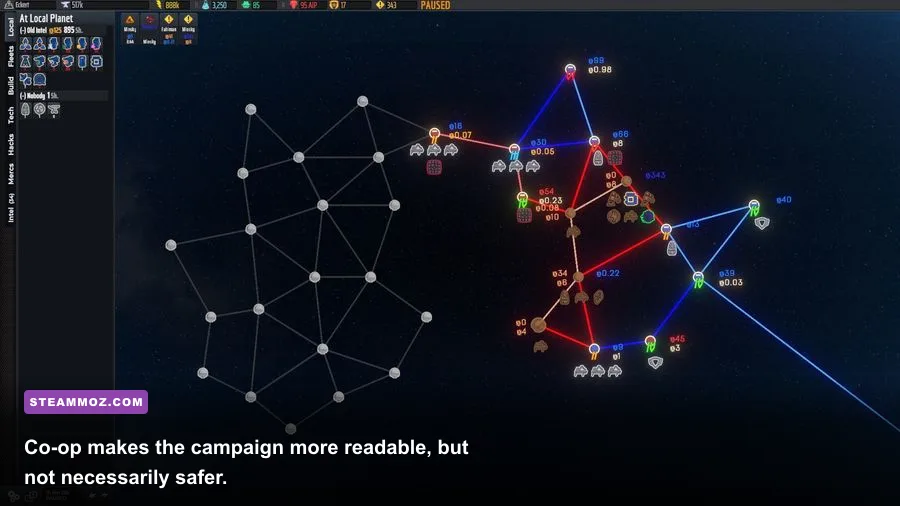
Combat looks chaotic until you learn to separate the battle into jobs. Your first priority is not maximum damage; it's preserving the ships that make the operation possible. Pull damaged frontline units backward, keep repair ships behind the engagement line, and pause frequently when multiple fleets converge. AI War 2 is real-time, but it rewards deliberate command more than frantic clicking.
Focus fire is critical. Enemy formations often include structures or ships that multiply the effectiveness of everything around them. Removing a command, support, repair, or production target can reduce the entire encounter's difficulty. Shooting whichever enemy is closest usually creates a long, expensive battle and gives reinforcements time to arrive.
Use terrain and system geometry to your advantage. Choke points can let a smaller force hold off a larger one, while open space exposes fragile ships to multiple attack angles. Don't enter an enemy system just because the jump route is available. Position your fleet outside the danger zone, send a scout through first, and identify the retreat path before the first shot.
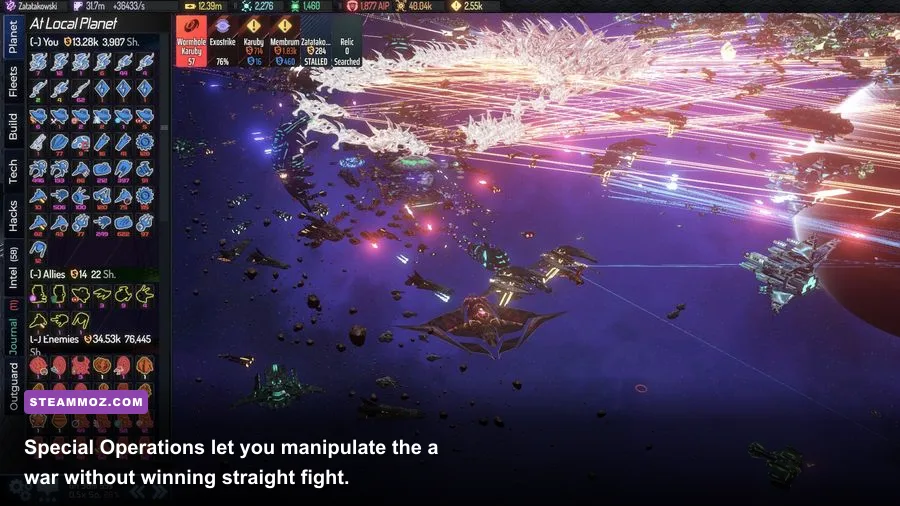
Raids are often stronger than sieges. A fast group can destroy a production structure, capture a lightly defended node, or bait an AI response before retreating. This is especially useful when your main fleet is not ready for a fortress assault. The goal is to make the AI spend attention and resources defending the wrong place.
When the campaign turns against you, stop expanding. Consolidate two or three useful planets, repair, replace lost utility ships, and watch the AI's patrol routes. The temptation to launch one desperate attack is how many otherwise recoverable campaigns end. A controlled retreat is not a failure in AI War 2; it is often the move that creates your next opening.
Performance, DLC Value, and Whether It Holds Up in 2026
AI War 2 is technically light compared with modern 3D strategy games. The challenge is not running the galaxy at the start of a campaign; it is maintaining clarity and responsiveness when dozens of fleets, projectiles, effects, and automation systems fill a late-game sector. The game's visual style remains readable, but large battles can still become information-heavy even when frame rate is stable.
On a modern gaming PC, use a high zoom level while planning and zoom in only for combat checks. Disable unnecessary visual effects if a large battle becomes difficult to read, and lower background or particle-heavy options before sacrificing interface scale. The most valuable performance improvement is often reducing clutter: fewer unnecessary fleets, cleaner formations, and sensible automation settings make the game feel faster even when the frame counter barely changes.
| Setting or Habit | Recommended Value | Performance Impact | Visual or Gameplay Note |
|---|---|---|---|
| Zoom level | High during planning | Low | Improves map awareness and reduces visual clutter |
| Particles and effects | Medium in huge battles | Medium | Makes projectile-heavy fights easier to read |
| Background detail | Medium or High | Low to Medium | Lower it first on older integrated graphics |
| Game speed | Pause for command reviews | None | Prevents accidental losses during multi-front fights |
The base game offers enough content to justify the purchase by itself, especially through randomized galaxies, difficulty settings, faction combinations, and cooperative play. The official AI War 2 developer page remains the best place to track the game's broader ecosystem. Expansions are worthwhile for returning players, but I wouldn't buy every add-on before learning the core campaign.
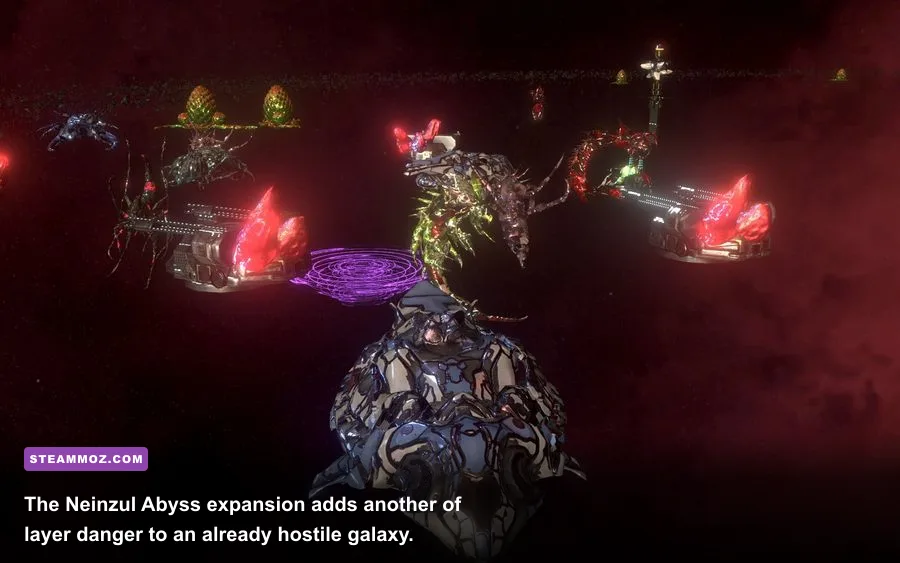
Neinzul Abyss is the standout recommendation for experienced players who want a new strategic threat and more unusual encounters. Other DLC content expands factions, units, scenarios, and campaign variety. The value depends on whether you want more complexity; these additions don't make the onboarding process easier. They make the sandbox deeper after the fundamentals click.
Co-op is another strong reason to revisit the game in 2026. Sharing scouting, fleet control, and strategic planning makes the galaxy easier to parse, but it doesn't remove the consequences of bad decisions. In fact, co-op can expose the game's best quality: two players can disagree about whether a target is worth the threat cost, and both arguments may be strategically sound.
If you like demanding strategy games, compare the experience with Steamoz's smooth 60 FPS settings guide and Airline Tycoon 2 performance breakdown. Those games approach optimization differently, but AI War 2 makes the same point: readable information is often more valuable than visual spectacle.
Final Verdict: Is AI War 2 Worth Playing in 2026?
Yes, but only if you meet it on its own terms. AI War 2 is worth playing in 2026 because almost no other RTS creates this particular combination of asymmetry, threat management, scouting, and campaign-level improvisation. It doesn't ask whether you can produce units quickly. It asks whether you can understand a hostile network well enough to make progress without turning the whole galaxy against you.
That also makes it a poor recommendation for players who want a polished onboarding experience, cinematic missions, or simple base-building comfort. The interface takes time to read. The terminology can feel dense. You will lose fleets because you misunderstood a system, and the game won't always explain your mistake in a satisfying way. Patience is part of the purchase price.
But once the logic clicks, every successful raid feels earned. You scout a fortress, identify the one defense that makes the assault impossible, bait a patrol away, capture a staging planet, and return with a fleet built for that exact weakness. The victory isn't just watching an enemy base explode. It's seeing your plan survive contact with a machine that was stronger than you from the beginning.
Steamoz verdict: Buy it for deep solo or co-op strategy, especially if you enjoy difficult systems and replayable campaigns. Skip it if you want a straightforward RTS with quick matches and obvious objectives. In 2026, AI War 2 is still rough around the edges, but its strategic imagination remains far ahead of most games in the genre.
For more long-tail PC recommendations, Steamoz's Alien: Isolation review covers another game that rewards patience, while our Bomb Rush Cyberfunk review offers a very different kind of replayable 2026 recommendation.