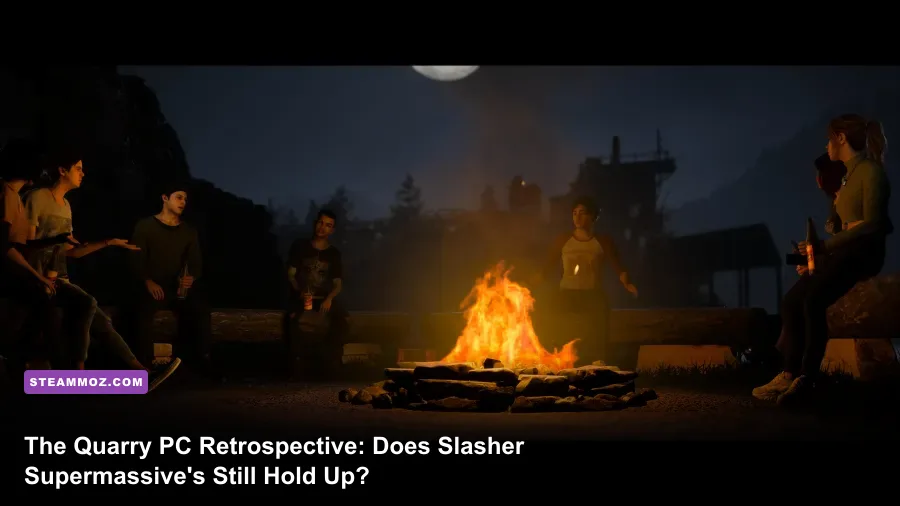
Yes, The Quarry is absolutely worth playing on PC today, provided you grab it during a seasonal storefront sale and adjust your expectations regarding its reflex difficulty. Years removed from its rocky 2022 release, Supermassive Games' cinematic love letter to vintage slasher cinema has quietly transformed from an overpriced, stutter-heavy package into a polished, pitch-black popcorn thriller. Thanks to post-launch patches that purged Denuvo anti-tamper, community workarounds that sideline the intrusive 2K Launcher, and routine digital sales dropping the price tag under $20, Hackett’s Quarry now stands as one of the most accessible and visually arresting narrative horror titles on modern PC hardware.
That endorsement, however, comes with critical caveats. If you enter Hackett's summer camp expecting the brutal quick-time event (QTE) gauntlets of Until Dawn or the razor-sharp mechanical tension of modern survival horror, you will walk away disappointed. The Quarry is an interactive Hollywood creature feature first and a video game second. It is a title built for dimly lit rooms, surround-sound headphones, and couch co-op debates over whether to abandon a friend or investigate a noise in the cellar. Stripping away the pre-release hype reveals a deeply atmospheric, flawed, and undeniably charming camp-horror romp that still outclasses most interactive dramas on the market.

Visuals, Mo-Cap, and Atmosphere: How Hackett’s Quarry Ages on Modern Rigs
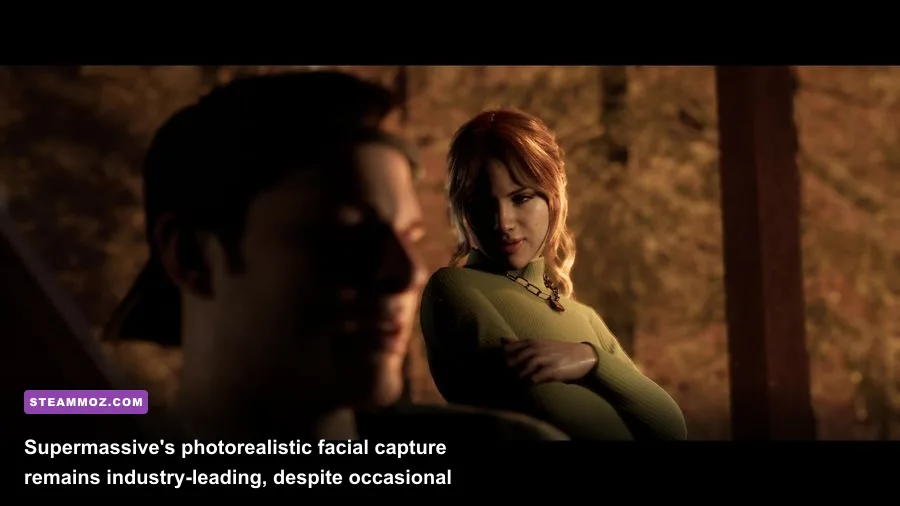
From an audiovisual standpoint, The Quarry remains a showcase title for Unreal Engine 4’s deferred rendering capabilities. The game leverages cutting-edge photogrammetry and high-fidelity performance capture to bring its star-studded ensemble to life. Actors like Brenda Song (Kaitlyn), Ted Raimi (Sheriff Travis Hackett), Miles Robbins (Dylan), Siobhan Williams (Laura), and horror royalty David Arquette (Chris Hackett) deliver nuanced facial performances that hold up remarkably well on modern high-resolution displays. Micro-expressions—a nervous twitch of the eyelid, trembling lips during panic attacks, or pupils dilating under flashlight beams—lend tangible emotional weight to the adolescent campfire melodrama.
The environmental design carries that same heavy atmosphere. The Hackett’s Quarry summer camp grounds feel soaked in history, damp wood, and rotting pine needles. Volumetric fog slithers through tree branches, moonlight scatters across the surface of the lake, and the interior spaces—from the cluttered camp lodge to the rusted scrapyard—are layered with atmospheric grit. Lighting is the real star here; Supermassive employs aggressive cinematic contrast, using suffocating black levels to hide threats just beyond the perimeter of your torch beam.
Yet, the presentation isn't completely immune to age. The infamous "wet mouth" glitch, where character teeth occasionally render with an unsettling, plastic sheen, still rears its head during certain dialogue angles. Some transitional animations between exploration and scripted cutscenes feel stiff, causing counselors to awkwardly snap 90 degrees when interacting with clue objects. Furthermore, the filmic grain filter and chromatic aberration applied to mimic 1980s celluloid stock can look excessively noisy at native 1080p, practically requiring you to step up your rendering resolution scale to keep distant forest foliage from devolving into a sea of shimmering artifacts.
🎮 The Quarry
Looking to experience this game? Grab your digital key directly on our store for $5.99.
View on Steammoz Store →PC Performance and Modern Optimization: Taming Unreal Engine Stutters
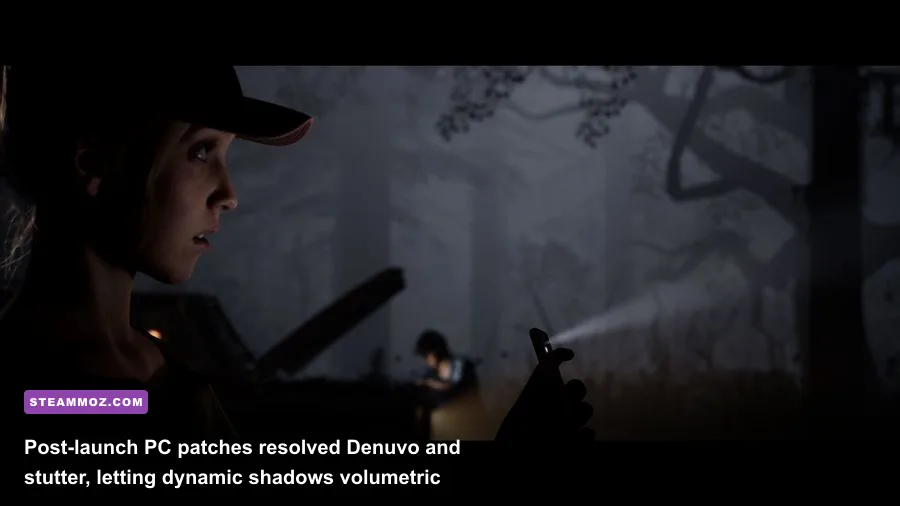
At launch, PC gamers faced stuttering camera pans, erratic frametimes, and broken HDR implementations. Fortunately, subsequent game updates significantly improved pipeline efficiency. The quiet removal of Denuvo stripped away CPU-bound frame pacing hiccups, while maturity in graphics drivers has eliminated the hard system lockups that once plagued DirectX 12 users. If you have spent time troubleshooting finicky engines like the ones detailed in our atmospheric horror stability guide, you know how crucial smooth frame pacing is for horror immersion.
Modern midrange rigs (such as an RTX 3060 or RX 6700 XT) can easily sustain a locked 60 FPS at 1440p using the highest visual presets, provided you configure your graphics pipeline properly. The biggest technical roadblock remains the default 2K Launcher, which can cause background CPU hitching. Bypassing the launcher via Steam launch properties (setting your target directly to "TheQuarry.exe" %command%) yields an immediate boost to frame stability. Much like resolving the stubborn frame drop issues seen in our performance optimization breakdowns, clean execution starts outside the game menu.
| Graphics Setting | Recommended Value | FPS Cost | Visual & Gameplay Impact |
|---|---|---|---|
| DirectX API | DirectX 11 (Legacy) / DX12 (Modern) | Low | DX12 is ideal for modern GPUs with DLSS/FSR; DX11 eliminates shader stutters on older Pascal/Polaris architectures. |
| Volumetric Fog | High (Drop from Ultra) | 8% - 12% | Ultra adds heavy GPU overhead along the lakefront with negligible visual gains over High. |
| Shadow Quality | High | 6% - 10% | Softens harsh flashlight edges. Crucial for atmosphere without cratering mid-range cards. |
| Ambient Occlusion | Ultra | 3% - 5% | Mandatory for horror depth; prevents character models from appearing detached from shadowy cabin interiors. |
| Screen Space Reflections | High | 4% - 7% | Dictates puddle, wet dock, and lake reflections. Disabling makes forest scenes look flat and dry. |
| Temporal Upscaling | DLSS / FSR 2 (Quality) | -20% to -35% (Gain) | Cleans up fine tree foliage shimmer and reconstructs dark scenes cleanly at 1440p and 4K. |
| Motion Blur & Depth of Field | User Preference (On for Film) | Negligible | Turning these On preserves the intended 2.39:1 anamorphic cinema aesthetic, but purists prefer them Off. |
For ultrawide display owners, be aware that The Quarry forces hardcoded 2.39:1 cinematic letterboxing. If you run a native 21:9 monitor, you will be met with pillarboxing inside letterboxing by default—a frustrating "black box" border surrounding the picture. Fixing this requires community utility patches from PCGamingWiki to uncap the aspect ratio and modify the FOV. Dialing in these display parameters ensures you won't suffer from the distortion or frame hitches explored in our high-resolution frame pacing guide.
Branching Narrative and Character Survival: Meaningful Choices or Smoke and Mirrors?
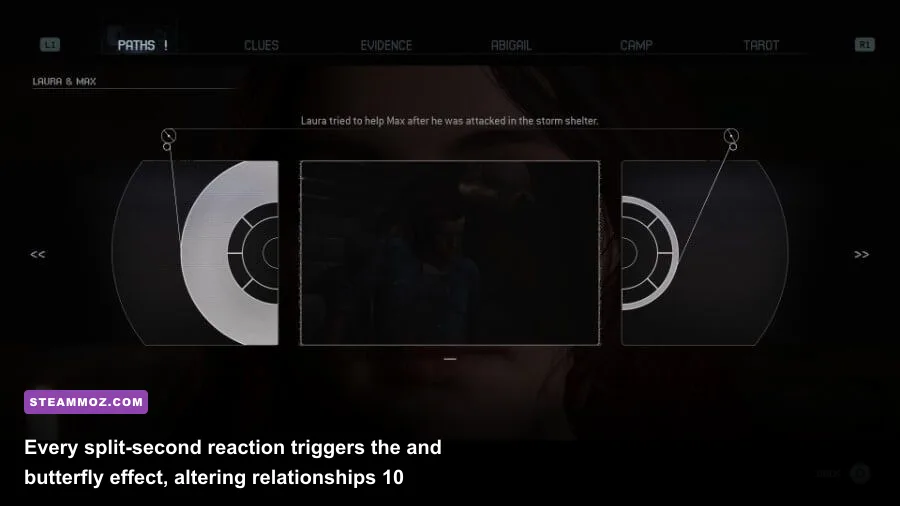
The marketing apparatus behind The Quarry promised a dizzying "186 unique endings," a figure that set unrealistic expectations at launch. In reality, the game uses a modular narrative framework driven by "Path Chosen" triggers. When an action substantially shifts the fate of a character, a stylized retro VHS tape splash screen interrupts the action, logging the decision into your menu tracker. These decisions weave a complex web, but they funnel toward specific thematic choke points rather than 186 wildly distinct finales.
Where the game genuinely succeeds is in its asymmetrical vulnerability. Unlike titles where character deaths feel restricted to late-game climaxes, Hackett's Quarry can claim lives shockingly early. Jacob Custos can meet a gruesome demise as early as Chapter 3 if you botch underwater escape QTEs or wander into bear traps. Emma can be shredded across the treehouse boardwalk in Chapter 4 if you make the fatal mistake of rummaging through bags instead of instantly sprinting for the zip-line.
However, narrative plot armor is undeniably present. Laura Kearney and Ryan Grossman serve as the central investigative spine of the story, meaning they are mathematically shielded from permanent death until Chapters 9 and 10. While this keeps the central mystery moving at a brisk clip, it robs specific mid-game sequences of genuine stakes once you realize the script refuses to kill them off prematurely. Contrast this with characters like Nick Furcillo, who essentially transforms into a passive narrative prop halfway through the run regardless of your survival choices.
| Counselor / Hackett | Earliest Fatal Chapter | Critical Survival Key / Decision | Vulnerability Tier |
|---|---|---|---|
| Jacob Custos | Chapter 3 | Rotor arm retrieval choice; breaker puzzle logic in Hackett basement. | Extremely High (Dozens of death triggers) |
| Emma Mountebank | Chapter 4 | Treehouse taser discipline; slow-reel vs. zip-line commitment. | High (Multiple early-to-mid lethal traps) |
| Abigail Blyg | Chapter 6 | Willingness to fire the 12-gauge shotgun at pool house attacker. | Moderate (Failsafe triggers tied to hesitation) |
| Dylan Lenivy | Chapter 5 (Infection) / Ch. 8 | Radio cabin bite amputation method; scrapyard crane horn timing. | Moderate (Can lose limbs, lives, or transform) |
| Kaitlyn Ka | Chapter 9 | Silver shells retrieval from Abi; freezer door bait-and-switch. | Late-Game Lethal (Final stand boss encounters) |
| Laura Kearney | Chapter 9 | Travis Hackett relationship status; Hackett mansion shootout resolution. | Plot-Armored (Invulnerable Chapters 1-8) |
| Ryan Grossman | Chapter 9 | Accepting Laura's bite proposal; shotgun aim in the dining hall. | Plot-Armored (Invulnerable Chapters 1-8) |
The Tarot card mechanic overseen by Eliza Vancore—the spectral fortune teller who greets you between chapters—adds a welcome layer of tactical foresight. Finding hidden cards like The Hierophant, The Tower, or Death allows Eliza to show you a fleeting glimpse of a potential future demise. These premonitions aren't always straightforward; some tempt you toward actions that look safe but carry catastrophic butterfly effects three chapters later. Managing these insights feels akin to balancing risky weapon rewards, much like evaluating gear trade-offs highlighted in our tactical progression breakdowns.
Gameplay Mechanics and Accessibility: Why the Horror Leans Casual
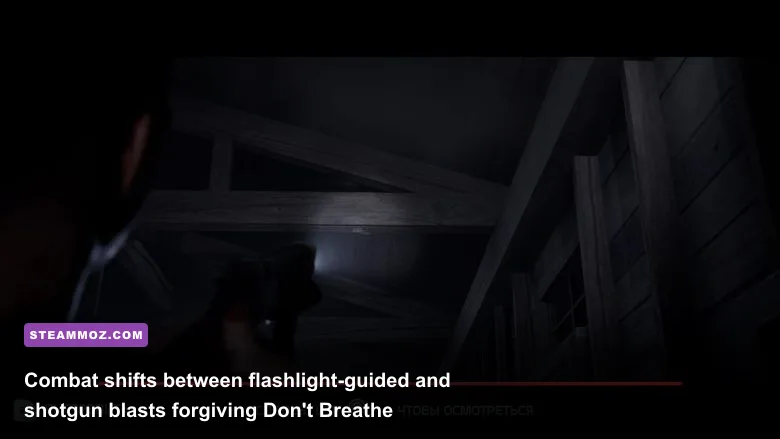
If you come directly from high-intensity survival horror games or tight rhythm titles, you will quickly notice that The Quarry pulls its mechanical punches. The control scheme strips back the twitchy input demands of earlier Supermassive titles to prioritize accessible, narrative flow. Quick-time events have been reduced to sweeping analog stick flicks (or keyboard direction keys) with extremely forgiving time windows—often granting players a massive two to three seconds to react.
The stressful "Don't Move" mechanic from Until Dawn, which tracked controller gyro movement with unforgiving precision, has been replaced by the "Don't Breathe" system. Here, you simply hold down a single button until the red heartbeat border fades from your monitor. It creates decent audiovisual tension, but it is nearly impossible to fail unless you completely lack patience. For players who found older horror games mechanically frustrating, this casual lean is a godsend; for hardcore gamers who want survival tied to mechanical execution, it diminishes the adrenaline rush.
Combat encounters utilize an over-the-shoulder shotgun reticle illuminated by your flashlight beam. Aiming feels intentionally sluggish to simulate panic, but the collision boxes on targets are generous. You rarely need pinpoint accuracy; the trick lies in choosing when to pull the trigger or holding your fire to assess whether the creature lunging out of the shadows is actually a friend who needs help. Getting your display input latency tuned correctly—similar to the techniques covered in our frame-timing optimization guide—ensures that even these sluggish flashlight movements track smoothly across your screen.
Where the mechanics truly shine is in social settings. The Quarry features an exceptional Movie Mode that lets you strip out all active gameplay entirely, setting character traits to "All Survive," "Gorefest," or custom behavioral profiles so you can watch the entire narrative unfold like an episodic Netflix miniseries. Furthermore, the local Couch Co-op mode (assigning specific counselors to individual players with pass-the-pad prompts) and the online Wolf Pack mode (where spectators vote on dialogue choices via an interactive overlay) turn what could have been an isolated single-player story into an unforgettable group party experience.
The Chapter 7 Pacing Wall and That Abrupt, Anticlimactic Ending
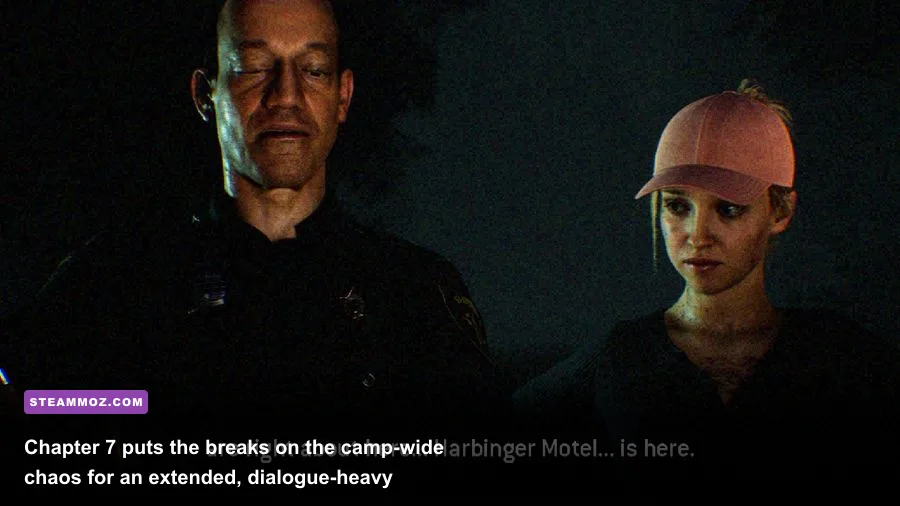
No honest retrospective can ignore the two glaring creative flaws that hold The Quarry back from reaching absolute greatness: its catastrophic mid-game pacing slump and its deeply underwhelming climax.
Around the halfway mark, the camp-wide panic grinds to a dead halt. Chapter 7 forces the player into an extended, nearly hour-long flashback inside the North Kill Police Station. While Siobhan Williams and Ted Raimi put on absolute acting clinics during these interrogation cells scenes, shifting away from seven other counselors trapped in mortal peril completely deflates the narrative momentum. You go from running for your life across moonlit docks to slowly wandering around office desks, inspecting coffee mugs, and playing acoustic guitar chords in a holding cell. By the time the game returns to the main camp in Chapter 8, you have to actively rebuild your emotional investment.
Then comes the ending. In Until Dawn, surviving the night treated players to an incredible police interrogation room sequence where each survivor broke down their trauma, reacted to the friends they lost, and directly responded to the horrors they witnessed. It provided catharsis, closure, and narrative payoff.
The Quarry abruptly cuts to black. There is no morning reunion at the camp gates, no tearful hugs between surviving lovers, and no confrontation between the counselors and authorities. Instead, you get a cold, sterile text summary detailing who lived, who died, and whether anyone contracted the werewolf curse. This is followed by an agonizingly long credits sequence set to an audio-only podcast called "Bizarre Yet Bonafide," where two annoying, unseen hosts dissect the clues you found. It remains one of the most tone-deaf, anticlimactic conclusions to an otherwise brilliant horror ride in modern gaming memory.
Final Verdict and Value: Should You Pick Up The Quarry Today?
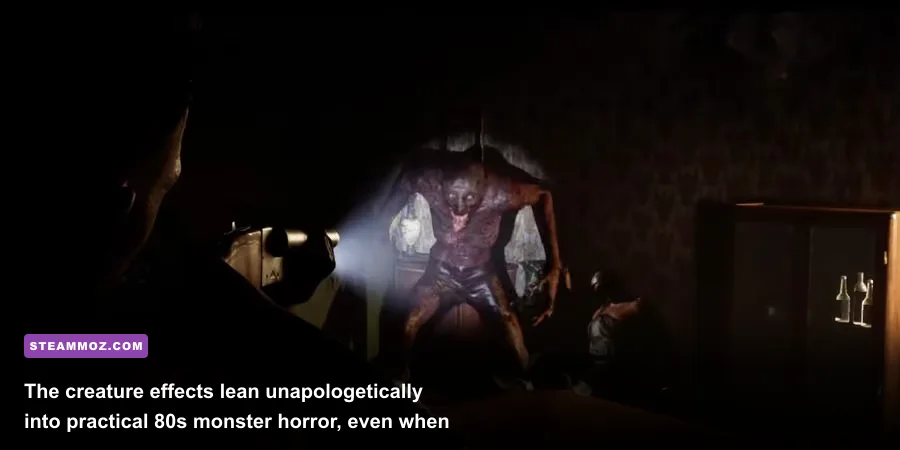
Despite its abrupt finish and casual-first mechanics, The Quarry remains an exceptional, highly replayable creature feature. The charm of its cast, the sheer brutality of its gory kill sequences, and the genuine depth of its branching paths make it a triumph of camp-horror atmosphere. It feels like an authentic homage to 1980s VHS classics like Friday the 13th, The Burning, and An American Werewolf in London, brought to life through stellar motion capture and gorgeous Unreal Engine artistry.
You should not pay the original launch price of $59.99 on The Quarry's official Steam store page. However, when the title drops into the $15 to $20 range during major platform sales, it is an absolute steal. It delivers an unforgettable 10-to-12-hour maiden voyage that begs to be replayed at least twice to see how wildly different decisions alter the camp's body count. If you love B-movie slasher tropes, have a weekend free, and want a gorgeous interactive horror film to play through with friends or a partner, Hackett's Quarry is waiting to welcome you back.