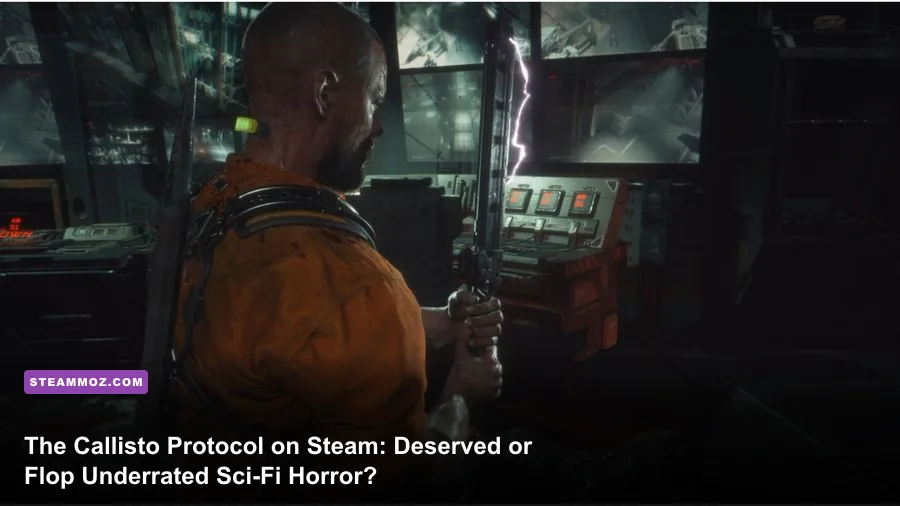
If you skipped The Callisto Protocol on Steam after its disastrous, stutter-crippled launch in late 2022, the verdict today is clear: yes, it is genuinely worth playing, provided you grab it during a seasonal sale and treat it as a linear, kinetic brawler rather than a slow-burn survival horror simulator. Striking Distance Studios spent well over a year systematically tearing out the game's worst launch pain points. They rebuilt the asynchronous shader compilation pipelines, cut sluggish healing animations down from 3.8 seconds to a snappy 2.1 seconds, sped up weapon swapping, and re-engineered enemy attack aggression so you don't get blindsided from off-screen while locked in a fistfight. What remains is a breathtakingly gorgeous, pulse-pounding, B-movie thrill ride through Jupiter's dead moon that finally runs at a buttery 60+ FPS on mid-range hardware.
The Launch Disaster vs. The Modern Patch Reality
To understand where the game stands today, you have to remember why it crashed so hard out of the gate. On December 2, 2022, PC players booted up The Callisto Protocol only to encounter an unplayable slide-show. Unreal Engine 4's notorious Pipeline State Object (PSO) caching hitches turned every new room, enemy spawn, and particle effect into a micro-freeze nightmare. Even monstrous rigs packing RTX 4090s and Core i9s dropped into single-digit frame rates. The user review score on Steam tanked into "Mostly Negative" territory within forty-eight hours.
Fast forward through patches v1.08 up to the final definitive updates, and the PC client feels like a completely different release. Striking Distance overhauled the shader pre-caching routines during boot-up, eliminated traversal hitches across streaming sector boundaries, and stabilized DirectX 12 API calls. Much like our hardware troubleshooting in Elex PC fixes that stop crashes and rescue your FPS and the stability adjustments detailed in our EscapeVR basement low FPS fixes, aggressive software-side driver tuning and engine updates completely redeemed the title's core performance envelope.
Beyond frame delivery, the developers listened to mechanical complaints. At launch, Jacob Lee moved like a tank stuck in wet cement. Swapping from the BI-55 Pistol to the Riot Shotgun felt like watching paint dry while a snarling Biophage ripped your jaw off. Healing required an excruciating, uninterrupted posture kneel. Today, weapon selection is instantaneous on hotkeys, healing syringe injection speed is increased by nearly 45%, and the camera FOV (field of view) has been pushed slightly back from Jacob's right shoulder, granting much-needed peripheral awareness during frantic mob encounters.

🎮 Protocol
Looking to experience this game? Grab your digital key directly on our store for $19.99.
View on Steammoz Store →Combat Mechanics: Rhythm, The Stun Baton, and Dodging Re-Examined
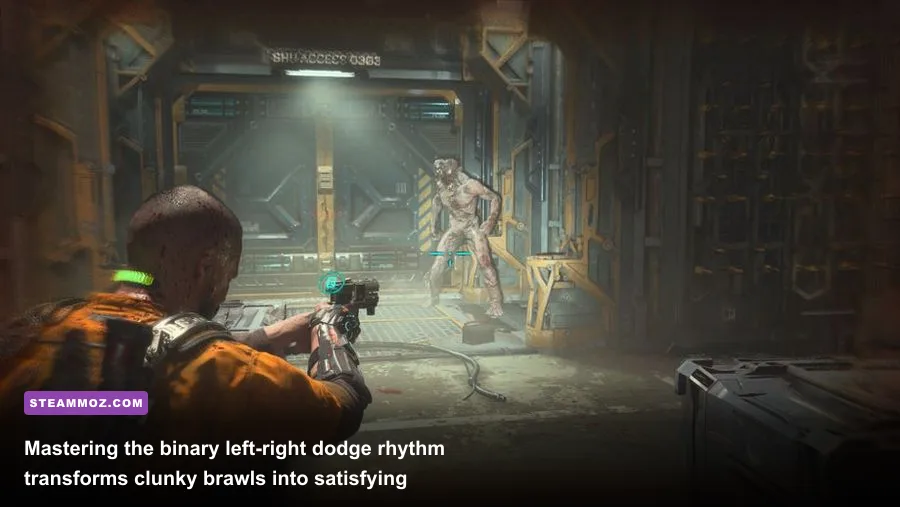
The single most divisive element of The Callisto Protocol was never its gore—it was the dodging mechanic. Striking Distance opted against traditional i-frame rolls or directional dodge buttons. Instead, you hold the left analog stick (or A/D on a keyboard) to either side before an enemy swing lands. You do not need frame-perfect timing; you simply hold left, wait for the swing, and then hold right for the follow-up blow. Many purists hated this system because it felt automated, but once you view it as a heavyweight boxing rhythm game, the melee combat clicks into an intensely satisfying loop.
Your bread-and-butter offensive tool is the Stun Baton. Upgraded through the Reforge 3D printer stations, the baton carries heavy staggering weight. When you execute a standard three-hit combo, a blue targeting reticle snaps onto the enemy's exposed vitals. Pulling your aim trigger immediately fires a snap "Skill Shot" with your equipped firearm, dealing a massive 2.5x critical damage multiplier and blowing off limbs without requiring manual re-centering.
Then comes the GRP (Gravity Restraint Projector)—Jacob's glove-mounted telekinesis device. While critics initially labeled it a cheap clone of Dead Space's Kinesis module, the GRP is far more aggressive. It enables you to yank approaching Biophages mid-sprint and launch them directly into industrial environmental hazards: wall-mounted meat grinders, spinning turbine ventilation fans, or spiked scaffolding. While environmental hazards instantly kill basic grunts, relying entirely on the GRP drains your battery pack rapidly. Tactical survival on Maximum Security difficulty demands balancing Stun Baton melee swings to build combo rhythm, Skill Shots to break armor, and GRP throws to thin crowds.
Weapon Arsenal & Progression Tier List
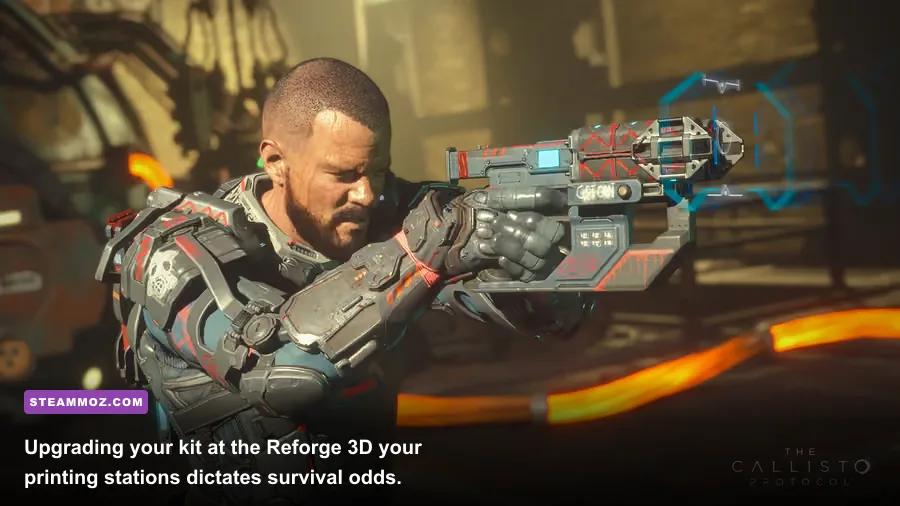
Managing Callisto Credits (the in-game currency spent at Reforge terminals) is cutthroat. Wasting thousands of credits upgrading mediocre gear leaves you critically underpowered once armored two-headed brutes enter the fray. Similar to optimizing weapon tiers in our Far Cry 3 Blood Dragon weapons ranked guide and evaluating gear value in the Everspace weapons worth your credits breakdown, you must ruthlessly prioritize high-impact utility over flashy spray-and-pray options.
| Weapon Name | Ammo Economy | Damage Output | Tier Rating | Key Upgrade Priority |
|---|---|---|---|---|
| Stun Baton | Infinite (Melee) | High (Combo Scaled) | S-Tier | Damage Level 3 & Velocity Swings |
| Riot Shotgun | Moderate (8 Shells/Stack) | Extreme (Close Quarters) | S-Tier | High-Explosive Explosive Rounds (Boom Bullets) |
| Skunk Gun | Poor (Small Magazine) | Very High (Burst) | A-Tier | Magazine Capacity Upgrade |
| BI-55 Hand Cannon | Excellent (Abundant Ammo) | Moderate | B-Tier | Stability & Skill Shot Critical Enhancer |
| Tactical Pistol | Low Efficiency | Low to Medium | C-Tier | Burst Fire Conversion |
| Assault Rifle | Terrible (Burns Ammo Stacks) | Moderate (Sustained) | D-Tier | Homing Micro-Missiles |
The clear undisputed king of the ranged roster is the Riot Shotgun, gifted automatically by Dani Nakamura in Chapter 5. Its final upgrade unlocks explosive slug rounds that stagger even the tankiest mid-bosses while obliterating mutated limbs in a single blast. Conversely, the late-game Assault Rifle looks tempting on paper, but its high fire rate quickly depletes your limited 12-slot inventory capacity. Crafting ammo for the rifle will drain your Callisto Credits without delivering the stagger-stopping burst damage you desperately need during corridor lockdowns.
PC Performance, Graphic Presets, and Hardware Benchmarks
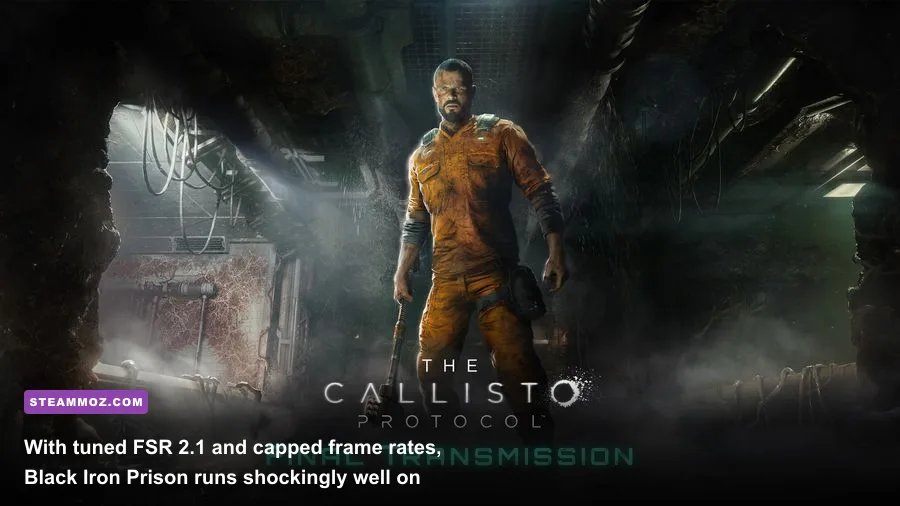
Visually, The Callisto Protocol remains an absolute graphical showcase. The game uses bespoke subsurface scattering for human skin, incredibly detailed photogrammetry for corroded steel, and volumetric fog that drapes over Black Iron's lower sewage tunnels. However, running everything pinned to Ultra settings will still bring high-end hardware to its knees if you do not fine-tune Ray Tracing.
Ray-traced shadows and reflections look phenomenal on puddles and wet metallic bulkheads, but Ray-Traced Reflections eat up approximately 30% of your rendering headroom. For maximum frame consistency, follow the optimized profile below, comparable to our tuning methodologies in Far Cry 6 settings for max FPS and the system balancing in our Filament settings for higher FPS guide.
| Graphic Setting | Recommended Value | FPS Performance Impact | Visual Impact & Strategic Notes |
|---|---|---|---|
| Rendering API | DirectX 12 | Baseline | Mandatory on PC; DX11 eliminates modern CPU threading. |
| Ray-Traced Shadows | On | Moderate (~8-12%) | Sharpens ambient environmental dread without massive drops. |
| Ray-Traced Reflections | Off | Severe (~25-35%) | Screen Space Reflections (SSR) are already high quality; turn off to prevent spikes. |
| Upscaling (FSR 2.1) | Quality Mode | +28% Frame Gain | Crisp reconstruction at 1440p and 4K; cleans up temporal aliasing. |
| Volumetric Fog | Medium | Low (~4%) | Imperceptible visual difference from High, but restores 5 FPS in transit tunnels. |
| Shadow Quality | High | Moderate (~7%) | Preserves sharp shadow outlines under harsh fluorescent tube lights. |
| Mesh Quality | Ultra | Negligible (<2%) | Keep high if you have 8GB+ VRAM to prevent geometric pop-in. |
Steam Deck Optimization Profile
Can you play it on Valve's handheld? Surprisingly, yes. Following patch updates and Valve's custom Proton Hotfix caches, the game is officially verified for Steam Deck. Lock your display refresh rate to 40Hz / 40 FPS (or a rock-solid 30 FPS on high-stress levels), engage AMD FSR 2.1 set to Balanced, and set Shadows, Motion Blur, and Volumetrics to Low. You will achieve an average battery runtime of roughly 1 hour and 45 minutes on the LCD model (near 2.5 hours on the OLED), delivering a portable survival horror showcase that punches way above its weight class.
Story, Atmosphere, and the Divisive Final Transmission DLC
Atmospheric immersion is where The Callisto Protocol unequivocally shines. Sound design crafted by Striking Distance is among the best in the industry. Wearing a proper spatial audio headset, you can track the scraping claws of Biophages crawling through ventilation conduits directly above your skull. The performance capture for Jacob Lee (portrayed with gritty exasperation by Josh Duhamel) and Dani Nakamura (Karen Fukuhara) grounds an otherwise standard evil-corporation outbreak story.
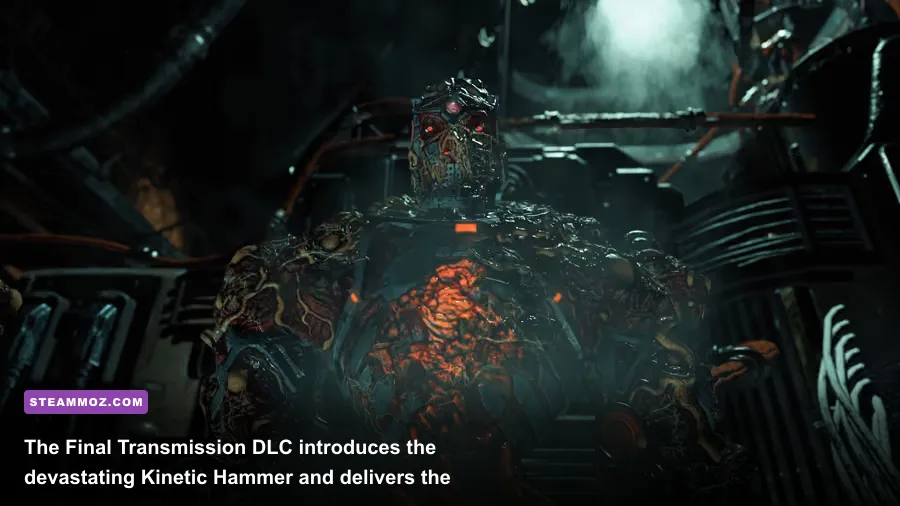
However, no honest retrospective can overlook the elephant in the room: the ending. When the base game shipped, the story cut off on an abrupt, unsatisfying cliffhanger that explicitly baited future content. That content arrived in June 2023 with the Final Transmission DLC, available separately on the official Callisto game store.
Final Transmission adds the devastating Kinetic Hammer—a shockwave-emitting heavy melee weapon that replaces the Stun Baton and transforms Jacob into an absolute freight train—along with the terrifying Biophage Corruptor enemy type. It also provides the genuine, heartbreaking canonical climax to Jacob's journey. While locking the definitive story finale behind paid DLC drew justifiable fury from day-one buyers, getting the full Season Pass bundle on sale for a fraction of its original $70 cost makes this complete narrative journey feel far more cohesive and rewarding today.
Final Verdict: Who Should Pick It Up?
The Callisto Protocol will never be the deep psychological puzzle box that the Dead Space Remake or Resident Evil 4 achieved. It lacks extensive backtracking, map navigation screens, and branching inventory management. It is, by design, an aggressive, linear corridor thrill ride that demands you stand your ground, duck under jagged bone spikes, and blow mutated heads off with an explosive shotgun slug.
If you judge the game by its broken 2022 release state, you are missing out on what has evolved into one of the punchiest, most graphically arresting action-horror games on modern PC platforms. When it goes on sale on Steam—often dropping into the $15 to $20 bracket including the DLC—it is an effortless recommendation for anyone who loves high-budget sci-fi gore, bone-breaking melee brawls, and relentless popcorn-thriller tension.