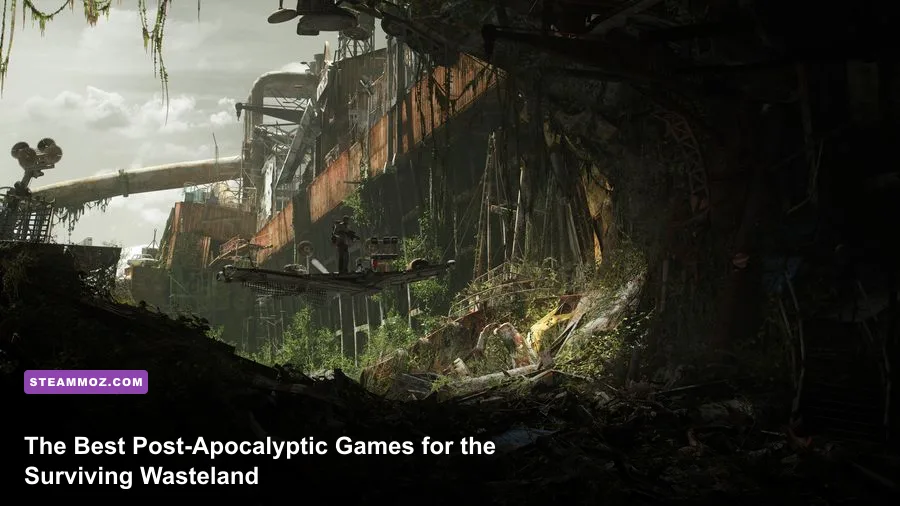
If you want the single best post-apocalyptic game for actually surviving a wasteland — not just shooting your way through one — it's Fallout: New Vegas for narrative-driven survival with real consequences, Metro Exodus for atmosphere and resource dread, and STALKER 2: Heart of Chornobyl if you want the Zone to genuinely try to kill you at every turn. But "best" depends on what kind of survivor you want to be: a scavenger juggling hunger and radiation, a horde-runner managing stamina against freaker swarms, or a base-builder fortifying against nightly zombie sieges. Below is the breakdown that actually matters — mechanics, stats, and why each game earns its spot in the wasteland canon.
What Makes a Post-Apocalyptic Game Actually About Survival
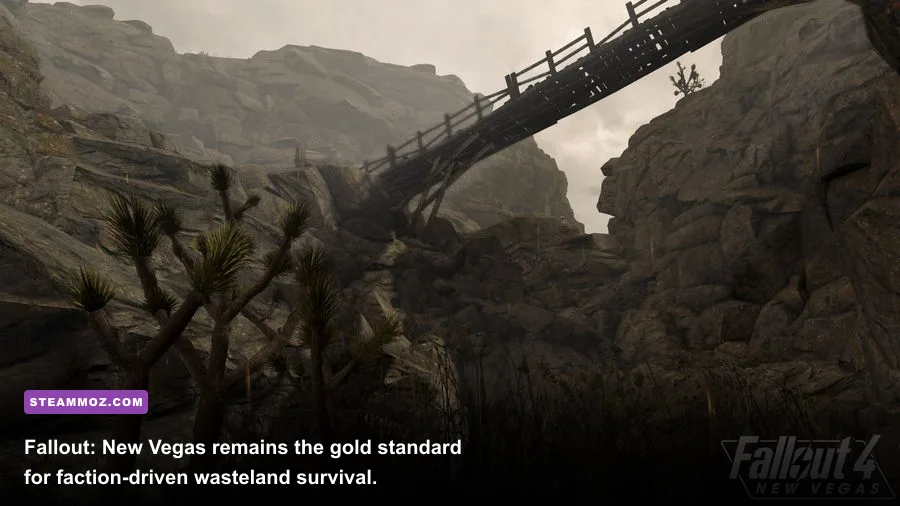
Here's the thing a lot of "apocalypse" games get wrong — they slap radiation zones and rusted cars over a standard shooter and call it survival. Real wasteland survival design needs friction: hunger and thirst meters that actually punish neglect, gear degradation that forces hard choices, and enemy AI that exploits your weaknesses instead of just soaking bullets. Fallout: New Vegas nailed this with its Hardcore Mode, where ammo has weight, Stimpaks heal over time instead of instantly, and dehydration can straight-up kill you in the Mojave heat. Metro Exodus does it through gas mask filters that degrade in real time, forcing you to sprint through irradiated zones with a ticking clock strapped to your face. STALKER 2 leans on anomaly fields and artifact hunting where greed gets you killed just as often as bullets. These are the design pillars that separate genuine wasteland survival from apocalypse-flavored action games.

🎮 Wasteland
Looking to experience this game? Grab your digital key directly on our store for $5.99.
View on Steammoz Store →S-Tier Wasteland Survival Games You Need to Play
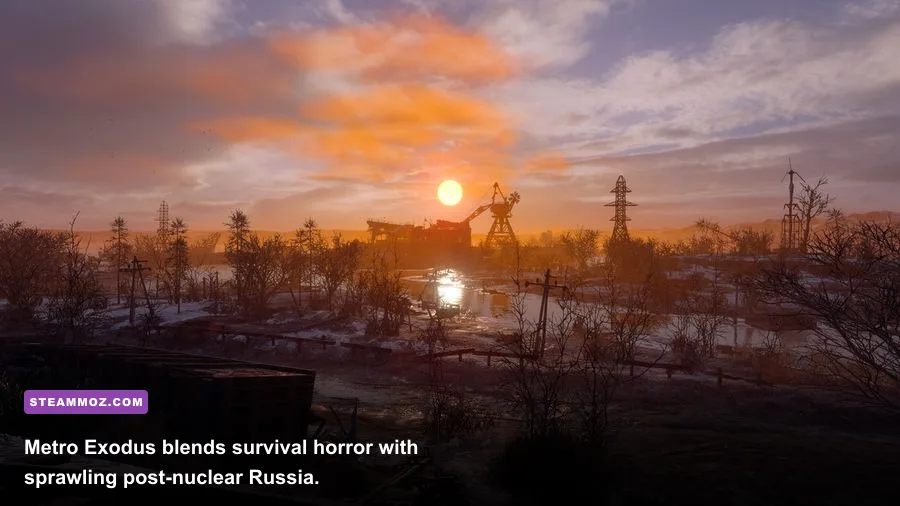
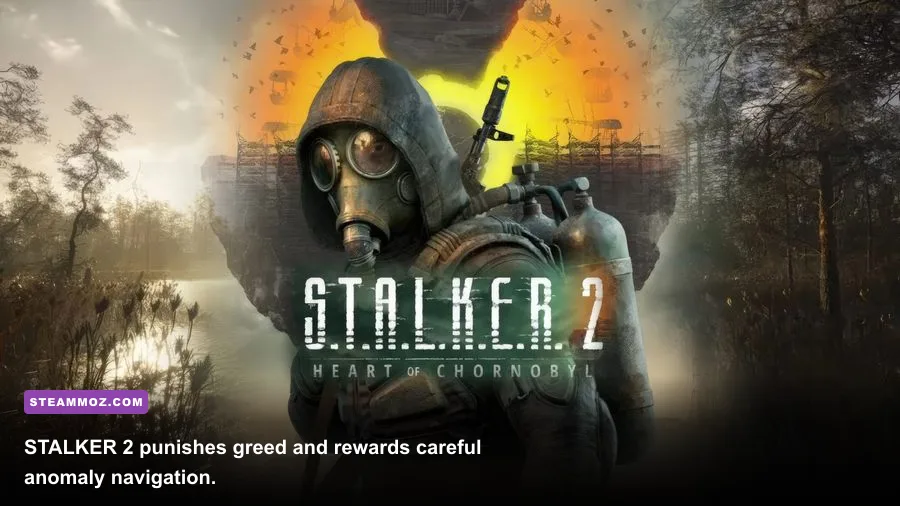
These are the games that built the genre's DNA. Fallout: New Vegas, developed by Obsidian on the Gamebryo engine, still holds up because of its faction reputation system — help Caesar's Legion and House's NCR rivals turn hostile on sight, complete with unique dialogue trees that react to your karma and companion loyalty. Metro Exodus (4A Games) trades open-world sprawl for tightly authored survival horror, with the Aurora train acting as your only safe zone between irradiated hellscapes like the Caspian desert and the Taiga forest. STALKER 2: Heart of Chornobyl, built on Unreal Engine 5, finally delivers the sprawling, seamless Zone that the original trilogy always promised, with A-Life 2.0 simulating NPC factions fighting for territory even when you're not watching.
| Game | Tier | Core Survival Hook | Best For |
|---|---|---|---|
| Fallout: New Vegas | S | Hardcore Mode, faction consequences, weighted ammo | Story-driven survival RPG fans |
| Metro Exodus | S | Gas mask filters, ammo crafting, weapon degradation | Atmospheric survival horror lovers |
| STALKER 2: Heart of Chornobyl | S | Anomaly fields, A-Life 2.0 faction wars | Hardcore immersive sim fans |
| Days Gone | A | Freaker hordes, bike fuel management | Action-survival hybrid fans |
| 7 Days to Die | A | Base building, nightly zombie hordes | Survival crafting enthusiasts |
| This War of Mine | A | Civilian scavenging, moral choice consequences | Narrative survival strategy fans |
| Fallout 4 | B | Settlement building, crafting depth | Base-building RPG fans |
| Rust | B | PvP looting, raiding mechanics | Multiplayer survival PvP fans |
A-Tier Picks That Hit Different Survival Angles
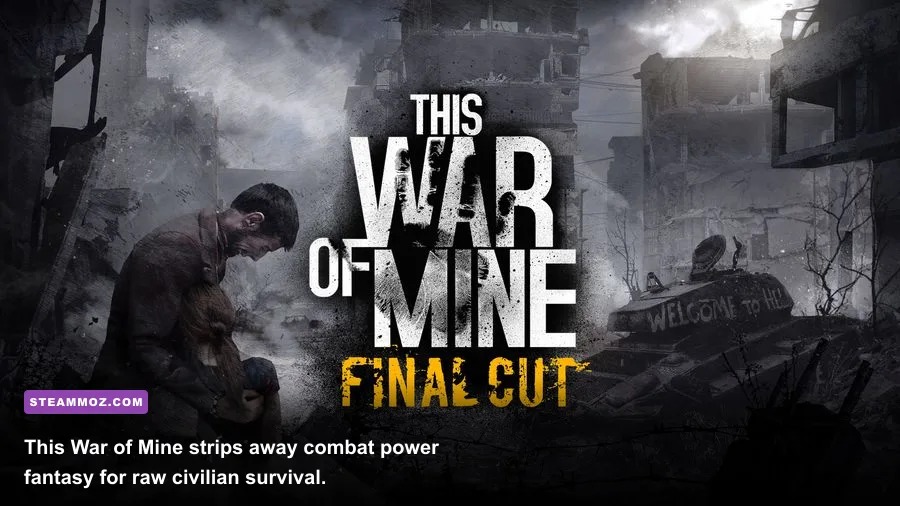
Days Gone doesn't get the credit it deserves. Once you hit the Iron Butte region and start running into 300+ freaker hordes, the game turns into genuine crowd-control survival — you're managing motorcycle fuel, molotov crafting, and stamina bars while a literal wall of undead chases you down a canyon. It's less about tactical positioning and more about controlled panic, and that adrenaline loop is unmatched. Then there's This War of Mine, 11 bit studios' brutal civilian-survival sim where you're not a super soldier — you're a scared person deciding whether to steal medicine from an elderly couple or let your own survivor die of infection. No combat power fantasy, just grim resource math and moral weight. And 7 Days to Die remains the base-building benchmark: horde nights every seven days force you to reinforce with steel spikes, electric fences, and turret placement, or watch your base get torn apart by a screamer-summoned zombie mob.
How Survival Mechanics Actually Scale in Difficulty
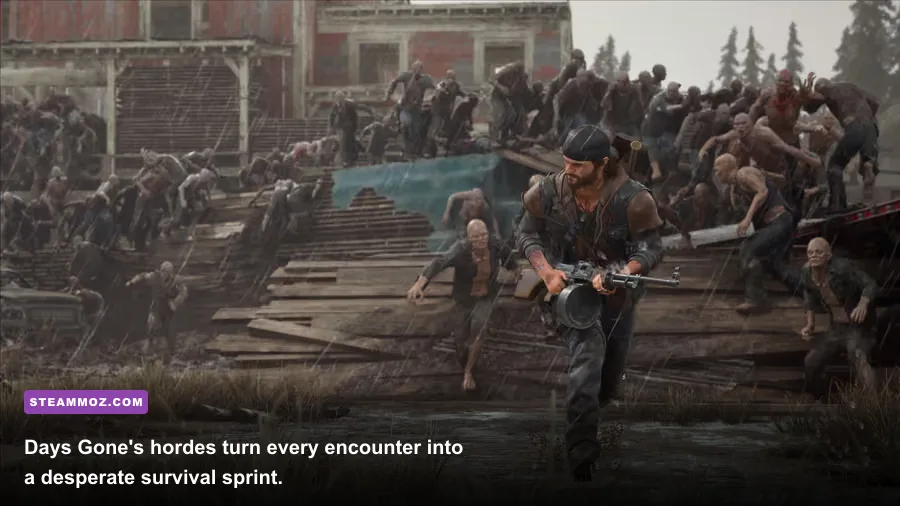
Difficulty scaling in these games isn't just "enemies hit harder" — it's systemic. In Fallout: New Vegas Hardcore Mode, Stimpaks heal 20 HP over several seconds instead of instantly, meaning you can't tank through a Deathclaw fight by spamming heals mid-combat. Metro Exodus scales filter consumption based on surface radiation zones — the Volga's open map lets you breathe easier than the tight, gas-choked corridors of the Moscow metro tunnels. STALKER 2 uses a hunger and bleeding system where untreated wounds cause continuous HP drain, forcing you to carry bandages and food rations at all times, especially before diving into anomaly-heavy areas like the Sarcophagus zone. Days Gone scales horde density by story progress — early hordes cap around 30-50 freakers, but late-game hordes can swell past 500, requiring you to have upgraded Drifter Bike fuel tanks and unlocked skill trees like Focus Aim before engaging.
| Survival Mechanic | Game Example | Punishment for Ignoring It | Counter Strategy |
|---|---|---|---|
| Radiation/Filter Management | Metro Exodus | Suffocation death within seconds | Stockpile filters, avoid open gas zones without cover |
| Weighted Ammo/Hardcore Healing | Fallout: New Vegas | Overweight status slows movement, delayed healing | Manage inventory weight, carry Doctor's Bags |
| Anomaly Fields | STALKER 2 | Instant death or severe damage | Throw bolts to reveal safe paths |
| Horde Density Scaling | Days Gone | Overwhelmed and killed in open ground | Use choke points, molotovs, and bike escape routes |
| Nightly Zombie Sieges | 7 Days to Die | Base walls destroyed, loot stolen | Build layered defenses, use electric fences |
Best Beginner-Friendly Survival Builds and Strategies
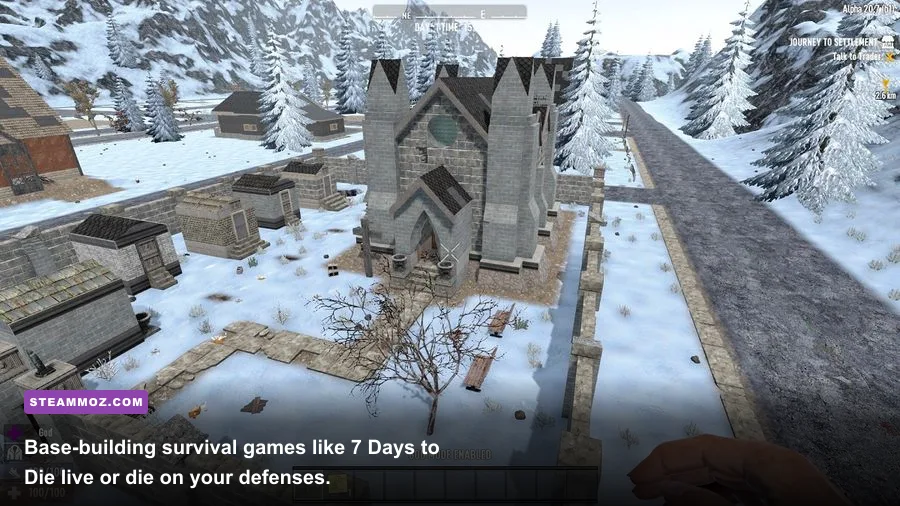
If you're new to wasteland survival games, don't jump straight into Hardcore Mode or Veteran difficulty — you'll get wrecked and quit before you learn the systems. Start Fallout: New Vegas on Normal, then flip Hardcore on once you understand ammo weight and companion perks like Boone's sniper support. In Metro Exodus, prioritize the Ranger perk that reduces filter consumption early, and always loot Rangers' hideouts for spare filters before big surface treks. For STALKER 2, invest in armor repair kits before artifact hunting — a single anomaly mistake can wipe half your health bar instantly. And if you're diving into 7 Days to Die, the classic beginner base is a simple "pillar base" — build up on a single reinforced concrete pillar with a retractable ladder, forcing zombies to funnel single-file into your kill zone.
If you're the type who also min-maxes weapon loadouts in survival-adjacent shooters, it's worth checking how Far Cry 6's beginner builds and gear picks compare — the philosophy of prioritizing sustain over raw damage carries over well, and you can read our breakdown of Far Cry 6's best beginner build for the GOTY Upgrade Pass for a similar resource-management mindset. Similarly, if frame drops are ruining your immersion during tense survival encounters, our guide on Far Cry 6 GOTY Upgrade Pass settings for max FPS has settings logic that applies broadly to open-world survival titles.
Performance and Settings That Actually Matter for Immersion
Wasteland games live and die on atmosphere, and atmosphere tanks hard when your frame rate is stuttering during a tense anomaly crossing or horde chase. STALKER 2 on Unreal Engine 5 is notoriously demanding — Lumen global illumination and Nanite geometry look gorgeous in the Zone's fog but can tank FPS on mid-range GPUs. Dropping Lumen to "Medium" and disabling Motion Blur nets a noticeable 15-20% FPS gain without gutting the moody lighting that sells the Zone's dread. Metro Exodus Enhanced Edition benefits hugely from enabling its ray-traced GI on RTX cards, but if you're on a GTX 1660 or similar, turn it off entirely and prioritize Volumetric Fog at Medium instead — it preserves the eerie atmosphere without the performance hit.
| Setting | Recommended Value | FPS Impact | Visual Note |
|---|---|---|---|
| Ray Tracing/GI | Off (unless RTX 3070+) | +15-25% FPS | Minimal visual loss in foggy wasteland zones |
| Volumetric Fog | Medium | +5-8% FPS | Keeps atmospheric dread intact |
| Motion Blur | Off | +3-5% FPS | Improves clarity during horde chases |
| Shadow Quality | High | -5% FPS | Worth keeping for anomaly/enemy visibility |
| Texture Streaming | Ultra (with 8GB+ VRAM) | Negligible | Keeps ruined environments crisp |
If you're running older hardware and constantly fighting crashes rather than radiation storms, it's worth reading through crash-fix guides built for demanding open-world titles — our piece on Elex PC fixes that stop crashes and rescue your FPS covers driver and shader-cache troubleshooting steps that apply almost universally to Unreal Engine and Gamebryo-based wasteland titles. And for players juggling GOTY editions of older survival shooters, the Far Cry 2 PC specs breakdown is a good sanity check for whether your rig can even handle the genre's classics before you touch the newer, heavier releases.
Hidden Gems Most Survivors Sleep On
Everyone talks about Fallout and Metro, but a few underrated wastelands deserve way more attention. Wasteland 3 (inXile) delivers a turn-based, squad-tactics take on nuclear survival with genuinely brutal Colorado weather mechanics — freeze too long without shelter and your squad takes stacking debuffs. Pathologic 2 is the most punishing survival experience in the genre — you're a doctor fighting a plague in a dying town with a hunger system so aggressive it borders on masochistic, and it's phenomenal precisely because it refuses to hold your hand. If you enjoy digging into obscure survival-adjacent titles and want more deep-dive mechanical breakdowns like this, our Eternal Destiny secret locations guide and Everspace 2 secret locations guide show how much hidden content rewards patient, exploratory players — a mindset that pays off tenfold in any wasteland survival game.
Whichever wasteland you pick — the neon-drenched ruins of the Mojave, the frozen Volga banks of Metro Exodus, or the anomaly-riddled Zone of STALKER 2 — the survivors who last aren't the ones with the biggest guns. They're the ones who respect the hunger meter, ration their filters, and never, ever walk into an unmarked anomaly field without throwing a bolt first. Check the official Fallout: New Vegas Steam page, the official Metro Exodus site, and the STALKER 2 developer site for patch notes and system requirement updates before you head into the wasteland yourself.