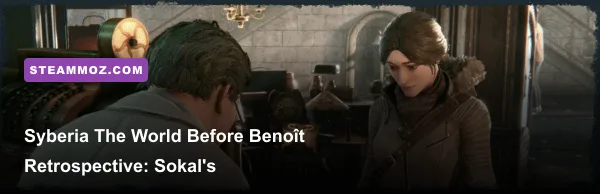
If you walked away from the disastrous controls and technical misery of 2017's Syberia 3 convinced that Kate Walker's journey was dead and buried, you weren't alone. Yet Syberia: The World Before completely redeems the franchise, delivering a poignant, visually stunning adventure that ranks among the finest European narrative games ever crafted. Serving as the posthumous swan song of series creator and Belgian comic artist Benoît Sokal, the game abandons its predecessor's clunky faux-action ambitions and returns to what made this universe iconic: melancholy storytelling, breathtaking Art Nouveau mechanical design, and tactile environmental puzzles that respect your time.
Dual Timelines and the Ghostly Resonance of Vaghen
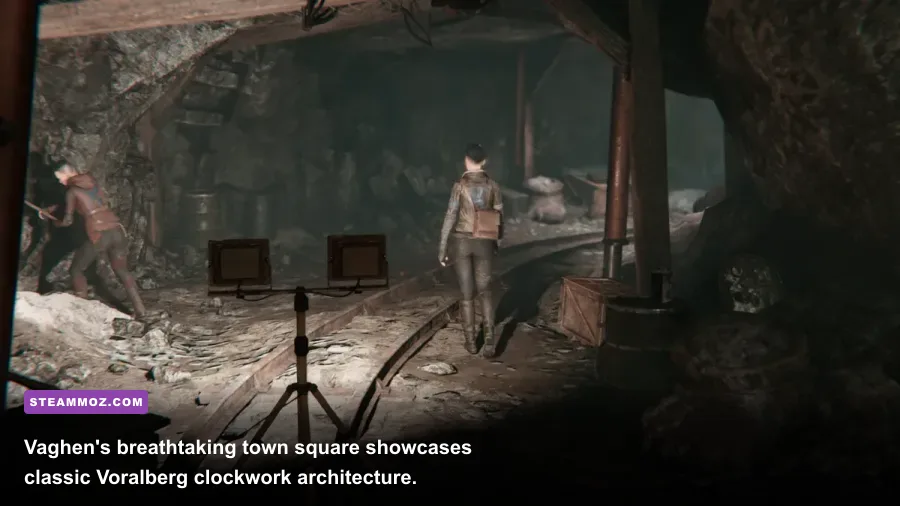
The smartest creative gamble developer Microids took here is splitting the narrative across two distinct eras and perspectives. You open in 1937 within the fictional European city-state of Osterthal, stepping into the shoes of Dana Roze—a seventeen-year-old piano prodigy preparing to perform the legendary Hymn of Vaghen. Looming over her performance is the insidious political rise of the "Brown Shadow," an unmistakable, chilling allegorical stand-in for European fascism. Fast-forward to 2004, and Kate Walker is trapped in an illegal Siberian salt mine, hardened, traumatized, and stripped of her identity following the grim aftermath of the third game.
When tragedy strikes the mine, Kate comes into possession of a small portrait depicting Dana, who bears an uncanny resemblance to her. This discovery ignites an obsessive cross-continental pilgrimage to Vaghen to uncover Dana's fate. The narrative ping-pongs seamlessly between Kate's investigative tracking in the 2000s and Dana's increasingly harrowing life under fascist occupation in the late 1930s and World War II.
Unlike many modern dual-protagonist setups that feel disjointed, The World Before weaves these lives together mechanically. You frequently swap perspectives in the middle of an investigation, using Dana's historical actions to clear spatial or intellectual roadblocks for Kate decades later. Much like learning the ropes in a complex story-driven environment like escaping multi-room puzzles in environmental adventure titles, cross-referencing information across eras makes you feel like an actual detective piecing together long-lost family secrets rather than a passive observer being ferried between cutscenes.

🎮 Syberia
Looking to experience this game? Grab your digital key directly on our store for $12.99.
View on Steammoz Store →Tactile Puzzles That Respect Your Modern Intellect
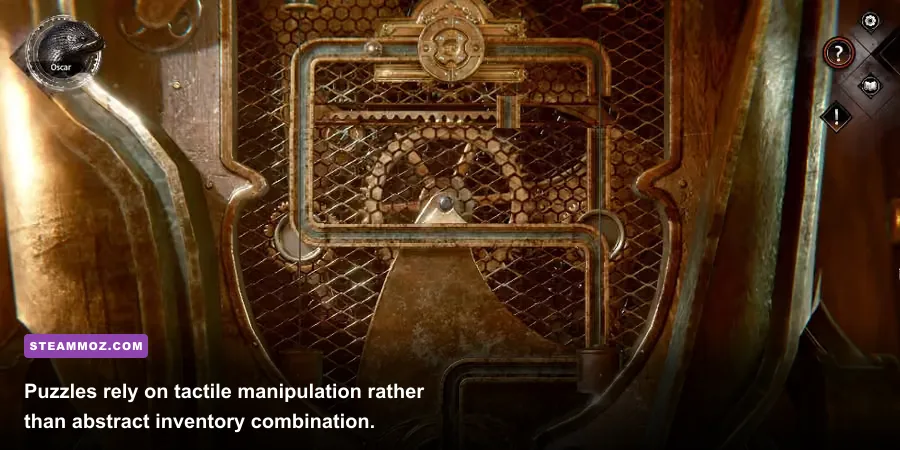
Point-and-click purists often fear that modern adventure games dumb down their interaction to interactive movie status. The World Before avoids this trap by replacing obtuse, moon-logic inventory puzzles with complex, tactile clockwork machinery. Every lever, dial, keyway, and cog feels heavy and physical. When you pick up an intricate Voralberg automaton cylinder or examine a locked trunk in the Silberspiegel antique shop, you spin the object in full 3D space, push release pins, slide secret panels, and line up mechanical tumblers.
The pacing never stumbles into the punishing brick walls of early 2000s adventure games, but it rarely insults your intelligence either. The signature centerpiece—restoring the colossal musical automaton in the town square of Vaghen—requires you to balance historical repair manuals, inspect internal steam valves, and solve acoustic timing mechanisms. When an obstacle gets tricky, the game offers optional, multi-tiered hints via Kate's diary, ensuring you don't need a walkthrough open on your phone just to progress through an emotional plot beat.
| Game Title | Puzzle Philosophy | Camera & Movement | Story Structure | Frustration Index |
|---|---|---|---|---|
| Syberia (2002) | Classic inventory combinations & fetch-quests | Fixed pre-rendered backgrounds, point-and-click | Linear, episodic travelogues across Eurasia | Moderate (backtracking across long screens) |
| Syberia 3 (2017) | Awkward 3D spatial puzzles with physics glitches | Clunky direct controls, poor third-person camera | Disjointed nomad trek, unresolved cliffhangers | High (broken mechanics & frustrating bugs) |
| The World Before | Tactile Voralberg machinery, cross-era clues | Fluid hybrid camera, full controller & mouse support | Intertwined dual-timeline mystery | Low (smooth interaction, optional hint tiers) |
If you've spent hours hunting for tiny interactable objects in games like classic 2D point-and-click adventures like Edna & Harvey, you'll find the streamlined UI here a massive breath of fresh air. It strikes an exquisite balance: the tactile joy of The Room series merged with the emotional weight of a prestige historical drama.
Visual Poetry and Inon Zur's Magnum Opus Score
Visually, The World Before is a living comic book rendered through modern lighting. Vaghen feels like an authentic Central European jewel—a mixture of Prague, Vienna, and Strasbourg, layered with the retro-futuristic clockwork automatons designed by Benoît Sokal. The cobbled alleyways, rusted iron tram networks, and mountain panoramas in the Osterthal countryside have a painterly warmth. Sokal's distinctive aesthetic—combining natural fauna with copper, brass, and steam-driven engineering—shines in every single frame.
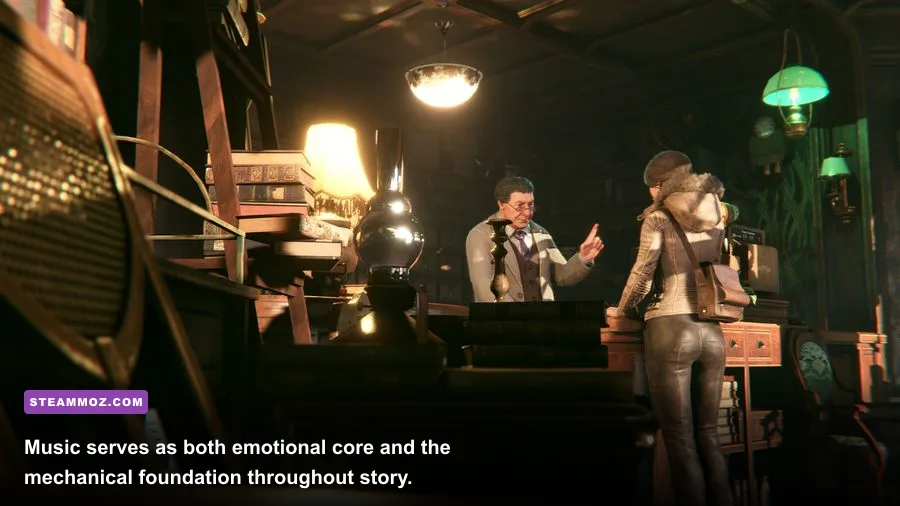
Equally critical to the experience is the soundtrack composed by Inon Zur, accompanied by world-renowned cellist Tina Guo. The music isn't merely background ambiance; it operates as a character within the narrative. The Hymn of Vaghen is a gorgeous, melancholic orchestral piece that echoes through the streets during peacetime, transforms into an anthem of quiet civilian resistance under occupation, and returns decades later as an artifact of Kate's emotional healing. The synergy between Zur's acoustic strings and Sokal's visual world makes the final two chapters hit like an emotional freight train.
PC Optimization, Deck Handheld Play, and Frame Pacing

Built on the Unity engine, the game runs significantly better than the stuttering mess of its predecessor. However, the heavy use of volumetric fog in the Taiga sequences and high-polygon mechanical models in the town square can cause sudden frametime spikes if you leave all graphical toggles maxed out. If you've spent time wrestling with performance issues in other mid-budget European releases like troubleshooting PC stability and stuttering in Elex or balancing framerates in demanding action titles like Everspace 2, you will appreciate how easy it is to dial in a rock-solid 60 FPS profile here.
On handhelds like the Steam Deck, the game holds a remarkably consistent 40 FPS / 40 Hz profile with a 15W TDP limit, making it one of the coziest bedside narrative experiences you can pick up. You'll want to lower Volumetric Lights and Shadows by one step, as those two settings account for over 35% of GPU overhead without adding noticeable clarity to the hand-crafted scenery.
| Setting | Optimal PC Profile | Steam Deck Profile | Performance Impact | Visual Impact |
|---|---|---|---|---|
| Resolution | Native (1440p / 4K) | 1280x800 | High | Essential for crisp text & inventory |
| Shadow Quality | High | Medium | Medium (~12% FPS gain) | Softens edge aliasing in bright courtyards |
| Volumetric Fog | Medium | Low | High (~18% FPS gain) | Minimal loss in outdoor mine sequences |
| Ambient Occlusion | High | Medium | Low (~5% FPS gain) | Adds vital depth to mechanical gears |
| Anti-Aliasing | TAA | FXAA + In-Game Sharpener | Low | Prevents shimmering on wire meshes |
Tweaking these options ensures you will never see the jarring frame drops that plagued earlier versions, much like dialing in your config when tweaking puzzle settings in Filament Marmalade Edition.
The Return of Oscar and the Weight of Sokal's Legacy
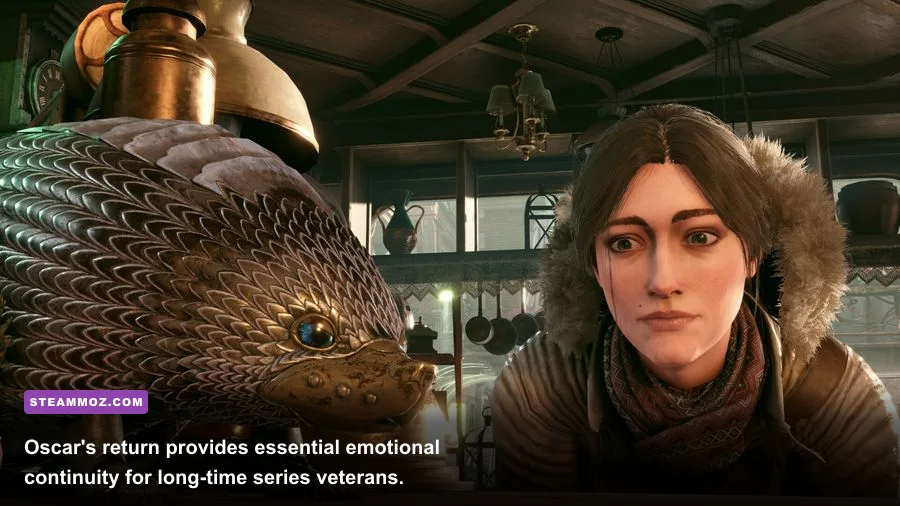
For longtime fans who began Kate Walker's journey back in 2002 alongside the delightfully pedantic automaton Oscar, The World Before brings Kate's long, grueling arc to a deeply satisfying thematic close. Sokal passed away in May 2021 before he could see the game's final public reception, but his DNA permeates every square foot of Vaghen. Oscar returns not as cheap nostalgia bait, but through a brilliant mechanical twist that integrates his whimsical personality directly into your inventory tools.
The game doesn't pull its emotional punches. It tackles wartime complicity, loss, survivor's guilt, and the slow realization that you cannot rewind the clock—you can only understand where you came from and decide what steps to take next. While the third game felt like an unwanted, cynical resurrection of a completed story, The World Before feels like the true, graceful goodbye Kate Walker and Benoît Sokal always deserved. Whether you are an old-school point-and-click veteran or an adventure newcomer seeking a sweeping European mystery, this title remains an absolute must-play.