The best defensive setup in Solo Leveling ARISE uses Sung Jinwoo with Vitality-focused stat investment, the Solid Foundation armor set, HP and defense substats, and shield support from Seo Jiwoo. Pair that core with a Break weapon such as the Radiru Family Longbow or West Wind, then use barriers, Extreme Evasion, and Break timing to survive high-damage bosses without turning the build into a low-damage stall strategy.
This setup is designed for Battlefield of Trials, encore and instance dungeons, gates with punishing area attacks, and story bosses that can erase an under-geared hunter in one rotation. It is not the fastest possible farming build. It is the safer option when a failed dodge, interrupted skill, or delayed heal is costing more time than a modest reduction in clear speed.
For broader mobile performance advice, compare the optimization principles in our gacha game optimization guide. For the game itself, check the official Solo Leveling ARISE Steam page and Netmarble’s official community forum for platform updates and balance changes.
Build Sung Jinwoo For Survival First
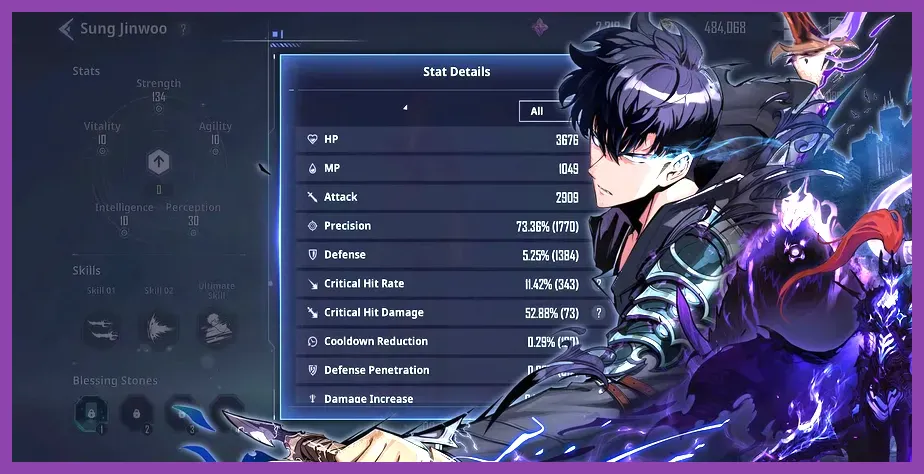
Sung Jinwoo’s defensive setup begins with his stat allocation. Put early points into Vitality when a boss can kill you before your next recovery window. Vitality increases his survivability through HP and defensive value, making it the most direct stat for a tankier profile. Once you can survive a complete boss sequence, move additional points into Strength so your Break and damage skills still end the encounter efficiently.
A practical priority is Vitality until you have a comfortable HP buffer, Strength for damage, then Precision and Agility through equipment rather than blindly sacrificing core survivability. Intelligence is lower priority for this setup unless your chosen weapon rotation depends heavily on skill resource recovery. Perception can help prevent poor damage rolls, but it should not replace HP, defense, or useful defensive effects on your artifacts.
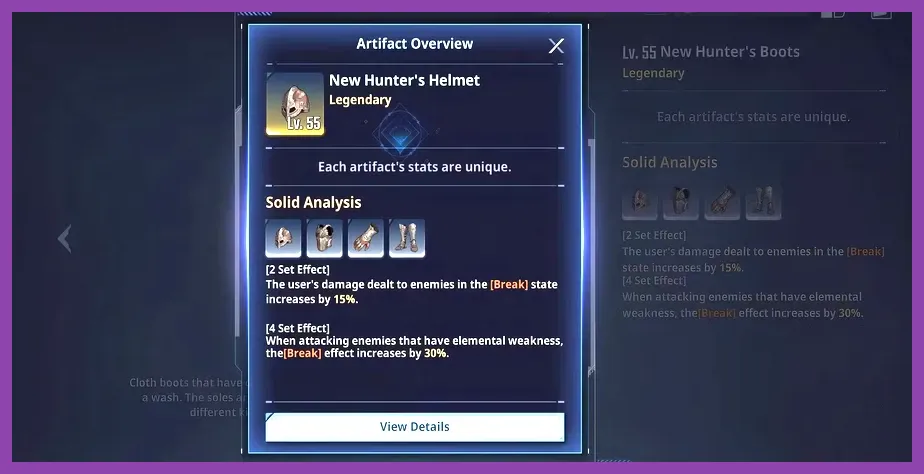
Use the Solid Foundation armor set as the default two-piece starting point. Its defense increase directly improves the value of a defensive build, while the four-piece bonus is more appropriate for a character intentionally scaling defense instead of chasing critical damage. Equip the best-rarity pieces available, but do not keep a weak legendary piece solely to complete a set if a substantially stronger item has better main stats and useful substats.
For main stats, prefer HP or defense where the slot allows it, then select damage-compatible options on pieces that cannot roll a defensive primary stat. Substats should target HP percentage, defense percentage, flat HP, cooldown reduction, and damage stats in that order of practical importance. Critical hit rate and critical damage remain valuable once your survival threshold is reached; a defensive build still needs to finish bosses before attrition overwhelms your healing.
Choose Armor, Jewelry, and Defensive Effects
Solid Foundation is the safest armor recommendation for Sung Jinwoo, but the jewelry set should match the encounter. A defensive build benefits from effects that increase HP, improve skill uptime, or reward controlled play. If your account has strong pieces from a set that grants shields, damage reduction, or an equivalent survival effect, use those pieces until better Solid Foundation gear arrives. Set bonuses matter, but a poor main stat can make a completed set weaker than a mixed build.
The Guardian set is especially useful when its shield effect is active in your current version of the game and your team can consistently trigger it. Shields are valuable because they absorb burst damage without forcing an emergency heal immediately after every mistake. Build around maintaining that protection rather than entering a boss phase with the effect on cooldown.
For jewelry, prioritize pieces with HP percentage, defense percentage, skill damage, and cooldown-related substats. The Outstanding Connection set can be useful for a team-oriented rotation when switching between hunters is frequent, while more offensive jewelry becomes appropriate after you are no longer dying to mechanics. Avoid automatically equipping Berserker-style low-HP damage bonuses on a defensive setup: they encourage fighting near a failure state and undermine the reason for building durability.
Artifact enhancement should be selective. Raise promising level-one pieces to a modest enhancement level, inspect the first several substat upgrades, and stop investing when every roll lands on an irrelevant stat. Defense and HP are not interchangeable in every calculation, so compare the actual character sheet after equipping an item. A piece with lower item score but repeated HP percentage rolls may outperform a higher-score artifact with attack-only bonuses in a survival-focused stage.
Use Seo Jiwoo For Reliable Shield Support

Seo Jiwoo is the best partner for this setup because her kit supplies shields while also contributing Water damage and Break pressure. Her value is not simply the size of the barrier. She lets Sung Jinwoo continue a planned attack sequence through chip damage, protects the team during a dangerous telegraph, and gives you time to reposition without immediately spending every recovery resource.
Build Seo Jiwoo with HP, defense, cooldown reduction, and skill-related stats rather than treating her as a pure damage dealer. Her shield should be available before the boss begins a scripted burst phase. If her advancement level or artifacts make her barrier substantially stronger, she can cover for a less-developed Sung Jinwoo while your account is still farming higher-rarity equipment.
Open difficult encounters by identifying the first major attack rather than spending Seo Jiwoo’s shield instantly. Use her skill when the boss begins its wind-up, when the party must stand near an objective, or when a Break window is about to open and you need protection while committing to a full combo. Save the ultimate for a phase where its damage, shield value, or crowd-control utility affects the outcome instead of using it on a nearly defeated target.
Baek Yoonho is the alternative frontline choice. His transformation and Break capabilities make him a strong partner against bosses vulnerable to Light damage and repeated stagger pressure. He does not replace Seo Jiwoo’s direct shield function, but he can reduce incoming danger by shortening Break windows and forcing the boss into vulnerable states. Use Baek when the encounter rewards aggressive Break control; use Seo when the main problem is surviving unavoidable burst.
Pick Weapons That Control Bosses
A defensive Sung Jinwoo build should not use four purely defensive weapons. The correct mix is one reliable Break option, one safe damage option, and a utility weapon that helps you control positioning or survive a mistake. Radiru Family Longbow is a useful Light option for ranged pressure and Break contribution, while West Wind offers strong ranged damage and safer uptime when staying close to the boss is dangerous.
For shield-heavy or Break-dependent encounters, make the weapon with the correct Break type your first slot even if its raw attack is lower. Breaking a boss prevents more damage than a small attack upgrade mitigates. Match the weapon element to the target’s weakness when possible, but never ignore a required Break gauge. A high-damage weapon that cannot answer the boss’s shield can create a longer and much more dangerous fight.
Recommended weapon skills should cover three jobs: a Break skill, a mobility or invulnerability tool, and a damage skill that can be used safely after a dodge. Do not chain every active skill immediately. Start with the Break attack, apply your defensive buff or shield, then rotate into damage while the boss is staggered. Keep one mobility or emergency skill unused until the boss leaves its vulnerable state.
Weapon advancement matters, but skill timing matters more when the account is under-geared. Check the exact weapon descriptions and current balance notes through the official Solo Leveling ARISE forums, since values and advancement effects can change between patches. Our skill respec guide also explains the general principle of testing builds before committing scarce resources.
Follow a Safe Combat Rotation
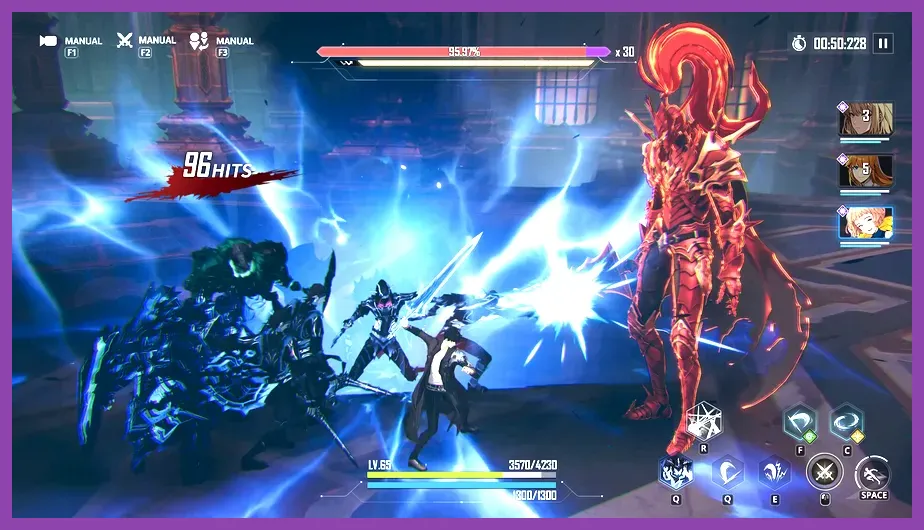
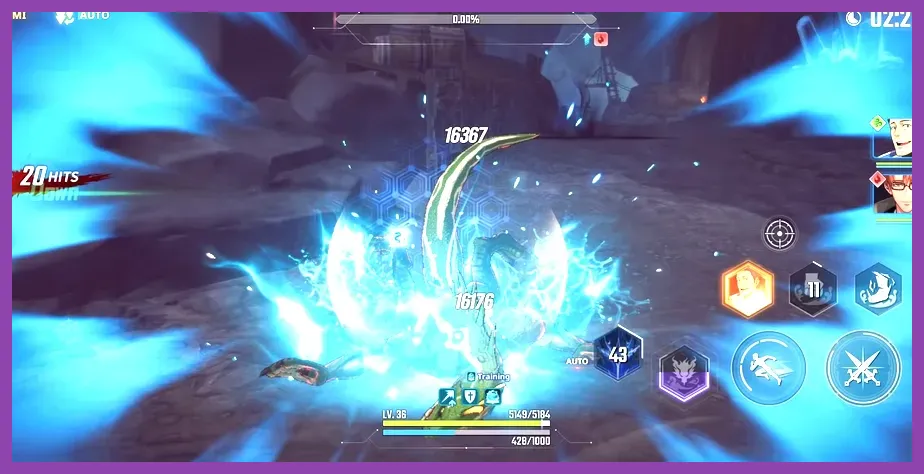
Begin each boss attempt by watching one attack cycle. Learn whether the opening mechanic is a charge, cone, ground marker, or arena-wide blast. Use Sung Jinwoo’s dash and Extreme Evasion to avoid the actual hit, not merely to reposition early. Extreme Evasion is most valuable when it activates during the attack’s impact window, giving you a cleaner transition into a counterattack and preserving health for mechanics that cannot be avoided.
The standard rotation is straightforward:
- Enter with the Break weapon equipped and apply its debuff or opening skill.
- Trigger Seo Jiwoo’s shield immediately before the boss’s committed attack or before your longest animation.
- Use Sung Jinwoo’s Break skill, then follow with the highest-damage safe combo while the boss is staggered.
- Switch to the secondary weapon for ranged damage when the boss leaves the Break state or fills the arena with hazards.
- Save one dodge, mobility skill, or emergency shield for the next telegraphed burst.
During a red attack indicator, stop attacking unless you have a confirmed invulnerability effect. During a purple or barrier phase, focus on the required Break type and avoid wasting ultimate resources on damage that will not advance the mechanic. If the boss summons adds, clear only the enemies that interrupt movement or apply a dangerous debuff; excessive target switching can waste the window in which your shield and cooldowns are aligned.
Heal after the mechanic, not before it, unless your character is within lethal range. A defensive setup works because it preserves options. Spending every shield and recovery tool at full health leaves nothing for the phase that actually kills you. This disciplined approach also improves clear consistency in gates, where a safe rotation is usually more valuable than restarting repeatedly for a perfect damage run.
When To Replace Defense With Damage
Keep the defensive setup until you can survive the encounter’s largest confirmed hit, complete at least one full Break cycle, and finish the stage before your resources run dry. After that point, replace defensive substats one at a time with Strength, critical hit rate, critical damage, or elemental damage. Do not remove the Solid Foundation four-piece bonus and all HP investment simultaneously; that makes it impossible to identify which change caused the new deaths.
A good progression path is Solid Foundation four-piece armor, HP and defense jewelry, Seo Jiwoo shield support, and one Break weapon. Next, upgrade artifact rarity and advancement levels. Then change one jewelry set toward damage, followed by offensive substats on gloves or other damage-oriented slots. Finally, test whether a Toughness-based critical build clears faster without losing consistency. Toughness is a damage-focused alternative, not the default answer for a character still failing defensive checks.
For PC players, stable frame pacing also protects this build because Extreme Evasion depends on readable attack timing. Use the official Steam version page to check system information, and see our PC performance settings guide for the broader approach to reducing stutter. Android players can apply similar principles from our mobile lag troubleshooting guide.
The final result is a balanced defensive setup, not an invincible one: Vitality and Solid Foundation absorb mistakes, Seo Jiwoo supplies a timed shield, Baek Yoonho offers an aggressive alternative, and a Break weapon keeps the fight short. Build enough durability to survive the mechanic, then return every remaining stat and rotation decision to damage.