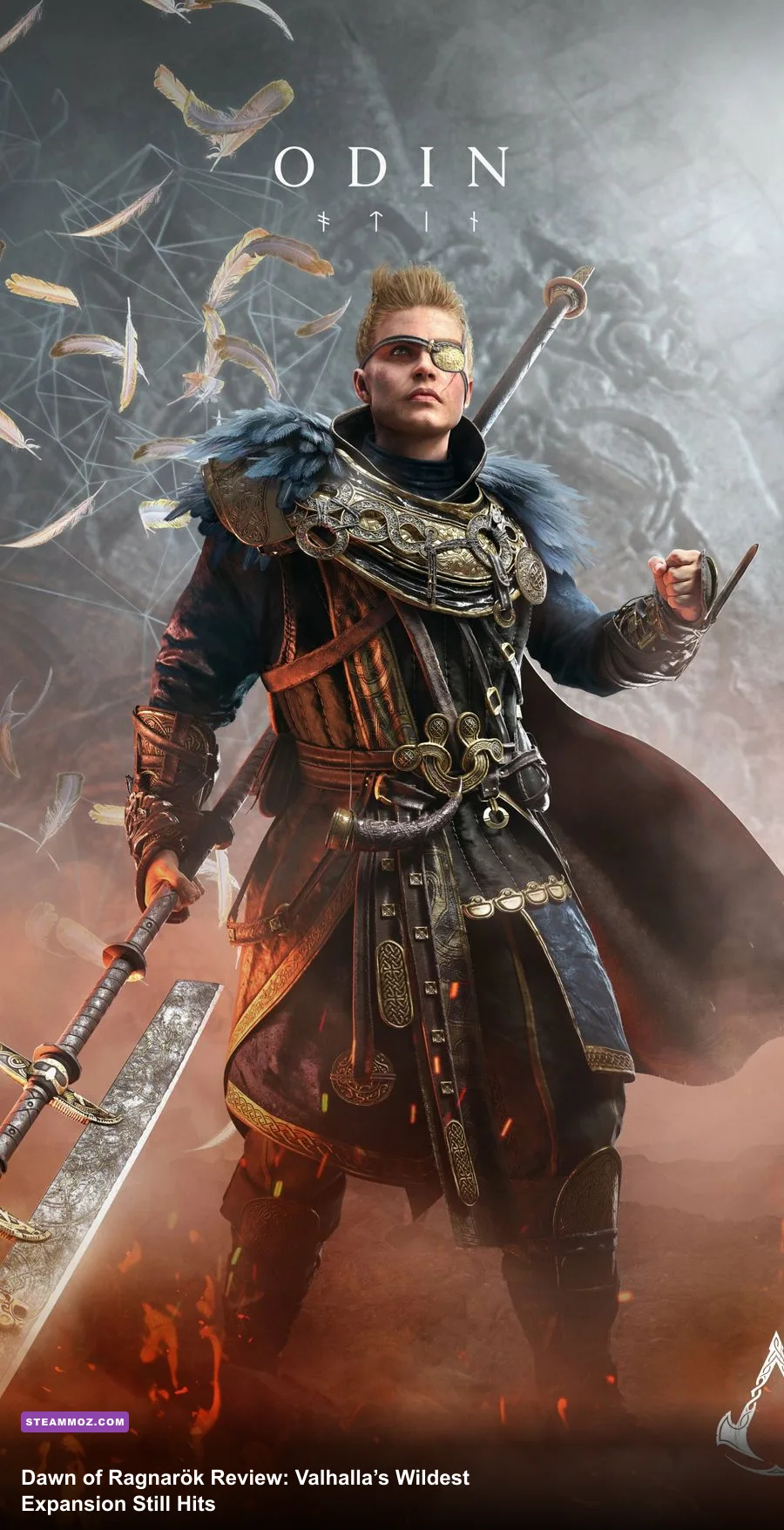
Yes, Assassin’s Creed Valhalla: Dawn of Ragnarök is worth playing in 2026—but mainly if you already enjoy Valhalla’s heavy combat, oversized maps, and mythological detours. It isn’t a clean starting point or a revolutionary sequel-sized expansion. What it does deliver is a focused 35-to-45-hour Odin adventure packed with better traversal, inventive powers, strong boss encounters, and one of Valhalla’s most memorable settings. At a discount, it’s an easy recommendation; at full price, the answer depends on how much patience you still have for Ubisoft’s familiar open-world formula.
Released in March 2022, Dawn of Ragnarök moves Eivor’s story into a vision of Svartalfheim, where Eivor takes the role of Odin, also called Havi, to rescue his son Baldr from the fire giant Surtr. The expansion sits apart from England’s historical plot, but it assumes you understand the base game’s mythology and Odin’s relationship with Baldr. You can launch it from a level-appropriate Valhalla save, and the game boosts your character for the journey, although bringing a developed endgame build makes the opening far more comfortable.
What Dawn of Ragnarök Actually Adds
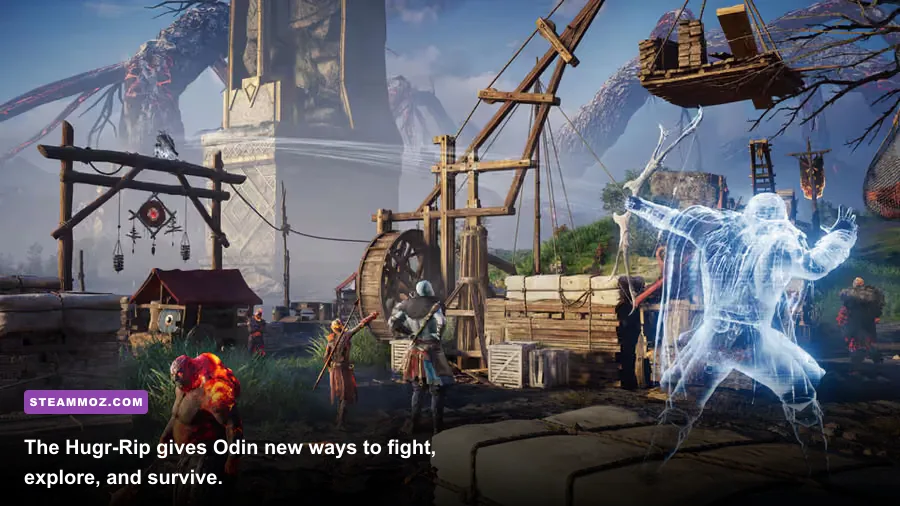
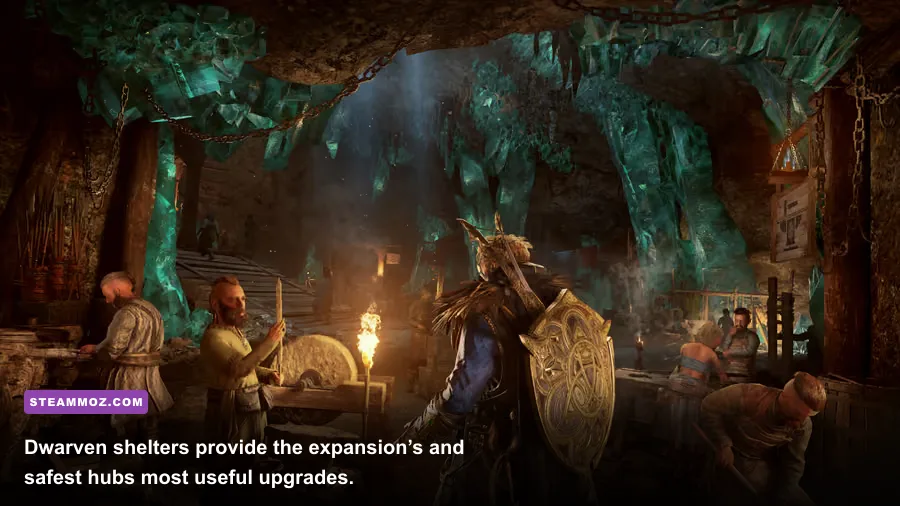
Dawn of Ragnarök is not just another region with a few side quests attached. Its central idea is the Hugr-Rip, a magical bracer that lets Odin steal powers from defeated enemies. You can equip two powers at once, then spend Hugr from a five-segment bar to activate them. Hugr comes from combat, flowers, and shrines, while Hugr Recharges at Dwarven shelters let you refill the resource without hunting for another fight.
The five main powers are the expansion’s best design decision. Power of the Raven lets Odin transform into a raven and fly across gaps or reach high platforms. Power of Muspelheim grants immunity to lava and fire, allowing you to walk through molten areas and blend into Muspel enemies. Power of Winter freezes targets and lets Odin shatter frozen enemies for heavy damage. Power of Rebirth resurrects fallen enemies as temporary allies. Finally, Power of Jotunheim enables teleportation through World Knots and improves dodging around marked targets.
Each power has a combat upgrade and an exploration upgrade, so you’re constantly choosing between immediate damage and better movement. Power of Rebirth is excellent when a camp is packed with elite enemies, while Power of Winter is the reliable answer to Muspel warriors and fire-resistant encounters. Power of Jotunheim is less spectacular in a straight duel but becomes essential in puzzle rooms and vertical ruins.
The expansion also introduces new enemy types, Dwarven shelters, Valkyrie-like challenges, Heroic Sagas, arena activities, and a new weapon type: the Atgeir. The Atgeir is a two-handed polearm with sweeping light attacks, a long-reaching heavy combo, and a powerful special attack that can control groups. It feels different from the standard axe-and-shield rhythm without completely changing Valhalla’s combat foundation.
| Feature | How It Works | Why It Matters |
|---|---|---|
| Hugr-Rip | Equip two enemy powers and spend Hugr to activate them | Makes combat and exploration more flexible |
| Svartalfheim | Large mythological region with mountains, lava fields, ruins, and shelters | Provides stronger vertical variety than many Valhalla zones |
| Atgeir | Two-handed polearm with crowd control and reach | Adds a genuinely useful weapon style |
| Heroic Sagas | Multi-step side stories based around Dwarven characters | Supplies some of the expansion’s best narrative moments |
| Valkyrie arenas | Combat challenges with escalating enemy waves | Tests builds after the main story becomes easy |
Compared with the base game, the additions are meaningful rather than cosmetic. The problem is that the underlying quest structure remains familiar: travel to a marked location, clear a camp, investigate a clue, or retrieve an object. The Hugr-Rip changes how you solve those objectives, but it doesn’t erase the repetition.
🎮 Assassin's Creed Valhalla: Dawn of Ragnarök
Looking to experience this game? Grab your digital key directly on our store for $9.99.
View on Steammoz Store →Combat Is Better, But Still Very Much Valhalla
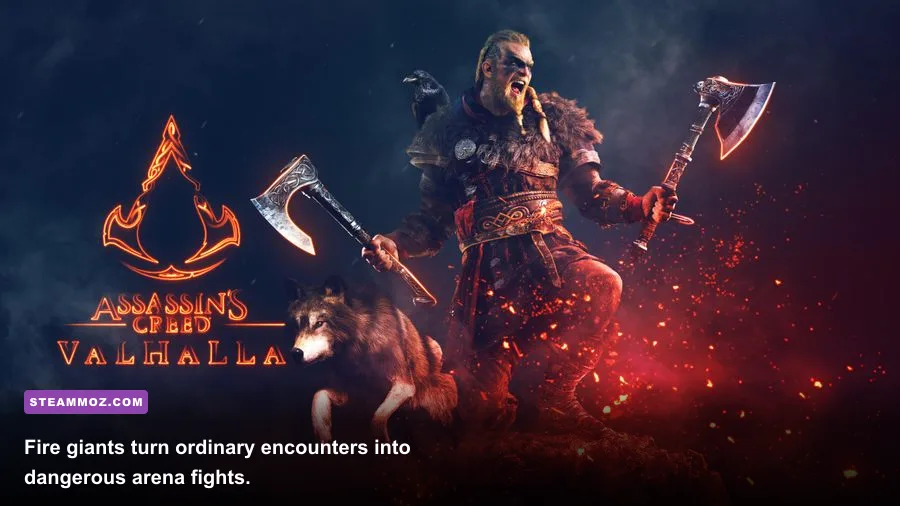
Valhalla’s combat is at its best when you stop treating every fight as a button-mashing contest. Dawn of Ragnarök rewards a deliberate build built around stun damage, weak-point hits, and weapon abilities. Enemies still telegraph attacks with yellow, red, and blue indicators: yellow attacks can be parried, red attacks must be dodged, and blue attacks are usually unblockable or require careful spacing. The game never reaches the clean precision of a character-action game, but the expansion’s powers create more tactical decisions than the England campaign usually demands.
For a dependable melee setup, pair an Atgeir with a light bow and prioritize abilities such as Brush with Death, Adrenaline Fiend, Counter Roll, and Heavy Dual Wield if you switch between weapons. Brush with Death briefly slows time after a perfectly timed dodge, giving you an opportunity to land weak-point shots or begin a heavy combo. Adrenaline Fiend increases damage when your adrenaline slots are filled, which suits players who can maintain a steady rhythm instead of spending every ability immediately.
Against larger enemies, don’t waste Power of Winter at the start. First, remove armor plates or hit weak points to fill the stun gauge. Once the enemy is staggered, activate Winter and follow with a heavy attack or weapon ability. Frozen targets can break apart spectacularly, and this sequence deletes a surprising amount of elite health. Power of Rebirth is stronger in camps than in boss arenas because resurrected allies can pull aggro while you isolate a captain.
The Atgeir’s biggest advantage is reach. Its sweeping attacks catch enemies circling your back, and its heavy finisher can stagger groups if you commit to the animation. Its weakness is recovery time: against fast Jotun or teleporting bosses, an overextended heavy attack is an invitation to take damage. Keep a shield or a quick secondary weapon available when the encounter includes several red-attack enemies.
| Build Element | Recommended Choice | Best Use | Watch-Out |
|---|---|---|---|
| Primary weapon | Atgeir | Reach, stagger, and crowd control | Slow recovery after heavy finishers |
| Ranged weapon | Hunter or Predator Bow | Weak-point damage and opening engagements | Limited value when enemies rush at close range |
| Skill | Brush with Death | Slowing time after a perfect dodge | Requires confident timing |
| Hugr power | Power of Winter | Freezing and shattering elite targets | Consumes Hugr quickly |
| Hugr power | Power of Rebirth | Splitting up large camps | Less useful in focused boss duels |
If you prefer stealth, Dawn of Ragnarök supports it better than its explosive premise suggests. Power of Muspelheim can help you pass through fiery zones, while raven transformation offers alternative routes above guarded paths. Still, assassination damage is tied to your existing skill tree and gear, so the expansion doesn’t turn Odin into a completely new stealth character. Players hoping for a dedicated stealth overhaul should lower their expectations.
For broader weapon comparisons, Steamoz’s Assassin’s Creed Valhalla weapons ranking is a useful companion before committing to a loadout.
Svartalfheim Is Spectacular, Not Always Efficient
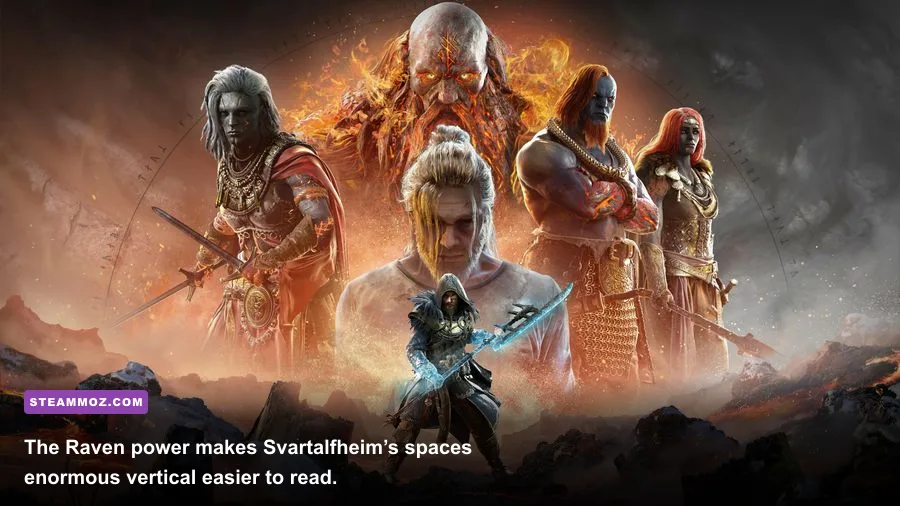
Svartalfheim is the expansion’s strongest argument. It is a mythological playground of black-rock mountains, glowing rivers, volcanic valleys, icy spaces, and Dwarven settlements hidden inside the terrain. The map feels denser than Valhalla’s broadest English regions because points of interest are stacked vertically. A single mountain can contain a shelter, a puzzle, a treasure route, and a combat arena at different elevations.
The Power of the Raven is the key to making that density work. It doesn’t let you fly indefinitely; the ability lasts for a limited duration and is primarily designed to cross gaps or reach a high perch. Use it early when you see a suspicious ledge above a ruin instead of climbing the entire structure. The power also makes the landscape easier to understand, revealing how bridges, towers, and cave entrances connect.
Exploration is more satisfying when you stop trying to clear every icon immediately. Dwarven shelters act as fast-travel points and provide blacksmiths, merchants, cosmetic options, and Hugr-related services. Unlock them as you move through the story, then return when you have the appropriate power. Several wealth chests are deliberately gated behind Muspelheim, Jotunheim, or Raven traversal, so forcing every puzzle on your first visit creates unnecessary backtracking.
The side content has a better hit rate than Valhalla’s average checklist. Heroic Sagas give Dwarven characters room to breathe, and some of their stories are surprisingly intimate beneath the apocalypse-scale setting. The issue is pacing. A major story beat can be followed by several errands that exist mostly to push you toward another upgrade or wealth marker. The expansion is more concentrated than the base game, but it still carries Ubisoft’s familiar habit of confusing map activity with momentum.
Players who prefer tightly authored exploration should set the difficulty to Drengr or Aesir and minimize map guidance. That combination makes the powers feel like tools rather than keys for obvious locks. On lower difficulties, the Hugr-Rip can trivialize many encounters because enemy powers solve both traversal and combat problems at once.
Story, Bosses, and the Question of Repetition
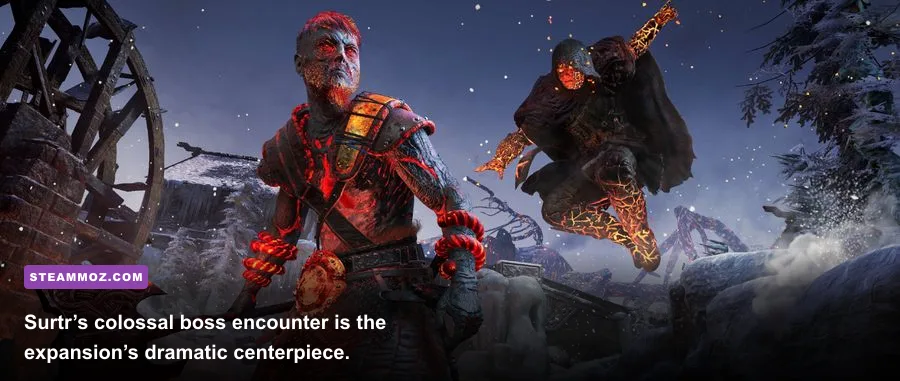
The story follows Odin’s desperate attempt to rescue Baldr while Surtr and Sinmara tear through Svartalfheim. Odin is still the difficult, prideful figure established in Valhalla’s mythology, and that makes the central conflict more interesting than a simple rescue mission. The expansion explores obsession, sacrifice, and the cost of trying to outmaneuver prophecy, although its emotional impact depends heavily on how much attention you paid to Valhalla’s Asgard and Jotunheim arcs.
Surtr is a suitably theatrical antagonist. He is not constantly present, but the game uses his fire to make the region feel occupied and doomed. His stronghold, Muspelheim encounters, and story interruptions sell the idea that you are fighting through a world already being consumed. Sinmara adds a more personal edge, and the supporting Dwarven cast gives the campaign a grounding that Odin’s larger-than-life behavior sometimes needs.
The main bosses are at their best when you read their attack patterns instead of relying on raw power. Look for the familiar red indicators, watch for delayed area attacks, and save Hugr for the phase where the arena becomes most dangerous. Power of Jotunheim is especially valuable against enemies that create distance, while Power of Winter can punish bosses with exposed weak points. Don’t burn every adrenaline ability during the opening phase; several fights escalate after a health threshold.
| Encounter Type | Primary Danger | Counter Strategy | Best Tool |
|---|---|---|---|
| Muspel elite | Fire pools and heavy unblockable swings | Use spacing, target weak points, avoid lava edges | Power of Muspelheim |
| Jotun fighter | Teleportation and sudden red attacks | Dodge sideways, punish after the teleport ends | Power of Jotunheim |
| Large arena boss | Delayed area damage during phase changes | Save adrenaline and Hugr for the escalation | Power of Winter |
| Fortified camp | Multiple captains and ranged pressure | Separate enemies before triggering reinforcements | Power of Rebirth |
| Vertical ruin | Missed routes and gated treasure | Return with the correct power instead of forcing it | Power of the Raven |
The repetition question is unavoidable. If you disliked Valhalla’s long story arcs, repetitive wealth puzzles, and routine camp assaults, Dawn of Ragnarök will not convert you. Its content is better arranged, but the verbs remain recognizable. If you enjoyed the base game and wanted a stranger, more focused setting, the expansion trims enough downtime to feel like an upgrade rather than an endurance test.
It also helps to approach the campaign as a mythological side story rather than a direct continuation of Eivor’s historical journey. Odin’s voice, abilities, and stakes create a different flavor, but the connection to the main plot is not strong enough to justify playing it solely for modern-day developments.
Performance and Best Settings in 2026
On current hardware, Dawn of Ragnarök runs much better than it did during the roughest months of Valhalla’s launch cycle, though the PC version remains demanding in crowded settlements and during large battles. The expansion uses the same AnvilNext 2.0 foundation as the base game, so CPU-heavy dips can still appear when many NPCs, fire effects, and destructible objects are active.
On PlayStation 5 and Xbox Series X, the performance mode targeting 60 frames per second is the best way to play. Resolution-focused modes look sharper at a distance, but the responsiveness matters more when parrying red and yellow attacks. Xbox Series S is playable, though its lower resolution and more aggressive visual compromises are noticeable in distant mountain scenery. On PC, a six-core processor, 16GB of RAM, and an RTX 3060-class GPU or equivalent are sensible targets for 1080p or 1440p gaming.
Start with the High preset, then adjust volumetric clouds, world detail, and screen-space reflections. Those settings produce the biggest performance gains without destroying character or environmental quality. Keep texture quality high if your graphics card has enough VRAM, because lowering textures makes Svartalfheim’s rock surfaces and glowing effects look flat while offering a smaller gain than reducing shadows or clouds.
| Setting | Recommended Value | FPS Impact | Visual Trade-Off |
|---|---|---|---|
| Preset | High | Baseline | Strong overall image quality |
| Volumetric Clouds | Medium | High gain | Less atmospheric sky detail |
| World Detail | High | Medium gain | Lower distant geometry density |
| Screen-Space Reflections | Medium | Medium gain | Less accurate wet and metallic reflections |
| Shadows | Medium or High | Medium gain | Softness and contact detail decrease |
| Anti-Aliasing | High | Low impact | Keep high to reduce shimmering |
| Resolution Scale | 100% | High impact | Lowering it visibly softens the image |
Players chasing a stable 60fps should use an upscaler cautiously. A balanced mode can help at 1440p, but aggressive reconstruction makes distant cliffs and foliage shimmer during raven flight. Cap the frame rate a few frames below your display’s refresh rate if you are using VRR, and update to the latest GPU driver before troubleshooting. Steamoz’s low-FPS troubleshooting guide covers the same practical checks for overlays, drivers, and frame caps.
The official Assassin’s Creed Valhalla page remains the safest place to check current platform information, while the Steam listing provides the latest PC requirements and edition details. Don’t confuse a high average frame rate with a flawless experience: the biggest dips usually happen during settlement traversal, major fires, and busy siege-style fights.
Is Dawn of Ragnarök Worth Buying in 2026?
Dawn of Ragnarök is worth buying in 2026 if you want more Valhalla and can find it bundled with the base game or discounted as part of the Complete Edition. Its strongest material—the Hugr-Rip, Svartalfheim’s vertical design, and the Odin-focused story—gives the expansion a distinct identity. It feels substantially more ambitious than a routine season-pass chapter, even when its mission structure falls back on familiar Ubisoft patterns.
The value calculation changes depending on your starting point. Returning players with a geared Eivor can jump in and immediately enjoy the new powers, weapons, and bosses. New players should begin with the main campaign because Dawn of Ragnarök’s emotional beats land harder after Asgard and Jotunheim. You can technically play it early, but the accelerated setup skips the gradual mythology that gives Odin’s crisis context.
| Player Type | Recommendation | Reason |
|---|---|---|
| Valhalla fan | Buy | Best focused dose of Valhalla’s combat and exploration |
| Open-world completionist | Buy on sale | Plenty to do, but some checklist repetition remains |
| Stealth specialist | Wait for a deep discount | Stealth works, but the expansion emphasizes powers and combat |
| New to Valhalla | Play the base game first | Odin, Baldr, and the mythology need narrative context |
| Soulslike or action-game purist | Try cautiously | Combat is flexible but not as precise or reactive |
There are better choices if you want a compact, relentlessly authored action RPG. Dawn of Ragnarök still asks you to clear camps, chase wealth markers, and revisit areas for gated collectibles. It also doesn’t fix every long-standing Valhalla issue: stealth detection can be inconsistent, animations occasionally collide awkwardly, and the skill tree remains more sprawling than readable.
Still, its good ideas are unusually effective. The Hugr-Rip encourages experimentation without replacing your existing build. Svartalfheim makes vertical exploration feel purposeful. The bosses provide better combat peaks than many base-game arcs, and the Dwarven storylines offer welcome character-driven pauses between apocalyptic set pieces. It’s a big expansion with a clear fantasy, not merely a larger map.
My final verdict is 8/10. Assassin’s Creed Valhalla: Dawn of Ragnarök is too repetitive to be essential for everyone, but it is absolutely worth playing in 2026 for returning Valhalla players—especially at a sale price. Buy it for the Hugr-Rip, the spectacular setting, and Odin’s mythic tragedy. Skip it only if Valhalla’s core loop already wore you down, because no amount of lava, raven flight, or resurrected enemies can fully hide that familiar foundation.
If you finish it and want another game built around unusual progression systems, Steamoz’s guides to Enshrouded’s hidden rewards and Legend of Keepers’ secret rewards are good next stops. For a more direct comparison, our broader list of games worth playing in 2026 can point you toward something less massive than Ubisoft’s Viking saga.