If you strip away the meme-tier YouTube sponsorships and predatory microtransaction pop-ups, Raid: Shadow Legends on PC remains an intricate, mechanically relentless turn-based strategy game that completely transforms when played on a proper desktop rig. The short answer to whether it is still worth your time today is a resounding yes—provided you treat it as an idle, second-monitor spreadsheet RPG rather than an impulse-driven gacha sandbox, and only if you have the discipline never to swipe a credit card for shard pulls. On mobile, the title feels like a battery-cooking grind engine designed to extract cash; on PC, paired with community-built toolsets, it functions like an absurdly deep hybrid of tactical chess, resource budgeting, and statistical character building.
Plarium's desktop port through their native launcher doesn't just upscale mobile UI assets. It unlocks native 4K textures, eliminates loading screen bottlenecks, and provides an uncapped frame-rate environment that turns an otherwise tedious daily chore into a slick, tactical simulation. Yet beneath the gorgeous 3D character models lies an unforgiving progression curve that has only grown more complex over the years. To decide whether you should dedicate gigabytes of SSD space and hundreds of hours to this game, we need to dissect client performance, modern endgame friction, and the reality of the free-to-play economy.
The Plarium Play PC Client vs. Mobile Experience
The vast majority of gamers dismiss Raid as mobile shovelware because they experienced it on a 6-inch phone screen capped at 30 or 60 frames per second, throttled by thermal limits and aggressive battery drain. Launching the game through the official Plarium Play desktop application presents an entirely different reality. The desktop build is a native Windows application running on Unity, leveraging full hardware acceleration rather than piggybacking on clunky Android emulation layers like BlueStacks or LDPlayer.
On a modern PC, load times for 10-wave dungeon runs collapse from 15 seconds down to sub-two-second transitions. When you are running Fire Knight 20 or Dragon 25 hundreds of times during a Fusion event, shaving 10 seconds off each run saves literal hours of real-world operational time. Much like tweaking visual setups in technical guides like our breakdown on Filament Marmalade Edition settings for higher FPS, configuring Raid on PC lets you run native 144Hz refresh rates with zero frame drops during heavy area-of-effect ability bursts from champions like Trunda Giltmallet or Kymar.
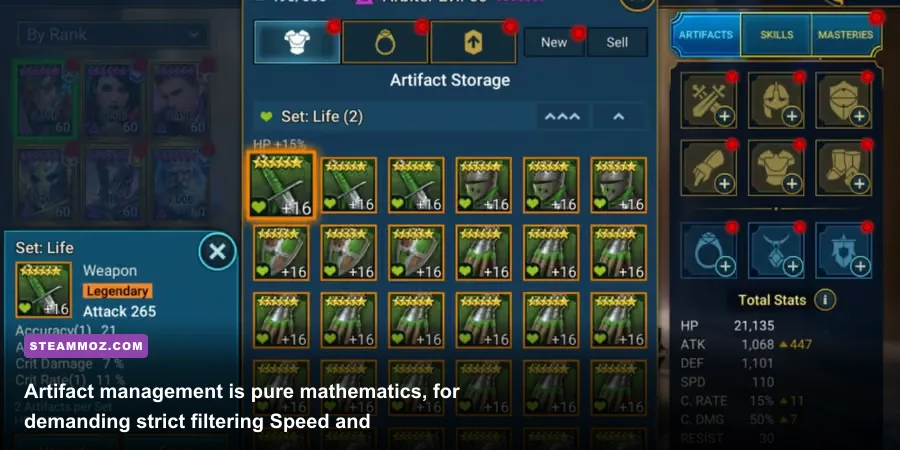
The PC client also solves the interface clutter that makes gear management miserable on mobile. The artifact filtering system allows keyboard-and-mouse interactions: mass-selling junk six-star rare gear, sweeping through inventory tabs, and hotkeying team presets takes a fraction of the time. Running the game windowed in the corner of an ultrawide monitor while handling daily workloads or playing other titles turns what would be an intolerable active grind into a clean, background automation loop.
| Performance / Feature Metric | Native PC Client (Plarium Play) | Mobile Application (iOS / Android) | Third-Party Android Emulators |
|---|---|---|---|
| Target Frame Rate | Uncapped (Native 60/120/144/240Hz) | 30 / 60 FPS (Thermal Throttled) | Capped at 60 FPS (Inconsistent Pacing) |
| Asset Loading Delays | Instant (NVMe SSD Streaming) | 3–8 Seconds Per Wave Transition | 5–12 Seconds (Emulation Overhead) |
| System Stability & Crashes | Exceptional; Negligible VRAM Leaks | App Crashes on Heavy Memory Loads | High Crash Rate During Long Multi-Battles |
| Multi-Tasking Workflow | Seamless Background Window / Minimized | Suspends Process on Screen Sleep | Demands Massive Background CPU Threads |
| Visual Assets & Resolution | Full Uncompressed 4K Textures | Compressed Textures / Dynamic Scale | Stretched Low-Res Mobile Textures |
If you've spent time wrestling with performance and game stability in complex PC titles—similar to sorting out problems documented in our guide for Elex PC fixes that stop crashes and rescue your FPS—you will appreciate just how lightweight Plarium Play is. It sips CPU resources, pulls under 2GB of RAM on average, and lets your discrete graphics card cruise along at minimal utilization while chewing through daily farming passes.
The State of the Meta and Endgame PVE Depth
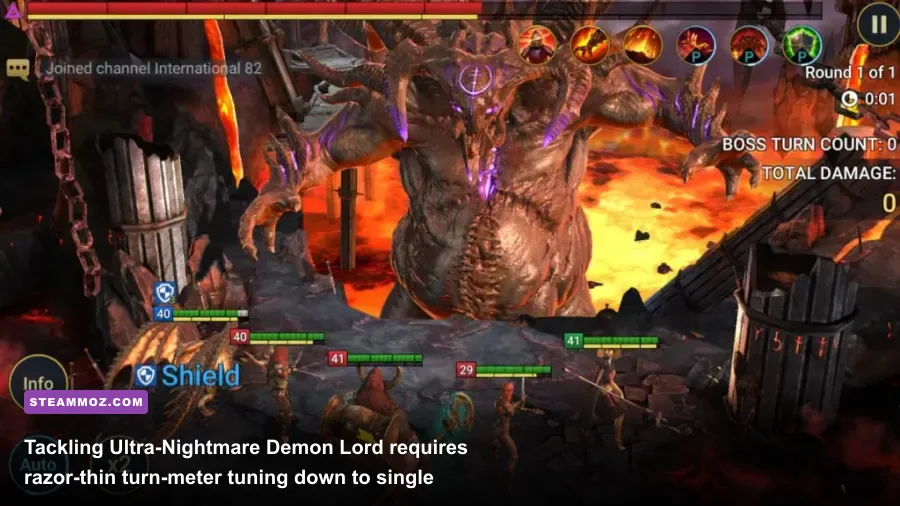
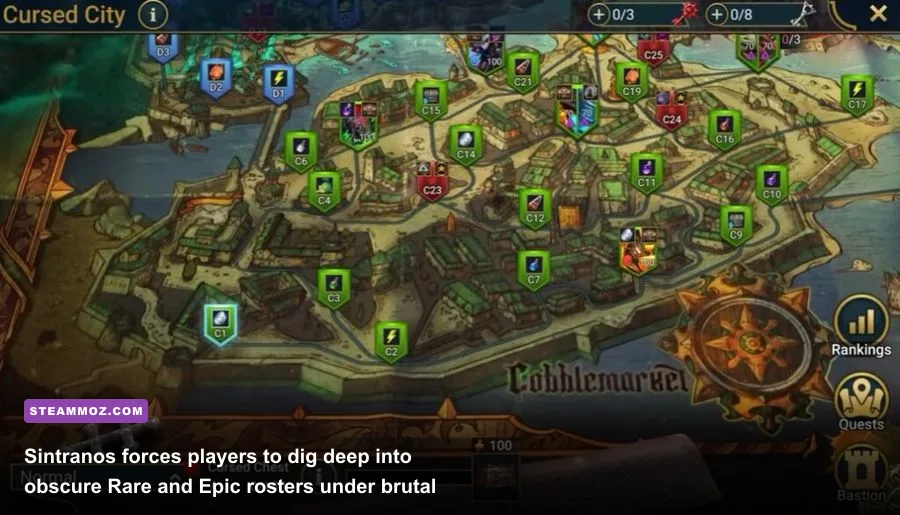
Where Raid blindsides newcomers is its astonishing mechanical depth. Early campaign levels lull you into believing the game is a brainless auto-battler where the highest rarity card wins. By the time you push into Clan Boss (Demon Lord), Hydra, Doom Tower Hard, and the sprawling districts of the Cursed City of Sintranos, brute force completely fails. The game transforms into an unforgiving puzzle requiring pinpoint team synchronization, turn-meter manipulation, and strict stat benchmarks.
Consider the Clan Boss—still the beating heart of Raid's progression because it supplies your primary daily income of Sacred and Void Shards. Conquering Ultra-Nightmare (UNM) difficulty demands that your five-champion squad operates within exact fractional Speed ranges. An unkillable team featuring champions like Demytha, Maneater, or Roschard the Tower cannot just be "fast"; Demytha might need exactly 274 Speed, while your debuff extender must sit between 171 and 178 Speed, accounting for True Speed variations caused by Lore of Steel masteries and artifact set fractions. Missing a turn-meter threshold by a single point desynchronizes your block damage buffs, leading to an instant wipe on turn 22.
Modern endgame has expanded dramatically with Sintranos and Hydra Clash. Hydra throws four shifting heads at you simultaneously, each wielding nightmare mechanics like Mischief's buff-stealing, Decay's team-wide cleanses, and Wrath's vengeance nukes. You cannot just build a single "meta" team; you need multiple rosters capable of landing Provoke on a two-turn cooldown, maintaining 100% uptime on Block Debuffs, and bringing champions like Geomancer or Inquisitor Shamael to turn enemy passive mechanics into offensive engines. It demands the exact same mindset of meticulous stat crafting that we explore when optimizing endgame loadouts in our breakdown of Far Cry 6's best beginner build for the GOTY upgrade pass.
Stat requirements in the current meta leave zero margin for lazy builds. If your debuffers do not carry at least 250 Accuracy for Stage 25 Dungeons and over 350 to 400 Accuracy for hard-mode content, your skills will be continually resisted by boss passives. Similarly, survivability demands building high effective hit points (EHP), balancing 4,200+ Defense against 65,000+ HP pools while maintaining minimum Speed baselines of 200+ on every support unit on the board.
Monetization, Soulstones, and the Free-to-Play Bottleneck
We cannot write an honest retrospective without taking aim at the elephant in the dungeon: Plarium's monetization model is extraordinarily predatory. Every time you log in, clear a milestone, or step foot into the Bastion, you are bombarded with pop-up sales pitching $50 to $100 packs containing energy strings, gems, and summon shards with dismal drop rates. Legitimate drop rates for Sacred Shards pulling a non-void Legendary sit at a brutal 6% baseline, requiring deep resource conservation for 2x Summon Rush events.
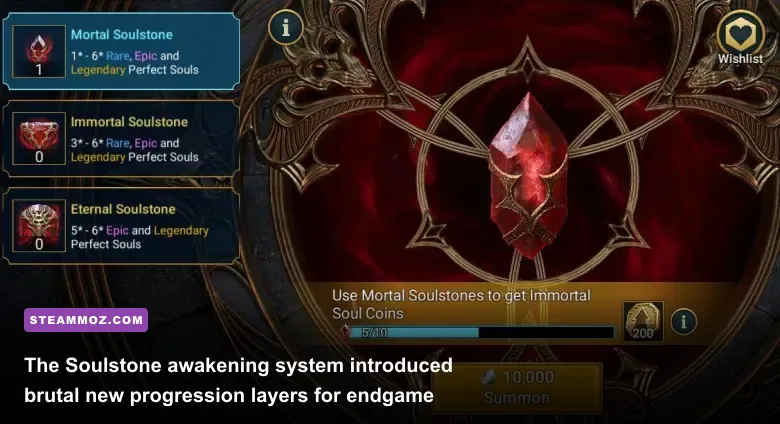
In recent years, the progression ceiling has been repeatedly raised. The introduction of the Altar of Souls brought Awakening and Soulstones (Mortal, Immortal, Eternal), adding six stars of secondary RNG power to every champion. Blessings like Brimstone (Smite) and Cruelty have shifted from luxury upgrades to absolute prerequisites for high-end PVE content. Layered on top of that is the Gear Ascension system sourced from the Iron Twins and the Sand Devil's Necropolis, demanding targeted resource farming routines that rival the grind loops we outlined in our guide on how to level fast and farm Zeni in Kakarot Master Edition.
| Endgame Content Pillar | Core Gate / Mechanical Wall | Minimum Stat & Composition Check | F2P Feasibility Rating |
|---|---|---|---|
| Ultra-Nightmare Clan Boss | Strict Turn-Meter / Unkillable Tuning | 170–280 Precise True Speeds, 230+ ACC | High (Achievable in 6–9 months using login Epics) |
| Hydra Normal through Hard | Head of Decay & Mischief Counters | 320+ ACC, Consistent Provoke & Block Buffs | Moderate (Requires varied utility champion pool) |
| Doom Tower Hard (Floors 100+) | Mortu-Macaab & Siphi Wave Nukes | High EHP, Crowd Control, Enemy Max HP Nukes | Moderate (Heavy dependency on specific CC kits) |
| Sand Devil Stage 25 | Slumber Mechanic / Complete Ignore DEF | Sleep Debuffers (e.g., Godseeker Aniri comps) | Low (Strict gear requirements, massive energy sink) |
| Live Arena (Gold Tier) | Whale Speed Leads & Mythical Champions | 380+ Speed on Arbiter/Siphi, 6-Star Blessings | Very Low (Dominated entirely by high-paying accounts) |
Does this make Raid unplayable without spending thousands of dollars? Paradoxically, no. If you stay far away from Live Arena—which is an open-wallet arena dominated by high-spending players with full six-star awakened Mythical champions like Mezomel and Gharol—the entirety of PVE can be cleared completely free-to-play. Managing your daily energy budget, hoarding gems strictly for energy refills, and utilizing free promotional login champions like Sun Wukong or Ninja provides enough firepower to dismantle high-tier content. The progression is slow, methodical, and requires disciplined resource hoarding akin to managing colony supplies in our Empires of the Undergrowth fast leveling and farming guide.
RSL Helper and the Essential Quality-of-Life Tooling
Here is the open secret among high-level players: practically nobody plays Raid on PC purely through the default Plarium client without third-party community tools. The PC ecosystem thrives largely because of two foundational external utilities: Farbstoff's RSL Helper and the official forums-approved community toolsets like the HellHades Gear Optimizer.
RSL Helper is a sophisticated automation framework that hooks directly into the game client. It doesn't hack the code or inject unfair stat boosts; it simply acts as an infinitely superior auto-clicker with deep computational logic. The default in-game multi-battle system caps you at a pathetic 30 to 50 runs per day unless you buy expensive passes. RSL Helper allows you to queue up 500 Dragon runs while you sleep, programmatically selling any five-star artifact with flat stat primaries (HP, Attack, Defense on gloves, chests, or boots), tracking your auto-potion mixing, and auto-swapping max-level food champions when leveling rank fodder in Campaign 12-3 Brutal.
Similarly, gearing a champion manually in Raid is a nightmare due to the sheer volume of variables. Between six artifact slots, three accessory pieces, faction-specific bonuses, and variable substat rolls, finding the optimal balance of Critical Rate (capped at 100%), Critical Damage (250%+), Speed, and Accuracy requires parsing through thousands of pieces of digital gear. Hooking the game into a gear optimizer reads your local save data, runs mathematical permutations across your entire inventory vault, and spits out the exact six pieces of gear that hit your required stat profile without wasting millions of Silver on trial-and-error gear upgrades.
This community-driven PC software layer completely rehabilitates Raid's most exhausting friction points. Without RSL Helper and gear scrapers, the administrative burden of running a mid-to-endgame account would take 4 to 5 hours of manual, active clicking every day. With them, your daily active investment shrinks to 20 minutes of strategic decision-making, team composition testing, and fusion event calculations.
Final Verdict: Who Should Actually Start Playing Today?
Raid: Shadow Legends on PC occupies a bizarre, singular position in the modern gaming landscape. It is not an action RPG that will reward your twitch reflexes, nor is it a generous, narrative-driven fantasy experience. It is an industrial-strength management simulator disguised as an epic dark-fantasy battle game. Every champion in your vault is a collection of mathematical variables that must be calculated, geared, and synchronized with four other champions to solve increasingly strict mechanical puzzles.
If you fit into one of the following profiles, the game is genuinely worth picking up:
- The Spreadsheet Strategist: You enjoy building optimized systems, analyzing turn orders down to fractional percentages, and watching a fully automated squad execute an intricate boss strategy flawlessly.
- The Dual-Monitor Gamer: You want a high-fidelity, visually impressive tactical RPG that runs cleanly in the background while you write code, work remotely, or play low-intensity single-player campaigns.
- The Patient Free-to-Play Min-Maxer: You find satisfaction in clearing high-end PVE content using budget teams, outsmarting predatory game systems without ever opening your wallet to Plarium's aggressive sales banners.
Conversely, if you suffer from gacha-summoning FOMO (fear of missing out), crave real-time competitive PVP parity, or expect immediate satisfaction without months of iterative artifact farming, stay as far away from this game as possible. Raid will not respect your time unless you force it to by leveraging PC-exclusive tools, strict energy management, and a cold emotional detachment from its gambling systems. For the disciplined PC gamer seeking a masterclass in long-term turn-based character building, however, there is still nothing quite like it on the market.