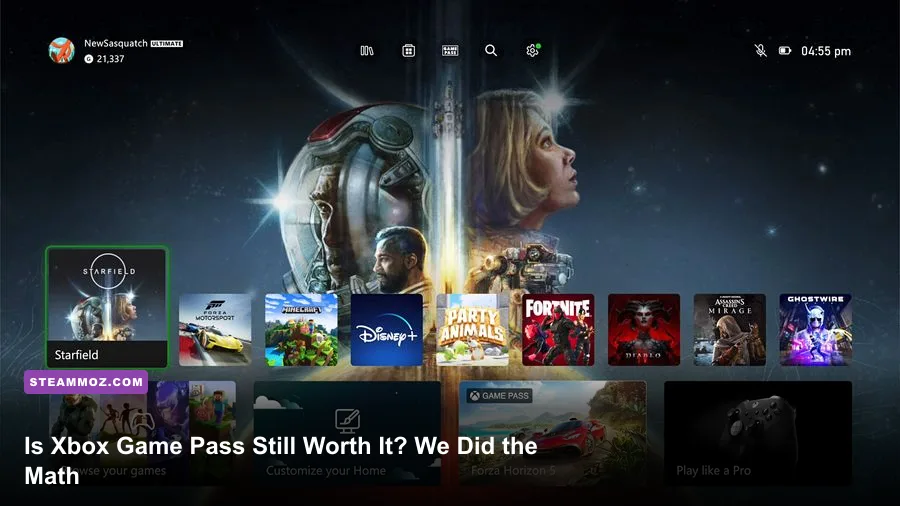
Yes, Xbox Game Pass is still worth your money, but only if you subscribe to the specific tier that fits your gaming habits and actually clear at least three full-priced day-one games every twelve months. The era of blindly recommending Game Pass Ultimate to every person who owns a controller is officially over. Following multiple price hikes, the confusing introduction of the "Standard" console tier that strips away day-one first-party launches, and the relentless creep of modern $70 MSRP game tags, the subscription requires real mathematical justification rather than blind loyalty.
If you treat Game Pass as an endless buffet where you sample two dozen games, finish none, and drift back to free-to-play shooters like Warzone or Fortnite, you are actively burning cash. However, if you are an omnivorous player who dives into major Microsoft first-party drops, devours narrative indie adventures, and wants access across PC and cloud devices, the service remains one of the sharpest value propositions in interactive entertainment. Let us crunch the raw numbers, inspect the library, and figure out whether you should keep your subscription active or cancel it today.
The 2026 Tier Breakdown: What You Pay vs What You Get
Microsoft's modern tier structure is not nearly as simple as it used to be. You cannot just pick a single $10 plan and expect the moon. Today, the subscription is divided into four distinct offerings: Game Pass Core, Game Pass Standard, PC Game Pass, and Game Pass Ultimate. Choosing the wrong tier instantly ruins the service's cost-to-benefit ratio, especially if you accidentally lock yourself out of blockbuster day-one releases.
Game Pass Core acts as the baseline console multiplayer tax, giving you online play on Xbox consoles and a curated, static vault of roughly 25 to 30 titles. Standard sits above Core, offering a larger console library, but it infamously lacks day-one first-party drops—meaning if a massive release drops tomorrow, you are left waiting months or forced to buy it outright. Meanwhile, PC Game Pass remains the golden child of the ecosystem, preserving day-one access, full catalog depth, and bundled access to EA Play at a significantly lower monthly fee than Ultimate.
| Subscription Tier | Monthly Price | Day-One Releases? | Cloud Gaming? | Online Console MP | EA Play Included? | Best For |
|---|---|---|---|---|---|---|
| Game Pass Core | $9.99 | No | No | Yes | No | Multiplayer-only console gamers |
| Game Pass Standard | $14.99 | No | No | Yes | No | Casual console back-catalog explorers |
| PC Game Pass | $11.99 | Yes | No | Included (PC) | Yes | Dedicated PC players seeking max value |
| Game Pass Ultimate | $19.99 | Yes | Yes | Yes | Yes | Multi-platform, cloud, and AAA fiends |
As the table highlights, the PC tier is arguably the sharpest bargain in the entire catalog. At $11.99 per month, PC gamers pay $143.88 per year. Considering high-end PC releases frequently hit $69.99 on the Steam Store, completing just two major AAA campaigns on PC Game Pass breaks you even before you touch an indie title or EA Play's back catalog.
The Real Value Test: How Many Games Make It Break Even?
To evaluate if Game Pass makes financial sense, we have to look at hard break-even math against retail purchases. Let us look at Game Pass Ultimate at $19.99 per month. Over twelve continuous months, you are committing $239.88. If you purchase games individually at modern $70 retail pricing, $240 buys you roughly 3.4 brand-new releases. If you do not play and finish at least four major tentpole games throughout the year, you are losing money on Ultimate compared to simply buying what you want on sale or keeping the licenses permanently.
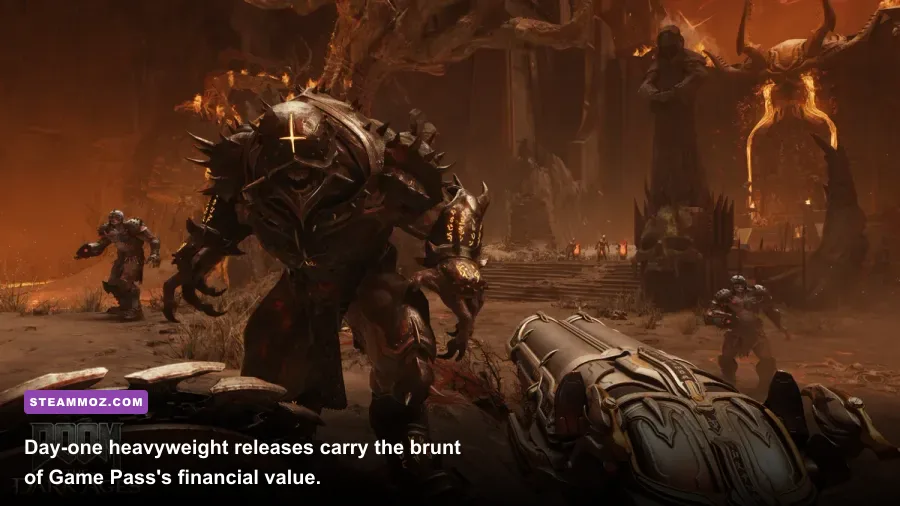
Consider Microsoft's heavyweight slate. When games like DOOM: The Dark Ages, Avowed, Clockwork Revolution, and the annual Call of Duty entry release day-and-date into the Ultimate and PC tiers, burning through three of them yields $210 in retail value. Throw in sprawling space epics or complex action-RPGs—much like how space explorers spend hours hunting hidden gear in deep space campaigns covered in our Everspace 2 secret locations and hidden rewards guide—and your cost-per-hour plummets dramatically into single-digit cents.
| Gamer Profile | Annual Pass Cost (Tier) | Typical Retail Spend Without Pass | Net Value Difference | Our Verdict |
|---|---|---|---|---|
| The Live-Service Specialist (Plays 1-2 Games) | $239.88 (Ultimate) | $70.00 (Base Game) | -$169.88 (Massive Loss) | Cancel immediately; buy base game |
| The Patient Backlog Gamer | $179.88 (Standard) | $90.00 (Deep Steam/Xbox Sales) | -$89.88 (Moderate Loss) | Skip pass; buy wishlist on deep discount |
| The Day-One PC Campaigner | $143.88 (PC Pass) | $280.00 (4 AAA Launches) | +$136.12 (High Value) | Must-subscribe tier; unquestionable win |
| The Omnivorous Completionist | $239.88 (Ultimate) | $490.00+ (AAAs + indies) | +$250.12+ (Massive Win) | Essential subscription; maximum efficiency |
Look honestly at your playtime. If your console or PC exists primarily as a dedicated machine for one competitive shooter or a single sports franchise, paying for Game Pass Ultimate is lighting twenty dollars on fire every single month. But if you jump into games rapidly, tackle 15-hour story campaigns, and drop titles the second credits roll, you save hundreds of dollars annually.
Catalog Quality Check: Blockbusters, Indies, and What Got Left Behind
A subscription is only as strong as what is actually on the drive. The days of Game Pass surviving on ancient Xbox 360 nostalgia are over; today's library is stacked with massive studio acquisitions, including Bethesda and Activision Blizzard. Having access to entire franchises like Fallout, The Elder Scrolls, Dishonored, and Diablo creates a bottomless safety net. If you love classic retro run-and-gun combat—comparable to the frantic weapon balance we analyzed in our Far Cry 3: Blood Dragon weapons tier list—the catalog lets you re-experience legendary shooters whenever modern releases experience a dry spell.
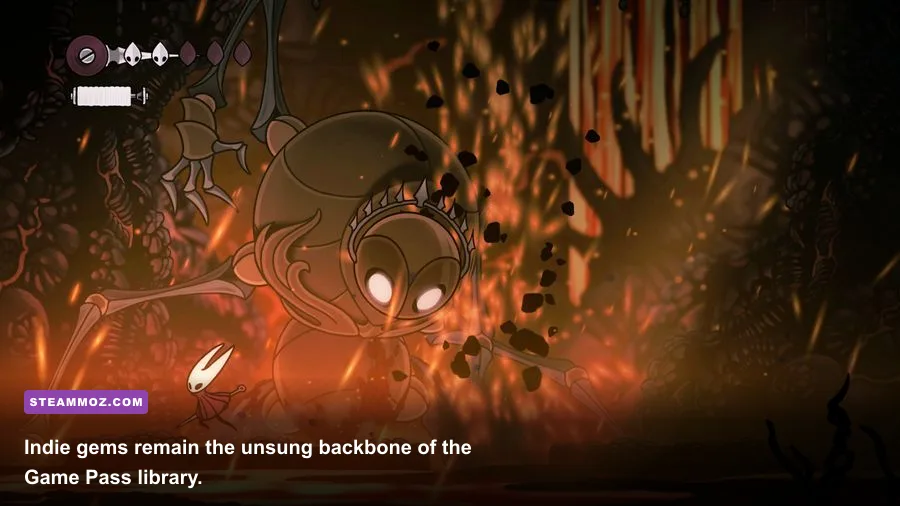
However, the real soul of the service lies in its curated indie rotation. Titles like Sea of Stars, Cocoon, and various standout deckbuilders give Game Pass its variety. Instead of gambling $25 on an experimental roguelite or a puzzle game you might bounce off of after two hours, you can download it with zero friction. The downside? Rotation anxiety is real. Third-party games generally remain on the platform for 12 to 18 months. If an indie masterpiece catches your eye, putting it off for six months risks seeing it flagged under the dreaded "Leaving Soon" category before you reach the second act.
Furthermore, downloadable content (DLC) remains the service's primary monetization trap. Base games are free on Game Pass, but story expansions, premium character passes, and deluxe cosmetic upgrades still demand cash. If you find yourself buying season passes and DLC packs for games you do not technically own, that math begins to bleed backwards into publisher profits.
PC Game Pass vs Console Experience: The Technical Reality
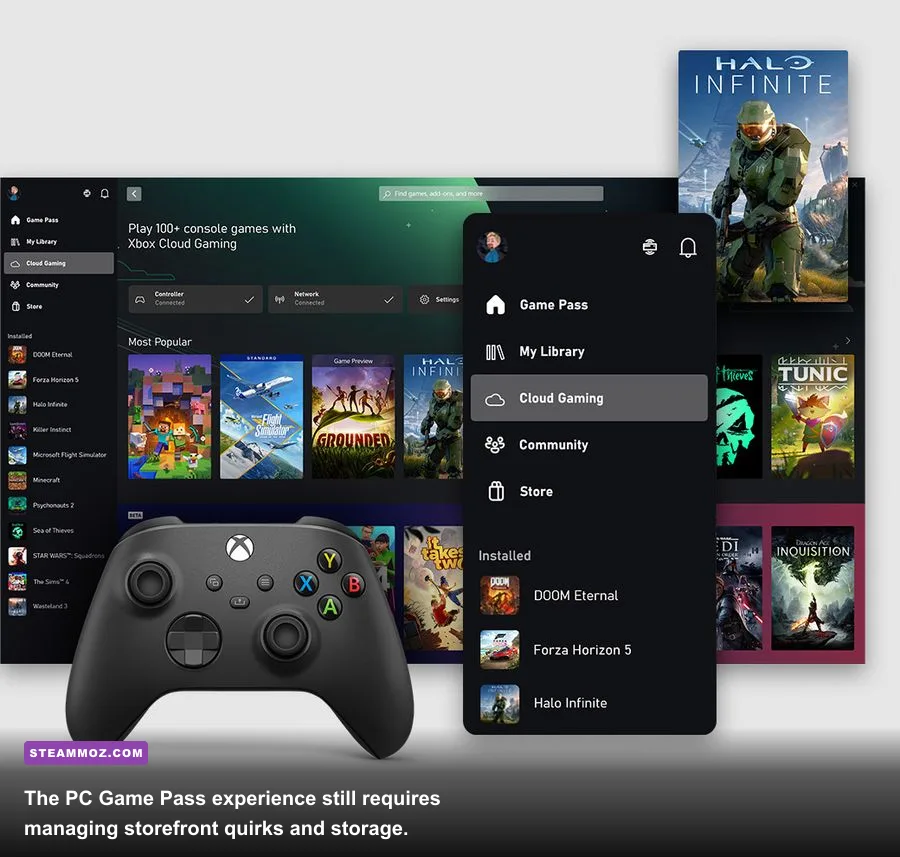
The experience of using Game Pass differs wildly depending on your hardware. On Xbox Series X, the integration is flawless: instant downloads, Quick Resume across multiple titles, and seamless achievement tracking. On PC, however, the Xbox App remains a polarizing piece of software. While it has improved leaps and bounds from its sluggish beginnings, it still relies on Windows package architectures that occasionally complicate manual file modding and custom resolution profiles.
Performance can also vary wildly across hardware configurations. Launching demanding open-world titles via Game Pass requires an optimized rig. If you struggle with stability or unexplainable stutters in ambitious European RPGs or expansive sandbox worlds, our troubleshooting manual on ELEX PC fixes that stop crashes and rescue FPS highlights just how critical engine-level driver tuning and file verification can be when dealing with Windows storefront installations. Similarly, dialing in advanced graphical presets is mandatory for heavy shooters, much like the steps covered in our breakdown for Far Cry 6 settings for max FPS.
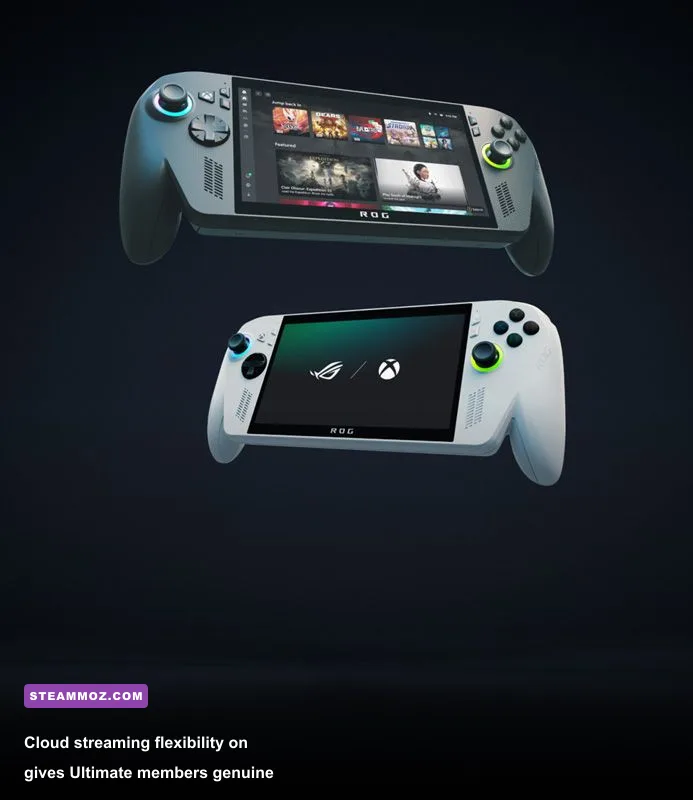
Then there is Xbox Cloud Gaming, exclusive to Ultimate. Operating on custom Series X server blades, cloud streaming has evolved into a legitimate option for low-latency titles on portable handhelds, smart TVs, and budget laptops. For turn-based tactics, visual novels, and slower narrative adventures, cloud gaming feels like magic. For frame-perfect twitch fighters—where mastering execution requirements matches the intense inputs seen in our Fatal Fury: City of the Wolves PC specs and performance guide—the native compression artifacts and minor network jitter mean local hardware installations are still completely non-negotiable.
The Final Verdict: Who Should Subscribe and Who Should Walk Away
When the dust settles, Xbox Game Pass is no longer an automatic default purchase, but a precision tool. It is an extraordinary service for specific types of gamers and a quiet money-sink for others.
You should subscribe if:
- You play on PC and want day-one blockbusters, indie gems, and EA Play for roughly twelve bucks a month.
- You clear three or more brand-new $70 first-party launches every single year.
- You love hopping between genres, testing weird indie concepts, and playing co-op games with friends without demanding everyone buy separate retail copies.
- You frequently travel and use Xbox Cloud Gaming on a Steam Deck, ROG Ally, or tablet.
You should cancel or skip if:
- You dedicate 80% of your leisure time to live-service giants like Apex Legends, EA Sports FC, or Destiny 2.
- You are a slow, meticulous player who takes four months to finish a single 100-hour open-world RPG.
- You only own a console and refuse to pay for the expensive Ultimate tier, leaving you stuck with the neutered "Standard" tier that completely cuts out day-one games.
Stop letting auto-renew dictate your gaming budget. If your calendar shows three massive day-one releases hitting the service over the next four months, turn Game Pass on, feast on the catalog, and shut it off the second your schedule clears out. In 2026, Game Pass is at its absolute best when treated not as a permanent lifestyle, but as a tactical pass to play the best games in the world on your own terms.