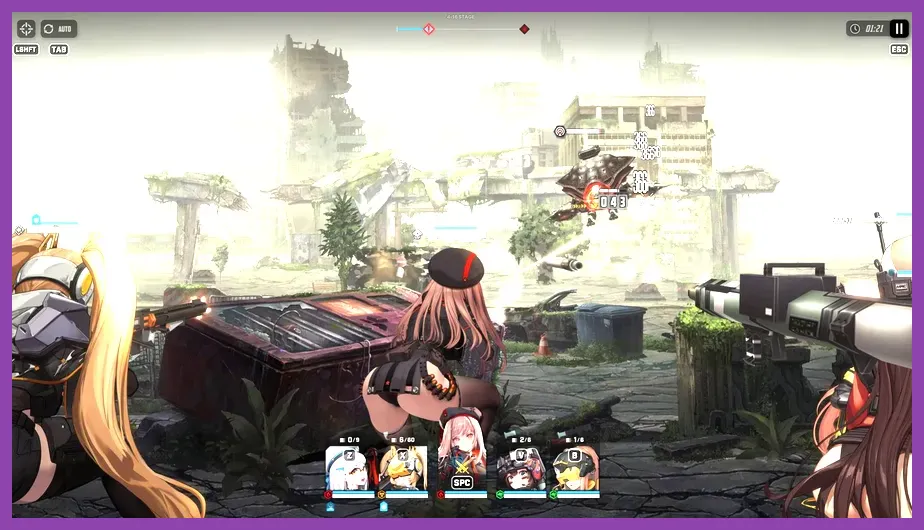
To clear Goddess of Victory Nikke’s late game consistently, build around a complete Burst I–II–III rotation, push five core Nikkes to level 200, farm Special Interception for manufacturer gear, and reserve Overload materials for your highest-impact damage dealers. The strongest general-purpose foundation is Liter, Crown or Blanc, and three Burst III attackers such as Red Hood, Alice, Modernia, or Scarlet: Black Shadow, with teams then adjusted for cover damage, interruption parts, and elemental weaknesses.
Late game is less about raising Combat Power blindly and more about converting limited resources into reliable damage. Campaign stages, Special Interception, Solo Raid, Union Raid, Tribe Tower, and Hard Mode all reward different team shapes. This guide focuses on the progression order, skill investments, gear rolls, burst rotations, and boss tactics that matter after the early story stops being forgiving.
Build the Correct Late-Game Account Foundation
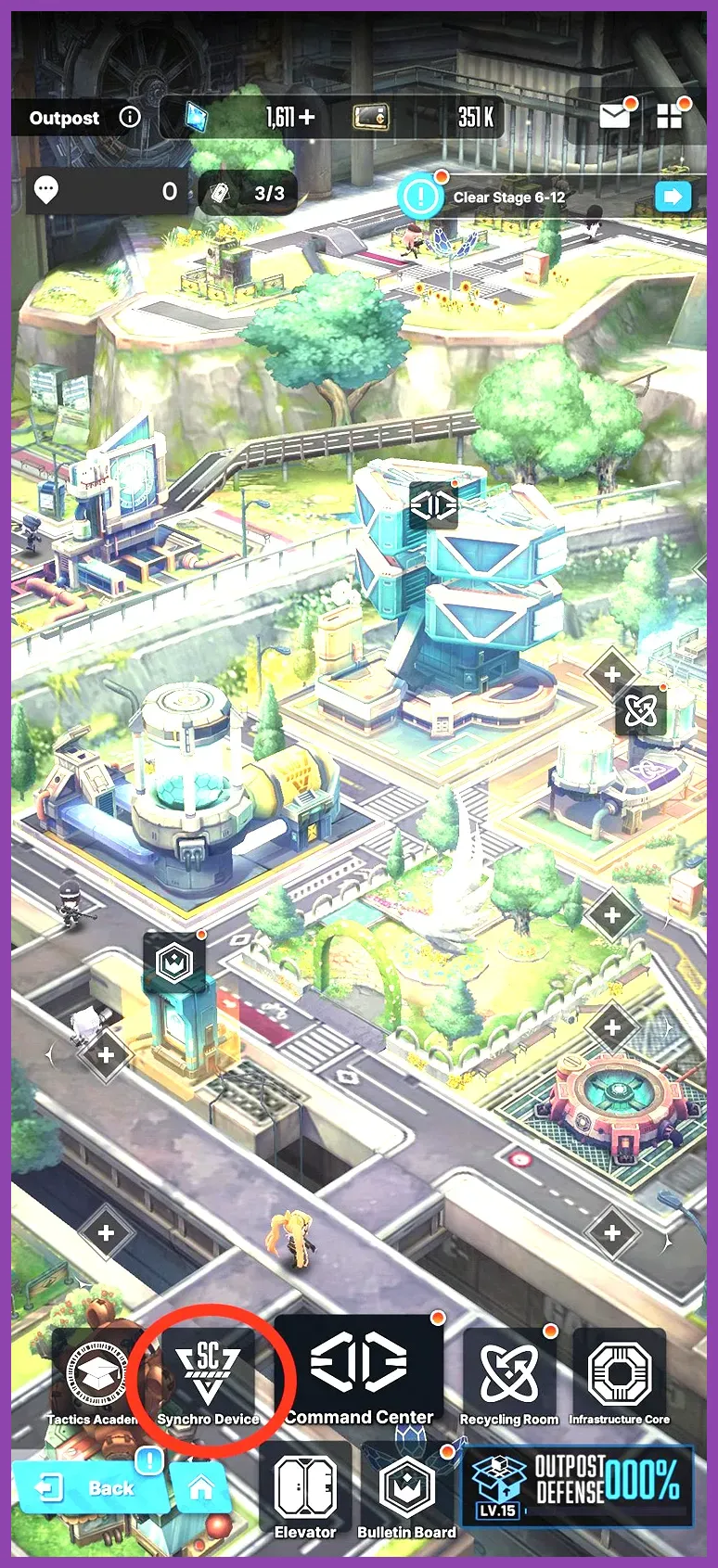
The first milestone is the level 200 wall. Level five Nikkes to 200 and use the Synchro Device to bring additional characters to that level. Do not keep spreading Core Dust across every unit in your roster. The five units in the Synchro Device slots determine your practical account level, so replacing a weak slot with a stronger, higher-limit-broken unit can improve the entire roster.
Prioritize Core Dust over Credits and Battle Data once your account reaches the midgame. Credits and Battle Data are still required, but Core Dust becomes the usual bottleneck for level increases. Claim Outpost Defense rewards regularly, push the Outpost Defense campaign as far as possible, and avoid spending gems to accelerate ordinary resource boxes unless a time-limited event makes the exchange unusually efficient.
Use a five-unit investment core
- Liter: Burst I cooldown reduction, cover repair, and attack buffs make her useful in Campaign, Interception, and most raids.
- Crown: Her Burst II provides powerful team utility, damage amplification, and defensive value after activation. She is one of the safest modern generalist supports.
- Red Hood: She can fill multiple Burst positions and remains one of the best answers to difficult damage checks because of her strong Burst III output.
- Modernia: Her sustained machine-gun damage and Burst clear groups of enemies efficiently, especially in campaign stages with many targets.
- Alice: With high investment, charge-speed support, and properly rolled gear, she becomes an exceptional single-target boss killer.
This is not a mandatory team. Dorothy can replace Liter for burst-heavy teams, Tia and Naga can form a powerful support pairing, and Blanc plus Noir remains a durable alternative when you need healing and frequent Full Burst access. The important rule is to maintain one dependable Burst I, one dependable Burst II, and at least two Burst III options rather than building five damage dealers with no cooldown support.
For players managing the game on a phone, reduce unnecessary background load before long campaign sessions. Our guide to optimizing gacha games on Android covers battery, heat, and performance settings that help prevent crashes during extended auto-battle farming.
Set Skill Priorities and Burst Rotations
Skill manuals are scarce, so do not level every skill evenly. Raise the abilities that increase team uptime, damage multipliers, or a character’s defining mechanic. A practical early late-game target is level 7 on important skills, followed by level 10 on the best damage skill or Burst once the rest of the team is stable. Skill levels 4, 7, and 10 are useful stopping points because they provide stronger returns than casually taking every ability to an identical level.
Recommended skill priorities
- Liter: Prioritize Skill 1 for attack and cooldown utility, then Skill 2 for cover recovery. Upgrade Burst III after those skills if she is routinely used in longer fights.
- Crown: Raise Skill 1 and Skill 2 to improve her support effects, then invest in Burst. Her value comes from enabling the whole squad, not from personal normal-attack damage.
- Red Hood: Upgrade Skill 1 and Skill 2 according to the Burst position you use most, then maximize Burst for boss damage. Her flexibility is wasted if her key damage skill remains underleveled.
- Modernia: Prioritize Skill 1 and Burst for sustained damage and wave clearing. Her Burst is excellent against multiple targets but can be less efficient when a boss exposes only a small weak point.
- Alice: Skill 1, Skill 2, and Burst all matter because her charge-speed and charge-damage scaling define her endgame performance. She needs high skill investment rather than simply good gear.
A standard general-purpose rotation is Liter Burst I, Crown or Blanc Burst II, then Red Hood or Modernia Burst III. If Red Hood is being used as Burst I to refresh cooldowns or activate a special setup, use her first Burst, follow with your Burst II support, and finish with the strongest available Burst III. Watch the Full Burst timer: wasting the final seconds while a boss is invulnerable is often more damaging than choosing a slightly weaker character.
Manual control matters in late campaign and raids. Aim Alice at exposed weak points, move Modernia’s reticle across grouped enemies during her Burst, and stop firing when a boss is about to enter an invulnerability animation if your ammunition would be better saved for the next damage window. If your skill resources are already committed to the wrong unit, Steamoz’s guide on how to respec skill points in Nikke explains the reset process.
Farm Special Interception Before Chasing Perfect Builds
Special Interception should become the center of your late-game farming routine as soon as it unlocks. Modernia, Blacksmith, Chatterbox, Alteisen, and Gravedigger each test different mechanics, but all can provide Tier 9 equipment and manufacturer gear. Manufacturer pieces are especially valuable because they can be upgraded into Overload equipment for manufacturer-compatible Nikkes.
Boss-specific priorities
- Modernia: Destroy the two wings quickly if your team can meet the damage check, then focus the core. If you cannot burst the wings, control the fight manually and eliminate one wing while preserving cover. A strong single-target Burst III and accurate weak-point shots are more useful than indiscriminate auto-fire.
- Blacksmith: Shoot the projectiles before they reach your team and break the exposed core during the damage window. Healing and cover recovery reduce the punishment from missed projectile clears, making Liter, Crown, Blanc, or Naga valuable.
- Chatterbox: Break the exposed parts and watch for the jump attack. When the boss prepares to land, use cover or manual movement to avoid losing a key attacker. Shotgun units can perform well when the boss is close, but range and part placement still matter.
- Alteisen: Destroy the turrets and missile launcher as quickly as possible. The train’s opening damage check is severe, so use your strongest burst sequence immediately and manually target the dangerous turret rather than allowing auto-targeting to split damage.
- Gravedigger: Keep the crosshair on the three interruption circles and break them before the boss reaches the team. Shotguns such as Drake, Sugar, and Isabel can be effective at close range, but accuracy and burst timing are more important than simply selecting a shotgun unit.
Do not judge progress only by whether you reach the final phase. A partial Special Interception clear that produces Tier 9 materials is still valuable. Upgrade the best manufacturer pieces first, then replace ordinary gear slot by slot. Helmet, gloves, chest, and boots all contribute differently to a character’s attack, defense, or HP profile, so avoid destroying a usable piece merely because its first random substats are imperfect.
For PC players, the official NIKKE official website provides news, event notices, and maintenance information, while the official Steam listing is useful for checking the PC client and system requirements.
Turn Manufacturer Gear Into Overload Equipment
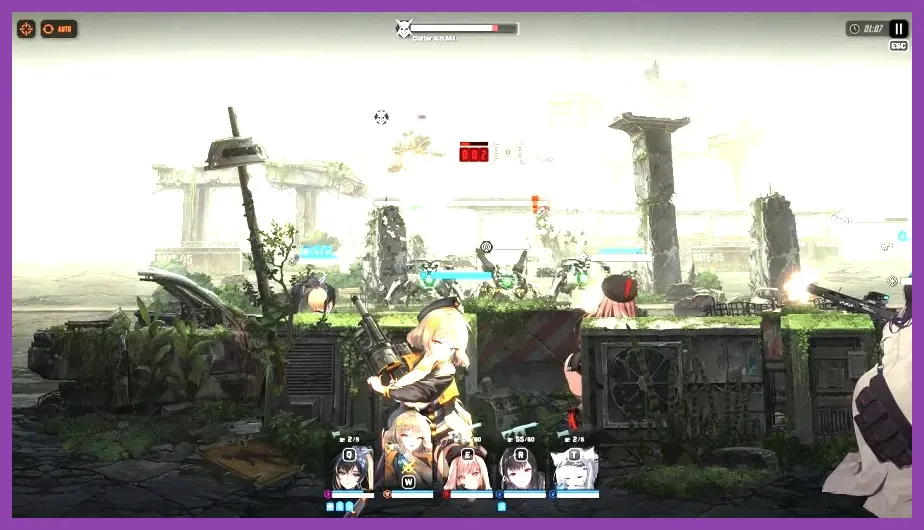
Overload gear is the largest permanent upgrade after your team reaches level 200. Equip a matching Tier 9 manufacturer piece, raise it to the required maximum level, and use the Overload conversion system to lock it to that manufacturer unit. After conversion, Custom Modules let you unlock and reroll bonus lines. Because Custom Modules are limited, do not Overload every unit that happens to receive a manufacturer item.
Who deserves Overload gear first?
- Primary campaign damage dealer: Red Hood, Modernia, Alice, Scarlet: Black Shadow, and other main carries benefit immediately from attack and ammunition improvements.
- Dedicated raid carry: Prioritize the character you use across Solo Raid and Union Raid, particularly if that unit needs additional charge speed, critical rate, or elemental damage.
- Specialized boss counter: A unit that solves Alteisen, Gravedigger, or a difficult interruption check can be worth upgrading before a generally stronger character.
Useful Overload lines depend on the character. Charge Speed and Charge Damage are highly desirable on Alice and other charge attackers. Max Ammunition Capacity improves uptime for machine guns and other units that lose damage while reloading. Attack, Elemental Damage, and Critical Rate can be excellent on damage dealers, but the value changes with a unit’s kit and team buffs. Do not automatically chase four perfect lines on one item while your other main attacker remains in unupgraded Tier 9 gear.
Save Custom Modules until the equipment belongs to a character you will use for months. Lock a valuable line before rerolling if the system allows it, and compare the total effect of a roll rather than celebrating one high percentage in isolation. Overload investment is permanent enough that careful sequencing matters more than gambling for a perfect screenshot.
Prepare Teams for Campaign, Solo Raid, and Union Raid
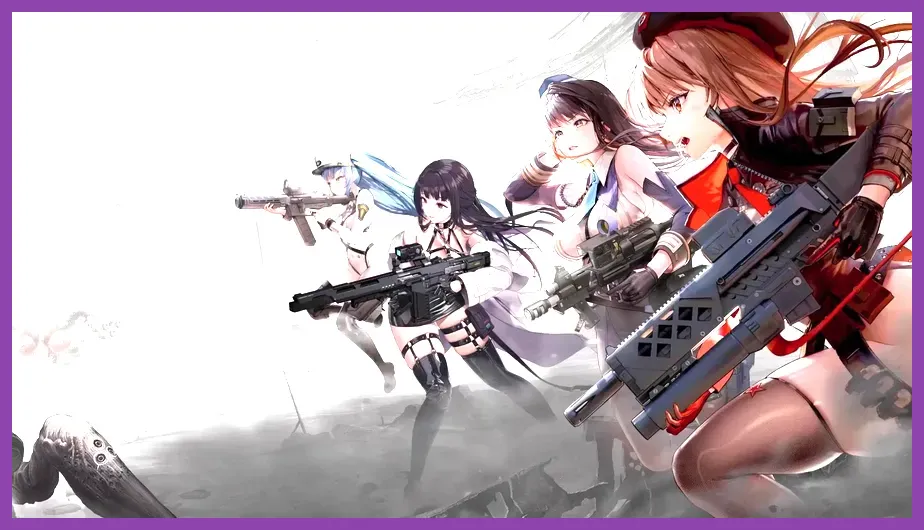
One universal squad cannot solve every late-game mode. Campaign rewards wave clear, survival, and fast burst cycling. Solo Raid rewards several independent teams and boss-specific elemental damage. Union Raid emphasizes sustained damage across multiple attempts, where duplicating the same high-value support may be impossible or inefficient.
Campaign team structure
Start with Liter, Crown, Red Hood, Modernia, and a flexible Burst III such as Alice or Scarlet: Black Shadow. Use Modernia’s Burst when the stage contains dense enemy groups; use Red Hood or Alice when a boss or elite target is the primary threat. If your Combat Power is below the recommended value, manual play can still help, but the penalty becomes increasingly severe when the gap is large. Improve gear, skills, and limit breaks instead of expecting a minor formation change to erase a major deficit.
Solo Raid and Union Raid structure
Build around five functioning teams rather than five copies of the same composition. A strong first team might use Liter, Crown, Red Hood, Alice, and Maxwell for a boss with a clear single-target window. A second team can use Dorothy, Blanc, Noir, Modernia, and another Burst III for sustained clearing. Tia and Naga can form a support core in another group, while a shotgun team with Drake, Sugar, or Guilty may handle close-range interruption mechanics.
Read the boss rules before selecting units. If the encounter spawns destructible parts, use characters who can distribute damage without losing control of the primary target. If the boss requires repeated interruption, bring accurate units and manual aim. If elemental resistance is active, matching the weakness can outperform a higher-rated character with the wrong element. Record which team consumed which support so that your later attempts do not collapse because every cooldown reducer was used in the first battle.
For roster planning, keep event units and spare SSRs instead of immediately using them as limit-break material. The official NIKKE news page announces new events and balance changes that can alter raid requirements. You can also use Steamoz’s broader low-end PC optimization guide if raid sessions cause stutter, overheating, or input delays.
Use a Daily Late-Game Progression Checklist
A disciplined routine prevents the most common late-game mistake: spending premium resources on short-term power while neglecting permanent progression. Begin by collecting Outpost rewards and Synchro Device resources. Complete the available daily missions, Simulation Room stages, Tribe Tower attempts, and Interception entries. Spend ordinary stamina and event currency before the event timer expires, but do not buy every shop item automatically.
Weekly resource order
- Core Dust: Your first long-term priority for Synchro levels. Buy efficient event-shop bundles when available.
- Skill Manuals: Direct them into the active five-unit core and the damage skills that define your raid teams.
- Manufacturer equipment: Farm Special Interception and improve the worst gear slot on your main carry before chasing tiny substat gains.
- Custom Modules: Spend them only on locked-in Overload pieces for permanent roster staples.
- Gems and tickets: Save for limited banners, anniversary banners, or a missing support that completes a proven team rather than pulling randomly for small roster expansion.
Check your damage after every major upgrade in the same boss encounter. If a new Overload piece does not improve your clear, inspect ammunition downtime, burst order, cover destruction, and target selection before replacing it. Late-game Nikke progress is usually a chain of small confirmed gains: a level 200 core, level 7 skills, a complete Tier 9 set, one correctly rolled Overload piece, and a manually timed Full Burst.
Finally, keep the client updated and verify event schedules through NIKKE’s official English social account. Follow that progression order and your account will move from merely surviving late campaign stages to farming Special Interception, building multiple raid teams, and clearing difficult bosses with repeatable rotations rather than luck.