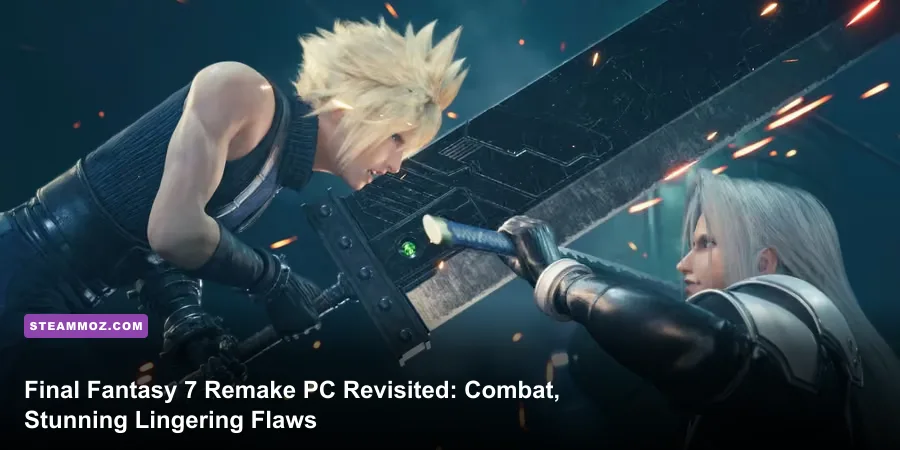
Yes, Final Fantasy 7 Remake Intergrade on PC is still fundamentally worth your time and hard-earned cash, but that recommendation comes with a crucial caveat: you must be willing to tame its stubborn engine. While the broader gaming conversation has largely shifted toward expansive sequels and sprawling open worlds, this 40-hour industrial Midgar odyssey stands tall as one of the tightest, most rewarding hybrid combat systems ever built. Yet years after its troubled debut on the Epic Games Store and subsequent arrival on Steam, Square Enix's vanilla PC port still carries peculiar visual bugs, aggressive dynamic resolution scaling, and barebones graphical options that require a few easy tweaks to truly shine.
The Combat System Is Still Peak Action-RPG Design
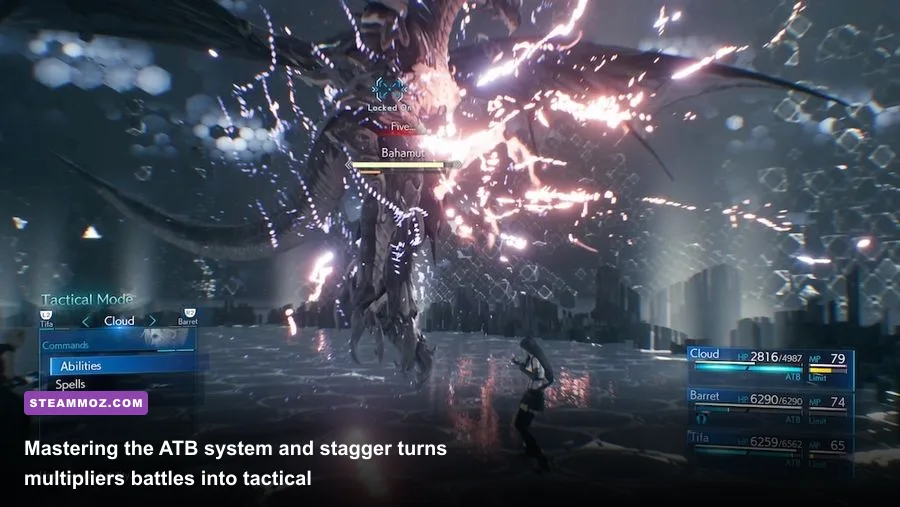
Many modern action-RPGs struggle to balance pulse-pounding, real-time dodging with deep tactical decision-making, often devolving into mindless button-mashing or rigid soulslike parry-fests. Final Fantasy 7 Remake solves this puzzle brilliantly through its Active Time Battle (ATB) engine. Real-time basic strikes deal negligible chip damage; their primary purpose is generating ATB charge to spend on specialized weapon abilities, high-tier spells, and support buffs. Slowing down combat to a razor-sharp tactical crawl when opening the command menu gives you the mental breathing room to analyze enemy pressures, assess elemental weaknesses, and chain stagger multipliers.
Each party member feels completely distinct under your fingers, demanding active swapping rather than passive AI babysitting:
- Cloud Strife: The ultimate frontline brawler. Toggling into Punisher Mode allows you to auto-counter physical melee attacks, while offensive abilities like Focused Thrust rapidly fill enemy stagger gauges. Once an enemy is knocked down, Cloud's Infinity’s End dishes out astronomical burst damage that scales ruthlessly with stagger percentages.
- Tifa Lockhart: The stagger multiplier engine. Tifa’s martial arts kit relies on stacking her Unbridled Strength buff, which transforms her unique triangle attack from Whirling Uppercut to Omnistrike and Rise and Fall. Her late-game True Strike ability directly increases a staggered boss’s damage intake well past the baseline 160% up to an absurd 300%.
- Aerith Gainsborough: A stationary magical turret. Aerith struggles with sluggish movement, but deploying Arcane Ward lets any party member standing inside cast attack magic twice for the cost of a single MP pool. Pair this with Fleeting Familiar and Sorcerous Storm to melt mechanical constructs in seconds.
- Barret Wallace: The unbreakable tank and ranged disruptor. Utilizing Steelskin and Lifesaver, Barret soaks incoming damage aimed at squishier teammates while Maximum Fury completely drains his ATB bars to unleash a relentless barrage of suppression fire.
When you line up these mechanics against aggressive, multi-phase bosses like the Airbuster or the Hell House, the combat achieves an adrenaline-fueled flow state that few contemporary games match. Learning how to properly pace your progression loops feels just as vital here as it does when you level fast and farm resources in other action RPGs.
The PC Port in 2026: What Square Fixed and What Modders Rescued
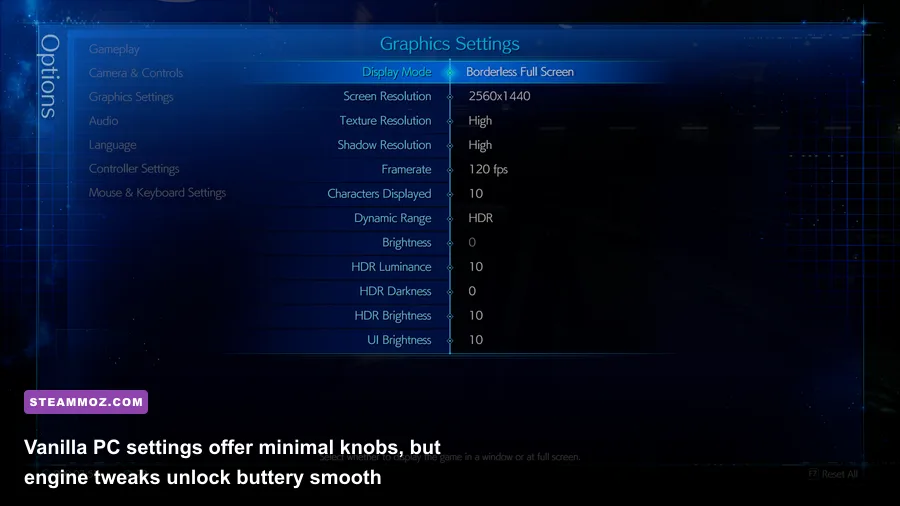
Square Enix built Final Fantasy 7 Remake on Unreal Engine 4, and the stock PC implementation remains disappointingly spartan. The in-game settings menu offers little more than basic toggles for resolution, shadow resolution, and texture quality, alongside an arbitrary frame rate cap set at 30, 60, or 120 FPS. Worse, the game features a forced dynamic resolution scaling (DRS) system. If your GPU drops even a single frame below your target threshold, the internal resolution aggressively downscales, causing muddy blurriness and jarring frame pacing spikes.
Thankfully, the PC community stepped in where official patches fell short. Using the essential FFVIIHook mod from Nexus Mods, you can effortlessly disable dynamic resolution, force anisotropic filtering to 16x, and adjust internal post-processing variables. Furthermore, running the game under DirectX 11 by adding -d3d11 to your Steam launch options entirely bypasses the shader compilation stuttering that plagues DirectX 12 on certain hardware. If you've ever dealt with stubborn frame drops when tuning PC fixes that stop crashes and rescue FPS, you know how crucial these engine-level tweaks are for maintaining a locked 60 or 120 FPS frame delivery.
| Setting / Variable | Recommended Config | FPS Impact | Engine & Tactical Rationale |
|---|---|---|---|
| DirectX Launch API | DirectX 11 (-d3d11) |
Zero (Improves Pacing) | Eliminates DX12 shader compilation micro-stutters during heavy combat particle effects. |
| Dynamic Resolution Scaling | Disabled (via FFVIIHook) | Moderate (5-8% hit) | Prevents the engine from randomly dropping internal resolution below native 1440p or 4K. |
| Texture Resolution | High | Negligible (>6GB VRAM) | Keeps Midgar's world textures crisp; minimal performance cost on modern GPUs. |
| Shadow Resolution | Low to Medium | High (10-15% gain) | High shadows introduce severe CPU overhead in busy hubs like Wall Market and Sector 7. |
| Characters Displayed | 7 to 8 | Low to Moderate | Reduces draw call pressure in densely populated slum markets without harming visual life. |
With these targeted adjustments, the game runs smoothly on modern mid-range rigs and older hardware alike. If you are accustomed to managing performance bottlenecks like configuring settings for maximum FPS output or optimizing hardware resource allocation like we see in settings guides for higher framerates, tuning FF7 Remake will take you under five minutes.
Midgar’s Pacing: Character Gold Amidst Corridor Tedium
The boldest creative decision Square Enix made was expanding a five-hour introductory sequence from the 1997 original into a sprawling full-length game. This delivers massive emotional payoffs. Side characters like Jessie, Biggs, and Wedge receive fleshed-out backstories, tragic motivations, and heartfelt domestic moments that transform them from mere plot catalysts into deeply endearing comrades. Chapter 9’s reimagined Wall Market remains a masterclass in atmospheric world-building, culminating in an unforgettable dance sequence at the Honeybee Inn and an opulent, tense showdown inside Don Corneo's mansion.
However, stretching Midgar into a standalone epic inevitably brings noticeable structural bloat. You will navigate several linear, claustrophobic industrial corridors that feel designed purely to burn time. The sluggish robotic mechanical arm puzzles in Chapter 9, the redundant return trip through the Sewers in Chapter 14, and the agonizingly slow switch-pulling in the Sun Lamp utility tunnels of Chapter 6 test your patience. If you enter Remake expecting open-world freedom, you won't find it here; this is an unapologetically directed, corridor-driven cinematic RPG.
Intermission: The Blueprint That Perfected the Formula
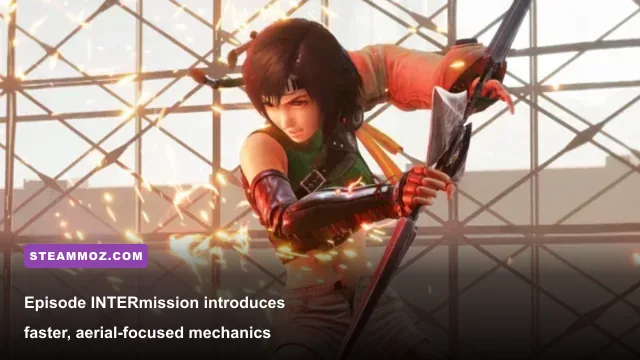
The PC version includes Episode INTERmission by default, and this standalone two-chapter DLC starring Yuffie Kisaragi is arguably the best slice of content in the entire package. Yuffie's combat kit addresses the base game’s minor mobility flaws by introducing a hyper-fast, acrobatic playstyle. She can throw her giant 4-point shuriken across the arena to pin down aerial targets, immediately morph her basic attacks into elemental ninjutsu (Fire, Ice, Lightning, Wind) on the fly without consuming MP or Materia slots, and execute Brumal Form to cancel recovery frames while evading lethal strikes.
Furthermore, Yuffie introduces the Synergized combat mechanic alongside her partner, Sonon Kusakabe. Pressing L2 links their movements, allowing them to coordinate simultaneous physical assaults that stagger resilient mechanical bosses in a fraction of the standard time. Throw in the addictive tactical mini-game *Fort Condor*, and Intermission acts as both a mechanical evolution and a joyful, character-focused interlude that easily justifies a playthrough on its own.
Materia Builds and Hard Mode Viability: How the Meta Holds Up
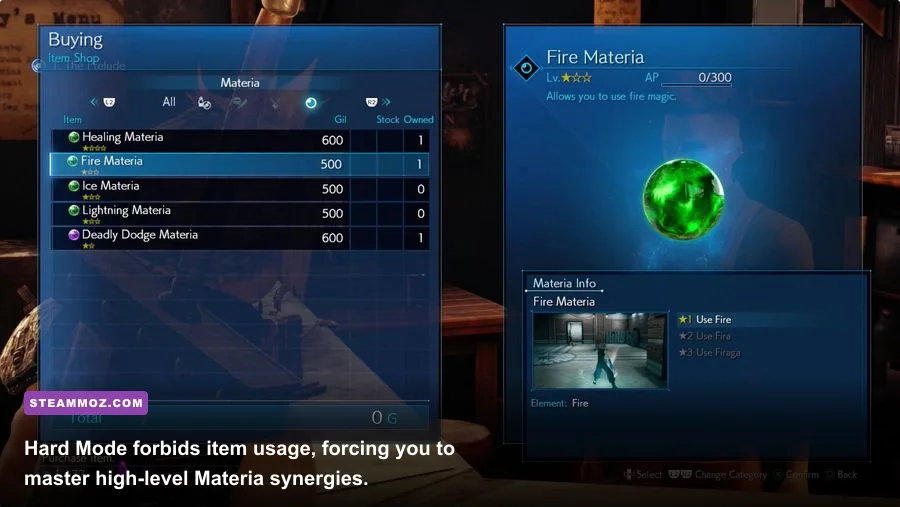
Where FF7 Remake truly ascends from a great RPG into a masterwork is its post-game Hard Mode. Unlocked upon completing the main story on Normal, Hard Mode disables all item usage inside and outside of battle, prevents benches from restoring MP, and elevates boss AI aggression to terrifying degrees. Suddenly, you can no longer chug Phoenix Downs, spam Mega-Potions, or brute-force your way through sloppy positioning.
Hard Mode forces you to intimately understand Materia synergy slots, MP conservation, and defensive action timing. Surviving grueling gauntlets like the Shinra Combat Simulator against the Pride and Joy Prototype demands calculated loadouts that leverage passive stat boosts, elemental absorption, and crowd-control loops.
| Materia Loadout Archetype | Core Linked Materia Pairings | Optimal Character | Combat Loop & Tactical Execution |
|---|---|---|---|
| The Elemental Drainer | Elemental + Fire/Ice/Lightning (on Armor) | Cloud / Barret | Converts incoming elemental boss attacks into direct HP healing, trivializing elemental damage phases. |
| The Automated Healer | Magnify + Healing & Synergy + Healing | Aerith | Casts party-wide Curaga for 1 ATB charge; triggers low-cost baseline heals whenever allies execute abilities. |
| The Trash-Mob Nuker | First Strike + ATB Boost + Triple Slash | Cloud | Instantly fills 2 ATB charges at battle start; immediately executes two consecutive Triple Slashes to wipe grunt packs. |
| The Stagger Extender | ATB Stagger + Skill Master + Luck Up | Tifa | Floods Tifa with rapid ATB refills upon staggering foes, fueling endless loops of True Strike to push multipliers past 280%. |
Boss battles like Rufus Shinra completely shift from standard slugfests into precise duels where swinging wildly guarantees instant death. You have to bait his gunfire, exploit his split-second "Reload" vulnerability window with a Focused Thrust, and punish him while his guard is shattered. It transforms the game into a thrilling tactical puzzle, far removed from the repetitive gameplay loops that sometimes derail other action titles, making it just as crucial to fix performance hitches like resolving DirectX frame spikes so your parry windows remain frame-perfect.
The Verdict: Should You Buy It Today?
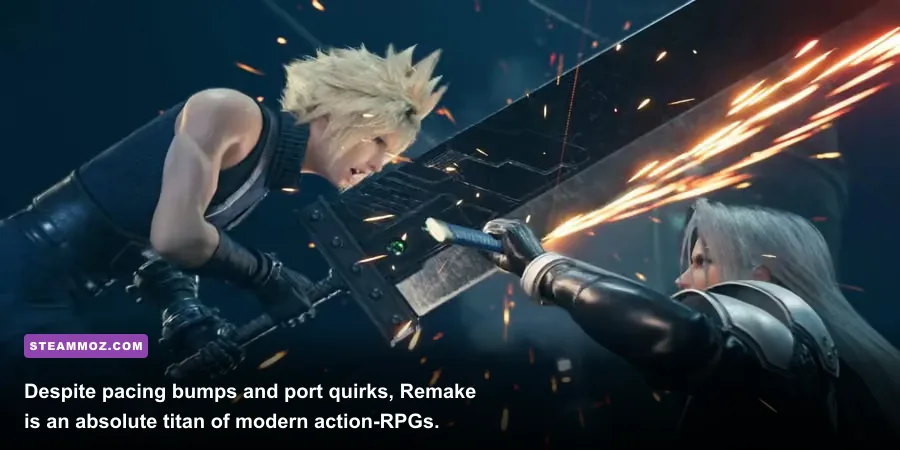
Even with its follow-ups expanding the narrative scope, Final Fantasy 7 Remake Intergrade on PC holds up astonishingly well. The visual fidelity—powered by Midgar's grimy dieselpunk aesthetics, breathtaking character models, and a phenomenal orchestral score—remains cutting-edge. While the linear level design can occasionally feel like a corridor simulator, the dynamic combat system and deep Materia customization deliver pure mechanical joy.
If you drop into the game on PC, don't settle for the barebones stock settings. Take two minutes to grab the necessary community optimization tweaks, force your launch options to DirectX 11, and immerse yourself in an exhilarating blend of modern action and old-school tactical depth. Whether you are an original 1997 veteran or a newcomer stepping onto the Sector 7 train platform for the very first time, Final Fantasy 7 Remake on PC remains an essential, deeply satisfying action-RPG experience.