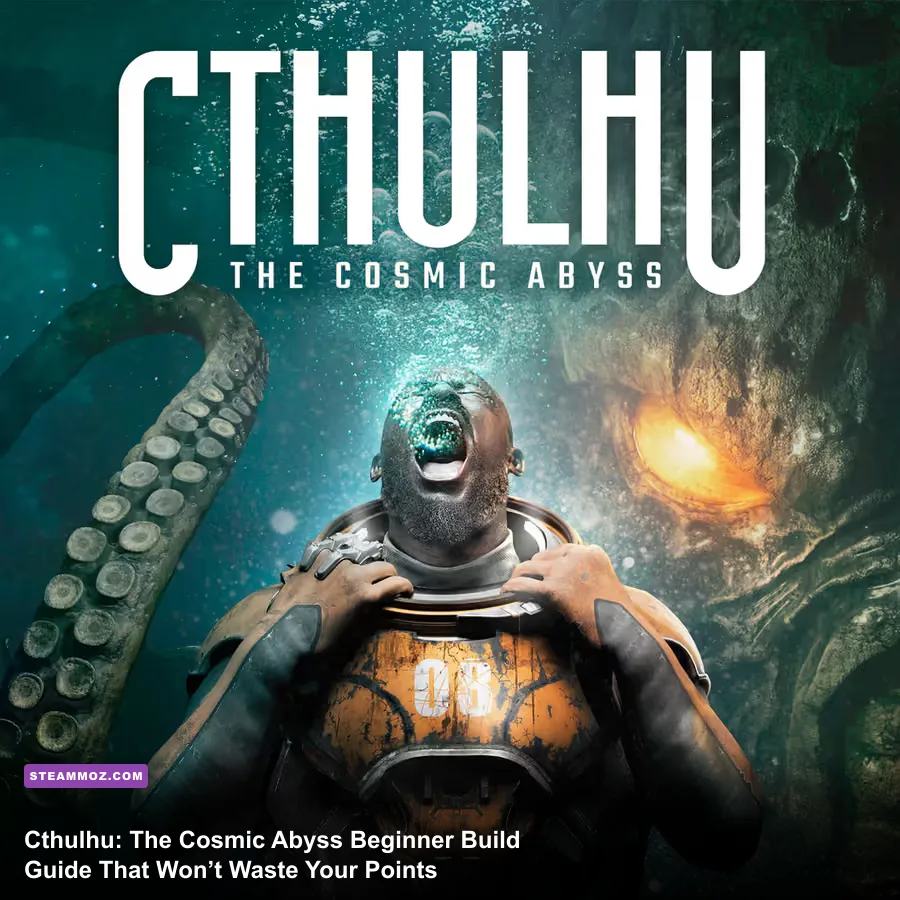
The best beginner build for Cthulhu: The Cosmic Abyss is a cautious investigator setup: prioritize clue gathering, dialogue flexibility, resource conservation, and defensive tools before chasing damage. There is an important catch, though. The game’s publicly confirmed material does not yet provide a final skill tree, weapon-stat sheet, character-leveling menu, or named starting classes. That means any guide claiming exact launch perks or a definitive “best gun” is guessing. This build guide separates confirmed information from smart launch-day preparation, so you won’t waste upgrade currency on a system that may change before release.

What kind of game is The Cosmic Abyss?

Cthulhu: The Cosmic Abyss is being presented as a first-person cosmic-horror adventure set in a future where humanity has encountered the mythos. The official pitch centers on investigation, exploration, dialogue, environmental danger, and the pressure of operating around forces that do not behave like ordinary enemies. It is not currently marketed as a traditional loot-heavy RPG with selectable classes and a familiar damage-per-second treadmill.
That distinction matters for your starting build. In a conventional action RPG, you can often solve a bad early choice with a stronger sword or a respec. In a Lovecraftian investigation game, information is often the real progression system. A missed clue can close off context, while a reckless confrontation may burn healing items, ammunition, or another limited resource. Your first objective should be making the game readable, not making your character flashy.
Keep an eye on the official Steam listing and the Big Bad Wolf website for confirmed mechanics. The developer may reveal the final progression structure, difficulty options, and equipment details closer to launch.
🎮 Cthulhu: The Cosmic Abyss
Looking to experience this game? Grab your digital key directly on our store for $27.99.
View on Steammoz Store →The best starting build priorities for beginners

Build your first playthrough around four priorities: investigation, survivability, control, and flexibility. Put damage last until you understand whether combat is frequent, avoidable, or tied to specific story encounters. This is the safest approach because the public gameplay information does not confirm whether weapon upgrades scale from attributes, skills, equipment rarity, or fixed story progression.
| Priority | Recommended focus | Why it matters early | Beginner rating |
|---|---|---|---|
| Investigation | Clue detection, environmental examination, readable notes | Improves navigation and helps you understand threats before committing | S-Tier |
| Survivability | Health, resistance, healing efficiency, defensive upgrades | Protects you from mistakes while learning enemy behavior | S-Tier |
| Control | Stuns, slows, escapes, stealth, or distraction tools | Creates space when direct combat becomes dangerous | A-Tier |
| Dialogue flexibility | Options that reveal information or avoid unnecessary fights | Keeps more routes open during investigation scenes | A-Tier |
| Raw damage | Weapon damage or offensive scaling | Useful only after the game shows that fights are the main bottleneck | B-Tier |
If the finished game offers a reset or respec option, you can test damage earlier. If it does not, the conservative route is stronger. Don’t spend your first rare resource on an attractive offensive upgrade simply because its number is large. In horror games, a tool that lets you disengage can be worth more than a 10 percent damage increase.
A practical first-hour build order

Start by examining everything that looks deliberately placed. Documents, damaged equipment, markings, terminals, bodies, and unusual architecture are likely to carry more value than a straight corridor sprint. Interact with objects from multiple angles, read recovered text completely, and mentally map locked doors against nearby rooms. This sounds slow, but it prevents the classic beginner mistake of wandering through a huge facility while missing one small trigger.
Step one: keep your resources untouched
Use the first encounters to learn the game’s detection rules. Test how quickly threats notice movement, whether sound attracts them, how long a defensive effect lasts, and whether hiding actually breaks pursuit. Avoid using healing or ammunition during a situation you can safely reset. If the game provides checkpoints, make a manual save before experimenting with a new device or dialogue branch.
Step two: choose information over intimidation
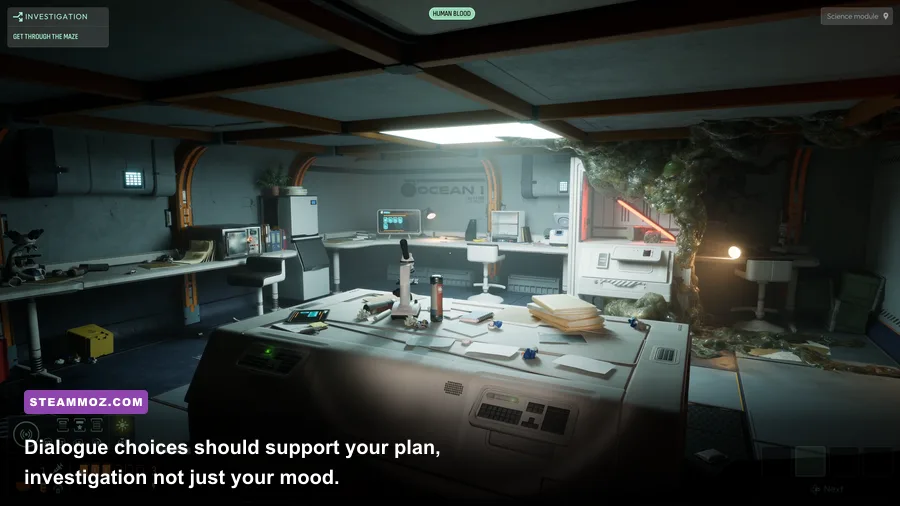
When the game presents a conversation or investigation choice, favor options that ask for context, identify contradictions, or reveal a location. A confrontational line may feel appropriate for a detective protagonist, but information tends to have longer-term value than a temporary emotional advantage. If a skill system includes persuasion, analysis, perception, or technical access, invest in the option that opens the most kinds of interactions rather than the one that only improves a single combat statistic.
Step three: unlock safety before power
Your first confirmed upgrade should ideally improve one of three things: the size of your margin for error, the number of escape options available, or the efficiency of a limited resource. In practical terms, that means health or resistance before damage, utility capacity before ammunition capacity if utility can bypass encounters, and faster recovery before a flashy attack modifier.
| Early upgrade type | Take it when | Skip it when | Likely role |
|---|---|---|---|
| Health or resistance | You are dying before understanding an encounter | Damage is already trivial and healing is abundant | Core defensive pick |
| Clue or perception utility | Objectives are unclear or clues are easy to miss | The game highlights every interactable automatically | Core exploration pick |
| Escape or crowd control | Multiple enemies can surround you | Most threats can be avoided without detection | Flexible safety pick |
| Weapon damage | Bosses or mandatory fights consume most resources | Combat can be bypassed through investigation | Delayed offensive pick |
How to handle combat without a confirmed weapon meta
There are no officially confirmed weapon names, damage values, fire rates, or final enemy health numbers to build around yet. So don’t plan around a fictional “best shotgun” or pretend an unannounced perk has a specific cooldown. Instead, use a rotation that works across first-person horror systems.
Observe, create space, control, reposition, then commit. Watch for an attack telegraph, step out of its range, use the cheapest tool that interrupts or delays the threat, and move to a location with a clear escape route. Only then spend ammunition or a high-value ability. This rhythm prevents panic dumping, where beginners empty every resource into the first frightening shape they see and reach the next checkpoint defenseless.
Keep corners, doorways, ladders, and narrow routes in mind. They can be useful for controlling line of sight, but they can also trap you. Avoid backing into an unknown room while looking at an enemy. Turn your camera briefly during movement so you know whether the route behind you is open. If sanity, stress, or psychological effects appear in the final version, treat them like a second health bar: avoid stacking exposure when you can retreat and recover.
For PC players, smooth frame pacing is especially important in first-person horror. Start with the game’s recommended preset, then lower volumetric effects, shadow quality, screen-space reflections, and motion blur before dropping texture quality. Those settings usually affect performance more than textures, while motion blur can make visual telegraphs harder to read. Our guides to PC settings that matter and stutter and low-FPS fixes cover the same troubleshooting principles.
Dialogue, sanity, and the mistakes beginners make

The biggest early mistake is assuming that every dialogue choice is a personality test. In an investigation-driven horror game, choices can also determine what you learn, which characters trust you, and whether a dangerous situation escalates. Read the wording carefully. A response that sounds brave may close a negotiation, while a cautious question may expose a clue that becomes useful later.
Save before major conversations if the game allows it, but don’t reload every line simply to force the most profitable result. Part of the tension comes from living with imperfect information. A better habit is to keep a short note of names, locations, symbols, and unresolved claims. Cosmic-horror plots deliberately overload you with strange terminology; externalizing those details stops the story from turning into a memory test.
Sanity systems deserve special caution if they are included. Don’t assume the lowest sanity state is automatically a damage boost or a secret bonus mode. It may distort navigation, alter dialogue, create false threats, or make investigation less reliable. If a meter starts dropping, prioritize safe rooms, light, recovery items, and completing nearby objectives before pushing deeper. The best beginner build is the one that preserves your ability to interpret what you’re seeing.
For comparison, the same resource-first mindset works well in other difficult games. Steamoz’s Creaks beginner build guide focuses on reading danger before committing, while our Caravan survival tips show why early supplies should support consistency rather than short-term speed.
Launch-day build checklist
When The Cosmic Abyss receives its final progression details, use this checklist to translate the cautious investigator setup into actual points. First, identify whether upgrades are permanent, refundable, or tied to equipment. Second, find out whether clues and dialogue checks use separate skills or a shared attribute. Third, test whether combat encounters are mandatory. Finally, compare the cost of one defensive upgrade against one offensive upgrade over the first two major areas, not just the tutorial.
| Question to test | If the answer is yes | Build adjustment | Beginner decision |
|---|---|---|---|
| Can skills be reset? | You can freely experiment | Move one or two early points into damage for testing | Flexible |
| Are combat encounters mandatory? | Bosses or story fights block progress | Add damage after one defensive and one utility upgrade | Balanced |
| Do clues unlock routes? | Investigation directly changes progression | Prioritize perception, analysis, or access skills | Investigator |
| Are resources scarce? | Healing and ammunition are limited | Favor control, stealth, and efficiency upgrades | Survival |
| Does sanity affect controls or clues? | Psychological effects reduce reliability | Invest in resistance and recovery before damage | Defensive |
Until the developer publishes final numbers, this is the honest answer to the Cthulhu: The Cosmic Abyss best starting build question: build for knowledge first, safety second, control third, and damage only when the game proves it deserves your resources. Check the publisher’s official news channels for confirmed updates, and don’t trust any guide that invents skill names or weapon stats before launch.