
The best Hack, Slash, Loot weapons are the dependable ones: swords and maces lead the list, axes are excellent burst tools, bows are powerful when the room gives you space, and staffs are specialist equipment rather than automatic upgrades. This ranking is based on practical run value—accuracy, reach, resource pressure, survivability, and how well a weapon works across the game's randomly generated dungeons—not simply the biggest damage number on an item tooltip.
Hack, Slash, Loot is an old-school, turn-based roguelike built around short decisions with brutal consequences. You explore a grid-based dungeon, collect equipment, fight monsters one turn at a time, and try to avoid turning a promising run into a corpse pile because you stepped into one room too aggressively. If you're coming from a faster action game, our Creaks beginner build guide explains a similar lesson: survival tools usually outperform flashy damage early.
Hack, Slash, Loot weapon tier list
This is the quick ranking before we get into the reasoning. The game doesn't behave like a modern loot RPG with neatly balanced rarity bands and a permanent best-in-slot chart. Weapon value changes with your character's Strength, Dexterity, Intelligence, current health, available ammunition, and the shape of the room. Still, some weapon families consistently make a run easier.
| Tier | Weapon or equipment | Why it ranks here | Best user or situation |
|---|---|---|---|
| S-Tier | Sword | Reliable melee damage, broad usefulness, no ammunition burden | Adventurer, Knight, Barbarian; almost every dungeon floor |
| S-Tier | Mace | Strong close-range answer against durable enemies and armoured targets | Low-risk hallway fights and high-Defense enemies |
| A-Tier | Axe | Excellent burst potential, but less forgiving when attacks miss | High-Strength characters and controlled engagements |
| A-Tier | Bow | Lets you soften enemies before contact and punish open rooms | Elf, Dexterity-focused builds, corridors with retreat space |
| B-Tier | Staff | Useful reach or magical utility, but dependent on character stats and charges | Wizard and Intelligence-oriented runs |
| B-Tier | Dagger | Fast, convenient, and good early; struggles to finish tougher enemies | Opening floors and emergency backup |
| C-Tier | Crossbow | High single-shot impact offset by slow handling and limited ammunition | Prepared ambushes, not chaotic rooms |
That table is a ranking of consistency, not a claim that every sword beats every axe. A strong axe with a favorable damage roll can absolutely carry a run. The point is that swords ask fewer questions. They don't need a clear firing lane, they don't consume a finite ranged resource, and they remain useful after an enemy reaches melee range.
S-Tier: swords and maces
The sword is the best all-purpose weapon in Hack, Slash, Loot because it solves the most common problem: an enemy is already next to you and you need a dependable answer now. It suits the Adventurer especially well because that character's flexible baseline doesn't force a narrow combat plan. Knights and Barbarians also get excellent mileage from it. Use a sword when you expect mixed encounters, unknown rooms, or several consecutive fights without a safe place to recover.
The mace sits beside it rather than below it. Against weak creatures, the mace can feel less exciting than a high-roll axe. Against sturdier enemies, though, its dependable close-range performance is exactly what you want. It is particularly valuable when your character's accuracy is not exceptional, because a failed attack in a roguelike costs more than damage—it costs a turn, positioning, and often the chance to retreat. Keep a mace if it gives you a more reliable hit profile than your current flashy weapon.
A-Tier: axes and bows
The axe is the greedy pick. It rewards a character who can stand in melee and win quickly, but it becomes dangerous when you swing at a target with poor odds and assume the next attack will fix the mistake. Barbarian runs can make the axe look like an S-Tier weapon because high Strength amplifies its natural role. A weaker or wounded character should treat it as a finisher, not a license to charge.
The bow is one of the strongest weapons in the game when the map cooperates. A doorway, long corridor, or open chamber gives you room to fire, step away, and force monsters to cross dangerous ground. Its ranking falls when the dungeon generates cramped rooms or when ammunition becomes scarce. Don't abandon a perfectly serviceable melee weapon just because a bow appears. Carry both when possible: use the bow to remove the most threatening enemy, then switch before something reaches your square.
B-Tier and below: staffs, daggers, and crossbows
A staff is highly character-dependent. On a Wizard, it can complement Intelligence-based attacks and provide an answer that ordinary armour doesn't solve. On a melee-focused character, it may be a trap: the weapon looks special, but your stats and available charges don't support it. Check the whole loadout before swapping. Magic power without enough survivability is just a more elaborate way to die.
The dagger is excellent during the opening stretch, particularly when your alternatives are damaged, inaccurate, or too slow for the current room. Its problem is not convenience; it is staying power. Once enemies need several attacks to drop, the dagger's lower impact gives them more opportunities to hit you. The crossbow has the opposite issue. It can be devastating from a prepared position, but its slower rhythm and ammunition pressure make it awkward when multiple enemies close together.

🎮 Hack Slash Loot
Looking to experience this game? Grab your digital key directly on our store for $5.99.
View on Steammoz Store →How weapon stats actually affect a run
Hack, Slash, Loot rewards players who read equipment as part of a system rather than chasing a single damage value. Your weapon's practical output depends on three linked questions: can you hit reliably, can you survive the distance to the target, and can you keep using the weapon after the next room?
| Factor | What it changes | Why it matters | Practical decision |
|---|---|---|---|
| Strength | Improves the value of physical melee equipment | Raises the payoff of swords, axes, and maces | Prefer melee when Strength is your clear advantage |
| Dexterity | Supports accurate, mobile, and ranged play | Makes bows safer before contact | Use distance and line-of-sight instead of trading hits |
| Intelligence | Improves the value of magical options | Determines whether staffs justify their opportunity cost | Keep magic gear on Wizard-style characters |
| Accuracy | Controls how often an attack converts a turn into damage | A miss can expose you to a full enemy response | Choose reliable equipment before theoretical burst |
| Reach and line of sight | Determines who gets the first meaningful attack | Extra space is defensive health | Use bows and staffs in corridors or open rooms |
| Ammunition or charges | Limits repeated ranged and magical attacks | A weapon can become dead weight mid-floor | Save resources for elites and dangerous clusters |
The most important hidden stat is turn efficiency. Suppose a weapon deals more damage when it connects but misses often. Its theoretical average may look attractive, yet every miss lets the dungeon continue operating while your character gains nothing. A sword that lands consistent attacks can therefore outperform an axe over an entire floor, especially when you cannot heal between encounters.
Character choice changes the answer. The Adventurer is the safest test case because it can use almost anything without demanding a specialist route. The Barbarian wants to convert Strength into fast melee kills, making axes and heavy physical weapons natural priorities. The Knight benefits from a conservative sword-or-mace plan that turns durability into controlled progress. The Elf has the clearest reason to preserve range, while the Wizard should evaluate staffs and magic items through Intelligence and resource availability rather than appearance.
Don't sell a weapon just because its damage number looks modest. A low-damage bow that lets you remove a dangerous enemy before contact can be worth more than a powerful melee weapon that forces you to absorb two hits. This is the same “performance over spectacle” rule we use in our Far Cry: New Dawn weapon ranking: the best gear is the gear that performs in the situations you actually face.
Best equipment combinations by character
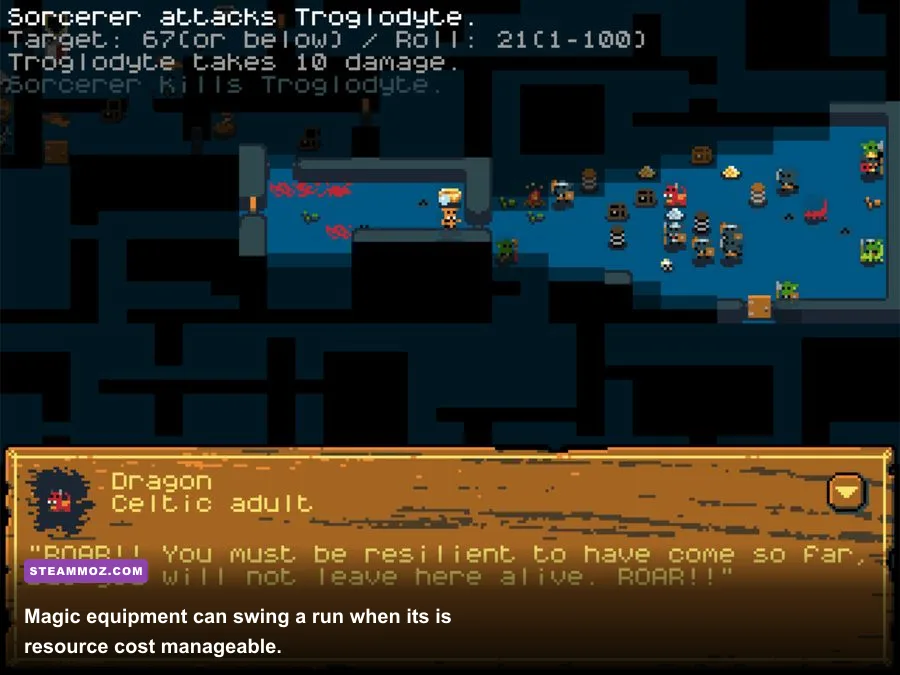
Weapon rankings become much more useful when paired with a role. A weapon that is merely decent in isolation can become the correct choice when it completes a character's defensive plan. Think in terms of a primary weapon, a backup answer, and one emergency resource you refuse to waste on ordinary enemies.
| Character | Primary weapon | Backup equipment | Stat and play priority |
|---|---|---|---|
| Adventurer | Sword | Bow or mace | Balanced accuracy; avoid committing before scouting |
| Barbarian | Axe | Sword | Strength and fast kills; never enter a room without an exit plan |
| Knight | Mace | Sword and defensive gear | Reliability and attrition; win safely rather than quickly |
| Elf | Bow | Dagger or sword | Dexterity, line of sight, and controlled retreats |
| Wizard | Staff | Dagger or sword | Intelligence and charge conservation; avoid melee swarms |
The safest general-purpose loadout
For a blind run, take a sword as the anchor, retain a bow whenever ammunition is healthy, and carry a mace or dagger as a situational backup. This gives you an answer for a single adjacent target, a distant priority target, and a weapon you can use when the main tool's matchup is poor. It also prevents the classic mistake of building around one weapon family and then discovering that the next floor's layout denies it.
The high-risk damage loadout
Barbarian players can use an axe as their primary weapon and keep a sword for accuracy-sensitive fights. The rotation is simple: scout, identify the target that can deal the most damage, attack only when you can finish or safely disengage, then retreat through a known route. Don't spend health proving that the axe is powerful. Its job is to shorten dangerous fights, not to turn every fight into a duel.
The ranged control loadout
Elf runs should preserve the bow for enemies that are dangerous at contact range. Fire from a doorway, step back when the monster advances, and never back yourself into unexplored tiles unless you have no alternative. A dagger is a backup, not a second primary weapon. If the room is too cramped for the bow, switch early rather than wasting shots at a poor angle.
For Wizard players, a staff plus a physical emergency weapon is mandatory in practice. Charges are a resource, and a staff that solves one ordinary enemy but leaves you helpless against the next cluster is not efficient. Spend magic on threats that melee weapons handle badly, then use movement and doors to prevent the rest of the room from arriving at once.
Loot priorities, combat mistakes, and floor-by-floor upgrades
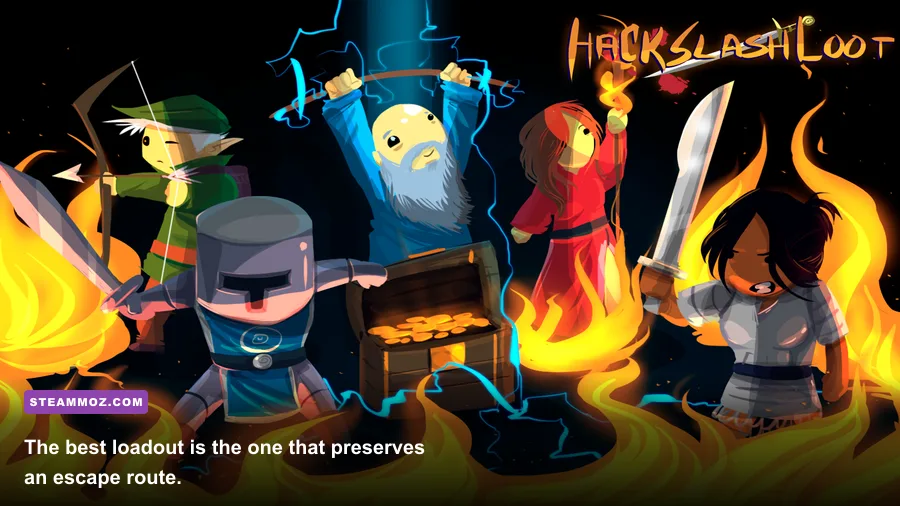
The strongest equipment decision often happens before combat. Open space is valuable, unexplored tiles are dangerous, and every item swap should be judged against the next three encounters rather than the current one. If you have to walk past a tempting pickup to preserve a safe route, walk past it.
Early floors: reliability beats rarity
During the opening floors, replace genuinely weak equipment, but don't burn limited ammunition or magical charges to show off. A sword, mace, or dagger with reliable performance is enough to stabilize the run. Explore methodically, keep health above the threshold where one unlucky exchange ends the character, and learn which enemies can be safely fought in a doorway.
Middle floors: specialize with a safety net
The middle of a run is where the tier list matters most. By now, you should know whether your character's stats favor melee, range, or magic. Commit to that strength, but keep a backup. This is also when carrying capacity and resource pressure become meaningful: don't hoard three similar weapons while discarding healing, ammunition, or defensive equipment that could save a run.
Late floors: protect the win condition
Late-game play is less about finding the theoretically strongest item and more about avoiding a bad engagement. Save your best ranged attacks for clustered threats, keep a physical weapon ready when magic runs low, and don't enter a room with no retreat path unless the alternative is worse. If a weapon's value depends on perfect accuracy, test it on a low-risk target before trusting it against an elite.
| Loot situation | Take it when | Leave it when | Expert rule |
|---|---|---|---|
| New sword or mace | It improves reliability or solves a current matchup | Your current weapon is accurate and the replacement is untested | Consistency is a stat |
| Bow and ammunition | You have open rooms and a ranged character | You are already resource-starved | Spend shots on priority targets |
| Axe | You can survive a missed attack and have strong melee stats | You are wounded or fighting several enemies | Burst is only good when the risk is controlled |
| Staff or magical item | Intelligence and charges support its role | You need every resource for emergencies | Never confuse rarity with usefulness |
| Defensive equipment | It reduces the number of hits needed to kill you | It forces a crippling weapon or movement compromise | Survival extends every future damage turn |
Three mistakes account for most avoidable deaths. First, players attack immediately after opening a door instead of checking whether the room contains a second threat. Second, they chase a fleeing or low-health monster into unexplored space. Third, they keep using a weapon after its matchup has changed. Switch to the bow when distance is available, switch to the sword when the enemy reaches you, and retreat when neither option is favorable.
There is no need to make the game harder with unstable performance or input delay. If you're running the Steam version on modern hardware, our guides on crashes and low FPS and max-FPS settings cover the broader troubleshooting habits that apply to older PC releases too.
Final ranking: what should you actually equip?
If you want one answer, equip the best reliable sword you find and keep a bow for enemies you can safely engage at range. Choose the mace when the dungeon is handing you durable targets or your character needs consistency. Take the axe when your Strength and health support aggressive play. Use the staff only when your character and available charges make its magic part of a real plan.
The deeper lesson is that Hack, Slash, Loot's best equipment is contextual. The weapon that wins a corridor may be terrible in a crowded room. The bow that saves an Elf can be a burden to a wounded Knight. The staff that looks like a treasure can become a liability when its charges disappear. Rank items by the number of dangerous situations they solve, not by how exciting they look in the inventory.
For the official listing, check the Hack, Slash, Loot Steam page, then compare your own runs against the game's Steam Community hub. The original developer information is also available through David Williamson's official site. Start with the S-Tier fundamentals, preserve an escape route, and let the dungeon—not a shiny item icon—tell you when to change weapons.