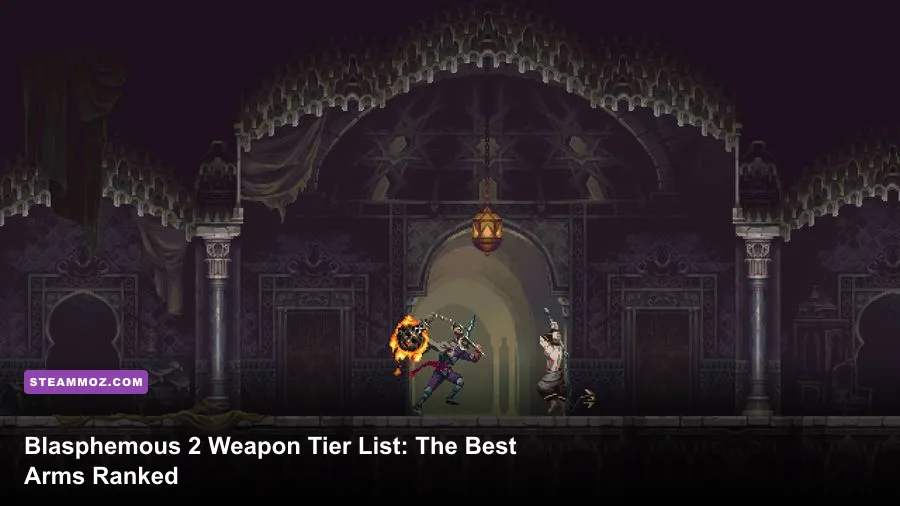
Veredicto is the best all-purpose weapon in Blasphemous 2, while Ruego Al Alba is the strongest beginner-friendly sword and Sarmiento and Centella is the highest-ceiling choice for expert players. Mea Culpa, added with the Mea Culpa DLC, lands in the top tier when its combo and sin mechanics are fully upgraded. The ranking changes slightly by boss, but this is the clearest order for a normal playthrough: S-Tier: Veredicto, Ruego Al Alba, Mea Culpa; A-Tier: Sarmiento and Centella; B-Tier: none of the main weapons. Blasphemous 2 is unusually generous here: no weapon is bad, and each one has a legitimate endgame build.
Your weapon choice also determines traversal. Veredicto activates blue bells, Ruego Al Alba breaks certain barriers and interacts with its heavy slash, while Sarmiento and Centella use mirrors to reach distant platforms. That means this isn't just a damage ranking. A weapon can be the best option in a boss arena and still be the wrong one for opening the next path. Keep two weapons upgraded rather than spreading every Martyrdom material across all four.
For official patch information and the game's current content, check the official Blasphemous 2 Steam page and the developer's Blasphemous 2 page. If you're tuning a PC that struggles with demanding games, Steamoz's PC crash and FPS fixes are useful background reading, even though Blasphemous 2 itself is comparatively light.

Blasphemous 2 weapon tier list at a glance
| Rank | Weapon | Best Strength | Weakness | Best Player |
|---|---|---|---|---|
| S | Veredicto | Huge damage, wide reach, fire resonance | Slow recovery and limited defensive options | Players who like spacing and burst damage |
| S | Ruego Al Alba | Excellent balance, healing through Blood Pact | Needs confident melee positioning | First-time players and adaptable builds |
| S | Mea Culpa | Fast sword strings, combo pressure, flexible upgrades | DLC weapon and less forgiving at low upgrade levels | Players who want a traditional action sword |
| A | Sarmiento and Centella | Fastest attacks, counters, electric burst | Short range and punishing mistakes | Experts who exploit openings |
The important distinction is consistency. Veredicto has the largest individual punish windows, but its wind-up makes careless swings expensive. Ruego Al Alba reaches S-Tier because it gives you a strong normal attack, a dependable charged strike, and the Blood Pact mechanic. Sarmiento and Centella can out-damage everything in a practiced player's hands, yet its low margin for error makes it less reliable for blind exploration.
Why there is no true C-Tier weapon
Weapon ranks in Blasphemous 2 are not like rankings in a loot game. The main weapons don't compete over random rarity or a fixed item level. Each has its own Resonance tree, weapon techniques, movement utility, and damage identity. A fully upgraded Sarmiento and Centella won't suddenly become weak because Veredicto has better crowd control. It simply asks you to play differently.
The best practical route is to choose one primary weapon, then invest in a secondary tool that covers its blind spot. Veredicto plus Sarmiento and Centella gives you heavy area damage and fast single-target pressure. Ruego Al Alba plus Veredicto is the safer combination for a first run. Mea Culpa pairs well with any weapon because it can maintain pressure when another weapon is waiting for a cooldown or better spacing.

🎮 ARMS
Looking to experience this game? Grab your digital key directly on our store for $59.99.
View on Steammoz Store →S-Tier weapons and the builds that make them shine
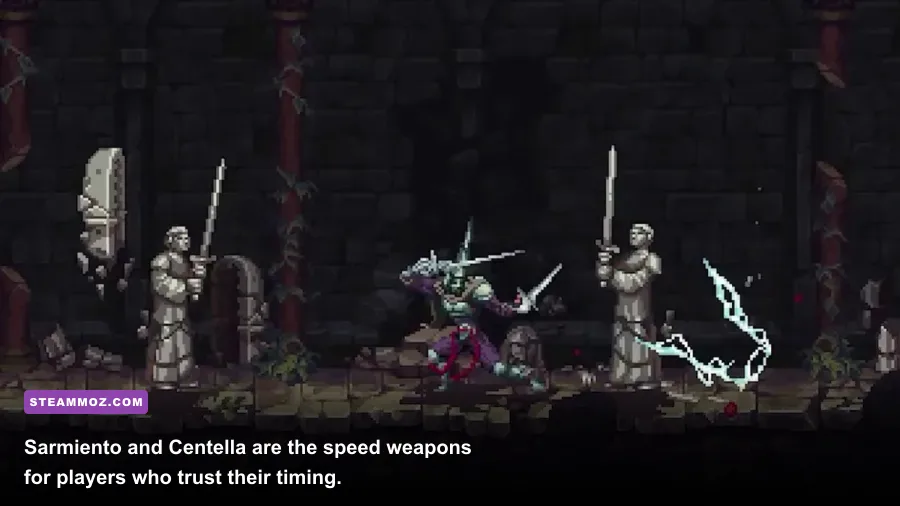
1. Veredicto is the best weapon for damage and crowd control
Veredicto is the giant flail selected in the Choir of Thorns starting area. Its basic attacks cover a broad arc, and its charged swing gives you the kind of stagger power that makes ordinary enemies look like training dummies. The weapon's defining feature is its fire state: use the associated weapon ability to ignite the flail, then build Fervour through attacks and maintain the flame for stronger damage. The cost is commitment. The Penitent One cannot casually cancel every Veredicto swing, so start attacks from outside an enemy's reach rather than face-tanking inside it.
Its early Resonance path should prioritize the upgrades that improve flame uptime and fire damage. In practical terms, this turns Veredicto into a resource loop: land safe normal hits, spend Fervour to activate the weapon's empowered state, then use wide swings to clear clustered enemies before the effect expires. The flail is particularly strong against rooms full of flying targets and shielded ground enemies because one correctly spaced attack can hit multiple bodies.
Veredicto's weakness is obvious against fast bosses. Eviterno and parts of the Two Old Ones encounter punish long recovery animations. Don't mash the flail in those fights. Tap out one or two hits, jump away, and reserve the weapon state for a confirmed punish. Veredicto also works beautifully with fire-focused Resonances and defensive altar pieces that reduce the danger of trading hits. It is the weapon I'd recommend to anyone who wants the shortest route through normal exploration.
2. Ruego Al Alba is the smartest first-playthrough pick
Ruego Al Alba, the broad sword found in the Sacred Entombments, is the game's most balanced weapon. Its normal chain is quick enough for ordinary enemies, its aerial attack is reliable, and its charged strike gives you a strong answer to armored targets. Most importantly, the Blood Pact mechanic lets the sword sacrifice some health to empower attacks and unlock its blood-themed techniques. That sounds dangerous, but it becomes one of the best sustain tools once you understand enemy patterns.
Use Blood Pact after a boss has committed to a long animation, not while the enemy is standing beside you. The empowered sword swings deal excellent damage, and a well-timed health recovery can erase the cost. Ruego's guard and counter tools also make it more forgiving than Sarmiento and Centella. Against bosses with clear melee telegraphs, hold your ground, block or parry the opening, then answer with a short combo instead of chasing every movement.
Ruego Al Alba scales especially well with upgrades that improve Blood Pact duration, charged attacks, and counter damage. It is also the best weapon for players who switch between exploration and bosses without wanting to rebuild their entire setup. If Veredicto feels too slow and Sarmiento and Centella feels too fragile, Ruego is the obvious middle path.
3. Mea Culpa is a top-tier DLC sword, not a free replacement
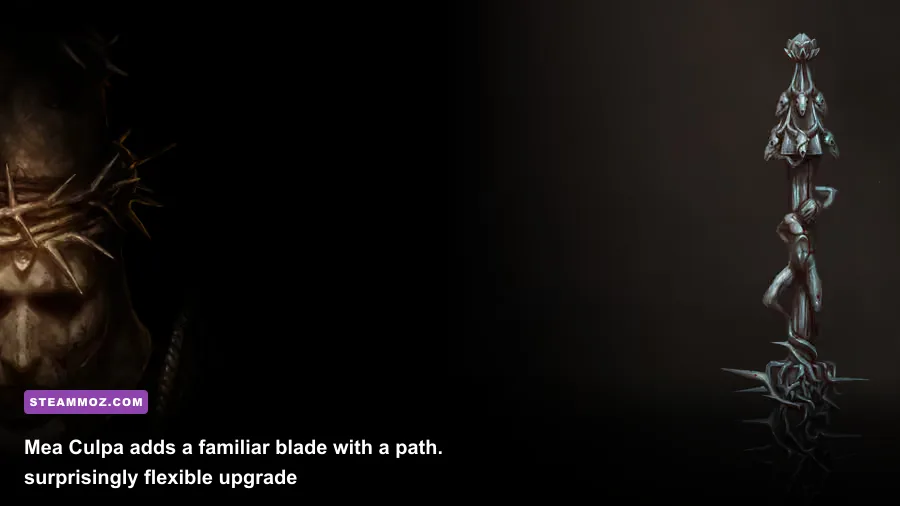
Mea Culpa returns through the Mea Culpa DLC and brings a faster, more traditional sword moveset to Blasphemous 2. It builds combo momentum through repeated strikes, then converts that pressure into stronger techniques. The blade feels immediately familiar to players who enjoyed the first Blasphemous, but it shouldn't be treated as a simple reskin of Ruego Al Alba. Mea Culpa rewards staying active, attacking from the edge of range, and using its technique branches to keep enemies locked down.
At low upgrade levels, Mea Culpa can feel merely good because its payoff depends on maintaining a sequence. Once the Resonance tree is developed, its speed becomes a major advantage in boss punish windows. Use short ground strings against mobile targets, then switch to aerial attacks when the boss creates a low hazard line. The sword's biggest drawback is that it asks you to remain near danger for longer than Veredicto does. If you lose your combo rhythm, its damage falls off quickly.
| Weapon | Primary Damage Pattern | Best Resonance Focus | Combat Rotation |
|---|---|---|---|
| Veredicto | Wide physical and fire burst | Fervour, flame uptime, area damage | Space enemy, activate flame, land two safe swings, disengage |
| Ruego Al Alba | Balanced melee with Blood Pact | Charged attacks, counters, healing loop | Block or evade, trigger Pact, punish during recovery |
| Mea Culpa | Fast combo and technique pressure | Combo retention, sword skill damage | Short string, reposition, restart pressure after telegraph |
A-Tier Sarmiento and Centella still has the highest ceiling
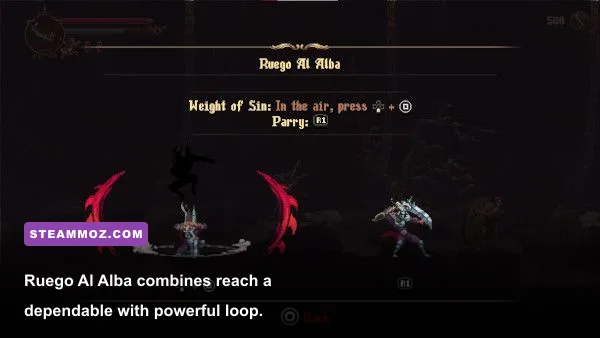
Sarmiento and Centella are twin rapiers obtained in the Palace of the Embroideries. They are the fastest weapon in the base game and the most demanding to master. Their thrusts reach less space than Veredicto's flail, but they recover quickly and can shred a target during a small opening. The weapon's signature mechanic is the electric charge built through its attacks and empowered by its Resonance effects. Once charged, your next committed strike can deliver a sharp burst of damage.
The rapiers also interact with the game's mirror transportation points, making them valuable outside combat. In a room full of platforms, their movement utility can save time and expose secrets earlier than a heavy-weapon route. That exploration advantage is real, but it shouldn't hide the combat trade-off: a missed thrust often leaves you too close to an enemy without the broad hitbox needed to rescue the mistake.
Build Sarmiento and Centella around attack speed, electric charge generation, and counter timing. The weapon's parry-like defensive option can turn an enemy's attack into an opening, but the timing window is much less forgiving than simply jumping away. Against bosses such as Orospina, stay just outside the blade's visible range, wait for the end of her lunge, and use a compact thrust sequence. Against Radamés, don't get greedy after a successful counter; his follow-up can arrive before a full combo finishes.
This is an A-Tier ranking, not a criticism. In the hands of someone who has learned every telegraph, Sarmiento and Centella may be the strongest weapon in the game. It ranks below the S-Tier group because Blasphemous 2 is filled with cramped rooms, aerial enemies, and attacks that punish short range. Veredicto and Ruego solve more situations without demanding perfect execution.
When the rapiers should be your primary weapon
Choose Sarmiento and Centella if you enjoy reactive combat and already understand the Penitent One's dodge timing. It excels in boss arenas with obvious recovery windows and against enemies that can be safely approached from the front. It is less comfortable in multi-enemy rooms, where a single off-screen attack can interrupt your charge plan.
Pair it with a secondary weapon that handles groups. Veredicto is the cleanest partner, while Ruego gives you a more defensive option. Don't spend every Fervour point on weapon abilities just because you have it. The rapiers need you to preserve enough resources for their electric payoff, and wasting Fervour before a boss enters its vulnerable phase can cost more damage than a missed attack.
Best equipment, Resonances, and upgrade priorities
Weapons decide your attack language, but the best equipment setup makes that language more reliable. Blasphemous 2's Altarpiece of Favours lets you combine Resonances, and those pairings matter more than blindly equipping the highest-looking bonus. Resonances that increase a weapon's preferred damage type, improve Fervour economy, or reward successful counters are usually stronger than small generic boosts.
For Veredicto, prioritize fire-oriented pairings and any bonus that keeps its empowered state active. The goal is not to create one enormous opening hit; it's to sustain the flame long enough to clear a room or capitalize on a boss phase. Ruego Al Alba wants melee damage, charged attack support, and defensive bonuses that make Blood Pact safer. Sarmiento and Centella benefits from electric Resonances, attack speed, and counter-focused effects. Mea Culpa should take combo and sword-technique bonuses, especially if your playstyle involves staying close.
| Loadout Goal | Recommended Weapon | Equipment Priority | What to Avoid |
|---|---|---|---|
| Fast exploration | Sarmiento and Centella | Attack speed, electric charge, mobility | Slow defensive setups that interrupt momentum |
| Room clearing | Veredicto | Fire Resonances, Fervour generation, area damage | Long fights without enough resource recovery |
| Safe first run | Ruego Al Alba | Health support, counters, Blood Pact upgrades | Overusing Pact before a telegraphed opening |
| Boss pressure | Mea Culpa | Combo damage, technique power, stamina for repositioning | Greedy full strings after a short punish window |
Upgrade order for a normal playthrough
Don't unlock every weapon node evenly. Pick the weapon that matches your habits and buy its first meaningful technique upgrades before chasing minor percentage increases. Veredicto players should seek its flame functionality early. Ruego players should make Blood Pact safer before maximizing raw damage. Sarmiento players should improve charge and counter consistency. Mea Culpa players should unlock the branch that lets them maintain pressure without needing a perfect uninterrupted combo.
Martyrdom is limited enough that this decision affects the middle game. If a weapon has a great-looking node but you rarely use its associated technique, skip it temporarily. The best equipment ranking is personal at the edges: a defensive Resonance that lets you survive a boss is worth more than a theoretical damage bonus you can't use reliably.
Use weapon switching as a damage strategy
Weapon switching is more than a traversal convenience. Start a room with Veredicto to soften a cluster, swap to Sarmiento and Centella to finish isolated targets, and reserve Ruego Al Alba for enemies that force close-range trades. During bosses, changing weapons between phases can preserve your resources. A slow weapon is excellent when the boss is recovering; a fast weapon is better when the opening lasts only a second.
For players who enjoy hunting every secret, keep traversal weapons equipped even when their damage build is unfinished. Sarmiento and Centella's mirrors, Ruego Al Alba's barrier interactions, and Veredicto's bell activation all open routes that a single-weapon run can't reach. If you're following other completionist guides, Steamoz's coverage of secret locations and hidden rewards offers a useful mindset for checking missed paths.
Final ranking and the best weapon for every player
Pick Veredicto if you want the strongest all-round answer to crowds, shields, and burst damage. Pick Ruego Al Alba if this is your first Blasphemous 2 playthrough or you value a forgiving weapon that can heal through smart aggression. Pick Mea Culpa if you own the DLC and want the most satisfying conventional sword-combo experience. Pick Sarmiento and Centella if you enjoy learning boss patterns and turning tiny openings into stylish damage explosions.
The tier list becomes much less important once you understand the weapon-specific loop. Veredicto wins by controlling space. Ruego wins by converting defense into sustain. The rapiers win by refusing to give enemies time to breathe. Mea Culpa wins by keeping a combo alive through movement and technique choices. Match that loop to your habits and the weapon will feel stronger than its raw ranking suggests.
My final recommendation is to make Ruego Al Alba or Veredicto your main weapon, then upgrade Sarmiento and Centella as your specialist option. That combination covers almost every room and boss in the game without demanding a complete rebuild. Keep your Altarpiece bonuses focused, don't waste Martyrdom on nodes you never activate, and learn to disengage after a punish. Blasphemous 2 rewards restraint just as much as aggression.
For more performance-focused reading, Steamoz's FPS settings guide explains how to think about visual trade-offs, while the site's weapon value ranking shows the same principle in a different genre: the best gear is the tool that consistently solves the problems in front of you. In Cvstodia, that tool is usually Veredicto—but the right player can make every blade sing.