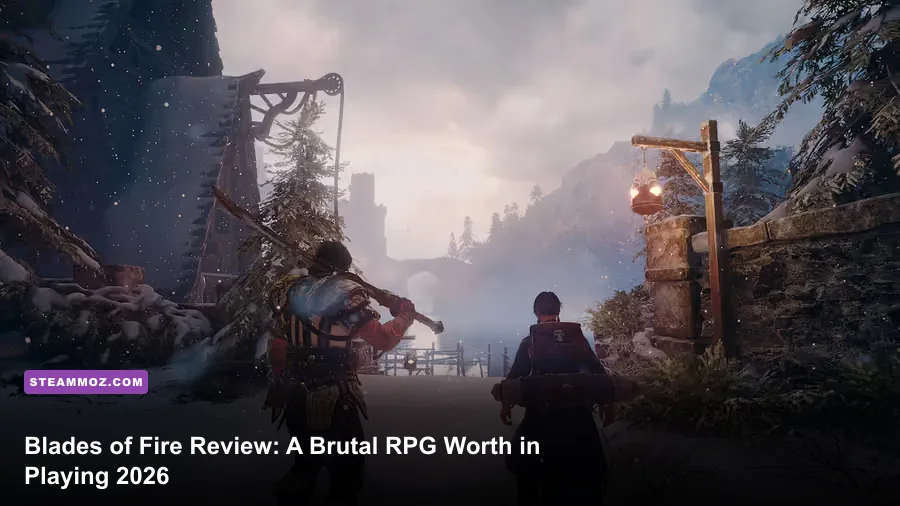
Yes, Blades of Fire is worth playing in 2026 if you want a focused, demanding action RPG built around weapon mastery rather than loot explosions. MercurySteam's adventure is rough around the edges, but its forging system, deliberate hit reactions, and wonderfully strange fantasy world give it a personality most modern Souls-likes never find. The short version: buy it for the combat and blacksmithing, not for a perfectly polished open world.
You play Aran de Lira, a former royal guard chosen by Queen Nerea to resist a curse that has transformed the kingdom's people into hostile creatures. Accompanied by the young scholar Adso, Aran crosses ruined settlements, temples, forests, and fortresses while rebuilding a lost arsenal one forged weapon at a time. That premise sounds familiar on paper. The actual hook is that your sword isn't simply a menu item with a higher number: you design its blade, choose its materials, and learn how its shape behaves in your hands.
For more context on the PC release, check the official Steam page for Blades of Fire and the game's official website. After spending time with its systems, here is the honest 2026 verdict.
What makes Blades of Fire different
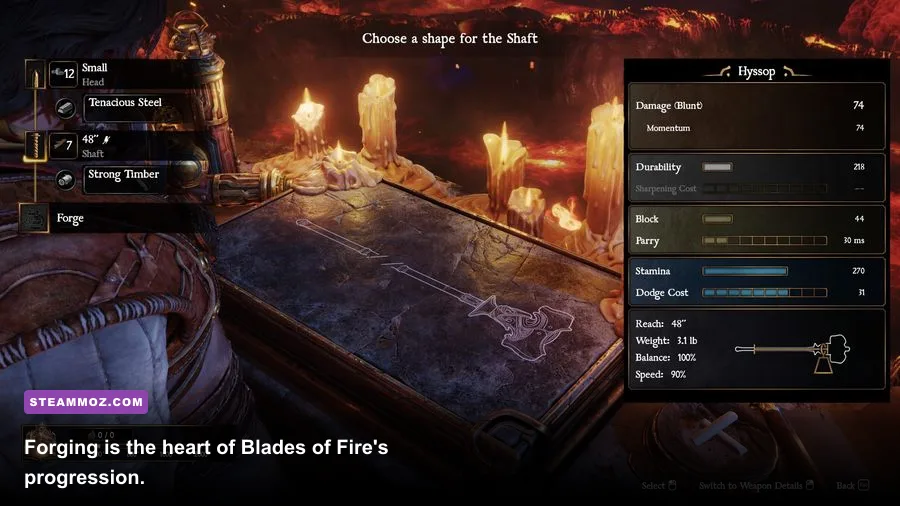
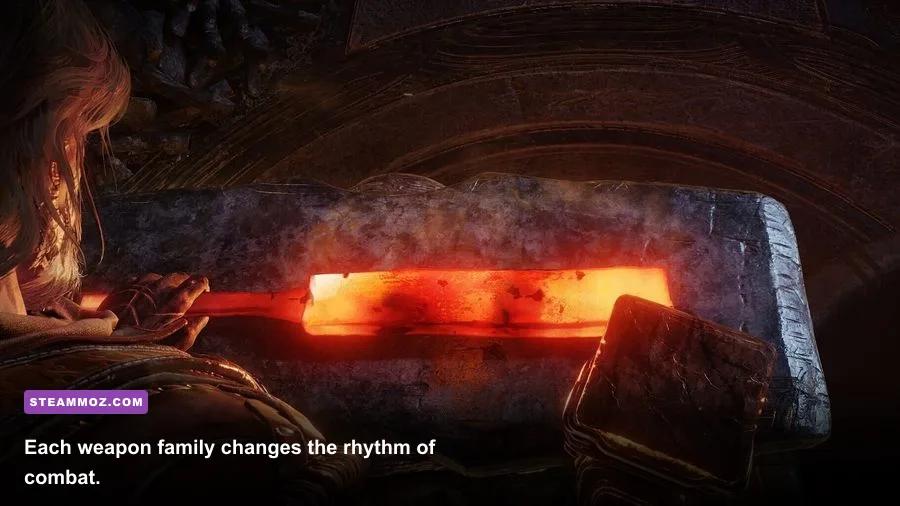
The weapon-forging loop is the reason to play this game. Instead of collecting dozens of disposable swords, you recover forging recipes and materials, then use the anvil to assemble weapons suited to a particular encounter. A weapon's family, blade pattern, metal quality, and handle setup affect damage, durability, reach, and handling. The game does not bury that concept under a giant spreadsheet. You feel it immediately when a long polearm keeps a shielded enemy outside striking distance or a compact blade lets you punish a gap in heavy armor.
Aran's four broad weapon families are built around different combat jobs. Swords are the dependable all-rounders, greatswords trade speed for staggering power, dual blades excel at rapid pressure, and polearms provide reach and safer spacing. These aren't cosmetic categories. A weapon's moveset determines which attacks can reach an exposed limb, interrupt a wind-up, or slip behind a guard.
| Weapon family | Core strength | Main weakness | Best use |
|---|---|---|---|
| Sword | Balanced speed, reach, and control | Doesn't dominate any single matchup | Blind first runs and mixed enemy groups |
| Greatsword | High impact and excellent stagger potential | Slow recovery after committed swings | Breaking armor and punishing bosses |
| Dual blades | Fast strings and strong close-range pressure | Short reach and greater stamina risk | Exposed targets and aggressive players |
| Polearm | Long reach and safer spacing | Awkward in cramped arenas | Controlling groups and testing enemy range |
Forging also gives exploration a clear purpose. A chest containing a new pattern can matter more than a pile of currency because it expands what you can build. You will occasionally return to the forge simply because a newly discovered material solves a problem that previously felt like a skill issue. That is excellent progression design: the reward changes how you think about combat instead of merely increasing a damage number.

🎮 Blades of Fire
Looking to experience this game? Grab your digital key directly on our store for $31.99.
View on Steammoz Store →Combat rewards patience, not button mashing
Blades of Fire's combat is closest to a weapon-focused character action game with Souls-like discipline. Attacks have commitment, stamina matters, and enemy armor creates a puzzle around target selection. You can attack high, low, or toward exposed sides, then change your angle as an opponent shifts its guard. A shielded soldier isn't just a health bar; you need to create an opening, strike the vulnerable section, and avoid getting trapped in a slow recovery animation.
The most important habit is learning to stop attacking. A short combo followed by a dodge or guard is usually stronger than an extended string that leaves Aran locked in place. Heavy enemies advertise their dangerous moves with readable body language: a raised weapon, a pulled-back shoulder, or a sudden step that closes the gap. These telegraphs are generous enough to learn, but only if you stop treating every encounter like a damage race.
How to build a reliable combat rhythm
Start by circling rather than retreating in a straight line. Many enemies track backward movement well, while a lateral step creates an angle around their guard. Use a quick attack to test the response, guard or evade the retaliation, then commit to a heavier strike when the target's posture or armor opens. Against groups, keep one opponent between you and the others; the camera is far less forgiving when several enemies surround Aran.
Weapon switching is another key skill. A polearm can thin a pack before you move in with dual blades, while a greatsword is ideal once a large enemy has been staggered. Don't carry one favorite weapon and ignore the rest. The game is at its best when you treat the arsenal as a toolbox, not a linear upgrade path.
| Combat situation | Recommended choice | What to do | Common mistake |
|---|---|---|---|
| Shielded human enemies | Sword or dual blades | Circle, bait the swing, then attack the exposed side | Hitting the shield repeatedly |
| Large armored targets | Greatsword | Wait for a recovery window and commit to impact attacks | Dodging early and missing the punish |
| Several light enemies | Polearm | Maintain distance and control the front target | Rolling into the center of the group |
| Fast beasts | Sword | Use short attacks, then reposition immediately | Chasing after a missed swing |
The system is satisfying because every victory teaches something concrete: an attack range, a recovery window, or a better weapon profile. It can also feel harsh when the camera catches on scenery or an enemy's tracking looks too sticky. Those moments don't ruin the game, but they stop it from reaching the precision of the genre's best combat.
Progression and exploration are stronger than the story
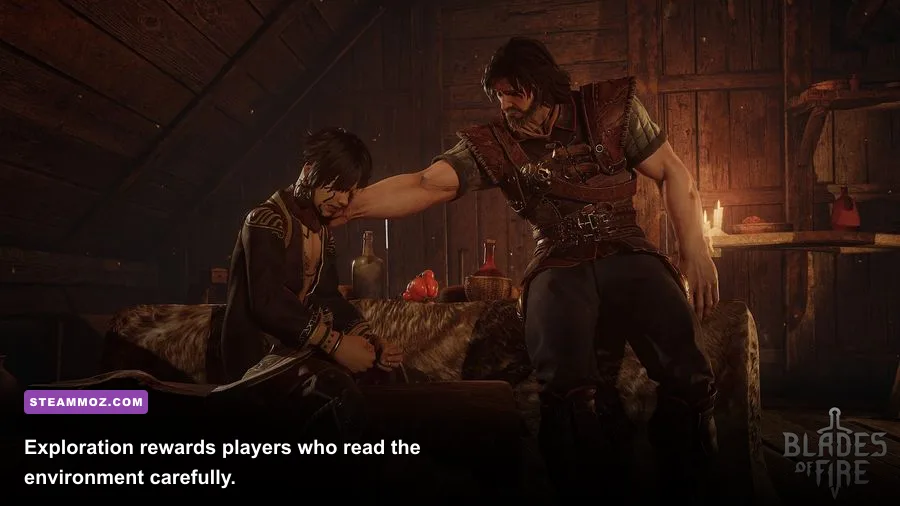
Aran's journey moves through interconnected regions rather than a giant map stuffed with icons. Adso's role gives exploration a useful narrative angle: he records observations and helps interpret the world, while environmental clues point toward shortcuts, hidden caches, and optional routes. The best detours reward curiosity with recipes, materials, or lore instead of another generic chest.
The campaign's progression curve is deliberately uneven. Early hours can feel restrictive because your crafting options are limited and a few enemies punish mistakes brutally. Once you have several weapon patterns and understand which materials suit your preferred style, the game opens up. That transition is satisfying, although players expecting constant new armor sets or a traditional level-based loot treadmill may find it thin.
There is no need to obsess over perfect forging during the opening chapters. Build one dependable sword, one weapon with reach, and one heavy option. Save rare materials until you understand the enemy types in the next region. A flawless weapon made for the wrong matchup is less useful than a merely good weapon that gives you the reach or impact you actually need.
| Progression stage | Priority | Best investment | Why it matters |
|---|---|---|---|
| Opening regions | Survival and experimentation | Basic sword plus polearm pattern | Covers close and long-range problems |
| Midgame | Matchups and armor damage | Upgrade materials and greatsword options | Heavy enemies become less exhausting |
| Late campaign | Specialization | Refined weapons for your preferred moveset | Turns good execution into reliable damage |
| Optional content | Completion and lore | Exploration tools and spare patterns | Finds the game's most unusual rewards |
That structure makes the game a good fit for players who enjoy reading maps and testing systems. If you prefer a constant stream of quest markers, collectible checklists, and cinematic dialogue, the quieter stretches may drag. The story has memorable ideas, especially around Queen Nerea's rule and the curse reshaping the kingdom, but its character writing doesn't always match the ambition of its setting.
For a similar appetite for hidden rewards, our guides to secret locations and hidden rewards and Everspace 2 exploration discoveries are useful follow-ups, even though their genres are very different.
Bosses expose both the brilliance and rough edges
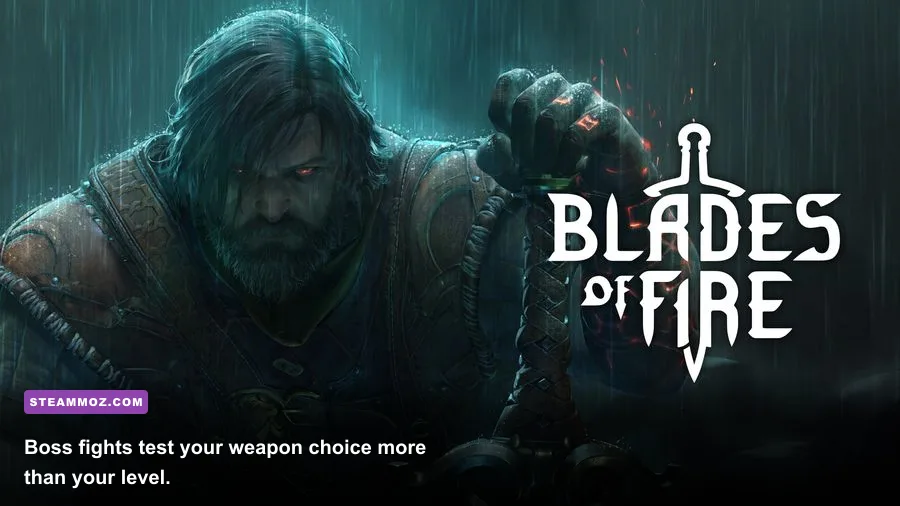
Boss encounters are where the forging system earns its keep. A boss may have armored sections, a weapon that controls a large part of the arena, or a recovery animation that only becomes safe after a specific attack. The correct response isn't always “use the highest damage weapon.” Reach, recovery time, and the ability to hit a vulnerable side can matter more than raw output.
What to watch for in major encounters
Before a boss fight, carry a weapon you already understand rather than a freshly forged experiment. Use the first phase to identify the safest punish. If the boss repeatedly follows a missed attack with a delayed second swing, don't dodge on the first visual cue; wait for the actual release. If the arena has pillars or raised edges, treat them as hazards rather than reliable cover because collision can disrupt your camera.
Stagger windows are especially valuable. Heavy attacks from a greatsword can turn a narrow opening into a full damage sequence, but only if you begin from a safe distance. Dual blades are better when the boss remains exposed for several seconds. Polearms shine against bosses that punish close proximity but become awkward when the fight forces you into a tiny circular arena.
| Boss problem | Danger signal | Counter strategy | Optimal tool |
|---|---|---|---|
| Wide sweeping attack | Weapon pulled far behind the body | Delay your dodge, then punish recovery | Sword or polearm |
| Heavy armor phase | Visible protected sections | Attack the exposed angle instead of trading hits | Greatsword |
| Rapid close-range string | Short step followed by repeated slashes | Guard the first hit and disengage after the string | Sword |
| Summoned adds | Boss pauses or raises an arm | Create space and control the nearest add first | Polearm |
The downside is inconsistency. Some fights feel like elegant duels, while others become messy camera battles in narrow spaces. Checkpoints are generally fair, but a failed attempt can still feel wasteful when the real problem was geometry rather than execution. That unevenness is the strongest argument against calling Blades of Fire a masterpiece.
PC performance and the 2026 buying verdict
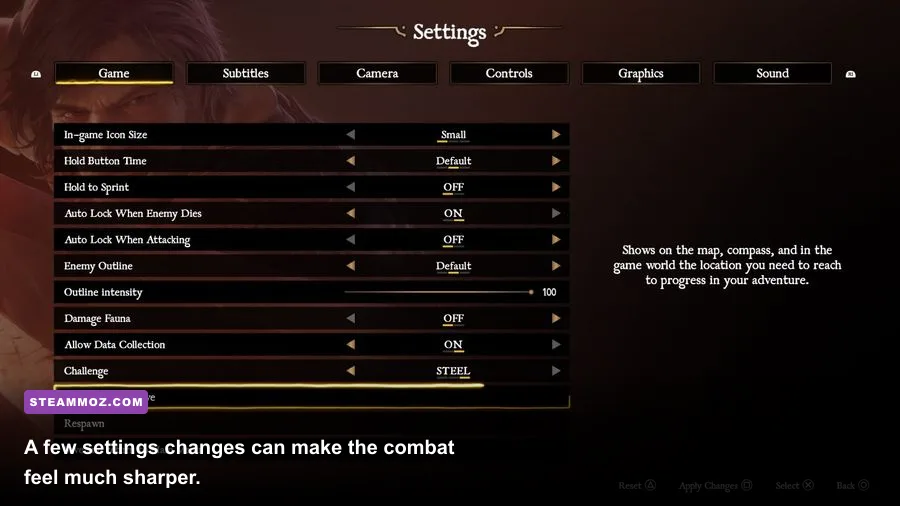
On PC, the priority should be stable frame pacing over maximum image quality. Combat depends on reading attack releases, so a visually impressive 4K preset that constantly dips during effects-heavy fights is the wrong trade. Use the Steam system requirements as your baseline, then tune shadows, volumetric effects, and foliage before sacrificing texture quality.
Exact performance depends heavily on your CPU, GPU, resolution, and upscaling mode, so the table below is a practical starting profile rather than a universal benchmark. Cap the frame rate to a number your system can hold. A locked 60 frames per second feels far better than an unstable 75 to 100 during combat.
| Setting | Recommended value | FPS impact | Visual note |
|---|---|---|---|
| Resolution | Native 1080p or 1440p | Very high | Lower only after tuning heavier effects |
| Upscaling | Quality mode | High benefit | Good balance between clarity and stability |
| Shadows | High | Medium to high | Drop to medium for crowded areas |
| Volumetric effects | Medium | Medium | Reduces fog-heavy dips with limited image loss |
| Foliage | Medium or high | Medium | Mostly affects outdoor traversal scenes |
| Textures | High if VRAM allows | Low FPS impact | Keep high for sharper armor and environments |
| Motion blur | Off | Negligible | Makes attack reads cleaner |
Steam Deck and lower-powered systems deserve caution: this is a demanding, reaction-sensitive game, and aggressive settings cuts can produce a soft image or uneven frame delivery. If your PC struggles with other Unreal Engine releases, our PC crash and FPS troubleshooting guide offers the usual first steps, including driver updates, shader-cache checks, and background-app cleanup.
So, is Blades of Fire worth playing in 2026? Yes, with a clear caveat. Buy it if the idea of forging a weapon for a specific matchup sounds more exciting than chasing legendary loot. Its combat has weight, its exploration has purpose, and the blacksmithing loop makes every new recipe feel tangible. Don't buy it expecting a flawless Souls-like, a massive open world, or perfectly consistent boss arenas.
For action RPG fans, Blades of Fire is one of those games that improves the longer you engage with its rules. It asks you to slow down, observe, and build deliberately. That won't appeal to everyone, but in 2026 its unusual weapon system still feels fresh enough to justify the trip into Queen Nerea's broken kingdom. Wait for a sale if you dislike rough edges; otherwise, this is absolutely worth adding to your backlog.
If you need more performance-focused recommendations after finishing it, see our coverage of Far Cry 6 PC settings and low-FPS troubleshooting for additional tuning ideas.