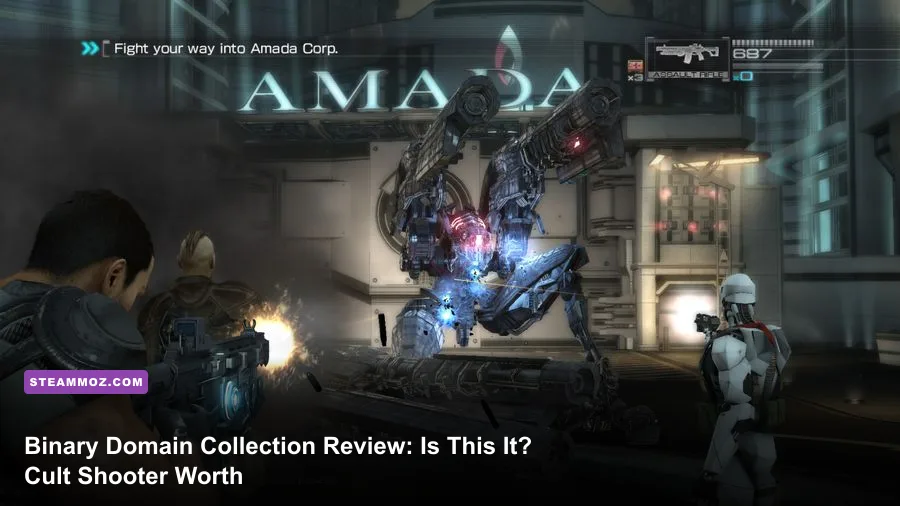
Yes—Binary Domain is still worth playing in 2026, especially if you enjoy story-driven third-person shooters and can grab the PC collection cheaply. It isn't a remaster, its online multiplayer is effectively a historical footnote, and the PC port shows its age. But the 2012 campaign remains unusually satisfying thanks to destructible robots, a surprisingly sharp science-fiction story, memorable squad banter, and a cover system that rewards deliberate shooting instead of endless bullet-sponging. Treat it as a focused 10-to-12-hour campaign rather than a modern live-service package, and the value becomes much easier to see.
The important clarification is that “Binary Domain Collection” does not represent a new 2026 edition with rebuilt textures, ray tracing, or restored multiplayer servers. On PC, buyers are generally looking at the original Binary Domain Steam release, sometimes presented alongside soundtrack or bundle branding. Check the exact store contents before paying a premium. The core game is the same campaign starring Dan Marshall and the Rust Crew.

Why Binary Domain Still Feels Different
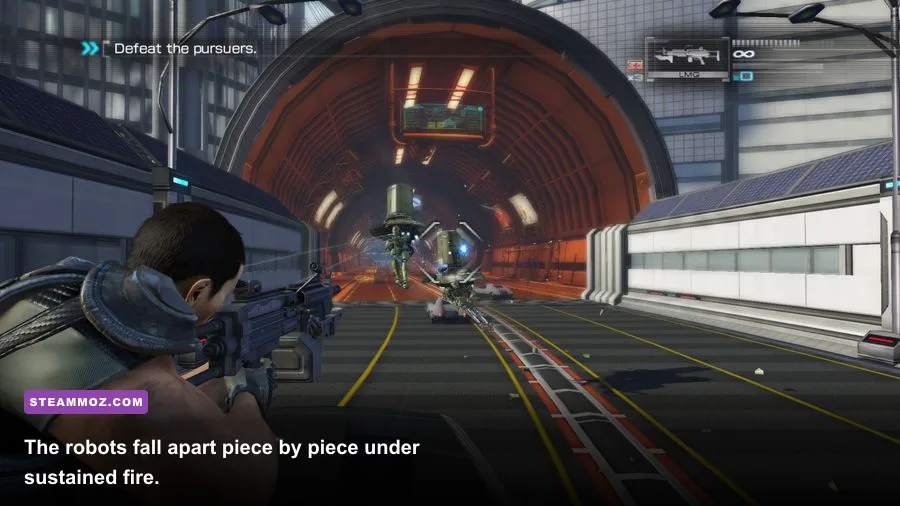
Binary Domain borrows the familiar shoulder-camera language of Gears of War, but its robots give every encounter a tactile twist. Shooting a standard Hollow Child in the chest isn't simply a damage calculation. Repeated hits can strip away its outer shell, expose internal components, remove an arm, or force it to stagger. A damaged machine may crawl toward you, fire with reduced accuracy, or switch to a more desperate melee attack. That physical feedback makes the basic assault rifle feel more interesting than its numbers suggest.
The campaign also understands escalation. Early Tokyo missions teach you to use waist-high cover and controlled bursts. Later chapters add shielded machines, suicide attackers, heavy armor, flying threats, and arenas where staying behind one piece of cover is a fast route to death. You are constantly reading the room: which robot is flanking, which armored plate can be removed, and when to spend explosive ammunition instead of hoarding it for a boss.
That combat loop is supported by a compact upgrade economy. Weapon and character improvements use credits, while upgrade items and skill slots let you shape a squad around survivability, damage, accuracy, reload speed, ammunition capacity, health, or armor. You won't build an elaborate RPG character, but the choices matter on Hard and No Mercy. Increasing weapon damage and reload speed on Dan gives a much more noticeable return than spreading points evenly across every available perk.
| Combat Element | What It Does | Best Use | 2026 Verdict |
|---|---|---|---|
| Robot damage modeling | Armor and limbs can be destroyed independently | Target weapons, legs, or exposed cores | Still excellent |
| Cover shooting | Lean, blind-fire, reload, and issue commands from cover | Control lanes before advancing | Functional but dated |
| Squad commands | Direct allies toward targets or positions | Suppress heavies and clear flanks | Useful, occasionally awkward |
| Upgrade system | Improves weapons, health, armor, and handling | Prioritize damage and reload speed | Simple but meaningful |
🎮 Binary Domain Collection
Looking to experience this game? Grab your digital key directly on our store for $3.19.
View on Steammoz Store →Campaign, Characters, and the Story’s Biggest Strength
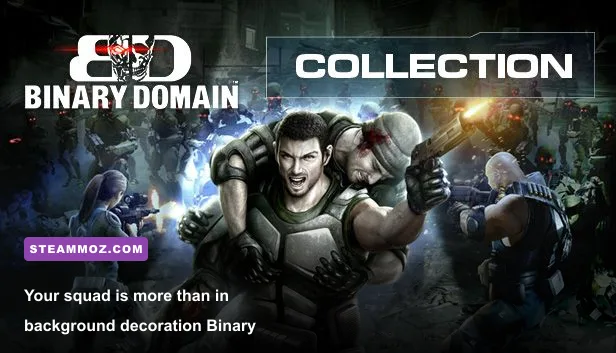
Dan Marshall begins as a loud, cocky American soldier, but Binary Domain gradually gives him more weight than the opening hours suggest. His team includes Big Bo, the heavy weapons specialist; Faye, a capable British operative; Rachel, a combat medic; Cain, a powerful mechanical ally; and Shindo, among others. Their personalities aren't subtle, but the squad has enough friction to make the long push through Tokyo feel like a journey rather than a sequence of disconnected shooting galleries.
The standout system is the trust mechanic. Squad members react to your dialogue choices, battlefield behavior, and command decisions. High trust improves cooperation and can affect how reliably companions follow orders, while poor relationships make the team less eager to support you. It isn't a branching role-playing game with dozens of radically different endings, so don't expect Mass Effect-level consequences. Still, it gives ordinary combat chatter a useful edge: when a squadmate questions your plan, that relationship is mechanically relevant.
The story's central idea—humanity confronting increasingly convincing artificial life—lands better than the game's occasionally melodramatic presentation suggests. Binary Domain asks uncomfortable questions about identity, obedience, and what makes a person more than a collection of manufactured parts. Its reveal-heavy second half is far more ambitious than most cover shooters from the same period.
That ambition is also where the writing can wobble. Some dialogue is broad, the voice direction is uneven, and the early military banter leans heavily into stereotype. Stick with it. The campaign becomes more confident once the team reaches the deeper layers of Tokyo and the conflict stops looking like a straightforward robot uprising. For players who enjoyed tense modern shooters with strong atmosphere, Binary Domain's pressure-cooker pacing is worth experiencing.
Weapons, Squad Tactics, and the Best Upgrade Priorities
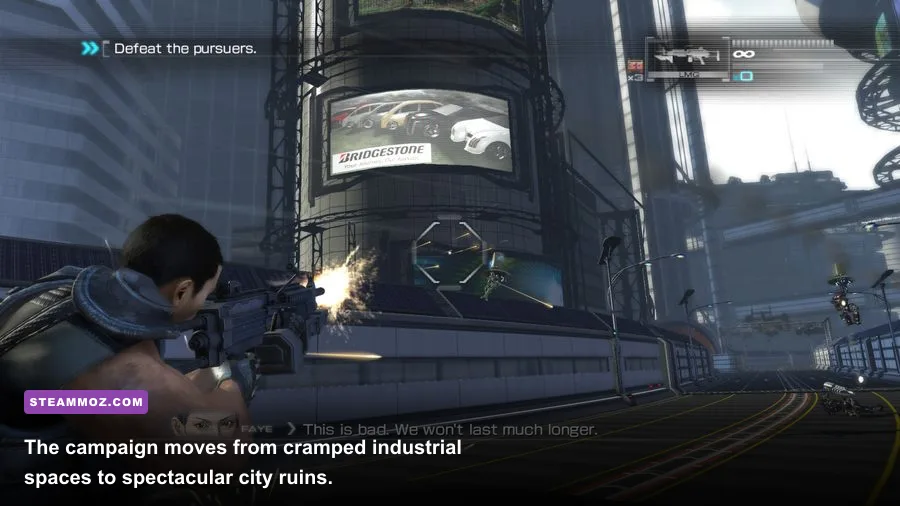
Dan's default assault rifle is the reliable workhorse. Use short bursts against exposed robot joints and save full magazines for enemies carrying automatic weapons. The shotgun is the best answer to close-range rushers and damaged armor, while the sniper rifle rewards patient head and component shots. The submachine gun is useful when the game forces you to move quickly, but its ammunition economy is less forgiving. Rocket launchers and grenades should be reserved for heavy machines, clustered enemies, and boss vulnerability windows.
Don't treat companions as disposable turrets. Give the squad a clear job. Big Bo is valuable when a heavy enemy needs sustained pressure, while Rachel's presence can stabilize a bad push when health is running low. Cain can absorb attention and create the opening needed to flank. Commands work best before the shooting starts: point the team at a dangerous weapon carrier, then use your own rifle to remove its exposed limb or targeting assembly.
Voice commands are an interesting but unreliable part of the original design. A microphone can make squad orders feel immediate, but recognition varies wildly with hardware, accent, and background noise. Controller users generally get the more dependable experience. Mouse aiming is workable, though the PC port's menus and input handling feel designed around a gamepad.
| Weapon or Upgrade | Strength | Weakness | Priority |
|---|---|---|---|
| Assault rifle | Balanced range and component damage | Can waste ammunition on heavy armor | Upgrade early |
| Shotgun | Excellent stagger and close-range burst | Limited range and shells | High on Hard |
| Sniper rifle | Precise shots against exposed weak points | Poor when enemies rush the position | Situational |
| Rocket launcher | Huge damage against heavies and bosses | Rare ammunition | Save ammunition |
| Reload speed | Shortens vulnerable downtime | Doesn't increase raw damage | Very high |
| Weapon damage | Improves every standard firefight | Costs upgrade resources | Very high |
For a first run, prioritize Dan's weapon damage, reload speed, and ammunition capacity. Add health or armor when playing Hard. On No Mercy, defensive upgrades become more important because incoming fire punishes exposed movement and careless revives. A balanced squad is usually stronger than a “maximum damage” setup because Binary Domain frequently attacks from multiple angles.
Bosses, Difficulty, and Where the Campaign Stumbles
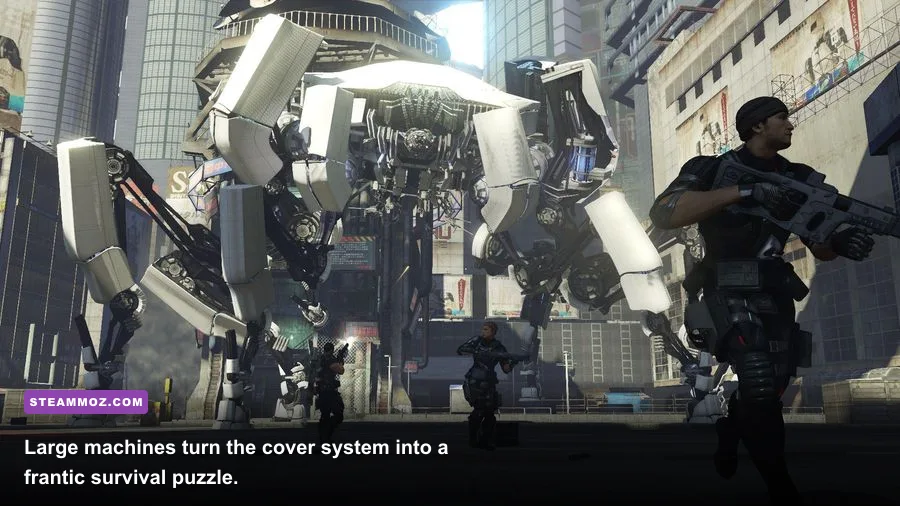
Binary Domain's best large-machine encounters are built around observation rather than memorizing a single attack pattern. The Giant Golem, for example, turns the arena into a movement test: watch its wind-up, leave the obvious impact zone, then attack exposed components during recovery. Smaller machines and environmental hazards keep you from standing still and emptying magazines. The correct response is usually to break armor first, not blindly target the glowing core from the start.
Difficulty changes the texture of the game. Casual is forgiving enough for players who mainly want the story. Normal offers the intended balance, with cover, ammunition, and squad commands all contributing to survival. Hard makes positioning and component targeting matter, while No Mercy is for players willing to replay encounters and learn enemy timing. The game does not suddenly become a deep tactical simulator at higher settings; it simply makes mistakes more expensive.
The campaign's weaker stretches are equally clear. Some scripted sequences take control away at awkward moments, enemy variety can feel repetitive before a new machine type arrives, and friendly AI sometimes exposes itself or fails to focus on the target you selected. The final act also moves quickly through major ideas that deserved more room. These aren't deal-breakers, but they explain why Binary Domain became a cult favorite rather than a genre-defining classic.
Players who want more demanding squad shooting may prefer the slower tension of Insurgency: Sandstorm, while those chasing old-school arcade aggression should look at Huntdown. Binary Domain sits between those extremes: cinematic enough for a weekend binge, tactical enough to reward attention, and compact enough not to exhaust its central gimmick.
PC Performance and What to Expect in 2026
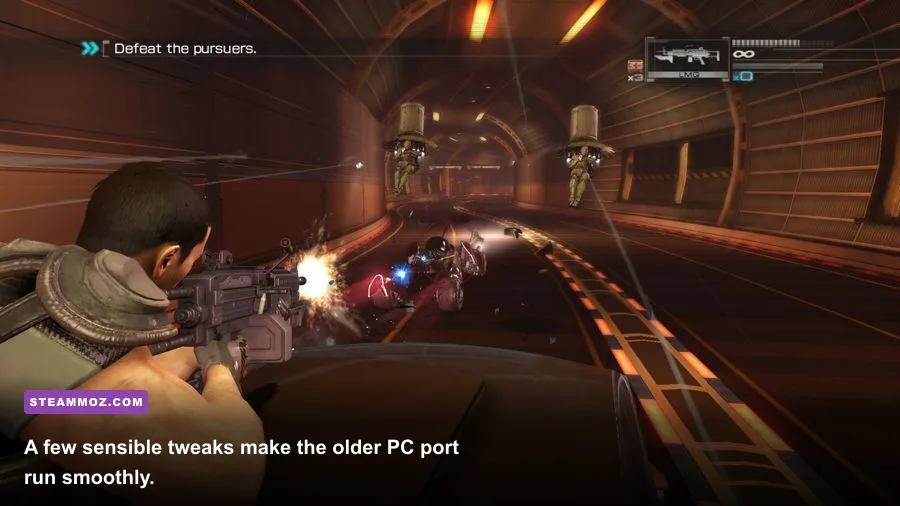
The PC version is lightweight by modern standards and should run comfortably on current hardware. The bigger concern is compatibility polish, not raw performance. A 60-fps presentation is realistic on contemporary systems, but menus, controller detection, mouse behavior, and occasional camera quirks can feel like a port from another era. Use a controller if possible, enable subtitles, and test your display mode before committing to a long session.
| Setting or Hardware | Recommended Value | Performance Impact | Visual Note |
|---|---|---|---|
| Resolution | Native monitor resolution | Moderate | Sharper UI and distant robot parts |
| V-Sync | Enable if tearing appears | Low to moderate | Cleaner camera movement |
| Anti-aliasing | Highest stable option | Moderate | Reduces jagged armor edges |
| Shadows | High, lower if needed | Moderate | Important in industrial interiors |
| Controller | Recommended | No FPS impact | Best for menus and squad commands |
| Frame-rate target | 60 fps where stable | System-dependent | Feels noticeably better than 30 fps |
There is no modern graphics overhaul to justify buying the game at a collector's price. Instead, its value comes from what remains unusually good: destructible enemies, a focused campaign, strong set pieces, and a relationship system that makes squad chatter matter. If you want a broader list of older games that still punch above their weight, Steamoz's guide to cult classics worth playing in 2026 makes a useful companion read.
Final Verdict: Buy It Cheap, Play It Soon
Binary Domain Collection is worth playing in 2026 if you want a short, characterful third-person shooter—not if you're expecting a remastered package or a thriving multiplayer game. The robot destruction still feels great, the campaign has more narrative ambition than its rough edges suggest, and the trust system gives the squad a personality many modern shooters lack. Its aging PC interface, uneven AI, repetitive stretches, and dated presentation are real drawbacks, but none erase the game's identity.
At a discount, this is an easy recommendation for fans of Vanquish, Gears of War, Lost Planet, or story-heavy shooters that don't demand 80 hours. Play on Normal for the first run, invest in weapon damage and reload speed, aim for exposed components instead of center mass, and use squad commands before the arena becomes chaotic. Binary Domain isn't secretly a lost masterpiece. It's something more interesting: a flawed, confident shooter with ideas that still haven't been copied as well as they should have been.