If you are asking whether investing your time and money into playing Xbox games is still worth it today, the honest answer is a resounding yes—provided you abandon the notion that Xbox is just a box sitting under your TV. The traditional console war of plastic boxes tethered to proprietary HDMI cables has evaporated. Instead, diving into the Xbox software catalog today means engaging with an ubiquitous service layer spanning native PC installations, high-spec consoles, handheld gaming PCs, and streaming blades. If you judge Xbox strictly on whether you must buy a dedicated home console to play cinematic, award-winning blockbusters, the platform feels optional. But if you evaluate it based on sheer flexibility, seamless cross-progression, and unprecedented library value, playing Xbox titles remains one of the smartest software propositions in modern gaming.
The Play Anywhere Dream: Cross-Progression and PC Parity
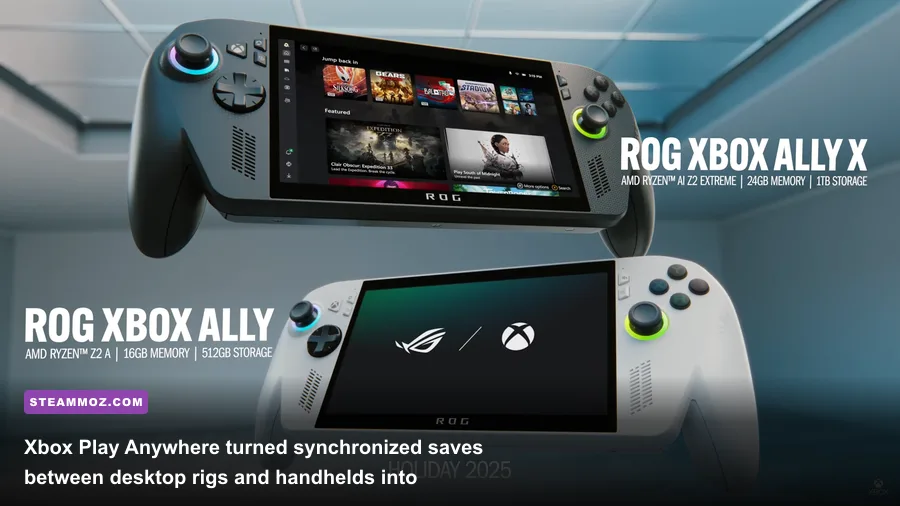
Microsoft's most durable victory over the last several years has not been hardware unit sales, but the quiet perfection of the Xbox Play Anywhere protocol. The vision was straightforward: buy a title digitally once, and you automatically own it across the Xbox console family and PC, complete with cloud-synchronized saves, shared achievements, and matching multiplayer matchmaking pools. While Sony continues to stagger their PC ports across multi-year delays with separate storefront purchases, the Xbox ecosystem treats your platform preference as completely irrelevant.
Jump into a sprawling campaign in Avowed or blast through dynamic weather seasons in Forza Horizon 5 on your primary desktop rig at 1440p uncapped frame rates. When you step away to hit the couch or travel with a Windows handheld like the ROG Ally or Legion Go, your save file pulls down from the Azure cloud in seconds. You don't configure third-party cloud sync tools, mount manual network shares, or pay auxiliary licensing fees. The state of your inventory, character positioning down to the exact coordinates, and graphic setting profiles retain continuity.
This ecosystem parity has radically shifted the value calculation for enthusiasts who bounce between spaces. Instead of feeling locked down to an individual display, your software library moves fluidly throughout your living space. For players juggling busy schedules, that single convenience routinely saves dozens of hours of lost progress and prevents redundant multi-storefront purchases.
| Access Tier | Native Target Performance | Play Anywhere Support | Local Storage Footprint | Ideal Player Profile |
|---|---|---|---|---|
| PC Game Pass / Native Store | Uncapped FPS / Native 4K Ultra | Full (Select First/Third-Party) | High (80 GB – 150 GB per title) | Enthusiast desktop gamers & handheld PC users |
| Xbox Series X | Dynamic 4K at 60–120 FPS | Full System Integration | High (DirectStorage NVMe) | Living room setup seeking plug-and-play fidelity |
| Xbox Series S | 1080p to 1440p at 30–60 FPS | Full System Integration | Moderate (512 GB – 1 TB Internal) | Budget-conscious secondary bedroom gamers |
| Xbox Cloud Gaming (Ultimate) | 1080p at 60 FPS (15 Mbps stream) | Server-side Sync | Zero (Streamed Instance) | Mobile players, ultrabooks, and hotel travelers |
First-Party Reality Check: Hits, Misses, and the Obsidian Factor
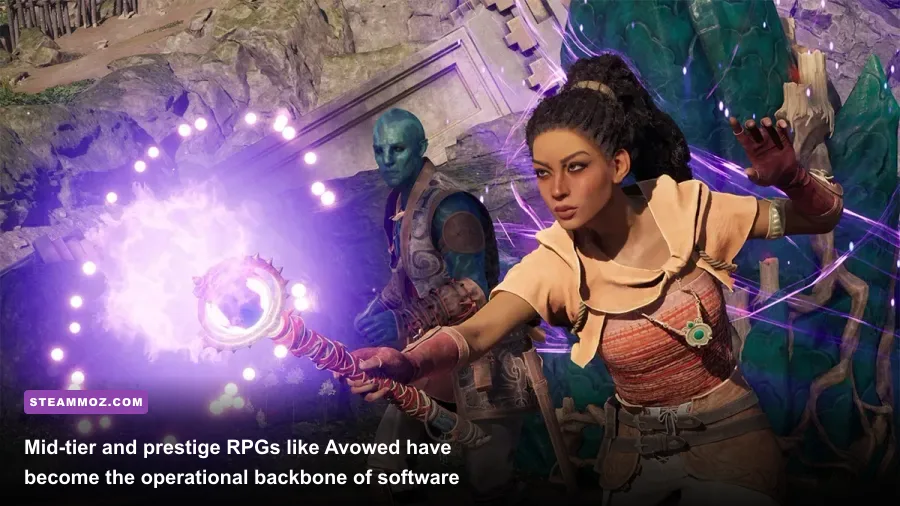
The biggest criticism leveled against the Xbox ecosystem has historically been its software cadence: long developmental droughts punctuated by uneven releases. However, looking at the catalog today reveals an ecosystem anchored by an entirely different design philosophy than its competitors. While PlayStation doubled down on ultra-high-budget, third-person narrative action adventures with $250 million production cycles, Xbox diversified into varied mid-tier, experimental, and deep RPG projects, largely propelled by their aggressive studio acquisitions.
Obsidian Entertainment has emerged as the MVP of this strategy. Rather than forcing studios to deliver solitary decade-long projects, the platform greenlit lean, distinct masterpieces like Pentiment, followed by systemic multiplayer survival hits like Grounded, and sprawling narrative role-playing adventures like Avowed. When paired with machine-tooled genre juggernauts like Senua's Saga: Hellblade II from Ninja Theory and MachineGames' narrative action craftsmanship, the library delivers mechanical variety that avoids franchise fatigue.
Of course, the road has not been without craters. Titles like Redfall served as harsh reminders that unfocused live-service mandates can derail premier talent, and Bethesda's Starfield polarized audiences with its compartmentalized loading screens and legacy engine quirks. Yet, Microsoft's post-launch support remains exceptionally tenacious. Years after release, Halo Infinite features robust Forge toolsets and rock-solid networking, while Sea of Thieves continues to post healthy player concurrency numbers via relentless seasonal updates. If you want high-tempo action and weapon crunch while fine-tuning your library, checking out retro and alternative shooters like our breakdown of Far Cry 3 Blood Dragon weapons ranked from S to C reveals how distinct game feel can make or break an extended play session.
| Core Title | Developer | Primary Genre | Performance Profile | Software Longevity Score |
|---|---|---|---|---|
| Avowed | Obsidian Entertainment | First-Person Action RPG | Dynamic 4K / 60 FPS Mode | High (Branching storylines, build variety) |
| Forza Horizon 5 | Playground Games | Open-World Simcade Racing | Native 4K / Solid 60 FPS | Very High (Endless playlist rotations) |
| Hellblade II: Senua's Saga | Ninja Theory | Cinematic Narrative Adventure | Unreal Engine 5 / 30 FPS Lock (Console) | Moderate (Short, high-impact playthrough) |
| Starfield | Bethesda Game Studios | Space Exploration RPG | 40 FPS VRR / 60 FPS Performance | High (Mod creation kit, massive expansions) |
| Halo Infinite | 343 Industries / Halo Studios | Arena / Sandbox FPS | 120 FPS Arena / 60 FPS Campaign | High (Custom game browser, Forge) |
Hardware vs Cloud: Does Native Silicon Still Matter?
The traditional urge to purchase a dedicated home console has fundamentally shifted. When the Xbox Series X launched, its 12-teraflop RDNA 2 GPU and custom NVMe architecture offered unmatched price-to-performance against expensive graphics cards. Today, that silicon has aged gracefully, but it faces stiff competition from modern PC hardware and increasingly viable cloud delivery pipelines. If you already own a capable desktop equipped with a modern graphics card, buying a physical Xbox console is virtually redundant, thanks to day-and-date release parity on Windows.
On PC, the software delivery vehicle—the Windows Xbox app—has had a notoriously bumpy development history. Early iterations suffered from locked Win32 folder permissions, cryptic error codes tied to Windows Gaming Services, and broken download queues. If you run into stutter or stability hiccups on PC storefronts, applying deliberate stability tweaks much like our troubleshooting steps for rescuing your FPS and stopping crashes can make an immediate difference. Microsoft has spent extensive engineering cycles decoupling titles from restrictive UWP wrappers, granting players full modding access, customizable installation directories, and proper DirectStorage 1.2 runtime implementations.
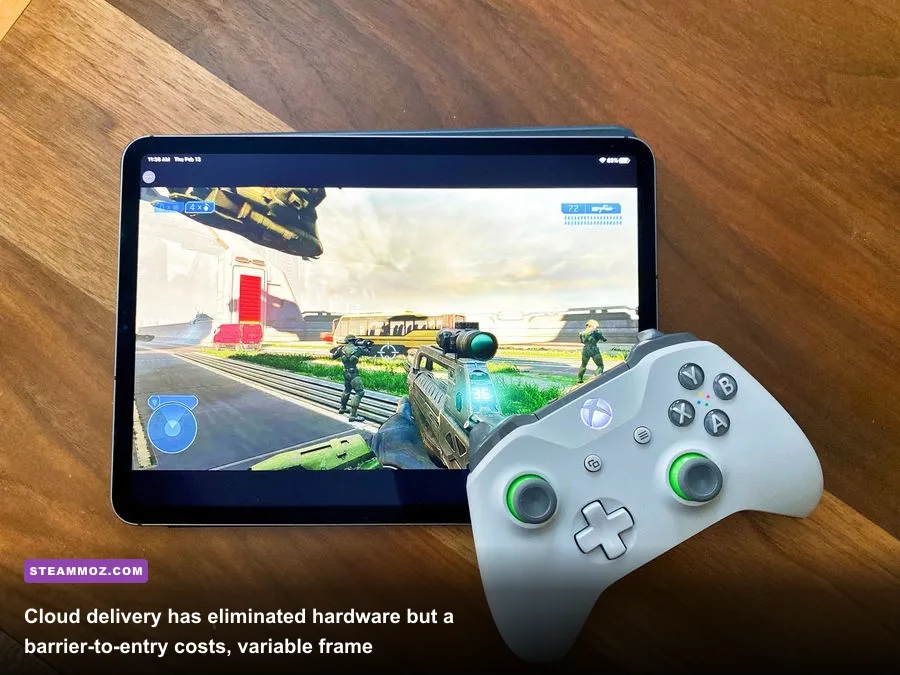
Meanwhile, Xbox Cloud Gaming has moved past the proof-of-concept phase. Upgraded to run on custom Series X server hardware, streams push low-latency 1080p feeds at 60 frames per second over a stable 15 to 25 Mbps connection. Input latency remains too high for competitive ranked multiplayer matches in titles like Halo Infinite or twitch-reaction fighters, but for turned-based tactics, dialogue-heavy RPGs, and chill management sims, the cloud alternative completely eliminates the storage penalty of massive 100-gigabyte installs.
Game Pass Economics: The Hidden Cost of Endless Choice
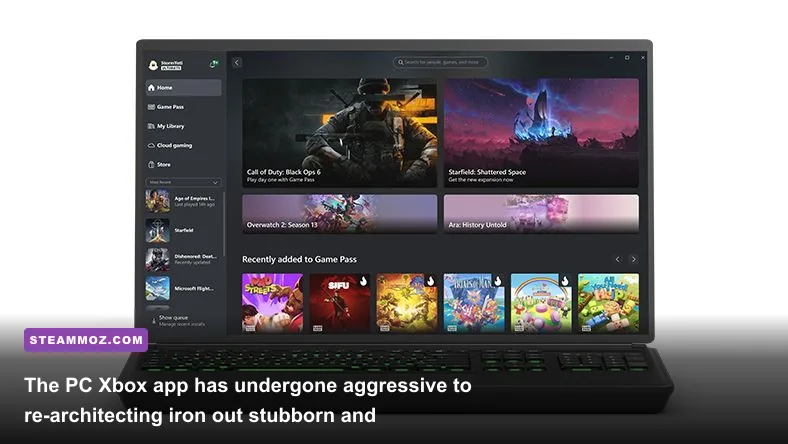
You cannot discuss playing Xbox titles without addressing the elephant in the room: Xbox Game Pass. Subscribing grants access to hundreds of titles on tap, fundamentally transforming how players interact with their backlogs. You no longer need to agonize over whether a quirky indie or a 60-hour mid-budget RPG is worth a $50 gamble; you simply click install. This low-risk environment encourages players to experiment with unfamiliar genres, breathe life into cooperative indies, and jump into sprawling space epics like Everspace 2, where mastering deep flight systems pays dividends—be sure to reference our Everspace 2 secret locations and hidden rewards guide if you decide to jump into that cockpit.
However, that sheer volume comes with subtle psychological drawbacks that every gamer experiences eventually: subscription paralysis. When you have immediate, frictionless access to five hundred titles, the motivation to stick with a challenging game through its slow introductory acts degrades rapidly. The moment an encounter spikes in difficulty, the temptation to exit to the dashboard and download something else is constant.
Furthermore, subscription price adjustments across recent years mean that maintaining an ongoing Game Pass Ultimate tier represents a substantial recurring commitment. If you are someone who plays only two or three massive releases per year—perhaps sinking hundreds of hours into mastering progression loops like we see in our Kakarot Master Edition leveling guide or fine-tuning endgame loadouts like our Far Cry 6 best beginner build breakdown—buying your games outright during seasonal sales remains far more economical than paying an indefinite monthly toll.
| Consumption Model | Upfront Financial Cost | Long-Term Ownership | Best Suited For |
|---|---|---|---|
| Game Pass Ultimate Subscription | Recurring Monthly Fee (~$20/mo) | Zero (Access ends when billing lapses) | Gamers completing 10+ varied titles yearly |
| Ala Carte Purchases (Steam / Xbox Store) | $30 – $70 per title (Sales drop to $15–$30) | Perpetual digital license | Specialists who focus on 2–3 live-service/massive RPGs |
| Hybrid (Targeted 1-Month Subs + Buy Favorites) | Targeted bursts ($20 sporadic) | Perpetual for favorites, temporary for campaigns | Calculated campaign runners who binge new launches |
The Technical Verdict: How Xbox Software Runs Today

From an engineering standpoint, the modern Xbox software stack delivers remarkable consistency, provided you understand the hardware targets. On Series X, developers have largely mastered Dynamic Resolution Scaling (DRS) coupled with AMD FSR techniques to stabilize 60 FPS performance targets. While pure native 4K rendering at high refresh rates is increasingly rare on console silicon, the perceptual image quality on modern living room displays remains pristine.
If you're jumping in on PC, the technical landscape is significantly broader. Optimization can vary wildy across the portfolio depending on which internal studio handled production. Turn 10's Forza Motorsport engine overhaul demanded aggressive hardware overhead at launch, requiring heavy driver-level shader caching to smooth out micro-stuttering. Conversely, Playground Games' Forza Horizon 5 stands as a monumental masterclass in PC optimization, providing silky framerates across low-end APUs all the way up to monstrous enthusiast setups. Dialing in graphic settings precisely—similar to optimizing your rig using our Far Cry 6 max FPS settings guide—ensures you extract clean frame pacing without thermal throttling.
System memory allocation on Windows has also leveled up. The Xbox PC app previously choked background threads during decrypt-on-the-fly packaging. Modern updates handle multi-threaded game installations cleanly, allowing background downloads to saturate gigabit fiber lines without tanking CPU resources needed for your active gameplay.
The Verdict: Who Should Still Invest in the Xbox Experience?
Revisiting the Xbox ecosystem today makes one reality crystal clear: Microsoft stopped trying to beat Sony and Nintendo at their own game and instead built an entirely different playground. If your metric for a platform's success is a mandatory collection of exclusive, system-selling console boxes that demand $500 hardware buy-ins, Xbox will look confusing. But as a dynamic, gamer-first software ecosystem, it offers a degree of consumer freedom that simply does not exist anywhere else in the industry.
If you fit into one of the following categories, diving into the Xbox gaming ecosystem is undeniably worth your investment:
- The Multi-Device Enthusiast: Players who own a gaming desktop, a portable Windows handheld, or multiple displays will find the Xbox Play Anywhere ecosystem completely transformative. The ability to seamlessly carry your save data between systems without friction or double-dipping purchases is an unmatched convenience.
- The Voracious Genre Explorer: If you tire of playing the exact same formulaic open-world action games and crave varied experiences—from Obsidian's dense dialogue-driven RPGs to high-octane racers and experimental indie adventures—Game Pass provides unprecedented discovery value.
- The Friction-Free Living Room Gamer: For anyone seeking a quiet, discreet living-room machine with high-end spatial audio, blistering load times via Quick Resume, and dependable backward compatibility reaching all the way back to original Xbox discs, the Series X remains an astonishingly capable piece of consumer electronics.
Playing Xbox games today doesn't require loyalty to a brand or lock-in to a single plastic box. It is about accessing a massive, varied library wherever your screens happen to be. If you embrace the flexibility and manage your backlog intentionally, playing Xbox titles remains one of the absolute best, most modern ways to enjoy interactive entertainment today.