
Yes, Above Snakes is still worth playing in 2026 if you want a relaxed, story-driven survival game with bite-sized exploration, accessible crafting, and a world that literally grows beneath your feet. It isn't the next Valheim or Subnautica: combat is simple, the survival systems are forgiving, and the later hours lean heavily on gathering. But its floating-island structure, approachable progression, and melancholy post-apocalyptic setting give it a personality that many larger survival games never find.
That distinction matters. Above Snakes, developed by Square Glade Games and published by Crytivo, is built for players who enjoy the satisfying rhythm of chopping wood, improving a camp, unlocking a recipe, and opening the next piece of a strange map. It launched on Steam in 2022 after Early Access, and its compact design remains its biggest strength. You can make meaningful progress in a short session instead of spending an evening just looking for one missing metal ingot.
The hook is a world you build while exploring it
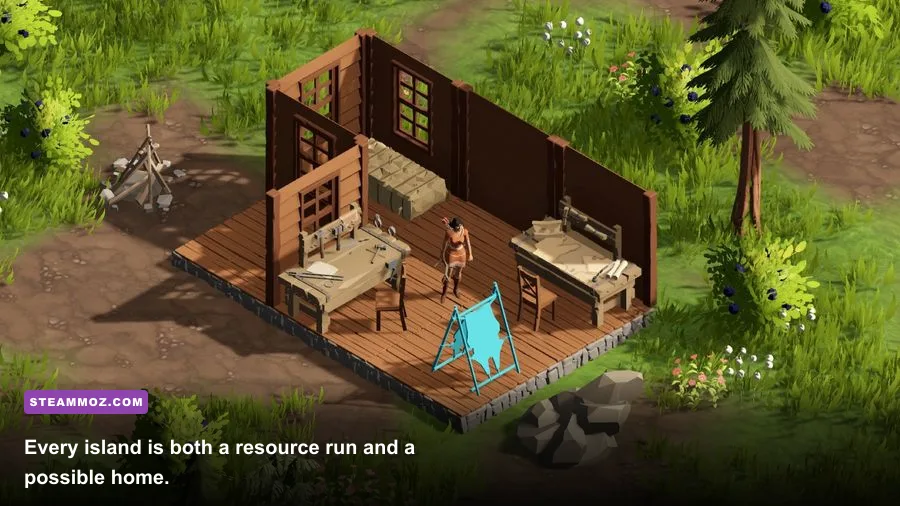
Above Snakes places you in a flooded, broken world where land survives as scattered floating islands. You travel across these chunks of terrain, collect materials, investigate abandoned places, rescue survivors, and expand the playable world from a central raft-like hub. The result feels less like a seamless open-world survival game and more like a series of hand-sized adventure stages connected by one growing base.
That structure solves a common survival-game problem: aimless wandering. Most islands have an obvious job. One may offer timber and stone, another may contain a story objective, while a third gives you access to a new resource tier or a survivor who unlocks useful progression. You still have room to explore, but the game rarely makes you wonder what the developers expect you to do next.
The visual design sells the premise surprisingly well. Bright grass, turquoise water, foggy horizons, and ruined human settlements create a colorful surface over a grim story about catastrophe and the undead. The contrast is deliberate rather than edgy. Above Snakes wants to feel lonely without becoming miserable, and it generally succeeds.
The downside is that island repetition becomes more obvious the longer you play. Resource nodes, enemy camps, and environmental props begin to follow familiar patterns. The compact zones are excellent for early momentum, but they don't provide the same sense of discovery as the deeper caves of Fade to Silence or the wider survival spaces found in more ambitious sandbox games.

🎮 Above Snakes
Looking to experience this game? Grab your digital key directly on our store for $6.24.
View on Steammoz Store →Crafting is approachable, not endlessly demanding
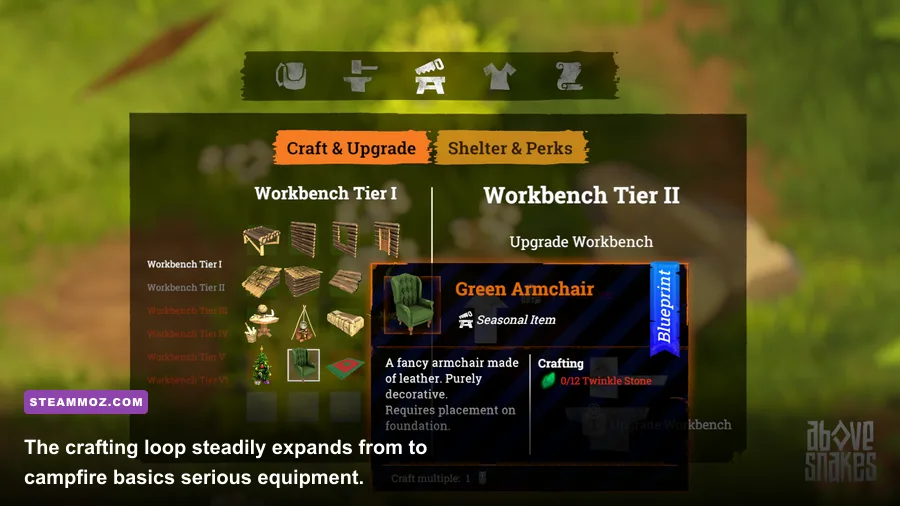
The central progression loop is straightforward: gather raw materials, process them at stations, craft tools and weapons, then use those upgrades to reach more dangerous or resource-rich areas. You begin with basic survival equipment and gradually add stations such as a workbench and forge. Recipes are unlocked through progression rather than buried under a punishing research tree, which keeps the game moving.
That accessibility is a major reason Above Snakes works for newcomers. You don't need a spreadsheet to understand the difference between early wood tools and later metal equipment. The interface tells you what a recipe needs, the world gives you a clear reason to seek it, and the next upgrade usually feels close enough to chase.
Food and health add pressure, but they aren't designed to ruin a run. Cooked food provides a practical way to keep your character supplied while exploring, and the game gives you enough warning before a trip becomes dangerous. This is survival-lite rather than a hardcore endurance test. If you want constant hunger management, severe durability loss, and base raids every few minutes, you'll find the systems too gentle.
| Progression Stage | Primary Goal | Important Resources | What It Unlocks |
|---|---|---|---|
| Opening camp | Secure food and basic tools | Wood, stone, fiber, food | Reliable gathering and first shelter upgrades |
| Workbench phase | Improve tools and storage | Planks, cloth, refined materials | More efficient crafting and stronger equipment |
| Forge phase | Process tougher materials | Metal ore, fuel, stone | Metal weapons, tools, and higher-tier recipes |
| Late exploration | Complete objectives and expand the map | Rare materials, quest items, ammunition | Story areas, survivor upgrades, and endgame crafting |
The clever part is how the game links crafting to exploration. You aren't just upgrading numbers for their own sake. Better tools let you harvest more efficiently; new stations turn previously useless materials into progress; and survivors give your home base a sense of purpose. Players who enjoyed the structured resource loops in Bounty Train will recognize that same satisfying “one more upgrade” momentum here.
Combat is functional, but it won't carry the game
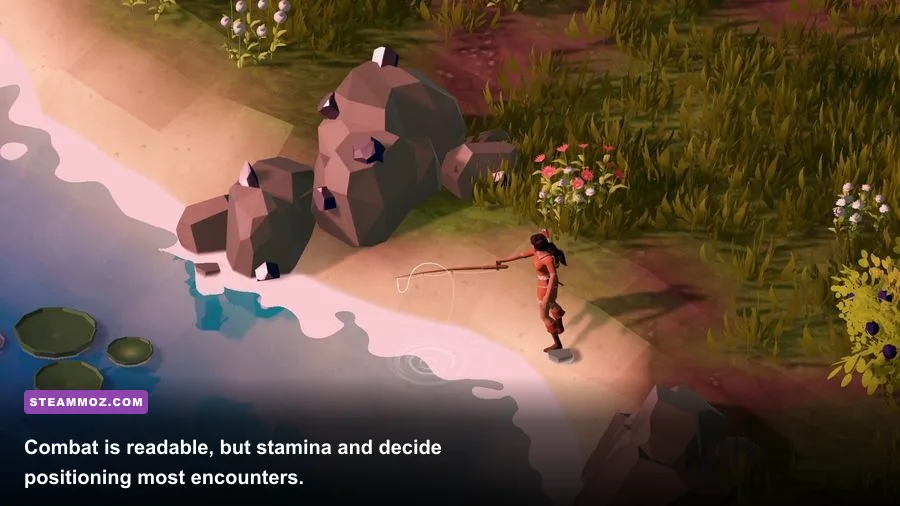
Combat uses simple real-time attacks, movement, stamina management, and ranged options. You can fight with close-range weapons such as a club or spear, while bows give you a safer way to pull enemies away from groups. The controls are easy to read, and enemy attacks usually have enough visual warning to let you react instead of guessing.
The most important combat habit is restraint. Swinging repeatedly until your stamina is empty leaves you exposed, particularly when several undead enemies surround you. A safer pattern is to land one or two attacks, back away, wait for the enemy's recovery animation, then re-enter. With a bow, create distance before firing rather than trying to shoot while trapped against scenery.
Enemy variety is adequate rather than exceptional. Standard undead establish the rhythm, while tougher variants and quest encounters add pressure through higher health, stronger attacks, or more dangerous positioning. The game doesn't build a deep combat ecosystem around them. You won't be memorizing elaborate boss phase rotations or exploiting ten different elemental weaknesses.
| Weapon Approach | Best Use | Main Risk | Practical Advice |
|---|---|---|---|
| Club | Early single-target fights | Short reach | Attack once, step out, and avoid stamina exhaustion |
| Spear | Keeping basic undead at distance | Less forgiving when surrounded | Use open ground and don't fight beside obstacles |
| Bow | Pulling enemies and opening encounters | Ammo consumption and close-range pressure | Clear a retreat path before taking the first shot |
| Upgraded equipment | Late islands and tougher encounters | Resource cost | Spend materials on dependable tools before luxury crafting |
This is where expectations decide the review. If you want a survival game with combat as its main event, Above Snakes will feel underpowered. If combat is simply the obstacle between you and the next crafting station, the lightweight design is perfectly serviceable. It never becomes frustrating enough to eclipse the exploration loop, but it also never reaches the tactile satisfaction of a dedicated action game.
Story quests and survivors give the grind a reason
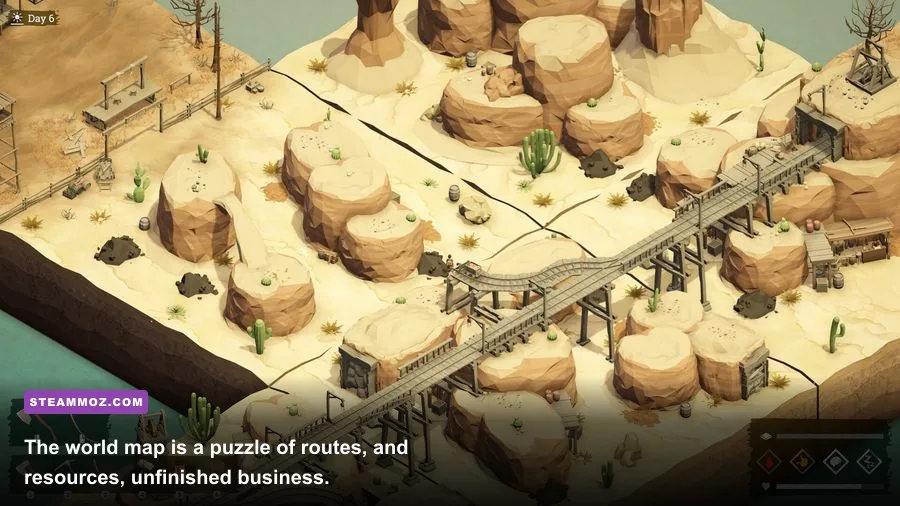
Above Snakes' narrative follows a world recovering from disaster and the people trying to survive among the ruins. The story is delivered through quests, environmental clues, conversations, and the survivors you encounter. It isn't a cinematic blockbuster, but it gives the resource grind context: you're not expanding a base because a quest marker told you to; you're making a safer place for a growing community.
The survivor system is particularly useful for pacing. Finding a new character often changes the mood of the home base and gives you another reason to return between expeditions. These moments prevent the game from becoming a pure checklist of trees, rocks, and crafting recipes. The characters aren't all equally memorable, but they make the world feel inhabited rather than procedurally empty.
Quest objectives can occasionally be vague, especially when the next step depends on exploring the correct island or interacting with a small object in a cluttered area. Keep an eye on the journal, read dialogue instead of skipping it, and mark resource-rich locations mentally. If a task appears stalled, check your base and previously visited islands before assuming the save is broken.
The story also benefits from the game's restrained scale. Because each island is compact, environmental details are easier to notice. A ruined building, an abandoned camp, or a suspicious path through the trees can point toward a quest or hidden reward. That sense of discovery is similar to the compact secrets found in Deleveled's hidden locations, even though the two games play very differently.
Performance is good, with sensible PC settings
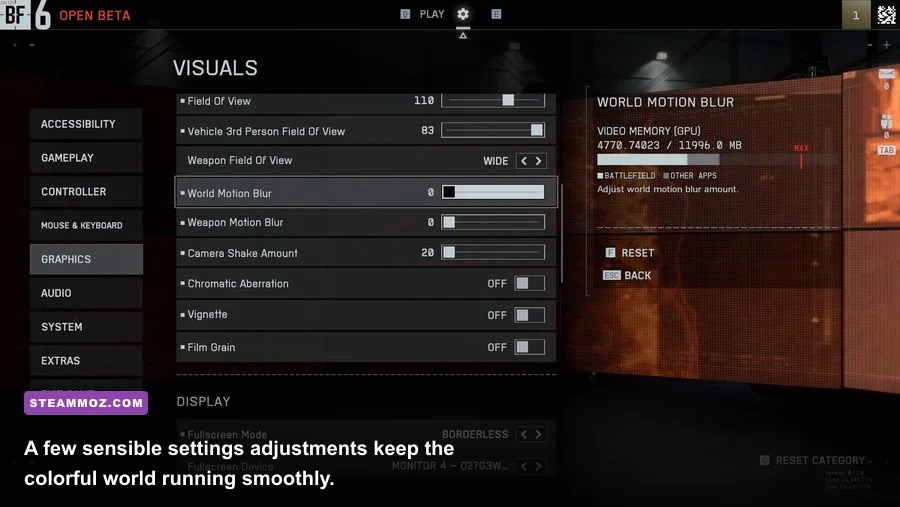
Above Snakes is not a demanding PC game by modern standards. Its stylized presentation scales well, and the relatively small island zones reduce the kind of massive streaming load that can punish weaker systems. The official Steam listing gives a minimum target of a 64-bit Windows 7 system, an Intel Core i5-2400 or AMD FX-6300 processor, 4 GB of RAM, a GeForce GTX 660 or Radeon HD 7870 with 2 GB of VRAM, and 10 GB of storage.
Those numbers are old, but they are useful. On a contemporary entry-level gaming PC, 1080p should be comfortable with medium-to-high settings. The biggest practical gains usually come from reducing shadows and post-processing before lowering texture quality. The colorful art style remains attractive at medium settings, while shadow quality can cost frames without dramatically changing readability.
| Setting | Recommended Value | FPS Impact | Visual Trade-Off |
|---|---|---|---|
| Resolution | Native 1080p | High if increased | Keep native resolution for sharper terrain and UI |
| Texture quality | High with 4 GB VRAM | Low to medium | Lower only if you see hitching or VRAM pressure |
| Shadow quality | Medium | Medium to high | Reduced shadow detail is barely noticeable during travel |
| Post-processing | Medium | Medium | Lower values reduce visual softness and effects |
| View distance | High | Medium | Useful for spotting resources and island landmarks |
| Frame cap | Monitor refresh rate | Improves consistency | A stable cap can feel smoother than uncapped spikes |
Before buying, compare your hardware with Steam's published requirements and check the latest player reports on the official Above Snakes Steam page. For general PC troubleshooting habits, Steamoz's guides to crashes, stutters, and low FPS are also useful, although their fixes aren't specific to this game.
What holds Above Snakes back in 2026?
The answer is repetition. The first several hours are the strongest because every discovery matters: a new recipe, a better tool, a survivor, or a fresh island type. Later, the same actions take longer while offering less surprise. Gathering can become routine, especially if you are trying to fully clear every island instead of following the story.
Base building is another mixed feature. You can create a pleasant home and arrange crafting stations, storage, and decorations, but the construction system isn't as expressive as the systems in Valheim, Enshrouded, or even some smaller indie survival games. Building is mainly functional. If you dream of designing elaborate castles, you'll run into the game's limits quickly.
There are also moments where the presentation feels rough around the edges. Animations lack weight, some interactions are less polished than they should be, and the interface occasionally makes a simple objective feel more complicated. These aren't deal-breakers, but they remind you that Above Snakes is a compact indie production rather than a premium open-world adventure.
Co-op expectations deserve a warning, too. Above Snakes is best approached as a single-player experience unless the current Steam build explicitly lists multiplayer support. Don't buy it assuming it will replace a shared Valheim or Raft session. Its design is focused on one player's progression through a story-driven chain of islands.
Above Snakes verdict: buy it on the right day
Above Snakes is worth playing in 2026 for players who want a calm survival adventure with a clear route forward, a colorful ruined world, and crafting that respects their time. It is especially easy to recommend during a sale, or to anyone who finds heavyweight survival games exhausting rather than exciting.
| Player Type | Recommendation | Why |
|---|---|---|
| Survival newcomer | Strong buy | Forgiving systems and readable progression make a friendly introduction |
| Story-focused explorer | Buy | Quests, survivors, and island discovery provide useful direction |
| Hardcore survival fan | Wait for a sale | Hunger, combat, and base threats may feel too light |
| Creative base builder | Maybe | Construction is practical but not especially deep |
| Co-op survival group | Check first | Its single-player focus makes multiplayer expectations important |
My final score is 7/10. The game has a genuinely good central idea, a welcoming progression curve, and enough story texture to make gathering feel purposeful. It loses points for repetitive island design, lightweight combat, and a building system that never quite matches the promise of its survival sandbox. Still, those weaknesses don't erase its charm.
For a tougher, more demanding survival experience, look elsewhere. For a compact adventure you can finish without turning resource management into a second job, Above Snakes remains an appealing pick. Start on normal difficulty, prioritize a dependable tool set, keep food stocked before story excursions, and resist the urge to strip every island bare. Played that way, its small world feels less like a limitation and more like the point.
You can also follow the developer's updates through the Steam news hub and learn more about the studio via the Square Glade Games website. If the premise appeals to you, the official Crytivo publisher page is worth checking for related projects and current availability.