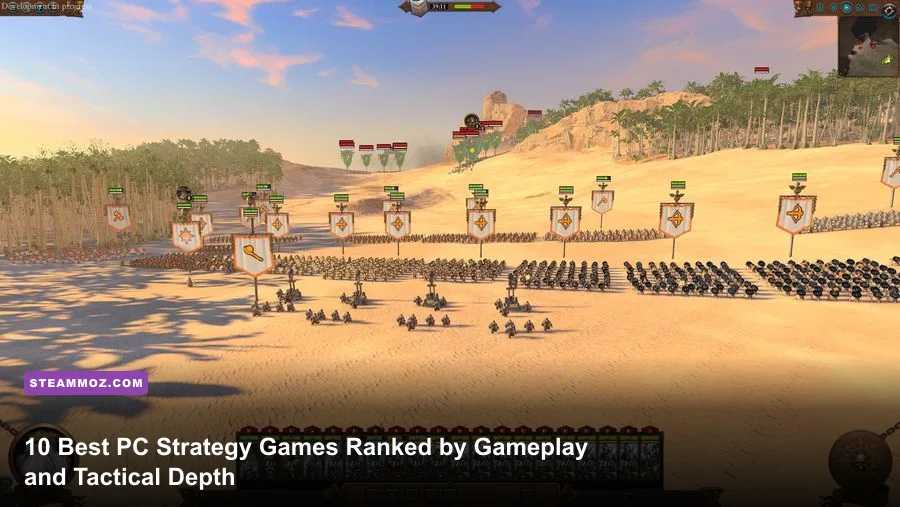
If you want pure tactical depth and razor-sharp decision-making on PC right now, Total War: Warhammer III, Crusader Kings III, and XCOM 2: War of the Chosen stand at the absolute pinnacle of strategic game design. PC remains the undisputed king of strategy gaming because nothing beats the mechanical precision of mouse-driven micro, intricate multi-layered tech trees, and heavy simulation engines capable of tracking thousands of individual ballistics trajectories or generational feudal disputes in real time. Whether you crave the panic-inducing 200-APM split-second micro of competitive RTS or the cold, calculated five-hour turns of an interstellar 4X empire builder, these ten games represent the gold standard of modern strategy.
S-Tier Legends: The Undisputed Titans of PC Strategy
At the top of the strategic food chain, games must deliver near-infinite replayability, spotless combat logic, and systems that refuse to hold your hand when you make a bad call. These three titles define their respective sub-genres through surgical execution and immense mechanical depth.
1. Total War: Warhammer III
Creative Assembly's magnum opus isn't just an RTS; its crown jewel mode, Immortal Empires, is a monstrous sandbox featuring over 80 legendary lords and nearly 300 factions duking it out across a world-spanning campaign map. Tactical battles demand precise hammer-and-anvil cavalry maneuvers, elevation awareness, and calculated magic reserve management. If you mistime a Cathayan celestial spell or fail to brace your spearmen against a rampaging Khorne Bloodthirster charge, your frontline collapses in seconds. You can grab the base game and expansions directly via the Total War: Warhammer III on Steam storefront to unlock the sprawling mega-campaign.
2. Crusader Kings III
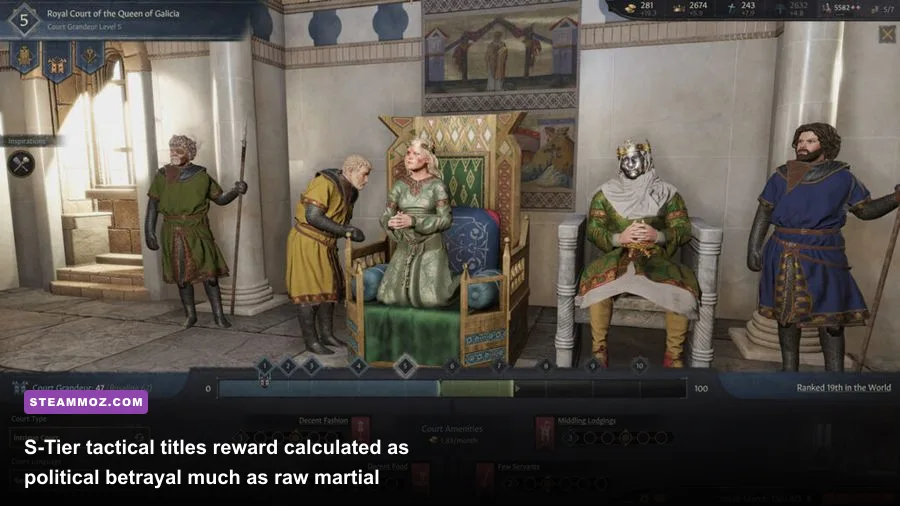
Unlike traditional 4X map-painters, Paradox Interactive built this grand strategy masterpiece around human frailty, biological genetics, and dynastic politics. Developed on the robust Clausewitz engine, every character in Paradox Interactive's official portal operates on personality traits, stress mechanics, and opinion modifiers. Success isn't measured solely in levies and gold; it hinges on manipulating the Hook system to force advantageous matrilineal marriages, fabricating blackmail on rogue dukes, and surviving catastrophic succession partitions. If you play wide without securing your heir's dread rating, a single assassination will fracture your empire into a five-way civil war before your ruler's corpse is cold.
3. StarCraft II: Legacy of the Void
More than a decade after release, Blizzard's sci-fi benchmark remains the most demanding competitive real-time strategy game ever coded. Mastering StarCraft II requires lightning-fast macro-mechanics: you must balance Mineral and Vespene harvests, continuously cycle production buildings, and manage supply caps while simultaneously executing micro tricks like Marine stutter-stepping against banelings or Protoss Warp Prism pick-up micro. With zero turn-based breathing room, your decision cycles happen in milliseconds, testing your nerve under brutal psychological pressure.

🎮 Depth
Looking to experience this game? Grab your digital key directly on our store for $19.99.
View on Steammoz Store →A-Tier Masterpieces: Deep 4X and Gritty Tactical Squad Battles
A-Tier entries offer elite-level gameplay loops that keep you up until 3:00 AM chasing just one more turn, one more research unlock, or one more desperate ambush mission.
4. XCOM 2: War of the Chosen
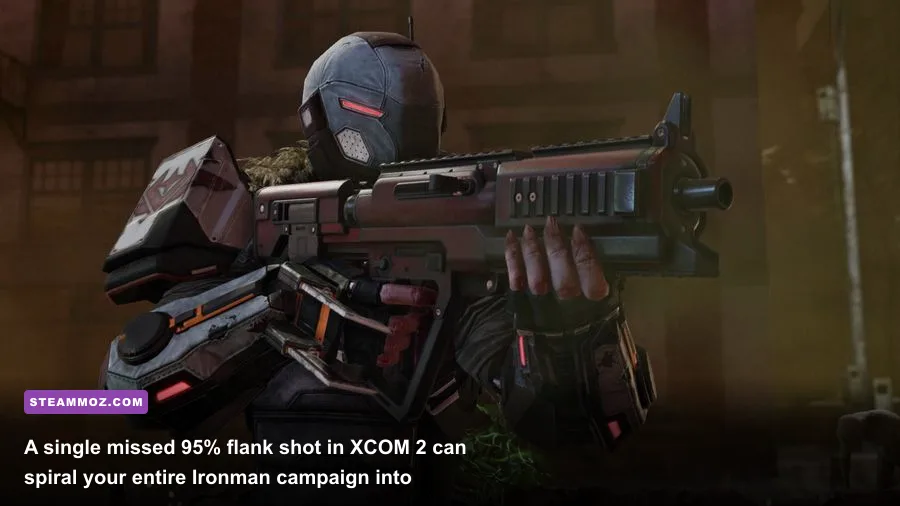
The definitive tactical turn-based squad combat experience, crafted by Firaxis Games, is notorious for teaching players the painful mathematics of probability. War of the Chosen supercharges the base guerilla campaign by introducing stalker-like alien bosses who track your squad dynamically across procedurally generated cityscapes. Combat revolves around tight action point economies, destructible cover thresholds, and sightline ambushes. Equipping a Reaper operative with a Superior Extended Magazine and the Banish skill lets you unload seven straight critical rounds into an alien Avatar, single-handedly turning an unwinnable wipe into an extraction miracle.
5. Stellaris
Stellaris elevates space 4X by throwing out static victory conditions and giving you an empty sandbox governed by hyperlane logistics and pop ethics. Designing your fleet isn't just about picking big hulls; you have to tailor shield-bypass kinetics, point defense screens, and plasma lances against mid-game crises and awakened fallen empires. Much like squeezing high-tier optimization out of demanding simulators, managing planetary amenities and trade routes across 60 colony worlds requires dedicated administrative focus to avoid an economic flatline.
6. Age of Empires IV
World's Edge revitalized historical RTS by creating genuine asymmetrical mechanics across its civilizations, verified through the official Age of Empires database. Playing the English means constructing fortified forward longbow nests backed by the Network of Castles attack-speed buff, while the nomadic Mongols tear down and pack their town centers onto wagons to hunt opponent supply lines. Relic positioning, siege engine assembly, and age-advancement landmark choices make competitive matches a masterclass in scouting and hard-counter recruitment.
7. Sid Meier's Civilization VI
Civilization VI replaced brainless city-spamming with the district puzzle system. Unstacking cities across hexagonal tiles forces you to plan geography fifty turns in advance, matching campus scientific output to adjacent mountain ranges and commercial hubs to winding river deltas. If you love building synergistic loadouts—similar to crafting specialized combat setups in our Far Cry 6 beginner loadout guide—the civic policy card swaps in Civ VI allow you to pivot an entire civilization's production overnight to repel unexpected barbarian swarms.
B-Tier Innovators: Survival Tactics and Emerging Simulation Giants
These titles lean into specific mechanical niches: extreme environmental survival, intense directional armor physics, and organic biological macro-management.
8. Frostpunk 2
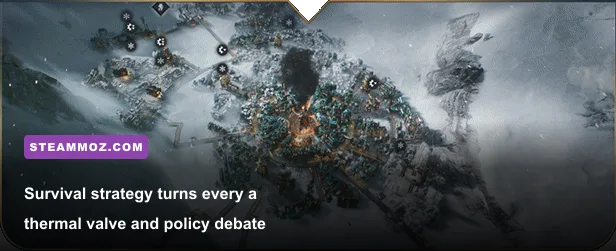
11 bit studios ditched micro-scale coal shovelers to focus on city-scale societal fractures in sub-zero post-apocalyptic conditions. In Frostpunk 2, your biggest enemy isn't just the freezing weather; it's ideological radicalization within your council chambers. District layouts demand careful heat pipe routing, and passing aggressive survival mandates can provoke violent riots. Pushing your central generator past safe limits risks catastrophic boiler explosions, turning every fuel shortage into a high-stakes ethical test.
9. Company of Heroes 3
Relic's World War II tactical RTS thrives on frontline gritty micro. The game replaces health bars with armor deflection angles, directional line-of-sight cones, and true destruction physics. Infantry squads can breach and clear fortified buildings, while tanks suffer engine criticals and turret jams when hit from rear-flank ambush positions. If tactical movement games trigger memory of old-school system strain, remember that modern RTS engines demand stable CPU thread scheduling, much like we detailed for classic open-world hardware in our Far Cry 2 PC spec breakdown.
10. Empires of the Undergrowth
Taking subterranean nature and turning it into an intense, pheromone-guided RTS, this hidden gem puts you in control of an insect colony battling brutal micro-predators. Coordinating your ant castes between black worker ants digging chambers and major soldier ants spraying formic acid across aggressive wolf spiders feels intensely tactical. Before you venture deep into the dirt, check out our Empires of the Undergrowth fast leveling and farming guide to master your brood chamber expansions and resource flow.
Strategy Mechanics Breakdown: How the Top 10 Compare
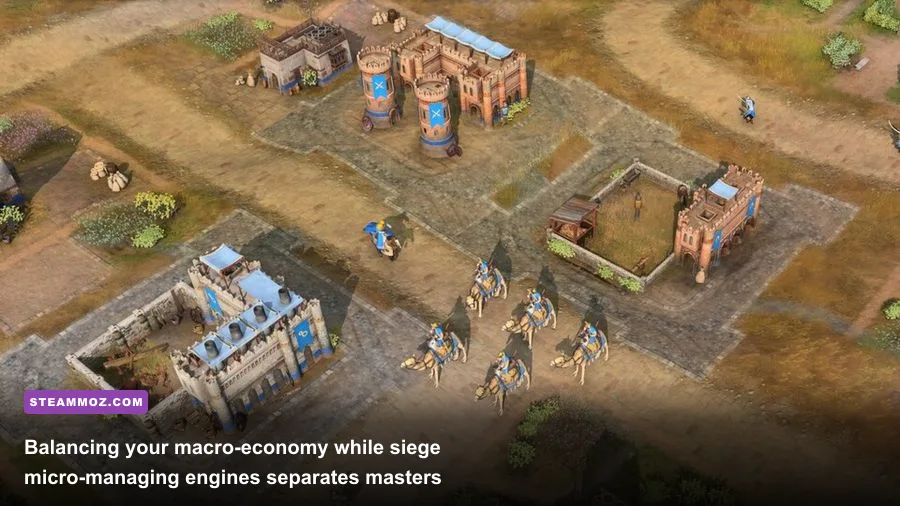
Every strategy gamer has a specific tolerance for APM stress, campaign duration, and systemic complexity. The table below cuts through the noise, matching your tactical style to the right PC titan.
| Game Title | Sub-Genre | APM Demand | Complexity Rating | Core Gameplay Hook |
|---|---|---|---|---|
| Total War: Warhammer III | Grand Strategy / Tactical RTS | Moderate (60-90) | 9.5 / 10 | Combined-arms battles with magic & monstrous units |
| Crusader Kings III | Grand Strategy / Role-Playing | Turn-Based / Pause | 9.0 / 10 | Dynastic lineage, feudal scheming, & stress system |
| StarCraft II | Competitive RTS | Ultra-High (150-300+) | 8.5 / 10 | Pixel-perfect unit micro & cutthroat economic macro |
| XCOM 2: WotC | Turn-Based Squad Tactics | Low (Turn-Based) | 8.8 / 10 | High-stakes permadeath & ambush line-of-sight math |
| Stellaris | 4X Grand Strategy | Low / Pausable RTS | 9.2 / 10 | Galactic pop management & custom ship design counters |
| Age of Empires IV | Historical RTS | High (100-180) | 8.0 / 10 | Asymmetric civ mechanics & mobile siege combat |
| Civilization VI | 4X Empire Builder | Zero (Turn-Based) | 7.5 / 10 | Hex-based urban district adjacency planning |
| Frostpunk 2 | Survival Society Builder | Pausable Real-Time | 8.2 / 10 | Heat distribution networks & ideological council laws |
| Company of Heroes 3 | Tactical Military RTS | Moderate-High (80-120) | 8.4 / 10 | Dynamic cover, directional armor, & building breaches |
| Empires of the Undergrowth | Nature RTS / Simulation | Moderate (50-80) | 7.8 / 10 | Pheromone routing & biological unit evolution |
Just as weapon loadouts dictate your combat range in action titles—as we charted in our Far Cry 3 Blood Dragon weapon rankings—your chosen strategy game dictates whether your brain thrives on raw reflex execution or methodical, long-term calculation.
Hardware Optimization: Pushing Massive Unit Counts Without Dropping Frames
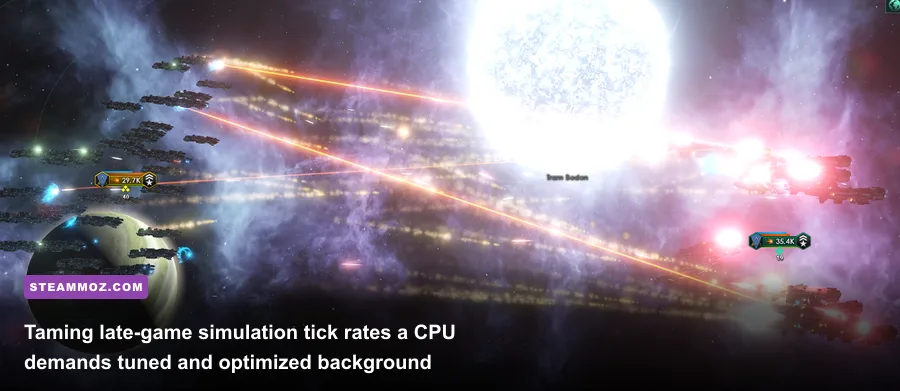
Strategy games abuse PC hardware differently than corridor first-person shooters. Instead of purely hammering your GPU with screen-space reflections, RTS and 4X titles slam your single-core CPU clock, system RAM bandwidth, and CPU cache when simulating hundreds of active pathfinding units, projectile arcs, and AI decision trees. If you've ever dealt with stubborn frame-drops in complex PC titles, you will benefit from our general engine troubleshooting and PC fixes to rescue low FPS across heavily simulated worlds.
Before launching a 20,000-unit clash in Warhammer III or running a 1,000-star galaxy simulation in Stellaris, evaluate your rig against modern hardware limits using our rundown on rig specs and hardware thresholds. To extract silky frametimes without sacrificing battle readability, dial in the engine settings outlined below:
| Engine Setting | Recommended Value | Performance Impact | Tactical Readability Benefit |
|---|---|---|---|
| Unit Size / Army Scale | Ultra / High | Heavy CPU Draw (-15% to -22% FPS) | Critical for accurate frontline mass and flanking hitboxes |
| Shadow Quality & Resolution | Medium | Moderate GPU Gain (+12% FPS) | Eliminates visual clutter beneath fast-moving infantry formations |
| Corpses & Debris Lifetime | Low / 30 Seconds | Massive CPU Cache Saver (+18% Late Battle FPS) | Prevents pathfinding engine slowdown during prolonged sieges |
| Screen Space Reflections (SSR) | Off | Moderate GPU Gain (+8% FPS) | Reduces shader bloom that obscures tactical unit health overlays |
| Terrain & Mesh Detail | High | Low Performance Cost (-4% FPS) | Maintains clear line-of-sight readouts over ridges and trenches |
If you enjoy micro-optimizing settings and love complex spatial mechanics, you can discover similar balance tweaks in our guide covering Filament Marmalade Edition optimization tips. When your graphics settings and background CPU threads are locked down, you won't drop frames right as you trigger an artillery strike, initiate a flank charge, or pass a critical vote in your frozen council hall. Pick your game, set your hotkeys, and claim victory.