
The best online games of all time are World of Warcraft, Counter-Strike, Minecraft, Fortnite, Grand Theft Auto Online, League of Legends, and Final Fantasy XIV. They rank highest because they do more than fill matchmaking queues: they create communities, establish their own vocabulary, and keep players returning years after launch. This ranking weighs mechanical depth, social impact, longevity, accessibility, competitive integrity, and the simple question every multiplayer veteran understands: does the game still feel worth booting up tonight?
That last test matters. A technically impressive online game can fade quickly if its progression becomes exhausting or its servers empty out. Conversely, a game with dated visuals can remain unforgettable because its combat, economy, or social structure still works. I have ranked these games by the complete player experience rather than launch hype, sales alone, or esports prestige.
The All-Time Online Games Ranking
This is a ranking of influence and staying power, not a list of whichever game currently has the biggest Twitch audience. Every title below either built a genre, perfected a multiplayer loop, or gave players a virtual place they genuinely missed when they stopped playing.
| Rank | Game | Genre | Why Gamers Still Play | Best For |
|---|---|---|---|---|
| 1 | World of Warcraft | MMORPG | Deep progression, raids, guild identity | Long-term character journeys |
| 2 | Counter-Strike 2 | Tactical FPS | Precise shooting and endlessly readable strategy | Competitive players |
| 3 | Minecraft | Sandbox survival | Unmatched creative freedom and community servers | Families, builders, and explorers |
| 4 | Fortnite | Battle royale | Building, events, crossovers, and constant reinvention | Social play and variety |
| 5 | Grand Theft Auto Online | Open-world action | Heists, businesses, freedom, and shared chaos | Open-world crews |
| 6 | League of Legends | MOBA | Exceptional competitive depth and champion variety | Serious ranked play |
| 7 | Final Fantasy XIV | MMORPG | Storytelling, raids, crafting, and welcoming communities | Story-focused MMO fans |
🎮 1bitHeart
Looking to experience this game? Grab your digital key directly on our store for $2.99.
View on Steammoz Store →S-Tier Games That Changed Online Gaming
1. World of Warcraft
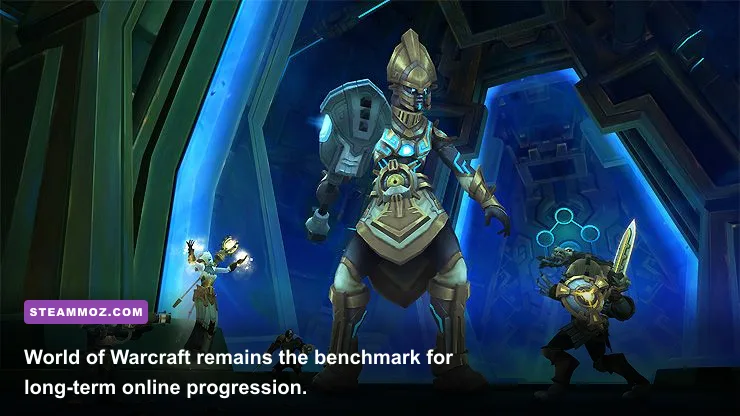
World of Warcraft takes the top spot because it made the MMORPG feel like a second home. Its greatest achievement is not any single raid or expansion. It is the way the game connects everyday routines to memorable milestones. A guild run through Molten Core, a first level-60 character, or the frantic coordination needed for a Mythic+ key can remain vivid for decades.
The game’s best design trick is layered progression. You can chase item level through Mythic+ dungeons, learn boss patterns in raids, collect mounts, pursue professions, or simply explore zones such as Northrend and Pandaria. Each activity feeds a different kind of player motivation. Combat uses the global cooldown and class-specific resource systems to make familiar roles feel distinct. A Protection Warrior manages Rage and active mitigation, while a Restoration Druid rotates HoTs and anticipates incoming damage rather than merely reacting to it.
WoW is not flawless. Its endgame can turn into a checklist, the subscription creates a barrier, and expansion resets can make years of gear feel disposable. Still, no other online RPG has matched its combination of social structure, raid design, class identity, and sheer cultural reach. The official World of Warcraft site remains the starting point for current expansion information.
2. Counter-Strike 2
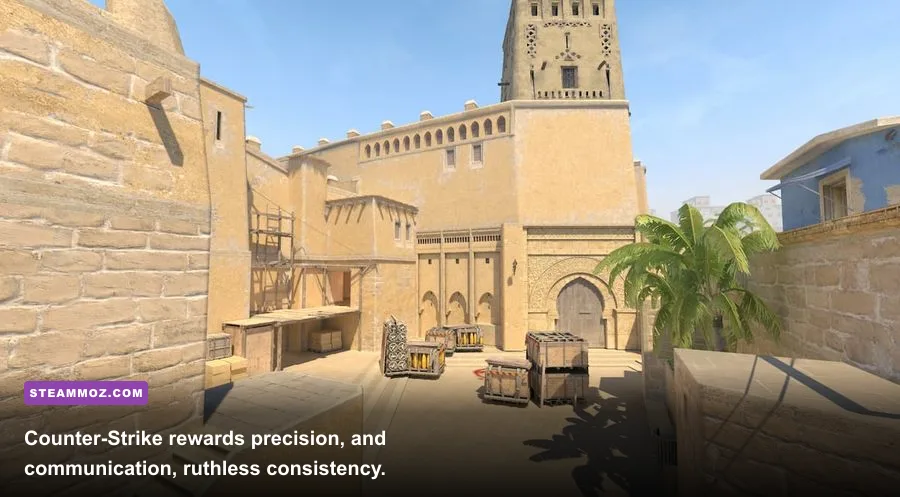
Counter-Strike 2 is the purest competitive multiplayer game on this list. Its rules are brutally simple: two teams, limited money, one life per round, and objectives that force contact. The depth comes from everything players do before the trigger pull. Economy management, grenade lineups, timing, map control, sound cues, and trade kills decide rounds long before the final duel.
The AK-47 can kill with a single headshot against an unhelmeted opponent, while the M4A1-S offers a quieter firing profile and more forgiving spray control. The AWP changes the geometry of a round by denying long sightlines, but its $4,750 price makes a missed shot expensive. That relationship between weapon power and team economy gives Counter-Strike its famous tension. A lost force-buy can damage the next two rounds, so experienced teams understand when saving is more valuable than chasing a low-percentage retake.
Counter-Strike 2’s responsive smoke system and subtick networking modernize the formula, though some players still prefer the visual clarity and consistency of Counter-Strike: Global Offensive. Either way, the core remains extraordinary. A new player can understand a round in minutes, yet a veteran can spend 1,000 hours improving crosshair placement on Mirage. For competitive shooting fundamentals, Valve’s official Steam page is the obvious place to begin.
3. Minecraft
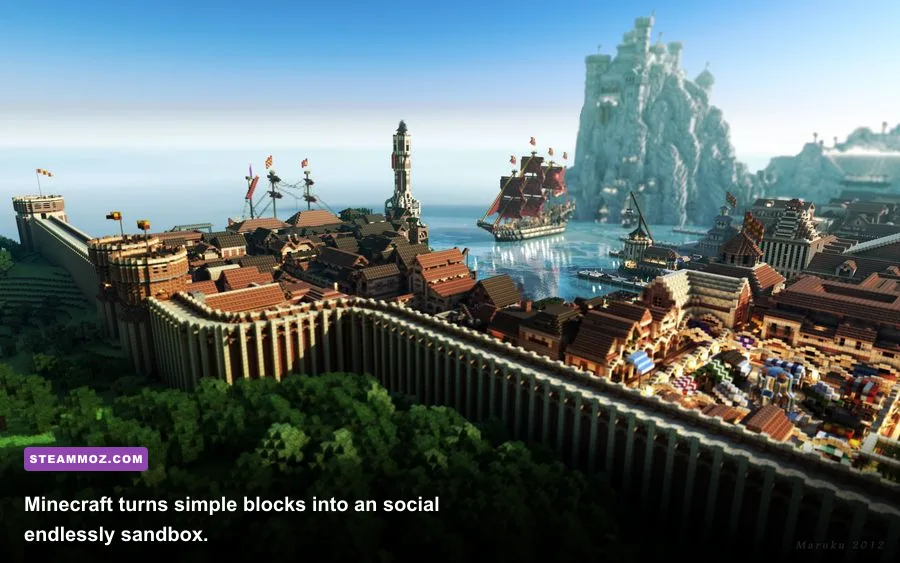
Minecraft ranks third because it is less a single game than a toolkit for making games. Survival mode gives you a clear early rhythm: punch wood, craft stone tools, find food, light a shelter, then mine toward iron, diamonds, and eventually the Nether. After that, the goals become personal. You might build an automated wheat farm, defeat the Ender Dragon, create a redstone calculator, or spend 40 hours making a castle entrance look right.
Online servers turn those systems into social experiments. A shared world develops politics, trading routes, protected claims, rival factions, and landmarks that only make sense to the people who built them. Redstone components such as observers, pistons, hoppers, and comparators support automation without demanding conventional programming skills. That accessibility is why Minecraft works for children discovering multiplayer and adults running technically complex server economies.
Its weaknesses are equally clear. Public servers vary wildly in moderation quality, Java and Bedrock editions do not always behave identically, and the early survival loop can feel repetitive for experienced players. Even so, Minecraft offers more freedom than any competitor and receives meaningful updates without invalidating older creations. The official Minecraft website explains the current edition and account options.
A-Tier Live-Service Giants
4. Fortnite
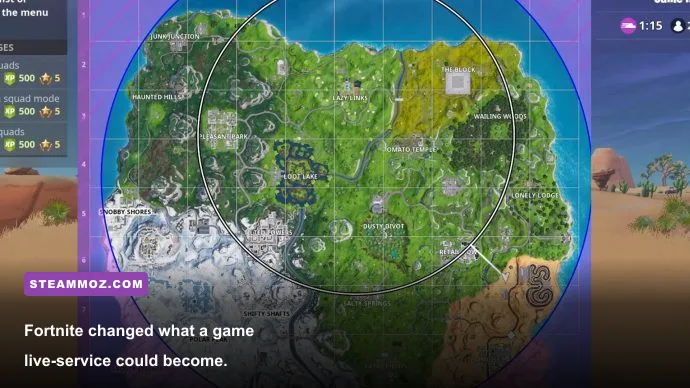
Fortnite transformed the battle royale from a niche survival format into a cultural operating system. Its original building mechanic still separates it from rivals. Players harvest wood, brick, and metal, then use walls, ramps, floors, and cones to create cover or gain high ground in seconds. A good player does not build randomly; they edit windows for peeks, replace damaged walls, and manage material counts while tracking the storm.
Zero Build made Fortnite more approachable by removing the steepest mechanical barrier, but the game’s larger achievement is its ability to change identity without losing its shooting foundation. Live events, music performances, creator islands, ranked modes, and crossovers with Marvel, Star Wars, and major sports have made it a social destination rather than merely a last-player-standing contest.
The trade-off is visual and systemic overload. Menus, quests, currencies, and seasonal mechanics can feel like a second job, while the skill gap in build mode is intimidating. Players on weaker hardware should prioritize Performance Mode, lower view distance only if necessary, and keep textures moderate; competitive visibility matters more than cinematic detail. Epic’s official Fortnite portal tracks seasons, modes, and events.
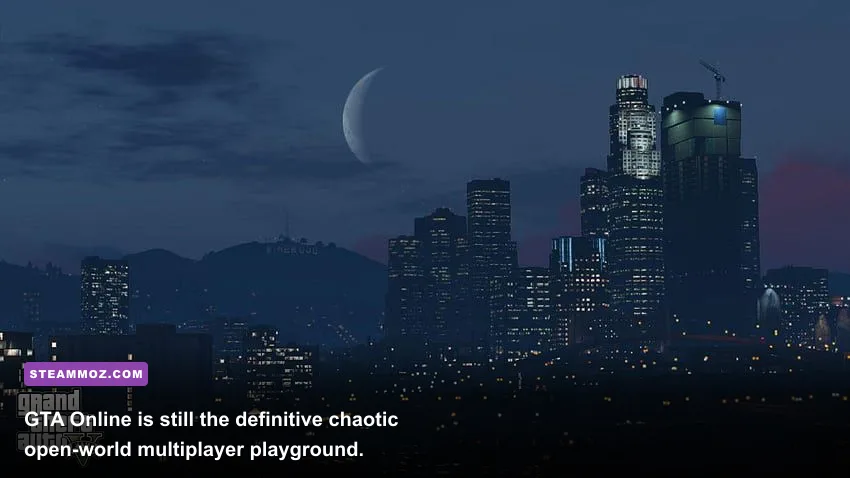
5. Grand Theft Auto Online
Grand Theft Auto Online succeeds because it turns Los Santos into a multiplayer toy box with remarkably strong economic hooks. A new player can steal cars, run contact missions, join a heist, buy an apartment, or simply cause trouble in free roam. Later, properties such as the Kosatka submarine, Arcade, Agency, and Nightclub unlock larger income loops and more elaborate missions.
The best content remains cooperative heists. The Cayo Perico Heist rewards stealth, route knowledge, and preparation, while the Diamond Casino Heist lets crews choose aggressive, silent-and-sneaky, or Big Con approaches. These missions create memorable stories because mistakes are visible: a missed guard, a bad getaway, or one teammate forgetting armor can unravel ten minutes of preparation.
GTA Online also deserves criticism. Loading times, griefers, shark-card monetization, and years of accumulated menus make the first ten hours unnecessarily confusing. Start with a cheap armored vehicle or a reliable weaponized option rather than spending everything on cosmetic cars. Steamoz’s PC performance advice for Far Cry 6 is also useful if your system struggles with large open-world games, since similar graphics settings can affect frame pacing in Los Santos.
6. League of Legends
League of Legends is one of the hardest games to recommend casually and one of the easiest to recognize as a masterpiece. A standard match combines five roles, more than 160 champions, item builds, lane management, jungle pathing, vision control, and objective timing. The first ten minutes can be decided by tiny advantages: a missed cannon minion, a ward placed five seconds too late, or a support roaming while the enemy wave crashes.
Champions such as Orianna, Thresh, Lee Sin, and Camille remain enduring examples of ability design because each rewards precision without having only one viable trick. Orianna’s Command: Attack and Shockwave create positioning puzzles for the entire team. Thresh’s Dark Passage can save an ally or reposition an aggressive teammate. The best players read cooldowns and wave states rather than chasing kills.
League’s major flaw is its emotional tax. Toxicity, long matches, and an unforgiving learning curve can make improvement feel like work. Use mute-all when necessary, learn one role, and master two or three champions before expanding. The game’s competitive ceiling is immense, but its social friction keeps it below the more welcoming MMORPGs on this list.
The Best Online Games by Player Type
There is no universal winner for every player. The right choice depends on whether you want a persistent character, short competitive matches, creative freedom, or a low-pressure way to spend time with friends.
| Player Type | Best Pick | Why It Fits | Main Warning |
|---|---|---|---|
| Competitive perfectionist | Counter-Strike 2 | Every round teaches a measurable skill | Losses feel intensely personal |
| Story-driven MMO fan | Final Fantasy XIV | Excellent narrative and cinematic trials | The early story is a long commitment |
| Creative builder | Minecraft | Nearly limitless construction and automation | Server quality varies |
| Drop-in social player | Fortnite | Fast matches and constantly changing modes | Seasonal systems can feel cluttered |
| Open-world role-player | Grand Theft Auto Online | Heists, businesses, vehicles, and free-roam chaos | Grind and monetization are unavoidable |
| Deep strategy learner | League of Legends | Huge strategic and mechanical ceiling | Very steep onboarding curve |
| Raid-focused veteran | World of Warcraft | Best-in-class group encounters and class roles | Subscription and seasonal resets |
Final Fantasy XIV deserves special mention
Final Fantasy XIV narrowly misses the top six because its greatest strength requires patience. The opening A Realm Reborn campaign is slower than modern players expect, but the payoff in Heavensward, Shadowbringers, and Endwalker is extraordinary. Jobs are cleanly defined: a Paladin combines mitigation and party support, a Black Mage turns positioning into a damage puzzle, and a Scholar balances shields with fairy management.
Trials such as The Weapon's Refrain and raids such as Eden reward memorized mechanics rather than raw reaction speed. Bosses telegraph attacks through markers, arena shapes, cast bars, and scripted sequences. That makes FFXIV unusually teachable: when a group wipes, the answer is often visible in the timeline. Its crafting and housing systems also give non-raiders a meaningful place in the world. The official Final Fantasy XIV Lodestone is the best source for patch notes and live-service updates.
What Makes an Online Game Last for Years?
Longevity is not just a content problem. Developers can add maps and cosmetics forever, but players stay when the underlying decisions remain interesting. Counter-Strike has survived because a smoke grenade still changes a round. Minecraft survives because a new world still creates the same dangerous first night. WoW survives because a guild can turn a difficult raid into a weekly ritual.
The strongest online games also respect different kinds of mastery. A player can improve aim, optimize a build, lead a raid, decorate a house, trade resources, create videos, or simply become the friend who always organizes the group. That breadth protects a game from becoming irrelevant when one mode loses popularity.
Technical performance matters too. Stable frame pacing often beats maximum image quality in competitive games, while an MMO benefits from a clear interface and reliable network connection more than ultra settings. If older PC hardware is holding you back, Steamoz’s ELEX crash and FPS fixes and Everspace 2 performance guide cover the same practical basics: update drivers, cap unstable frame rates, reduce shadows first, and check background overlays.
| Online Game | Core Strength | Learning Curve | Session Length | Long-Term Hook |
|---|---|---|---|---|
| World of Warcraft | Class roles and group progression | Medium to high | 30 minutes to several hours | Guilds, raids, seasonal gear |
| Counter-Strike 2 | Gunplay and tactical information | Very high | 35 to 60 minutes | Ranked improvement |
| Minecraft | Creative freedom | Low to limitless | 15 minutes to all-day sessions | World building and servers |
| Fortnite | Variety and accessibility | Low to very high | 15 to 30 minutes | Seasons, events, cosmetics |
| GTA Online | Open-world freedom | Medium | 20 minutes to several hours | Properties, heists, collection |
| League of Legends | Strategic competitive depth | Very high | 30 to 45 minutes | Ranked mastery and champion pool |
| Final Fantasy XIV | Story and cooperative encounters | Medium | 30 minutes to several hours | Expansions, jobs, crafting, raids |
The Verdict on the Best Online Games Ever
World of Warcraft is the best online game of all time because it offers the broadest and most durable multiplayer ecosystem. It has the strongest claim to the crown, even if it is not the best fit for every player. Counter-Strike 2 is the better choice for competitive purity, Minecraft is the better creative platform, and Fortnite is the better social game for a mixed group.
The ranking ultimately proves that online gaming has no single winning formula. One player wants a perfect headshot on Dust II. Another wants to spend Saturday building a railway through a mountain. Someone else wants to clear a savage raid with seven friends or run a chaotic Cayo Perico finale. The best online games make those ambitions feel meaningful, then give you a reason to come back after the match, raid, or sunset ends.
That is why these games have outlived trends that once looked unbeatable. Their communities create the real content, their systems reward mastery, and their worlds accumulate stories. Pick the game that matches the way you like to play, not merely the one sitting highest on a list. The best multiplayer game is often the one that gets your group talking long after everyone logs off.