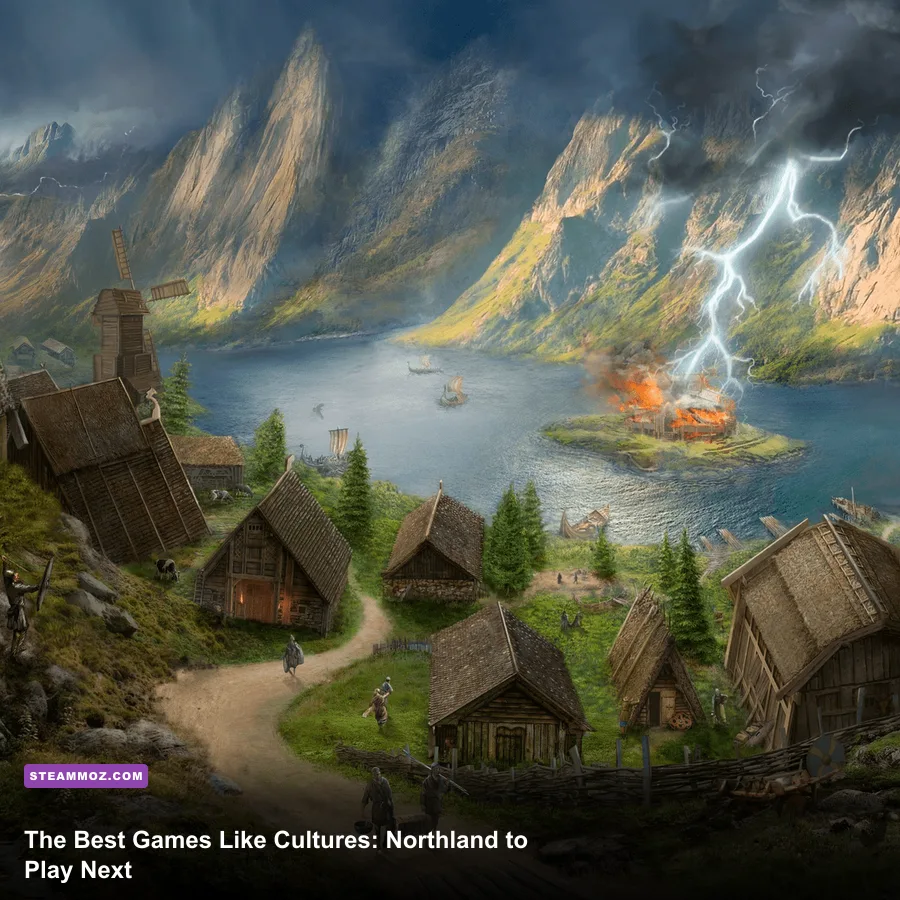
If you miss Cultures: Northland's blend of Viking exploration, animated villagers, production chains, and slow-burn settlement growth, start with Northgard for combat and survival, The Settlers 2: 10th Anniversary for the closest logistics loop, and Pioneers of Pagonia for a modern replacement. Banished, Foundation, and Farthest Frontier round out the list depending on whether you want harsher survival, creative town planning, or deeper economic pressure.
Funatics' 2002 classic still has a rare rhythm. You place a road, watch workers carry goods, unlock better buildings, and gradually turn a rough Viking outpost into a functioning community. The best alternatives don't simply copy the medieval art style. They preserve that satisfying chain reaction where one missing resource can stall an entire settlement.
Best games like Cultures: Northland ranked
There isn't one perfect substitute because Northland mixes several genres. Its campaign structure feels like a light RTS, its economy resembles a traditional city builder, and its characters give the settlement more personality than a standard spreadsheet simulator. This ranking weights four things: visible worker activity, production-chain clarity, exploration, and how much pressure the game puts on expansion.
| Game | Best for | Economy depth | Combat and exploration | Overall fit |
|---|---|---|---|---|
| Northgard | Viking strategy with territory control | High | Excellent | S-Tier |
| The Settlers 2 History Edition | Classic worker logistics | Excellent | Moderate | S-Tier |
| Pioneers of Pagonia | Modern production chains | Excellent | Light to moderate | A-Tier |
| Banished | Settlement survival | High | Minimal | A-Tier |
| Foundation | Organic medieval towns | Moderate | Limited | A-Tier |
| Farthest Frontier | Hard survival and town defense | Excellent | Strong | B-Tier |
S-Tier: Northgard is the most immediately playable recommendation if you want Vikings without losing strategic tension. The Settlers 2 wins for pure logistics. A-Tier: Pioneers of Pagonia has the most convincing modern economy, while Banished delivers the best crisis management. Foundation is less mechanically demanding but far better for players who want to shape a beautiful town. Farthest Frontier is excellent, though its disease, raiders, and crop systems make it feel more like a survival game than Northland.

🎮 Cultures: Northland
Looking to experience this game? Grab your digital key directly on our store for $0.54.
View on Steammoz Store →Northgard is the best Viking-focused successor
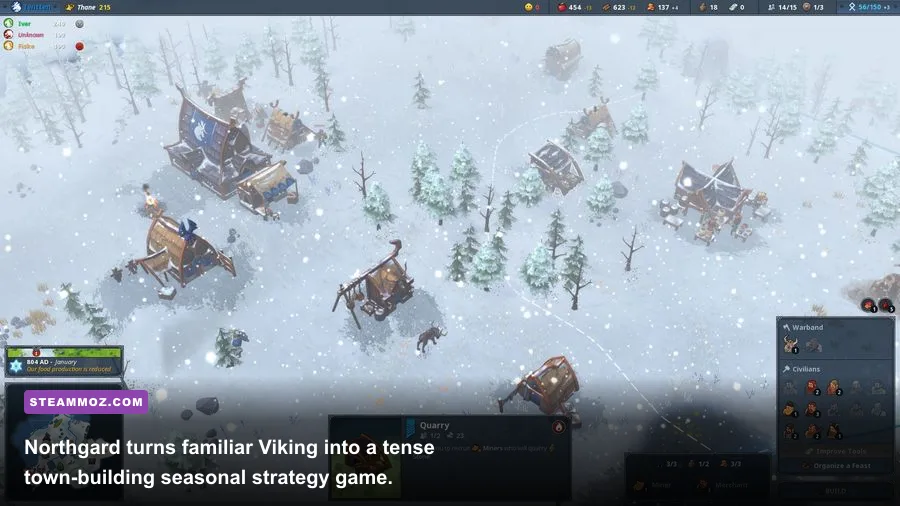
Northgard on Steam takes the familiar Nordic setting and adds a sharp territorial layer. A map is divided into zones, and each zone has a limited population and food upkeep. You don't freely paint a giant town across the landscape. Instead, you claim a useful area, assign villagers to buildings, and decide whether its strategic value justifies the cost.
The core loop is built around food, wood, and Kröwns. Food keeps villagers alive and pays for expansion; wood covers building and winter costs; Kröwns recruit units and maintain specialist structures. Lore unlocks technologies, while Fame provides clan-specific bonuses. Winter is the key pressure point: food production drops, wood consumption rises, and an overextended settlement can collapse even when its summer economy looked healthy.
For a Northland veteran, begin with the Clan of the Stag. Its Fame bonuses and stronger economic profile give you room to learn zone management without being punished instantly. Keep one woodcutter active before winter, avoid claiming a zone simply because it is nearby, and place military camps only where they defend a meaningful border. The Clan of the Wolf is a stronger choice once you want aggressive map control, but its economy rewards confident fighting rather than passive town growth.
Northgard's main difference is tempo. Northland lets you watch a village breathe; Northgard constantly asks whether you should explore, trade, raid, or fortify. Matches can finish in under an hour, and the 4X-style victory conditions make every production decision matter. It is also the best option if you want multiplayer, though it won't recreate Northland's long campaign missions one-for-one.
Players who enjoy difficult adaptive strategy should also read Steamoz's AI War 2 review. It is a very different game, but its hostile-map pressure rewards the same habit of planning around threats instead of building blindly.
The Settlers 2 remains the purest Northland alternative
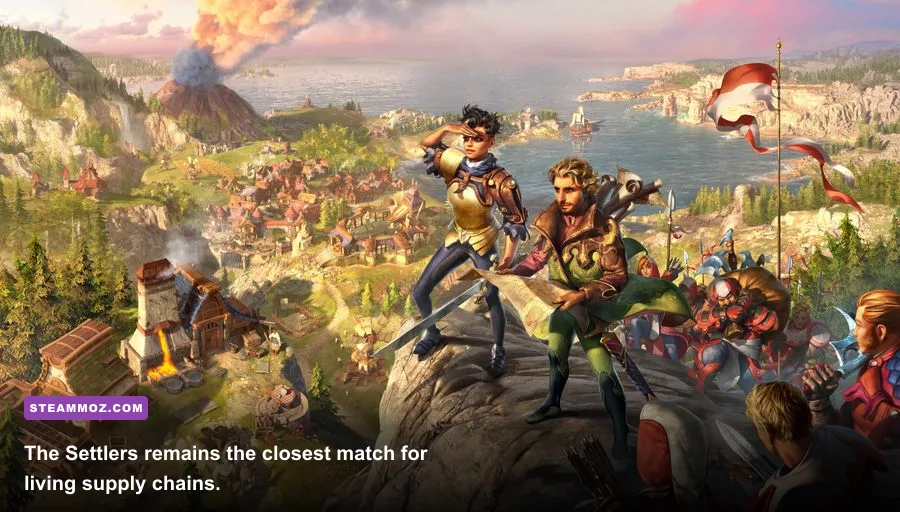
The Settlers 2: 10th Anniversary is the closest mechanical match because its economy is the star. Roads are not decoration. They are the veins of the settlement, and every mine, farm, bakery, barracks, and warehouse depends on a clean transport network.
The classic chain is wonderfully readable: a farm produces grain, a mill turns grain into flour, and a bakery creates bread. Bread then supports miners, whose ore feeds the smelter and tool production. If a road is too long, a flag is missing, or a warehouse is badly positioned, the delay ripples through the entire economy. You can fix the problem by adding carriers, shortening routes, or moving storage, not by clicking a vague efficiency button.
That distinction makes The Settlers 2 ideal for Northland players who remember enjoying the journey of every resource. Its military system is simpler than Northgard's, and the interface shows its age despite the 10th Anniversary presentation. Still, the feedback is immediate: zoom in and you'll see carriers hauling goods, donkeys moving along roads, and materials stacking at buildings.
| Northland habit | The Settlers 2 equivalent | Best adjustment | Common mistake |
|---|---|---|---|
| Building a safe village core | Placing warehouses and flags | Keep routes short and separated | One overloaded central road |
| Supporting Viking workers | Feeding miners and specialists | Secure bread before expanding mines | Opening too many mines at once |
| Exploring the map | Using pioneers and scouts | Survey terrain before claiming space | Spreading roads without storage |
| Preparing for combat | Training and supplying soldiers | Build a stable economy first | Recruiting before tool production |
Buy it for logistics, not modern convenience. If you want a similar idea with contemporary presentation, Pioneers of Pagonia is the safer recommendation. If you want the original chain-reaction feeling with minimal abstraction, The Settlers 2 still wins.
Banished and Foundation cover the city-builder side
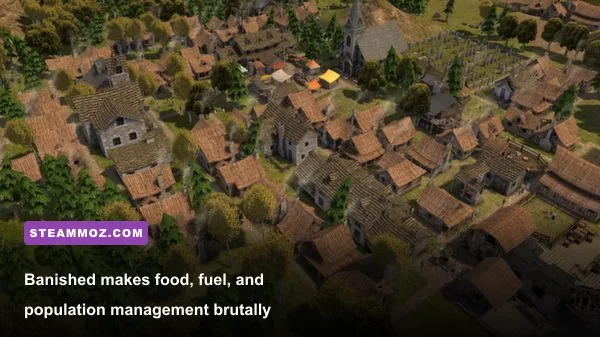
Banished strips out Vikings and direct combat, then turns survival into the main antagonist. Citizens have explicit jobs such as farmer, gatherer, forester, hunter, blacksmith, tailor, and teacher. The challenge isn't finding a clever military build. It's keeping enough adults working while children grow, elders retire, and winter consumes food and firewood.
A reliable opening uses one gatherer's hut, one hunting cabin, a woodcutter, and a forester near the town's first houses. Don't rush a stone road or decorative buildings. Keep a reserve of firewood, plant a crop suited to your available land, and add a school before your first population boom creates a generation of uneducated workers. Banished's biggest trap is building for the future while your current labor pool is already overcommitted.
Foundation is almost the opposite. Its villager behavior and road system create an organic medieval town rather than a rigid grid. You zone residential, farming, and extraction areas, then let homes develop around services and desirability. The result feels closer to watching a settlement grow than engineering a machine.
Foundation has fewer hard survival edges than Banished and no Northgard-style territorial warfare, but its progression through commoners, serfs, and citizens gives the town a clear social arc. It also has a strong monument-building system, so it suits players who remember Northland's pleasure in upgrading a small settlement into something visually impressive.
For a tougher survival benchmark, Steamoz's Dungeons 3 settings guide is useful reading for older PCs, while the site's Dungeons review covers another strategy game built around economy, territory, and escalating pressure.
Pioneers of Pagonia is the modern production-chain pick
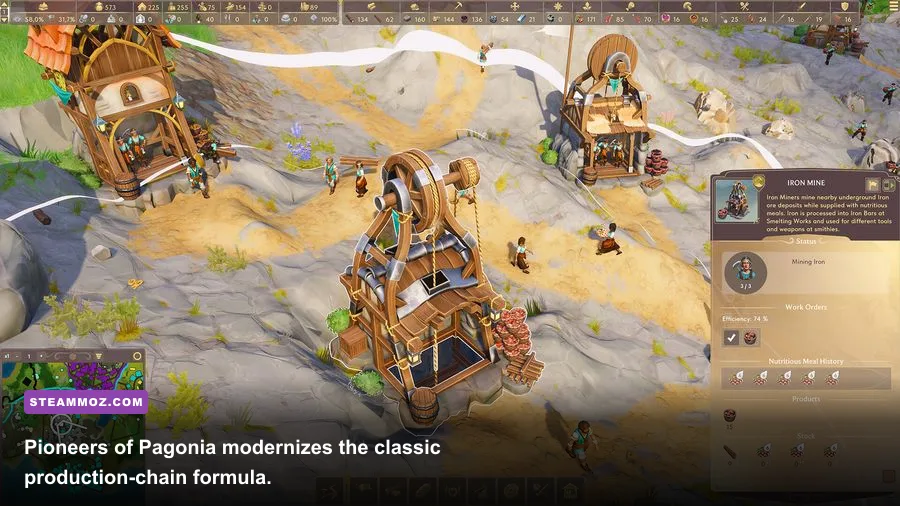
Pioneers of Pagonia understands why older settlement games remain addictive: resources should be visible, workers should travel, and an upgrade should create several new problems. Its settlements use broad production networks for food, tools, clothing, construction materials, and trade goods, with logistics rather than a single global inventory determining whether the town actually functions.
The game is a particularly good match if your favorite Northland moments involved fixing a stalled chain. A shortage of tools can slow construction, which delays housing, which limits worker capacity, which then starves the farms of labor. The answer is usually spatial and economic: add storage, rebalance jobs, improve a route, or increase a missing intermediate product. That is much more satisfying than simply raising a numerical efficiency slider.
Pagonia also gives you a broader sandbox than Northland. You can build a peaceful economy, deal with hostile encounters, and expand through a procedurally generated map. Its early-access status matters, though. Features, balance, and interface details can change between updates, so it isn't as predictable as a finished classic. Check the official Steam updates before buying if you want a stable campaign experience.
| Game | Opening priority | Midgame priority | Why Northland fans will care |
|---|---|---|---|
| Northgard | Food, wood, safe zone | Winter planning and territory | Viking identity with combat |
| The Settlers 2 | Roads, flags, storage | Tool and bread throughput | Workers visibly move every good |
| Banished | Food, firewood, labor | Education and population balance | Every citizen affects survival |
| Foundation | Housing and desirability | Estate tiers and monuments | Organic medieval town growth |
| Pagonia | Storage and basic tools | Interlocking trade chains | Modernized logistics sandbox |
Which game should you play in 2026?
Choose Northgard if you want the strongest Viking atmosphere, clear victory goals, and meaningful combat. Choose The Settlers 2 if the sight of workers carrying goods is the part of Northland you remember most. Pick Pioneers of Pagonia for the best modern production-chain sandbox, accepting that early-access development can affect balance and polish.
Go with Banished if you want every winter to feel dangerous. Pick Foundation if you want to build a medieval town that looks authored without placing every house by hand. Finally, choose Farthest Frontier if you want deeper farming, illness, raiders, and settlement defense; its pressure is excellent, but it is less relaxed and less characterful than Northland.
| Your priority | Best choice | Recommended difficulty approach | Why it wins |
|---|---|---|---|
| Viking battles | Northgard | Start with a forgiving economic clan | Best mix of expansion and combat |
| Classic logistics | The Settlers 2 | Play the campaign before skirmishes | Most authentic worker-chain simulation |
| Modern economy | Pioneers of Pagonia | Use a smaller map while learning | Excellent visible production networks |
| Hard survival | Banished | Pause often and protect labor capacity | Population and weather create real stakes |
| Creative building | Foundation | Start with normal resource settings | Best organic medieval town presentation |
My personal order for a returning Northland player is Northgard first, The Settlers 2 second, and Pioneers of Pagonia third. That trio covers the original game's three strongest moods: Viking adventure, satisfying logistics, and long-form settlement growth. Once those hooks have you, Banished and Foundation are excellent detours rather than replacements.