
Yes, Marvel's Spider-Man Remastered is not just still worth playing today; it remains the gold standard for superhero sandboxes and one of the tightest open-world action titles on modern hardware. While newer AAA releases continue to drown players in artificial 100-hour grinds, procedural filler, and erratic PC ports, Peter Parker's 2018 adventure—re-engineered for PC by Nixxes Software—proves that focused world design, tactile locomotion, and cinematic pacing age like fine wine. Whether you're dropping into Manhattan for the first time or revisiting it on a high-refresh display, this remaster is a clinic in mechanical joy.
The Web-Swinging Mechanics and Traversal Dynamics
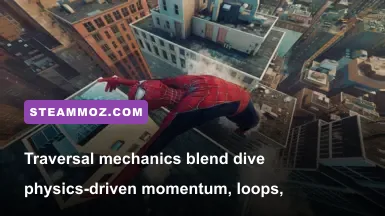
Traversal in open-world titles is typically a chore—a dead space between waypoint markers where you mash sprint or toggle auto-drive. Insomniac Games completely dismantled that apathy. The traversal engine in Marvel's Spider-Man Remastered Steam page relies on physical anchor points throughout Manhattan's architecture. If there isn't a building, bridge, or crane beside you, your web-line has nothing to hook into, instantly forcing you to read urban geography in real time.
What elevates the system from good to transcendent is its kinetic momentum loop. By timing your jump release at the bottom of a swing arc, you convert vertical drop into pure horizontal velocity. Release at the peak, and Peter catapults skyward, giving you the altitude needed to initiate a steep dive (clicking L3 or Left Stick), which reloads your speed reservoir for the next swing. Layer on the Point Launch mechanic—tapping Web-Zip to perch on an architectural spire and pressing Jump instantly upon contact—and you get a gameplay loop where you never want to touch fast travel.
Compared to newer open-world shooters like those explored in our Far Cry 6 GOTY upgrade settings guide, where crossing terrain feels utilitarian, Insomniac made traversal an expressive skill. The PC version amplifies this tactile feedback significantly: if you plug in a DualSense controller via USB, the adaptive triggers actively push back with increasing resistance depending on web-line tension, while nuanced haptics vibrate under your palms as wind rushes past your suit at 60 miles per hour.

🎮 Marvel's Spider-Man Remastered
Looking to experience this game? Grab your digital key directly on our store for $59.99.
View on Steammoz Store →Kinetic Combat: The Ballet of Gadgets, Focus, and Air Combos

Combat clearly borrows the DNA of Rocksteady's rhythmic counter system, but Insomniac injected it with blisteringly fast aerial verticality and dynamic crowd control. Ground combat is dangerous, especially on Spectacular and Ultimate difficulties where brute-class heavies, rocket-launching mercenaries, and whip-wielding Sable agents can shred Peter's health pool in three unblocked strikes. Survival hinges on mastering air superiority.
Holding Square launches standard grunts skyward, taking them out of the fight while you juggle them with four-hit aerial combos, web-strike pulls, and the downward Swing Kick. Once you're airborne, ground-bound melee units stand helpless below. To manage large groups, the gadget wheel acts as an extension of Peter's scientific intellect rather than mere flashy tools. The legendary Web Bomb combined with a Concussive Blast is an instant-kill combo: cluster a dozen enemies together, detonate a Web Bomb to coat them in adhesive, and trigger a Concussive Blast to send the entire squad hurtling against a wall, instantly webbing them to the concrete for immediate neutralizations.
| Loadout Archetype | Core Gadget Synergy | Essential Suit Mods | Optimal Combat Scenario |
|---|---|---|---|
| Crowd Annihilator | Web Bomb + Concussive Blast | Kinetic Power Cells, Threat Sensors | Fisk Construction Sites & Large Rooftop Mobs |
| Shock & Awe Brawler | Electric Web + Suspension Matrix | Discharge Power Cells, Battle Tech | Sable International Outposts & Shield Troopers |
| Air Superiority Assassin | Impact Webbing + Trip Mine | Stormbolt Discharger, Ballistic Inserts | Demons Overrun Encounters & Snipers |
| Focus Finisher Build | Spider-Drone + Sonic Blast | First Aid, Scavenger | Miniboss Encounters, Brutes, & Boss Duos |
Managing your Focus Bar introduces crucial tactical decisions. Do you consume a full Focus bar to instantly heal 50 points of health after taking a stray sniper bullet, or do you bank it for a cinematic Finisher to eliminate a shielded brute immediately? Just as players fine-tune their synergies in our Far Cry 6 beginner build breakdown, tailoring Peter's suit mods to match your mechanical weaknesses completely transforms high-difficulty encounters from chaotic scrambles into choreographed action sequences.
Nixxes PC Port: Benchmarks, Visuals, and Optimization
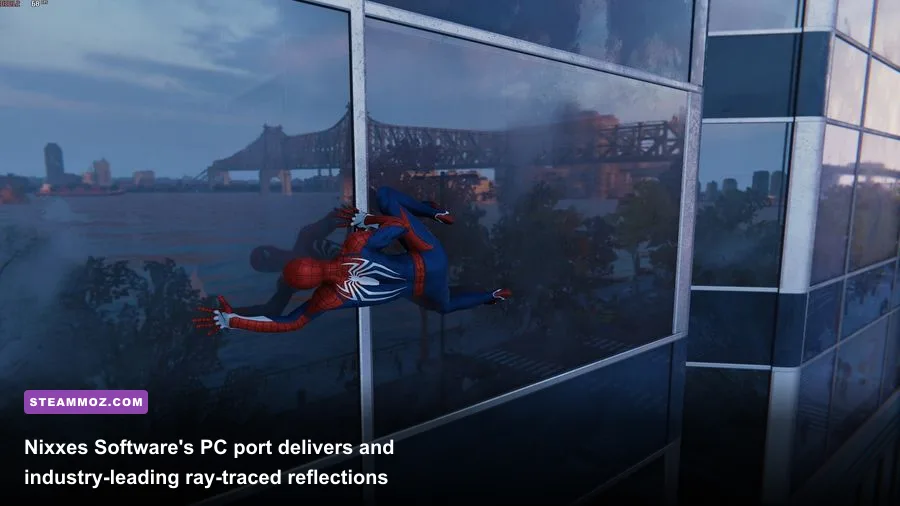
When Insomniac Games partnered with Nixxes Software to bring Peter Parker to Windows, they didn't just deliver a basic console wrapper—they delivered what is still one of the most technologically complete PC conversions on the market. From uncapped framerates and comprehensive ultra-wide support (21:9 and 32:9 panoramic ratios) to cutting-edge upscalers like DLSS 3.7, AMD FSR 3.1, and Intel XeSS, the game scales gorgeously across wildly disparate hardware tiers.
The crown jewel is the ray-tracing suite. Unlike titles where ray tracing is relegated to subtle ambient occlusion shadows, Manhattan’s glass towers, wet asphalt, and metallic facades bounce real-time architectural reflections with breathtaking accuracy. Ray-Traced Reflections and Object Range settings hit CPU thread dispatch hard, but when dialed in correctly, the visual payoff is immense.
| Graphic Setting | Recommended Value | FPS Cost (%) | Visual Fidelity Impact |
|---|---|---|---|
| Ray-Traced Reflections | High (Geometry: High) | ~22% - 28% | Massive; realistic window & puddle reflections |
| Object Range (Ray Tracing) | 6 / 10 | ~10% - 14% | High; balances CPU draw calls with draw distance |
| Shadow Quality | Medium | ~7% - 9% | Minor visual loss; cleans up shadow edge aliasing |
| Crowd & Traffic Density | Medium | ~8% - 12% | Noticeable CPU load drop during street-level dives |
| Upscaling (DLSS / FSR) | Quality Mode | +25% - 40% (Gain) | Matches or exceeds native TAA at 1440p / 4K |
If you're wrestling with frame drops or shader compilation hiccups on midrange rigs, diagnosing system bottlenecks is essential. Just like we highlighted when resolving micro-stutters in our ELEX PC performance and crash guide and tackling memory allocation in our Everspace 2 stability fixes, capping your framerate slightly below your monitor's G-Sync/FreeSync threshold and setting Crowd Density to Medium stabilizes 1% low frame times across hectic city street dives.
Furthermore, the game is fully Steam Deck Verified. Running at 800p with FSR 2.1 balanced and medium textures, Peter's web-swinging holds a shockingly reliable 40 FPS on Valve's handheld, making it one of the premier portable experiences available. For players testing modern graphics cards against demanding releases, checking out our analysis of modern hardware demands in Fatal Fury City of the Wolves PC specs reveals just how well-optimized Nixxes' engine remains by comparison.
Narrative Pacing: A Tightly Wound Comic Book Masterpiece
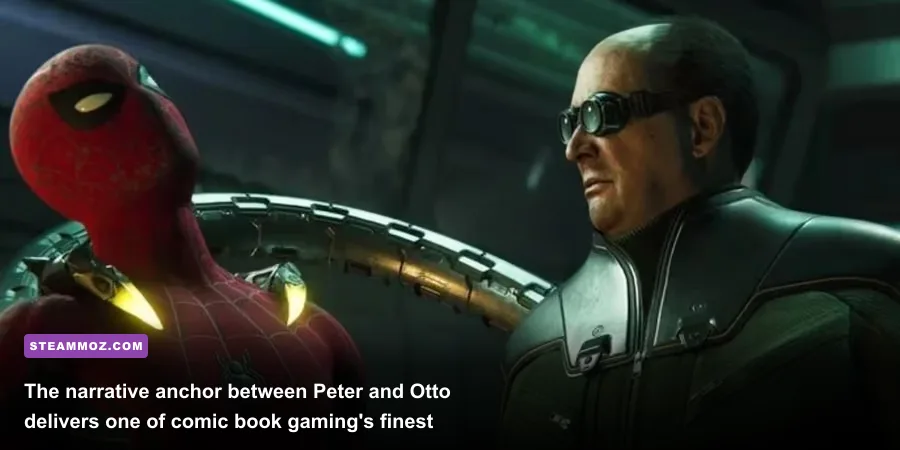
One of the biggest reasons this game holds up so spectacularly is Insomniac’s narrative maturity. They made the genius decision to bypass the tired high-school origin story. There is no spider bite, no wrestler showdown, and no rehashing Uncle Ben’s death in an alley. When the opening cutscene rolls, Peter Parker is 23 years old, has been operating as Spider-Man for eight full years, and is balancing a precarious career as a lab assistant under Dr. Otto Octavius.
Yuri Lowenthal’s performance as Peter Parker/Spider-Man is career-defining, matching emotional vulnerability with snappy mid-combat quips that feel entirely organic. The writing understands the fundamental tragedy of Spider-Man: Peter can never succeed in one aspect of his life without the other collapsing. When Spider-Man saves the city from Wilson Fisk or Martin Li (Mister Negative), Peter Parker is getting evicted from his apartment or neglecting Mary Jane Watson.
The relationship between Peter and William Salyers’ Otto Octavius forms the emotional spine of the narrative. Watching Otto slowly devolve from a brilliant, well-meaning mentor into the vengeful leader of the Sinister Six is genuine Shakespearean tragedy executed within a comic book framework. The third act, sparked by the release of the Devil's Breath virus across Manhattan, delivers staggering stakes and a heartbreaking conclusion that modern superhero media rarely has the courage to pull off. It's a tight, 17-to-20-hour campaign that doesn't overstay its welcome—a refreshing contrast to modern games that stretch 15 hours of narrative across 60 hours of map-clearing bloat.
Open-World Manhattan: Respecting the Player's Time
Look at the map screen of many contemporary open-world games, and you'll likely feel a sense of dread. Icons cover every square inch, turning gameplay into an administrative checklist. *Marvel's Spider-Man Remastered* certainly features map icons, but it avoids burnout through two design choices: spatial density and intrinsic mechanical rewards.
Manhattan is geographically compact compared to the sprawling, barren deserts of modern role-playing games. You can zip from Battery Park at the southern tip to Harlem in the north in less than four minutes of uninterrupted swinging. Because traversal is universally thrilling, traveling to a side objective never feels like down-time. Moreover, the collectibles actively enrich lore. Picking up Peter’s 55 hidden backpacks doesn't just hand you crafting tokens; each backpack contains a detailed 3D model and Peter's audio reflection on eight years of past history—from his first attempt at web formula to a cracked piece of the Shocker's original suit.
Even side activities serve mechanical loops:
- Taskmaster Challenges: Pure skill gauntlets testing precision traversal routes, bomb dispatches, and stealth chain-takedowns that teach you advanced engine mechanics.
- Fisk and Demon Warehouses: Multi-wave arena fights that let you test complex gadget combinations against escalating enemy types.
- Harry Osborn Research Stations: Environmental puzzle tracks that integrate high-speed diving, smog-filtering, and thermal navigation into New York's skyline.
Much like optimizing complex route interactions in titles like our Filament Marmalade FPS and gameplay configuration, mastering Taskmaster's gold-tier traversal challenges pushes your timing to the millisecond, demanding that you link dive-bombs and point-launches flawlessly.
The Modding Frontier and 'The City That Never Sleeps' DLC

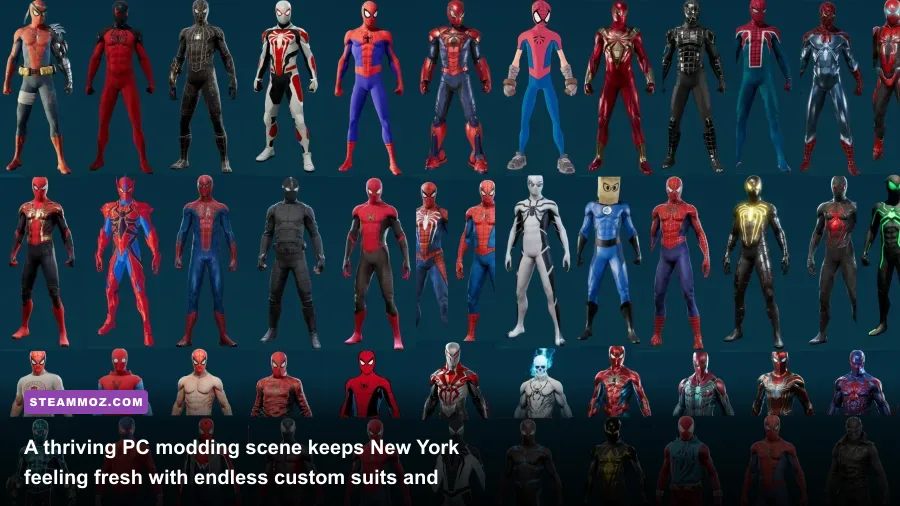
Another massive reason *Spider-Man Remastered* feels so fresh on PC is its vibrant modding scene. On sites like Nexus Mods, the community has completely disassembled and transformed the game. You can swap out the default suits for hyper-accurate cinematic models like Andrew Garfield’s *The Amazing Spider-Man 2* suit, Tobey Maguire’s black symbiote suit from *Spider-Man 3*, or high-fashion comic book designs.
Beyond cosmetic overhauls, mechanical mods rewrite the gameplay experience:
- Physics Traversal Overhauls: Mods that remove swinging speed caps, deepen pendulum gravity, and require manual web-line detachment for unforgiving, high-velocity momentum.
- Visual Reshades & Atmosphere: Photorealistic lighting profiles that recreate the rainy, neon-soaked aesthetics of Manhattan during the Devil's Breath quarantine.
- Combat Animation Swaps: Custom combat mechanics that incorporate Miles Morales' acrobatic flair or brutal back-alley finishers into Peter's moveset.
The Remastered edition on PC also comes bundled with all three chapters of The City That Never Sleeps DLC: *The Heist*, *Turf Wars*, and *Silver Lining*. Featuring Felicia Hardy (Black Cat) and the cyborg crime lord Hammerhead, these expansions raise combat difficulty significantly with minigun brutes and jetpack-mounted mercenary squads. While Hammerhead's narrative arc isn't quite as emotionally resonant as Otto Octavius' fall from grace, the DLC adds a solid 8-to-10 hours of high-intensity combat encounters and distinct suits to unlock.
The Final Verdict: Is It Worth It?
When you evaluate price-to-content value, *Marvel's Spider-Man Remastered* is an absolute triumph. Frequently dropping to deep sale discounts on Steam and digital storefronts, it offers a complete, bug-free, beautifully optimized package that outclasses most full-priced sandbox titles released in the years since.
It doesn't waste your time with microtransactions, live-service battle passes, or arbitrary level-gating that halts your story progress. It is a confident, impeccably crafted single-player superhero epic that gives you absolute mastery over one of pop culture's greatest traversal mechanics. If you have somehow skipped Peter Parker's remastered outing, or if you've been waiting for hardware upgrades to experience it with maxed-out ray tracing and 120 FPS fidelity, do not hesitate. *Marvel's Spider-Man Remastered* isn't just worth playing today—it remains an essential cornerstone of PC and modern action gaming.