
Gloomy Eyes has no conventional secret-collectible system, hidden inventory, or unlockable reward menu. The real discoveries are optional visual moments scattered through its three short VR episodes: background characters, tiny set pieces, environmental jokes, and story details that are easy to miss if you stare only at Gloomy and Nena. This guide maps the best places to look, explains how to trigger or spot each hidden moment, and separates genuine secrets from rewards that simply do not exist.
That distinction matters. Gloomy Eyes is an animated VR experience rather than a traditional adventure game with levels, weapons, stats, or a completion percentage. The official Steam page for Gloomy Eyes presents it as a three-episode story narrated by Colin Farrell. You watch, lean, turn, and explore the presentation space, but you do not collect coins or complete side quests.
So if you searched for “Gloomy Eyes all secret locations and hidden rewards,” the honest answer is: there are no collectible rewards to permanently unlock. Still, the experience absolutely rewards a second viewing. Use the location guide below as a missable-details checklist, not as a hunt for imaginary trophies.
What Counts as a Secret in Gloomy Eyes?
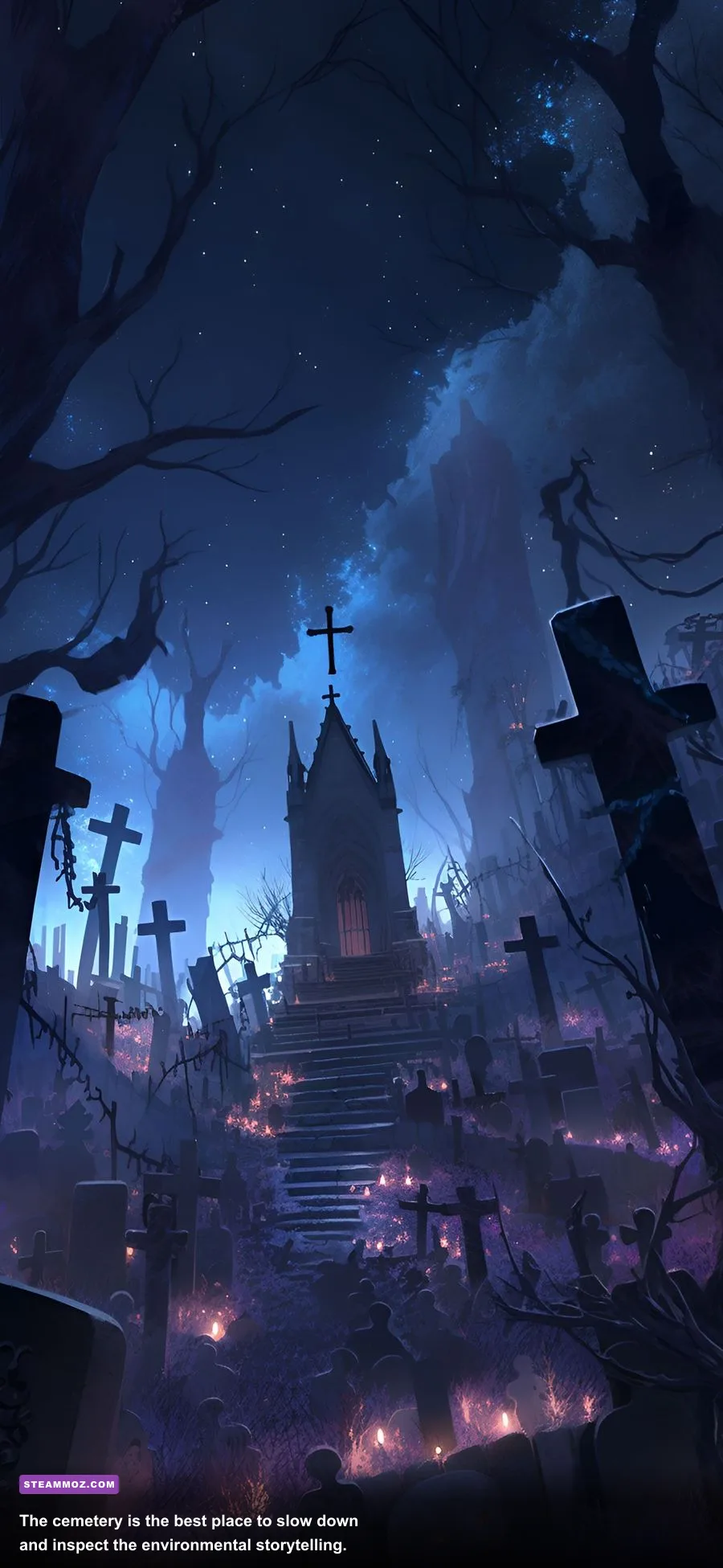
Gloomy Eyes plays with scale. Characters and major action usually occupy the centre of your view, while the surrounding miniature world keeps moving on its own. That makes the “secrets” easy to miss: a villager crosses a distant street, a light switches on behind a building, or a character reacts to events outside the obvious focal point.
There are three kinds of hidden content worth tracking. First are background story beats, such as villagers, guards, and machinery that continue their routines while the main narration is happening. Second are environmental details, including graves, signs, lanterns, rooftops, and small props that reinforce the town’s oppressive atmosphere. Third are camera-angle reveals. Some details are visible only when you lean forward, look down, or turn behind the action.
| Discovery type | What you can find | Permanent reward | Best viewing habit |
|---|---|---|---|
| Background event | Villagers, guards, moving figures | None | Watch the edges of the scene |
| Environmental detail | Graves, lights, props, buildings | None | Look down and behind the main characters |
| Story detail | Visual clues about the town and lovers | Better understanding of the narrative | Replay after finishing the episode |
| VR perspective reveal | Set dressing hidden by the default angle | None | Lean or turn gradually, never whip the camera |
Do not expect a pop-up, sound cue, Steam achievement, or item notification when you find one. The reward is the shot itself. That can feel underwhelming if you approach Gloomy Eyes like a completionist platformer, but it is also the point: the production wants you to inhabit the scene rather than strip it for loot.
For a useful comparison, this is closer to inspecting a carefully built film set than clearing a dungeon. Our Chroma Quaternion secret-locations guide covers a game with actual discoverable rewards; Gloomy Eyes does not operate that way.

🎮 Gloomy Eyes
Looking to experience this game? Grab your digital key directly on our store for $16.24.
View on Steammoz Store →Episode One Secret Locations and Missable Details
The first episode is where the experience teaches you how to look. Your first instinct will be to follow Gloomy, but resist locking your attention on him. Once the narration establishes the situation, scan the full environment in a slow circle. The cemetery and the nearby town spaces contain the clearest optional details.
The cemetery perimeter
Start with the ground around the graves. The central action draws your eyes upward, yet the lower edge of the scene contains the strongest visual information: uneven gravestones, patches of earth, fencing, and small objects that make the cemetery feel lived in rather than like a blank stage. Lean forward slightly instead of moving your head aggressively. In VR, a sharp movement can make a distant prop disappear from your peripheral vision.
Next, look behind the central grave area. The cemetery is designed with depth, and the back row can be overlooked when Gloomy is standing between you and the far set dressing. Check the gaps between stones and the darker corners near the boundary. You are looking for composition details, not an interactable item. Nothing goes into an inventory.
The town-facing side of the scene
When the viewpoint opens toward the village, inspect rooftops and windows before returning to the main characters. Watch for illumination changes and silhouettes. These details help sell the town’s fear of the undead, especially when the background remains active while the narration focuses on the romance.
The best method is a three-pass scan:
- Watch the scene normally so you understand where the story wants your attention.
- Replay it while looking left and right at the horizon, especially around windows, fences, and distant paths.
- Replay once more while looking down at the set floor and grave markers.
That rhythm is much more effective than trying to inspect everything during your first viewing. Gloomy Eyes is short, and its timing is cinematic. Fighting the edit by constantly looking away can cause you to miss dialogue and facial animation.
What the episode does not hide
There is no secret weapon, hidden letter, alternate costume, cemetery key, or bonus ending tucked into Episode One. Guides claiming that you must interact with a specific grave to unlock a reward are confusing environmental inspection with a gameplay trigger. You can look at the grave, but the experience does not turn it into a collectible objective.
| Area | What to inspect | How to spot it | Result |
|---|---|---|---|
| Front grave rows | Gravestones and ground props | Lean forward and look downward | Environmental story detail |
| Rear cemetery | Dark gaps and rear set dressing | Turn behind the main action | Optional visual discovery |
| Village-facing view | Windows, rooftops, distant movement | Scan the horizon during narration | Background world-building |
| Scene boundaries | Fences and shadowed corners | Use a slow 360-degree look | No item; extra atmosphere |
Episode Two Hidden Moments in the Town

The second episode gives the surrounding town more dramatic weight. It is also the easiest place to miss background action because the central story becomes more urgent. If you want to find every visual secret, let the scene play once without interruption, then replay while deliberately watching the areas farthest from Gloomy and Nena.
Search the edges, not the centre
When Gloomy and Nena occupy the middle of the frame, check the extreme left and right edges for figures and movement. Lanterns are particularly useful reference points. A lit window or lamp can draw your attention toward a side event, while an unlit section may conceal silhouettes until the scene’s lighting changes.
Look upward after major dialogue beats. The town’s vertical dressing—roofs, towers, elevated walkways, and upper windows—often communicates more than the street directly in front of you. VR viewers naturally hold their head at the level of the characters, so the artists can hide meaningful composition above that line.
Follow the light changes
Lighting is a better guide than the narrator’s voice. If a lamp brightens, a window opens, or a searchlight sweeps across the environment, follow it to the source and then inspect the area it leaves behind. These moments are not puzzles, but they are carefully staged. The background may contain a short visual reaction that lasts only a few seconds.
Use seated mode if standing makes it difficult to look down, but do not assume seated mode changes the content. It changes comfort and reach, not the secret list. The experience does not offer separate routes for standing and seated players.
Do not chase false interaction prompts
Gloomy Eyes can feel interactive because the world surrounds you, but most objects are presentation elements. If your controller ray or headset cursor appears over a prop, that does not necessarily mean the prop is an item. The experience is not built around picking up objects. Keep your hands relaxed and focus on viewing angles rather than clicking every object in sight.
This is a good place to apply the same practical mindset used in our Everafter Falls tips guide: separate genuine progression systems from details that simply improve your understanding of the world. In Gloomy Eyes, there is no hidden currency loop beneath the story.
Episode Three and the Best Replay Route
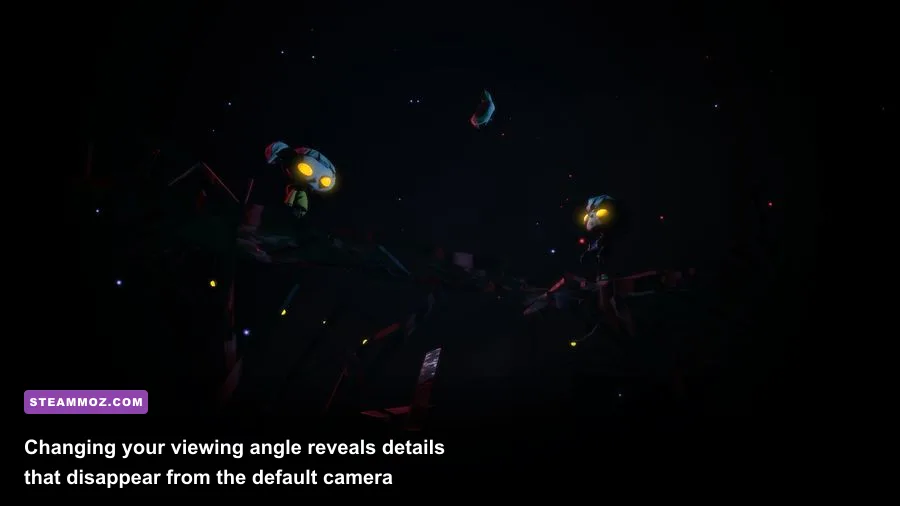
The final episode is less about locating a single secret object and more about noticing how earlier visual ideas return. Watch for changes in the town, the contrast between darkness and illumination, and the way Gloomy and Nena are framed against the surrounding world. The most rewarding “hidden” details are callbacks that become obvious only after you know where the story is going.
Use the outside-in method
Begin at the outermost edge of the environment and work toward the couple. On the first pass, look at the skyline, rooftops, and distant lights. On the second, inspect the middle distance: paths, fences, graves, and background figures. On the third, return to the central characters and study their reactions.
This order prevents the usual mistake of spending the whole episode staring at faces. The facial animation is excellent, but it is not the only layer. Gloomy Eyes uses a diorama-like presentation, so the artists expect you to appreciate the stage from multiple angles.
Check behind the apparent conclusion
When a scene appears to reach its emotional or narrative endpoint, keep watching the environment until the episode fully transitions. Do not immediately remove the headset or skip the credits. There may be additional atmosphere, a final visual beat, or production information worth seeing, but this still should not be confused with a secret ending or unlockable reward.
There are no known alternate endings created by finding every optional background detail. Your choices do not branch the plot, and missing a visual event does not lock you out of future content. You can replay the episode at any time and see the same story sequence again.
| Replay pass | Viewing target | Recommended pace | Why it works |
|---|---|---|---|
| Pass one | Central characters and dialogue | Watch normally | Preserves the cinematic experience |
| Pass two | Skyline, rooftops, distant lights | Slow head turns | Reveals high background dressing |
| Pass three | Ground, graves, fences, side paths | Lean and look down | Finds low-positioned details |
| Pass four | Character reactions and callbacks | Stay through transitions | Connects visual themes across episodes |
How to See Every Detail Without VR Discomfort
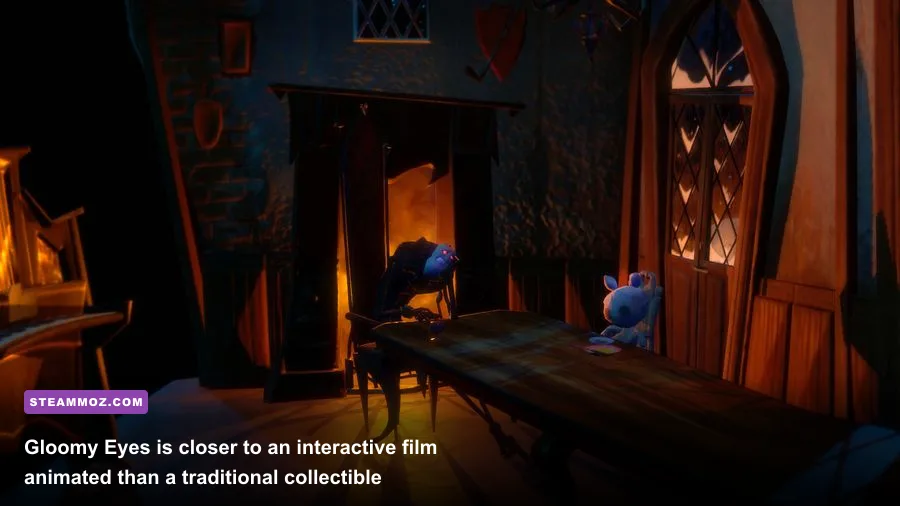
The biggest practical obstacle in a Gloomy Eyes secret hunt is not difficulty; it is motion comfort. A full 360-degree environment encourages constant scanning, but repeatedly twisting your neck or leaning too far can make a short experience exhausting. The trick is controlled observation.
Use a fixed scan pattern
Divide each scene into four zones: front, left, rear, and right. Spend roughly five seconds in each zone before returning to the centre. You do not need to spin rapidly. Let the scene’s animation do the work. If your headset supports snap turning, use small increments rather than a continuous rotation. Snap turning is usually less disorienting during a replay, while natural turning is better when you want to preserve the cinematic feel.
For low details, move your torso or lean gently instead of bending your neck sharply. If a prop seems to vanish when you lean, return to your original position and wait for the lighting to settle. Parallax can make small objects appear to shift, especially when you are close to the virtual set.
Optimize the PC version before hunting
Stable frame pacing matters more than maximum resolution. A sudden hitch can make a moving background detail impossible to follow and can also cause discomfort. Start with the headset’s native refresh rate, then lower render resolution if performance is inconsistent. Avoid stacking aggressive supersampling on top of SteamVR’s own resolution multiplier.
| Setting or habit | Recommended choice | Performance impact | Visual trade-off |
|---|---|---|---|
| Headset refresh rate | Stable 90Hz when available | Medium to high GPU demand | Smoother head movement |
| SteamVR render scale | 100% first, then tune downward | High when increased | Lower scale softens distant props |
| Supersampling | Disable extra layers during troubleshooting | High GPU demand | Less fine detail at lower values |
| Motion smoothing | Use only if native refresh is unstable | Can reduce judder | May create artifacts around moving figures |
| Play position | Seated or standing, whichever is stable | No meaningful FPS change | Changes comfort and viewing angle |
If you are troubleshooting VR stutter, our PC settings coverage explains the broader frame-pacing logic, while the Citizen Sleeper 2 PC fixes guide offers useful general steps for checking overlays and background processes. Those articles are not Gloomy Eyes-specific, but the same rule applies: eliminate unstable frame delivery before raising image quality.
Hidden Rewards, Completion Status, and the Honest Checklist
Here is the part many online guides get wrong. Gloomy Eyes does not have a traditional reward table. There are no collectable graves, no hidden currency, no secret costumes, no weapon upgrades, and no alternate ending earned by inspecting every corner. Steam achievements, where applicable to your platform build, should not be treated as a complete environmental checklist because looking at a background prop is not the same as completing an achievement objective.
The closest thing to a reward is a fuller reading of the story. You understand the town’s fear more clearly, notice how the setting frames the romance, and see the artists’ tiny production choices. That reward is subjective, but it is not imaginary: Gloomy Eyes was built as an immersive animated short, not as a game that measures exploration with a percentage.
| Claim | Actually present? | What to do instead | Reward |
|---|---|---|---|
| Hidden cemetery collectibles | No conventional item system | Inspect graves and rear set dressing | Extra environmental context |
| Secret key or unlockable route | No branching exploration route | Replay the scene from different angles | More visual detail |
| Alternate ending | Not tied to visual discoveries | Watch the complete final transition | Full narrative presentation |
| Hidden costume or weapon | Not part of the experience | Focus on character animation and staging | Appreciation of the production |
| Missable background events | Yes, visually | Use the four-zone scan pattern | Optional story and atmosphere |
Before starting, check the official Steam listing for current headset compatibility and platform information. For production context, the official Gloomy Eyes website is the better source than random achievement databases, and the project’s Atlas V official site provides broader information about the studio’s immersive work.
Finally, keep expectations realistic. If you want a checklist that unlocks gear, Gloomy Eyes will feel almost empty. If you want a dark, carefully staged VR story with layers that reward attention, its secrets are hiding in plain sight. Watch Episode One for cemetery depth, Episode Two for town activity and lighting changes, and Episode Three for callbacks and final-frame details. That is the complete Gloomy Eyes secret-location hunt—and the most satisfying reward is seeing the world the way its creators intended.