Chroma Quaternion hides its best rewards in optional corners rather than obvious quest markers: inspect every town perimeter, revisit opened routes after major story events, and unlock the postgame content before hunting the final treasures. The most valuable finds include rare weapons, stat-boosting accessories, recovery items, and optional battles that function as the game’s real endgame test.
This guide focuses on secrets that are easy to miss during a normal story run. It also explains when each location becomes accessible, what to bring, and which rewards are worth the detour. The Steam release can receive small localization or balance differences, so use the area names shown in your copy of the game and keep a manual save before entering any optional boss encounter.
Before You Start the Secret Hunt
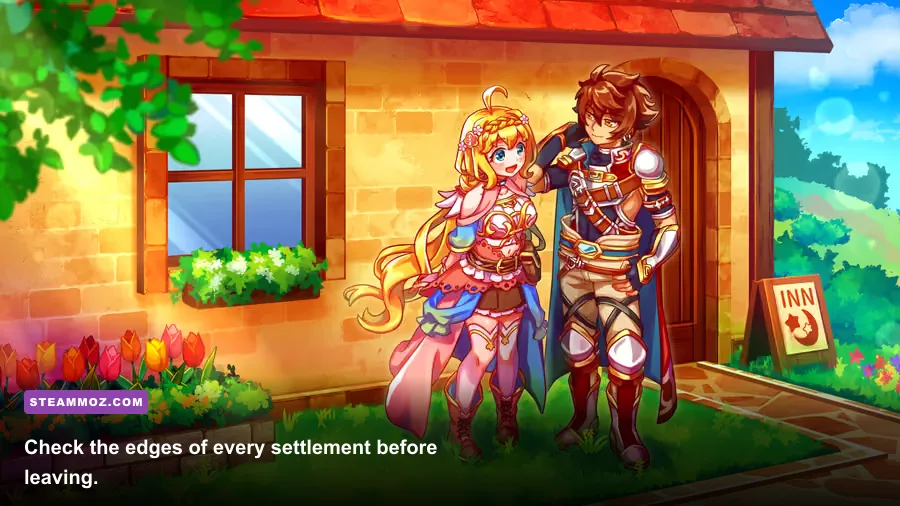
Don’t begin by sweeping the world map at random. Chroma Quaternion’s optional content opens in stages, and some areas look complete until a later story flag changes the available path. After every major chapter, return to the capital, speak to named NPCs again, and walk the outer edge of each settlement. The game frequently places interactable objects one or two tiles beyond the natural route.
Turn encounter settings down while searching, but don’t remove battles permanently if your party is under-leveled. Optional routes are most comfortable when the protagonist and two primary damage dealers are within roughly five levels of the current story boss. A secret chest is rarely worth burning every healing item you own, especially because several routes end in a boss or a high-density enemy corridor.
| Preparation | Recommended target | Why it matters |
|---|---|---|
| Party level | Story level plus 3 to 5 | Optional enemies punish unfinished equipment upgrades. |
| Healing stock | 20 single-target items and 5 to 10 full-party heals | Secret dungeons often place several fights between save points. |
| Equipment | Latest town weapons and armor | Raw defense is more reliable than chasing a niche resistance. |
| Save files | One town save and one dungeon save | Some optional fights cannot be safely tested without a fallback. |
The official Chroma Quaternion Steam listing is useful for checking the PC edition, while KEMCO’s official site can help confirm the publisher’s current version information. If you enjoy this style of old-school progression, Steamoz’s guide to fast leveling and gold farming has similarly practical route-planning advice.

🎮 Chroma Quaternion
Looking to experience this game? Grab your digital key directly on our store for $7.49.
View on Steammoz Store →Town Secrets and Easy-to-Miss Rewards

The first layer of hidden content is scattered through settlements. Search behind houses, around fenced gardens, beside docks, and along the outside wall of the local inn. Chroma Quaternion uses visual obstruction aggressively: a tree, roof corner, or building shadow can hide the interaction tile even when the object itself is visible.
How to sweep every town
Start at the entrance and walk clockwise around the entire exterior boundary. Then check the backs of large buildings from inside the town. Finally, revisit shops and residential interiors and talk to NPCs who previously offered only flavor dialogue. The important trigger is often a second conversation after the party has advanced the plot, not a new quest marker.
Prioritize treasure that improves survivability over early damage. A weapon that adds a little attack power will be replaced quickly, while a rare accessory that raises maximum HP, defense, or a useful resistance can remain equipped for several chapters. Save rare stat items until you know which character will stay in your final party.
| Search zone | Common secret | Best inspection method | Reward value |
|---|---|---|---|
| Town perimeter | Obscured chest or pickup | Walk the outside wall one tile at a time | High early, medium later |
| Behind large buildings | Hidden interaction tile | Approach from both sides of the building | Medium |
| Inn and homes | NPC dialogue reward | Revisit after each major story event | Medium to high |
| Shop district | Optional trade or upgraded stock | Speak to the merchant after new chapters | High before bosses |
A good rule is to revisit every major settlement immediately after acquiring a new party member or clearing a major dungeon. That timing catches most dialogue changes without forcing you to replay large portions of the game. It also prevents the classic JRPG mistake of remembering a suspicious NPC and forgetting the location ten hours later.
Hidden Passages in Fields and Caves

Overworld secrets are less about random pixels and more about suspicious geometry. Look for dead-end paths that stop one tile short of a cliff, isolated patches of grass, narrow gaps between trees, and cave walls with a different edge pattern. If a route appears designed to lead somewhere but ends abruptly, test the surrounding tiles instead of assuming it is decorative scenery.
Inside caves, map the room before opening chests. Some treasure paths loop behind the entrance, while others require you to pass the visible chest and approach from a side corridor. The safest order is left wall, top wall, right wall, then center. This minimizes backtracking and makes it easier to spot a corridor that was hidden behind a foreground rock.
The revisit rule
Return to earlier caves after key story milestones. New NPCs, switches, and passages can appear after the game updates the world state. If a door is sealed, record its location rather than repeatedly checking it during the same chapter. Later access is usually tied to story progression or postgame availability, not a missing key you can find immediately.
Bring a balanced party into unexplored caves. Area damage clears regular enemies efficiently, but a single-target attacker is still valuable because optional monsters often have one durable target surrounded by weaker guards. Keep at least one reliable recovery skill available; the secret reward is frequently positioned beyond two or three fights rather than beside the entrance.
Optional Battles and the Rewards Worth Chasing

Not every hidden encounter deserves an immediate attempt. Optional fights are designed to expose weak builds: enemies that punish repeated physical attacks, bosses with strong area damage, and encounters where failing to remove support enemies first turns a manageable battle into a resource drain.
Use the first turn to identify the threat rather than dumping your strongest skills blindly. Watch for charging animations, status-effect preparation, and a sudden defensive stance. When an enemy telegraphs a heavy attack, defend with the character most likely to be targeted and use the spare turns to heal, buff, or eliminate adds. Chroma Quaternion rewards consistency more than reckless burst damage.
| Encounter type | Primary danger | Counter strategy | Reward priority |
|---|---|---|---|
| Elite roaming enemy | High single-target damage | Keep defense buffs active and focus fire | Medium |
| Hidden cave boss | Area attacks and status effects | Remove support enemies first, then heal proactively | High |
| Postgame superboss | Large damage spikes and long endurance phase | Use your best equipment and reserve recovery items | Very high |
| Rematch encounter | Familiar moves with stronger numbers | Change resistances and damage roles between attempts | High |
Rare equipment should usually go to the character who acts most often, not automatically to the protagonist. A speed-focused accessory can create more value on a healer or support character because acting first prevents a knockout. Likewise, a modest attack upgrade on a multi-hit damage dealer can outperform a larger-looking boost on a slow character who rarely gets a second turn.
For broader party-building habits, compare the resource discipline in Steamoz’s beginner build guide and starting build breakdown. They cover different genres, but the same principle applies: build around what your party does consistently, not what looks strongest on paper.
Postgame Secrets and the Final Cleanup Route
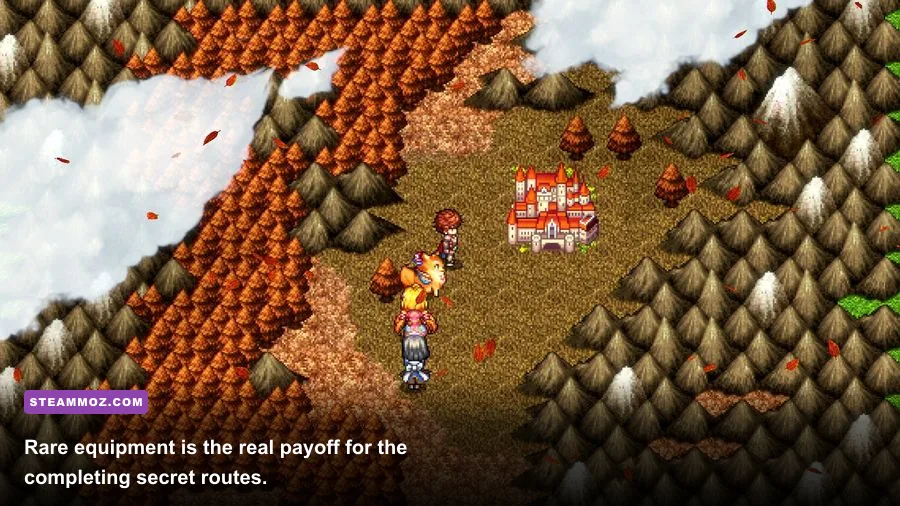
Once the main story is complete, return to the hub area and speak with NPCs who previously mentioned powerful monsters, sealed places, or unfinished research. Postgame flags commonly unlock the final optional dungeon, stronger versions of earlier enemies, and the best equipment rewards. Make a separate clear-save before starting this cleanup.
Follow this order: revisit every town, inspect all previously blocked doors, sweep the earlier caves, then enter the newly available postgame dungeon. Doing it in reverse wastes time because the new equipment makes the earlier optional fights far easier. It also gives you a chance to test your final party before committing to the toughest encounter.
| Cleanup stage | What to check | Why this order works |
|---|---|---|
| 1. Settlements | NPCs, shops, outer walls | Fastest checks and often unlock the next clue. |
| 2. Earlier dungeons | Sealed doors and suspicious dead ends | New rewards improve the party before the endgame. |
| 3. Optional encounter | Elite or rematch fight | Tests equipment and exposes resistance gaps. |
| 4. Final dungeon | Branching rooms and deepest chest | Contains the strongest hidden rewards and final challenge. |
What to do if a secret still won’t open
Check three things before assuming the game is bugged: confirm the main story objective is fully cleared, speak to the relevant NPC after returning to town, and inspect the location from every approach. Some interaction tiles only activate when the party stands on a particular side. Also verify that you’re searching the same save file that completed the required event; loading an earlier file can make a supposedly unlocked area appear unchanged.
Players troubleshooting other PC RPGs may also find Steamoz’s PC fixes guide useful, although Chroma Quaternion is generally lightweight. For comparable exploration-first puzzle design, see the advice in A Good Snowman Is Hard to Build.
Best Route for a 100 Percent Secret Sweep
For the cleanest completion run, make a checklist after each major story beat. Mark every town boundary, every suspicious cave wall, every locked door, and every NPC who hints at a future reward. Don’t rely on memory; Chroma Quaternion’s straightforward presentation makes its secrets easy to overlook precisely because the game rarely announces them.
Before the final story sequence, finish all currently accessible town and cave secrets, upgrade the equipment earned from optional fights, and keep one backup save. After the ending, begin the postgame sweep with the strongest party configuration rather than your story experimentation setup. Sell obsolete equipment only after confirming it isn’t required for a trade or a later upgrade.
The payoff is more than a handful of treasure chests. The optional routes provide the equipment, experience, and combat knowledge needed to see Chroma Quaternion at its most demanding. Search patiently, revisit locations after progression flags change, and treat every suspicious dead end as a question the game expects you to answer.
For official game information, check the official Steam search result and KEMCO’s publisher portal. Those are the safest references when an update changes localization, pricing, or platform details.