
These Everafter Falls 10 essential tips and tricks for new players will save you from the most common early mistakes: planting more crops than you can maintain, burning every stamina point before noon, selling materials needed for upgrades, and treating the dungeon like a one-way money printer. The smartest opening is a balanced loop of crops, gathering, fishing, relationships, and short combat runs. Everafter Falls rewards preparation far more than frantic efficiency.
The game looks cozy, but its systems overlap in surprisingly demanding ways. Farming feeds crafting, crafting improves exploration, exploration unlocks better income, and relationships can open additional help around town. Think of your first season as an investment period rather than a race to fill every square of soil.
1. Build a small farm you can actually maintain

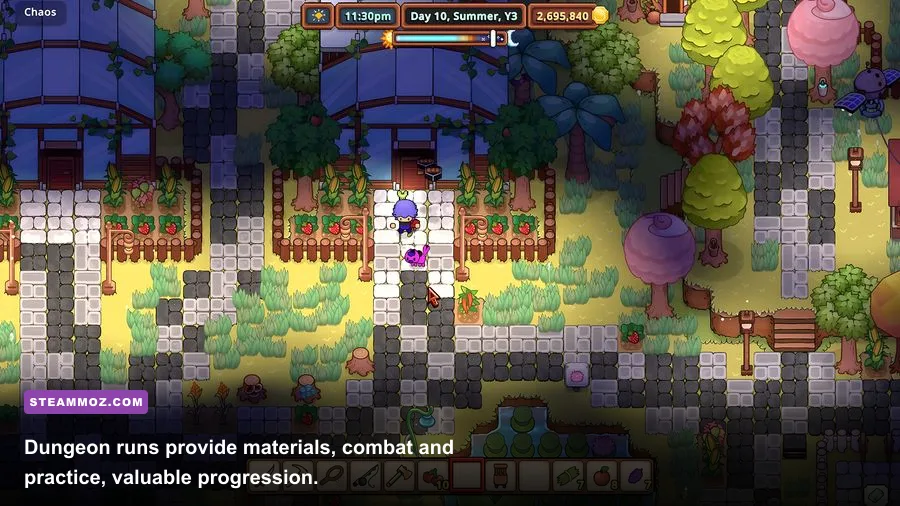
Your first instinct may be to use every available tile for crops. Resist it. Each planted crop creates a daily obligation, and watering consumes both time and stamina before you have reliable automation. Start with a compact block of roughly 12 to 20 crops, positioned close to your house and storage. That is enough to generate income without turning every morning into a chore marathon.
Prioritize crops with short growth cycles during the opening stretch. Fast harvests give you seeds, cash, and a chance to recover from a bad planting decision. Keep at least one example of every new crop rather than selling the entire harvest; farming and community requests frequently turn ordinary produce into progression materials.
Leave paths between crop groups. You want room for sprinklers, machines, pets, and drones later, and rebuilding a crowded farm is annoying. A simple 4-by-5 or 5-by-5 block is easier to water than a scattered field. Upgrade your watering tool when the cost is comfortable, but don't sacrifice all your money just to save a few swings.

🎮 Everafter Falls
Looking to experience this game? Grab your digital key directly on our store for $10.99.
View on Steammoz Store →2. Treat stamina as your real early-game currency
Money is visible, but stamina controls almost everything important. Farming, chopping, mining, and tool upgrades all compete for the same daily resource. If you spend the morning clearing the entire farm, you won't have enough energy left to fish, explore, or reach the deeper parts of a dungeon.
Use a three-part daily plan: one maintenance task, one money-making activity, and one progression activity. For example, water crops, fish by the river, then visit the dungeon until your stamina is low. This produces a better long-term result than spending the whole day on one activity.
Carry inexpensive food whenever possible. Don't eat your most valuable crops unless you have no alternative. Fish, forage, and low-value cooked items are better stamina insurance. Also watch the clock. A late return can cost you a full morning's momentum, especially if you arrive home without enough time to organize tools and prepare the next day's route.
| Daily Situation | Best Action | Why It Works |
|---|---|---|
| Early morning | Water crops and collect machines | Protects your farm's income before exploring |
| Midday | Fish, forage, or mine | Uses the safest part of the day for active work |
| Low stamina | Gift items, sort storage, craft | Converts remaining time into relationship and planning progress |
| Late evening | Return home instead of forcing one more run | Avoids lost time and an exhausted next morning |
3. Unlock automation before expanding aggressively
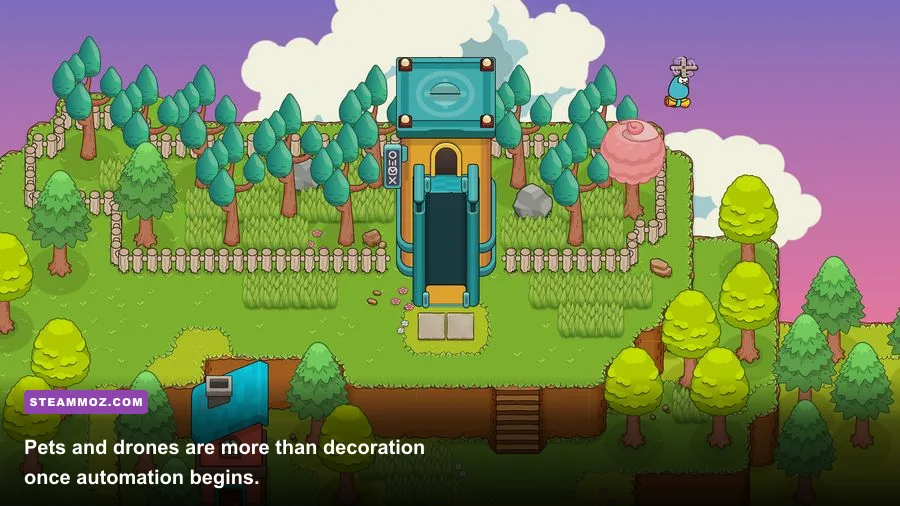
Automation is one of Everafter Falls' biggest advantages, but it only pays off when you build around it. Farming drones, machines, and pet-assisted chores can remove repetitive work, yet early materials are limited. Buy or craft the first automation upgrade that reduces a task you perform every single day, usually crop care or item collection.
Don't place machines randomly across the farm. Make a dedicated processing corner near your house or storage. Group machines by purpose so you can load them in one pass. If a device requires fuel, produce that fuel in batches instead of returning to it repeatedly throughout the day.
Pets also deserve strategic attention. A pet is not merely a cosmetic companion; its utility becomes much clearer when you assign it a job and keep it near the area where that job matters. Automation won't make a badly planned farm efficient. It magnifies a good layout and exposes a bad one.
For players who enjoy optimizing every loop, our weapon tier list coverage offers a useful comparison point: the strongest setup isn't always the one with the highest headline number, but the one that saves time across an entire run.
4. Mine and fight in short, prepared dungeon runs
The dungeon is not designed for blind, endless pushing on your first visits. Enter with food, a recently repaired or upgraded weapon, and enough inventory space for ore and drops. Your goal early on is learning enemy behavior and collecting materials, not reaching the deepest possible floor every time.
Watch enemy telegraphs instead of trading hits. Most threats signal an attack through movement, a brief pause, or a visible wind-up. Strike after the animation finishes, then step away before the next pattern begins. Ranged options are safer against enemies with contact damage, while melee attacks are more efficient when you can circle behind a slow target.
Keep your equipment balanced. A weapon upgrade improves clear speed, but defensive bonuses and healing supplies often matter more than a small damage increase on a difficult run. If you are repeatedly losing health to one enemy type, change your approach rather than simply grinding for another hour.
| Dungeon Problem | Warning Sign | Counter Strategy | Best Resource |
|---|---|---|---|
| Fast melee enemy | Short forward lunge | Attack once, then retreat diagonally | Quick weapon or ranged attack |
| Projectile enemy | Stationary firing pose | Move sideways and close the gap after the shot | Shielding, cover, or ranged damage |
| Group encounter | Several enemies activate together | Pull one target away from the pack | Open space and healing food |
| Low-health run | Healing item is nearly empty | Stop exploring and bank your materials | Town storage and a fresh route tomorrow |
Everafter Falls' combat is much easier when you approach it like a rhythm game: observe, punish, reposition. If you like this kind of deliberate preparation, compare it with our beginner build advice for Eldest Souls, where attack timing matters just as much as raw gear.
5. Fish and forage whenever your route makes it convenient
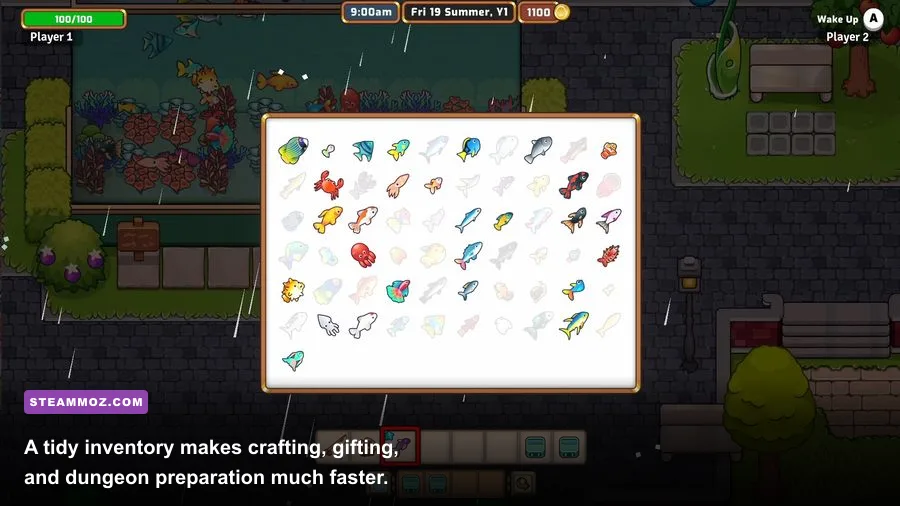
Fishing is an excellent early-game stabilizer because it doesn't require a large field, expensive machines, or deep dungeon access. Fish when your crop work is finished and your stamina is too low for a serious mine run. The income may not feel spectacular one item at a time, but a few catches can fund seeds, food, and tool progress without consuming your best agricultural resources.
Foraging works the same way. Pick up materials during travel rather than dedicating every day to sweeping the entire map. Keep a storage category for wild plants, wood, stone, and dungeon drops. Those “junk” items often become the bottleneck when you suddenly need a crafting recipe or request item.
Don't sell rare-looking objects immediately. Before selling, check whether the item is needed for crafting, a request, a collection, or a relationship gift. The game's relaxed presentation makes it tempting to clear your inventory, but a small reserve of unusual materials saves several frustrating backtracking trips.
6. Upgrade storage earlier than you think
Inventory pressure is one of the quietest ways to lose efficiency. A full bag forces you to abandon drops, sell useful materials, or make unnecessary trips home. Build multiple labeled storage areas: crops and seeds, forage and food, ore and monster drops, and tools or upgrade materials.
Use a “do not sell” chest for anything rare, unfamiliar, or required by a current request. A second chest can hold everyday sale items. This simple separation prevents the classic farming-sim disaster where you sell the one object needed for tomorrow's upgrade.
Before leaving for a dungeon, empty your bag except for combat supplies and a few flexible slots. Before fishing, bring bait or the relevant tool and leave heavy crafting materials behind. Inventory organization isn't busywork here; it directly increases the number of profitable actions you can complete before returning home.
7. Relationships are part of your progression route
Talk to townspeople whenever you pass them, but don't try to gift everyone random items. A consistent gift routine is more effective than scattering valuable produce across the entire town. Keep a small collection of common, renewable items so you can build familiarity without damaging your economy.
Pay attention to requests and dialogue. Characters often reveal what they value, and completing a request can be more efficient than guessing gifts. Relationship progress also gives your daily travel a purpose on low-stamina days: you can socialize, deliver items, and improve future access without spending energy.
Use the game's relationship systems alongside farming rather than postponing them. Waiting until your farm is “finished” means missing benefits during the exact period when assistance and extra resources are most valuable.
8. Spend upgrade materials with a priority order
New players commonly spread resources across every available upgrade. That creates several mediocre improvements instead of one meaningful power spike. A stronger priority is: basic tool reliability, inventory or storage, crop automation, combat capability, then luxury improvements.
There are exceptions. If you are spending most days in the dungeon, move weapon and defensive upgrades ahead of farm automation. If your farm is already generating more produce than you can process, expand storage and machines before planting additional crops.
| Upgrade Priority | Choose It When | Practical Benefit |
|---|---|---|
| S-Tier: Daily tool improvement | You use the tool every morning | Returns time and stamina across the entire season |
| A-Tier: Storage expansion | Your inventory fills during normal routes | Prevents lost drops and unnecessary home trips |
| A-Tier: Farm automation | Crop care consumes most mornings | Creates room for mining, fishing, and relationships |
| B-Tier: Combat upgrade | Dungeon damage or survivability is limiting you | Improves access to deeper materials and rewards |
| C-Tier: Decorative upgrades | Your core loop is already stable | Improves presentation without accelerating progression |
That same principle applies to money. Don't spend every coin on seeds at the start of a season. Keep an emergency reserve for food, a necessary tool improvement, or a tempting shop item that supports your current route.
9. Use cards and equipment for a specific job
Everafter Falls includes collectible cards and equipment choices that can make your character feel dramatically different. The trap is equipping whatever has the highest displayed value without considering the activity. A card that improves gathering may be excellent on a farm-and-forage day and irrelevant in a combat-heavy dungeon run.
Build separate loadouts mentally, even if you don't have a formal loadout screen. For farming, favor stamina efficiency, movement, and collection bonuses. For combat, prioritize survivability, attack consistency, and effects that help you recover after mistakes. For exploration, movement and inventory value can outperform a small damage increase.
Test one change at a time. If you swap five cards and three pieces of gear together, you won't know what actually improved the run. Everafter Falls is generous enough to let experimentation pay off, so use ordinary dungeon trips as controlled tests rather than waiting for a perfect setup.
10. Plan each season around one measurable goal
A season becomes much less overwhelming when you choose a single headline objective. You might aim to automate daily watering, improve your weapon, finish a set of town requests, or build enough cash for the next major farm expansion. Everything else becomes supporting progress.
At the beginning of the season, write down three targets: one farm target, one exploration target, and one social or collection target. For example: establish a compact crop block, complete several prepared dungeon runs, and deliver a handful of requested items. This keeps the game open-ended without letting every system compete for attention.
Review your plan halfway through the season. If crop income is strong but combat is lagging, shift a few days toward mining and equipment. If the dungeon is draining all your food, return to fishing and cooking. The best players aren't rigid; they notice which system is currently limiting the others and fix that bottleneck.
The strongest beginner route is flexible, not perfect
Everafter Falls rewards players who connect its systems instead of maximizing one of them in isolation. Grow enough crops to fund exploration, fish when stamina is low, gather materials before you need them, and automate the chores that steal the most time. Keep your inventory organized, treat dungeon runs as learning sessions, and build relationships while traveling through town.
For official updates and platform details, check the Everafter Falls Steam page, the Square Husky developer site, and the developer's official Steam community hub. If performance gets in the way of your farm routine, our guides to finding better PC settings and fixing low-FPS problems are useful adjacent reads.
Most importantly, don't confuse a slower day with a wasted day. A well-organized storage chest, a new relationship milestone, or a single useful dungeon material can be more valuable than another row of crops. Start small, automate deliberately, and let your first season teach you which part of Everafter Falls you enjoy mastering.