
The best Eldest Souls starting build for beginners is a Windslide-focused setup with Counter as your defensive backup and Whirlwind as your main punish tool. It gives you a fast escape, a dependable way to answer dangerous attacks, and enough burst damage to shorten boss phases without demanding perfect parries. Most importantly, it teaches the habits Eldest Souls actually rewards: staying close, watching telegraphs, charging attacks only during safe windows, and never wasting your dash.
Eldest Souls looks like a pixel-art action game, but its bosses hit with the precision of a modern Soulslike. You don't grind levels until the numbers solve a fight. The Godslayer's power comes from skill selection, upgrades, fragments, and your ability to recognize patterns. That makes your first build matter enormously. A bad early setup can make every arena feel slower and less forgiving; the right one gives you room to learn.
This guide focuses on a first playthrough, not a no-hit challenge run. It also avoids the common beginner trap of building entirely around damage. Damage is useful, but mobility and recovery are what keep a promising attempt alive after a boss changes phase.
The best beginner build at a glance

Your first priority should be Windslide. It lets the Godslayer reposition quickly and, more importantly, turns movement into part of your offense. Use it to pass through danger, close distance after a projectile pattern, or escape the edge of an arena before a larger attack locks you in.
Next, unlock Counter. You don't need to parry every hit for it to be worthwhile. Treat it as a high-value answer to attacks with clear, readable timing. If a boss has a long wind-up or a direct melee strike, Counter can turn a defensive moment into damage and momentum.
Finally, take Whirlwind as your charged damage option. Its value comes from timing rather than constant use. Charge it while a boss is recovering, after you have safely moved through an attack, or during a stagger opportunity. Holding it in the boss's face while an attack is already starting is how beginners lose half their health.
| Build Element | Recommendation | Why It Works | Beginner Use |
|---|---|---|---|
| Core skill | Windslide | Fast movement and safer repositioning | Escape telegraphs and close gaps |
| Defensive skill | Counter | Converts readable attacks into punish windows | Use against deliberate melee strikes |
| Damage skill | Whirlwind | Strong charged punishment after recovery animations | Charge only when the boss is committed |
| Upgrade priority | Mobility, survivability, then damage | More attempts teach patterns faster | Don't chase a glass-cannon setup |
| Combat identity | Mobile counterattacker | Works at close and mid-range | Stay active instead of button-mashing |
There is no conventional strength, dexterity, or intelligence spread to min-max here. Eldest Souls is built around the Godslayer's weapon skills and upgrade choices rather than a traditional RPG stat sheet. That is good news: you cannot ruin the character with an early stat mistake. Your real investment is learning which skills support your preferred rhythm.

🎮 Eldest Souls
Looking to experience this game? Grab your digital key directly on our store for $1.99.
View on Steammoz Store →How Eldest Souls progression really works
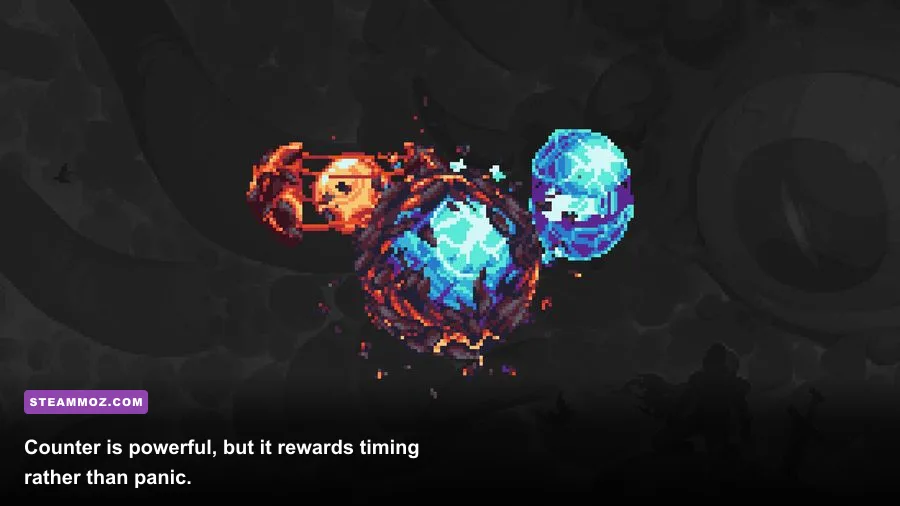
Boss victories are the main checkpoints in Eldest Souls. You explore the Sanctuary and surrounding areas, challenge powerful gods, earn access to new upgrades, and gradually expand the tools available to the Godslayer. The game does not ask you to clear dozens of ordinary enemies for experience before trying a boss again. If you are stuck, the answer is usually a better read of the fight or a smarter skill setup, not another hour of grinding.
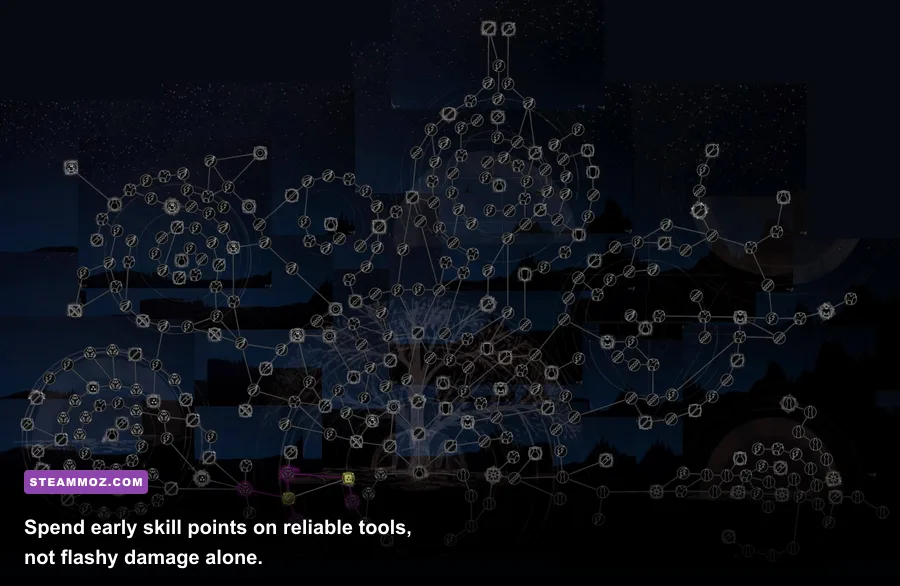
Skill points should first buy options that change how you survive. A mobility skill such as Windslide improves almost every encounter because it covers mistakes that a raw damage upgrade cannot. You can use it to cross a gap, escape a delayed explosion, or move around an enemy instead of backing into an arena wall.
Fragments are equally important. They act as passive modifiers that shape the build and reward you for experimenting after boss victories and exploration. Don't automatically equip the fragment with the biggest-looking damage benefit. A defensive or resource-oriented effect can produce more real damage by keeping you alive long enough to attack twice.
The cleanest beginner progression is simple: unlock a movement tool, add one dependable answer to predictable attacks, then improve your charged punish. Only after that should you lean hard into damage. This progression curve feels slightly slower during the first hour, but it pays off when bosses begin layering projectiles, delayed zones, and multi-hit patterns.
What to upgrade first
Choose skills that do at least one of three jobs: create distance, punish a committed boss, or improve your ability to recover from mistakes. A flashy area attack that leaves you rooted is less useful early than a modest attack you can cancel by moving away.
Keep one slot available for experimentation. Eldest Souls bosses are deliberately different. A skill that feels perfect against a slow, melee-focused god may become awkward against a boss that fills the arena with hazards. Swapping a fragment or damage tool between attempts is part of the intended progression, not a sign that your build failed.
Windslide, Counter, and Whirlwind combat rotation
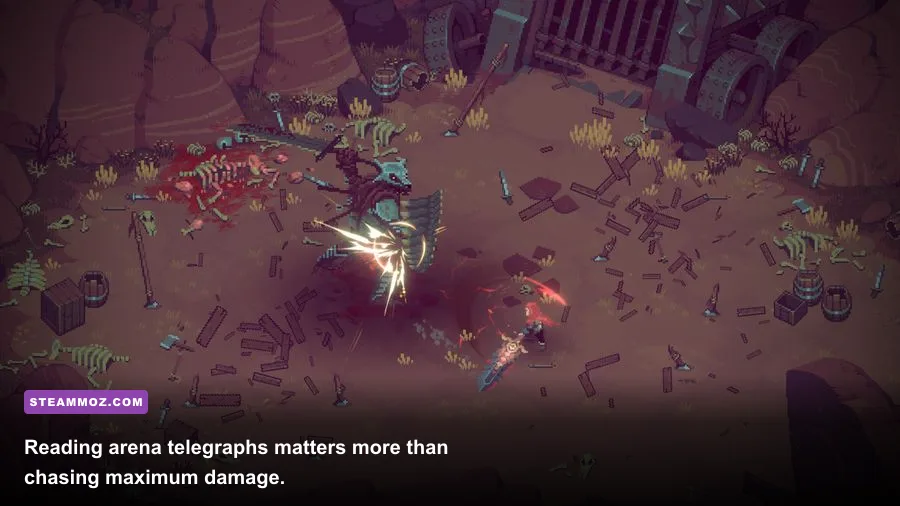
The build's basic rotation is not a rigid MMO combo. It is a decision loop: provoke or observe a telegraph, evade with Windslide when necessary, Counter a clearly timed strike, then charge Whirlwind during the recovery animation. Normal attacks fill the gaps, but they should never force you to stand in a damaging zone.
Windslide is strongest when used before panic sets in. Beginners often save their dash until a hit is already touching the Godslayer. By then, they may be trapped by another attack or moving in the wrong direction. Watch the boss's body and arena markers, then slide through the danger early. The goal is to arrive beside the boss as the attack finishes, not to flee to the opposite side every time.
Counter needs discipline. Do not mash it during a boss's entire attack string. Identify the single hit you can read consistently. Against a straight lunge, wait for the commitment and counter the impact. Against a delayed overhead swing, hold your nerve until the weapon actually begins its downward motion. The best Counter players look slow because they refuse to react to the first animation twitch.
Whirlwind is your reward for patience. Start charging only after the boss has spent its dangerous option. You can also use it when an enemy is recovering from a missed attack or has entered a stagger state. If the boss has a short recovery, release a smaller punish rather than insisting on a full charge. Surviving the next pattern is worth more than squeezing out one extra hit.
| Boss Situation | Your Response | Skill Choice | Common Mistake |
|---|---|---|---|
| Direct melee wind-up | Wait for commitment, then answer the hit | Counter | Activating too early |
| Large ground marker | Move through or around the zone | Windslide | Dashing into a second marker |
| Boss recovery animation | Charge and release damage | Whirlwind | Charging before the attack ends |
| Projectile spread | Change angle and stay mobile | Windslide | Retreating in a straight line |
| Stagger window | Use your biggest safe punish | Whirlwind plus attacks | Arriving late after a panic dash |
Think in terms of attack ownership. The boss owns the fight during its telegraph and active hitbox. You own it during recovery. Windslide helps you survive the first part; Counter and Whirlwind exploit the second. That mental model is more useful than memorizing a damage rotation.
Beginner boss strategy and arena habits

The early bosses in Eldest Souls are designed to teach different lessons, so don't approach every encounter with the same spacing. Some fights punish you for standing too far away because ranged patterns become harder to read. Others punish greed at close range with rapid follow-ups. Your build remains consistent, but your distance and timing should change.
Before attacking, spend one attempt watching the boss. Learn which animation leads to a lunge, which visual effect signals an area burst, and whether the attack has a second hit. That scouting attempt is not wasted. Eldest Souls has compact fights, and learning one reliable tell can remove an entire source of damage from every future run.
Stay near the arena's center whenever the boss allows it. Edges reduce the directions available for Windslide and make delayed zones overlap more easily. If you must move outward, return toward the center as soon as the pattern ends. The safest position is often not far away; it is slightly off the boss's attack line, close enough to punish recovery.
Watch for phase transitions. A boss may refill or alter its health bar, change the timing of familiar attacks, or add hazards that make the old safe spot dangerous. Do not spend every resource before the transition. Entering a new phase with Windslide available and enough health to make a mistake is better than ending the first phase with a stylish but risky burst.
| Encounter Problem | Telegraph to Watch | Counterplay | Build Adjustment |
|---|---|---|---|
| Repeated arena explosions | Ground circles or colored zones | Move early and preserve center space | Prioritize Windslide timing |
| Fast melee chains | Shoulder movement before each swing | Counter only the final readable hit | Don't force Whirlwind between hits |
| Heavy projectile pressure | Boss pauses before firing | Change angle instead of backpedaling | Use mobility for positioning, not panic |
| Short punish windows | Brief recovery after a missed attack | Use a quick attack and disengage | Skip full charges unless staggered |
| Phase transition deaths | Boss animation or arena shift | Stop attacking and reset spacing | Save a defensive option |
If a boss keeps killing you with the same move, don't immediately change the whole build. First ask whether the problem is direction, timing, or greed. Direction means you are moving into the attack. Timing means Windslide or Counter is being triggered too early. Greed means you keep charging Whirlwind after the safe window has already closed. Fix the specific problem before replacing a skill that may be working perfectly.
Fragments and damage choices for a first run
Your fragment setup should support consistency. Look for bonuses that improve your preferred action without creating a complicated condition you forget during a boss's second phase. If a fragment rewards aggressive play, pair it with Windslide so aggression has an escape route. If a fragment improves a charged attack, pair it with Counter so you can create safer punish windows.
Do not judge fragments only by the training-room feel of a single hit. The strongest beginner fragment is often the one that lets you attempt a boss more often before healing or dying. Eldest Souls rewards familiarity. A slightly weaker attack that lands reliably through ten attempts will outperform a theoretical burst setup that works once and collapses whenever the arena gets crowded.
There is also a resource-management angle. Charging attacks, using skills, and recovering from mistakes all compete for your attention. Avoid building around a loop that requires constant perfect resource timing until you understand the boss. Start with a simple pattern: regular attacks for neutral, Windslide for movement, Counter for one known hit, and Whirlwind only for confirmed recovery.
| Build Style | Tier | Strength | Weakness | Best For |
|---|---|---|---|---|
| Windslide / Counter / Whirlwind | S-Tier beginner | Mobility, defense, and burst | Needs timing discipline | First playthrough |
| Pure charged damage | A-Tier specialist | Excellent punish potential | Very vulnerable while charging | Players who know boss patterns |
| Counter-focused setup | A-Tier specialist | Huge rewards against melee bosses | Less comfortable against projectiles | Parry-focused players |
| Always-mobile attack setup | B-Tier | Forgiving repositioning | Can lack reliable burst | Learning arena layouts |
| Glass-cannon damage setup | C-Tier beginner | Fast kills when mastered | Small mistakes end attempts | Challenge runs |
For more build-oriented reading, Steamoz's Flat Heroes ability tier list makes a similar point: flexible tools usually outperform flashy options when a run is still teaching you the game. Eldest Souls follows that same principle, even though its combat is far more deliberate.
Controls, performance, and practice routine
Eldest Souls is not graphically demanding, but stable input timing matters more than visual fidelity in a boss rush. Play at a locked frame rate your system can hold consistently, use a controller if its layout feels natural, and avoid background applications that introduce hitching during a telegraph. A late input during Counter can look like a timing error when the real problem is inconsistent responsiveness.
Turn down post-processing or screen effects if they make attack markers harder to read. Keep the display clear enough to distinguish the boss, the Godslayer, and ground hazards instantly. There is no benefit to a prettier arena if particle effects hide the exact zone you need to leave.
Use a three-attempt practice routine. Attempt one is observation: identify the boss's main attacks and phase change. Attempt two is defense: survive as long as possible using Windslide without chasing damage. Attempt three adds Counter and Whirlwind only to the attacks you have already recognized. This turns a chaotic fight into a small set of repeatable decisions.
If your PC has broader stutter problems, Steamoz's guides on stutter and low FPS fixes and smooth PC settings cover general troubleshooting habits that also help with timing-sensitive games. You can also check the official Eldest Souls Steam page for current platform information and updates.
Why this build is the right first step
The Windslide, Counter, and Whirlwind setup succeeds because it covers the three questions every Eldest Souls boss asks. Can you get out of danger? Can you recognize a punishable attack? Can you capitalize when the boss finally gives you an opening? Windslide, Counter, and Whirlwind answer those questions without forcing a new player into perfect execution from the first room.
Once the build feels comfortable, start specializing. Replace Counter if a particular boss rarely offers a clean parry. Lean harder into charged damage when you can identify long recoveries. Experiment with fragments after you understand what each arena is testing. The beginner build is not a cage; it is a stable foundation for discovering the setup that matches your hands.
Above all, don't measure progress only by a boss's remaining health. In Eldest Souls, recognizing one new telegraph, surviving one extra phase, or reaching a transition with your healing intact is real progress. Keep Windslide ready, Counter the attacks you truly understand, and let Whirlwind do its work only when the opening is earned. That rhythm will carry you much farther than reckless damage stacking.
For another demanding action game with similarly important timing and positioning, Steamoz's Guilty Gear Strive beginner guide offers a useful reminder: strong fundamentals beat complicated options when you're still building confidence. In Eldest Souls, those fundamentals are movement, patience, and knowing exactly when the boss has stopped attacking.