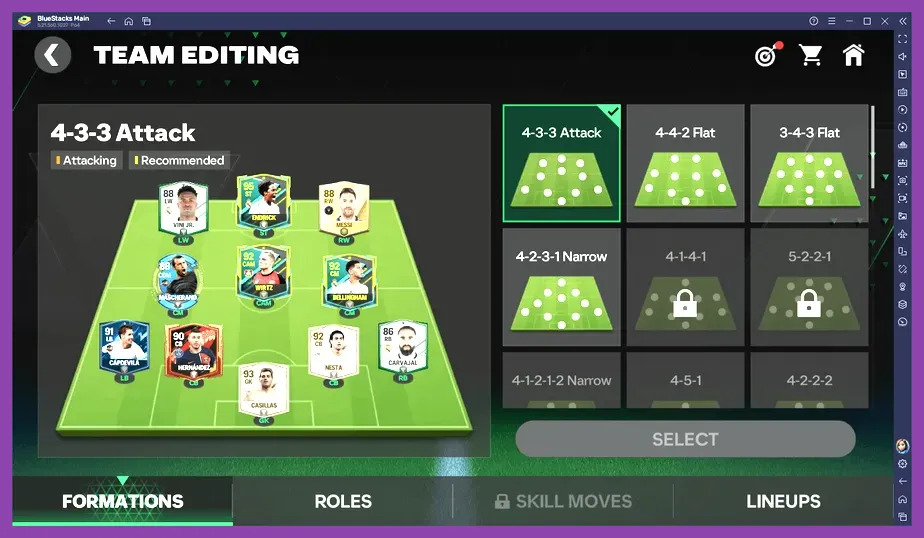
The best EFootball 2026 Mobile F2P build is a Quick Counter 4-2-1-3 squad with a defensive goalkeeper, one Anchor Man, one box-to-box midfielder, fast centre-backs and a Goal Poacher up front. Spend GP on a capable manager and standard players rather than chasing coin packs, then put progression points into speed, defensive awareness, stamina and the individual attributes that make each position work. This guide gives you a complete no-spend blueprint, including the recommended formation, player profiles, progression targets, skills and match routine.
This approach is designed for Dream Team on a fresh account. Player availability, standard-card ratings, managers and campaign rewards can change during the 2026 season, so use the official eFootball website to check the current database and live notices before signing. The principles remain stable: build a functional spine first, avoid redundant attackers and never waste progression points trying to make a slow player behave like a winger.
Best EFootball 2026 Mobile F2P Formation
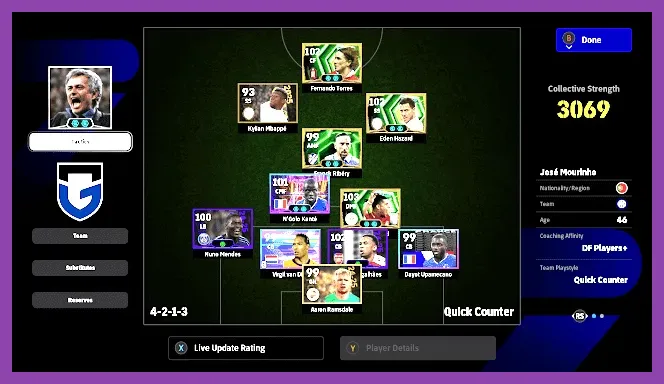
Use 4-2-1-3 with a goalkeeper, two centre-backs, attacking full-backs, a double pivot, one central attacking midfielder and three forwards. Select Quick Counter as the team playstyle. This shape gives a free account enough passing options to escape pressure while keeping two midfielders behind the ball when possession is lost.
Position-by-position setup
- GK: Defensive Goalkeeper. Prioritise goalkeeper awareness, reflexes, reach and catching. A tall keeper such as Thibaut Courtois is an excellent standard-card target if his current version is affordable, while Mike Maignan offers a more aggressive alternative.
- RB: Offensive Full-back. Look for 80-plus speed, 80-plus stamina and reliable Low Pass. Achraf Hakimi is the ideal profile; Trent Alexander-Arnold is useful when you want more crossing and long passing but needs protection in transition.
- CB1: Build Up centre-back. William Saliba combines recovery pace with a strong physical profile. Give this slot to the defender who can carry the first pass safely rather than the player with the highest overall rating.
- CB2: Build Up or Destroyer. Alessandro Bastoni supplies left-footed distribution, while Ronald Araújo adds speed and duelling strength. Pair one passer with one aggressive defender.
- LB: Defensive Full-back or balanced Offensive Full-back. Theo Hernández is the attacking option; a more conservative full-back is preferable if your right-back already pushes high.
- DMF: Anchor Man. Rodri is the model choice because his positioning, Physical Contact and passing protect the centre. Declan Rice is a strong budget substitute. Do not use two roaming midfielders here.
- CMF: Box-to-Box. Federico Valverde covers the largest area and gives the build pace. Nicolò Barella and Jude Bellingham fit the same role when available as standard cards.
- AMF: Creative Playmaker or Hole Player. Bruno Fernandes offers passing and shooting; Jamal Musiala gives tighter dribbling and late movement. A Hole Player is especially effective when your striker drops toward the ball.
- LWF/RWF: One Prolific Winger and one Roaming Flank. Use Son Heung-min, Rafael Leão, Bukayo Saka or Mohamed Salah according to the cards available. Put your fastest finisher on the side from which you naturally cut inside.
- CF: Goal Poacher. Kylian Mbappé is the premium standard-card target, but Lautaro Martínez, Erling Haaland or Victor Osimhen can lead the line. Choose one with acceleration, offensive awareness and a dependable first-time finish.
Set the bench around roles, not famous names: a second centre-back, a defensive midfielder, a fast winger, a target striker and a versatile full-back. Five attackers may look exciting, but a F2P team loses more matches through fatigue and defensive substitutions than through a shortage of forwards.
Best F2P Players and Budget Alternatives
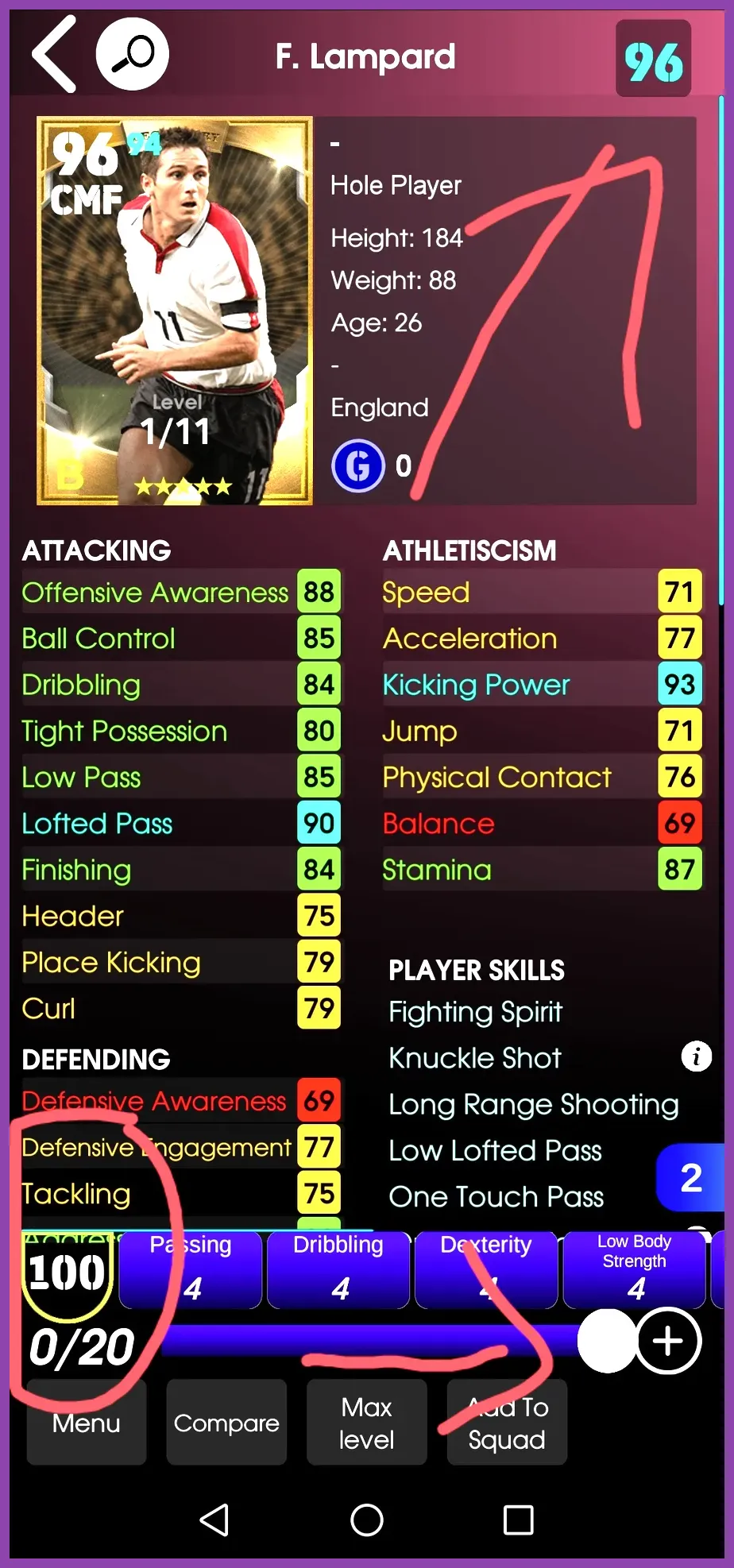
Standard players are the foundation of this build because they can be signed with GP and upgraded with training programs. The strongest F2P squad is not simply eleven high-rated cards; it is a group whose playing styles, footedness and physical tools complement one another. Before spending GP, compare the live card information in the official game overview and test players in a low-stakes match.
Priority signing order
- DMF first: Buy an Anchor Man with at least 80 defensive awareness after progression, strong stamina and 80 or better Low Pass. This player makes the biggest difference to how often your centre-backs are exposed.
- Fast CB second: Target a centre-back capable of reaching roughly 80 speed and 80 acceleration after development. Saliba, Araújo and Éder Militão are examples of the profile. Slow defenders can still defend manually, but they are punished severely by through balls in Quick Counter.
- CF third: Select a Goal Poacher with 80-plus offensive awareness, acceleration and finishing. Finishing in the mid-80s is sufficient when you create clear chances rather than shooting from poor angles.
- Full-back fourth: A full-back with 85 stamina, 80 speed and Low Pass helps both the first phase and recovery. Never start two highly aggressive full-backs until your DMF is secure.
- AMF and winger last: Dribbling is valuable, but a creative midfielder cannot rescue a squad that cannot defend transitions. Upgrade the spine before adding another expensive attacker.
Look for key skills during player comparison. One-touch Pass makes the first pass after winning the ball safer; Through Passing improves split passes into the channels; Interception and Blocker are premium defensive additions; Aerial Superiority matters for centre-backs and target forwards; and First-time Shot is more useful on a Goal Poacher than a decorative dribbling skill.
Do not discard a lower-rated card merely because its overall number trails a featured card. A 79-rated midfielder with Anchor Man and good defensive awareness can perform better at DMF than an 84-rated Creative Playmaker forced into the same position. This is the same role-first thinking used in our early-game character recommendations: evaluate what the unit does for the team, not just the number displayed on the menu.
Exact Player Progression and Skill Priorities

Open each player’s Development menu, inspect the available progression points and use the automatic allocation only as a starting reference. Then correct the build manually. The exact maximum level and point total vary by card, so these numbers are practical targets rather than a promise that every 2026 card reaches them. Use progression training items on starters first and avoid spending Skill Training Programs until the player has a permanent place in your XI.
Recommended progression targets
- Goalkeeper: Put points into Goalkeeping 1 and Goalkeeping 2 until awareness, reflexes and reach are dependable, then add lower-body strength if available. Aim for roughly 85 awareness and 85 reflexes on a top standard keeper. Do not overinvest in kicking at the expense of shot stopping.
- Centre-back: Prioritise Defending 1, Defending 2 and Lower Body Strength. Aim for 85 defensive awareness, 85 tackling, 80 physical contact and at least 75 speed; your recovery defender should approach 80 speed. Useful skills are Interception, Blocker, Man Marking and Aerial Superiority.
- Full-back: Use Lower Body Strength and Passing, followed by Defending. Target 80 speed, 85 stamina, 80 Low Pass and 75 defensive engagement. One-touch Pass, Pinpoint Crossing and Interception are better additions than flashy finishing skills.
- Anchor Man: Prioritise Defending, Lower Body Strength and Passing. Target 85 defensive awareness, 80 tackling, 85 stamina and 80 Low Pass. Give Rodri or Rice Interception, Blocker, One-touch Pass and Through Passing if the card lacks them.
- Box-to-box CMF: Spend on Lower Body Strength, Passing and Dribbling. Aim for 85 stamina, 80 speed, 80 Low Pass and 75 defensive awareness. One-touch Pass, Through Passing and Fighting Spirit keep the player effective late in matches.
- AMF: Prioritise Passing, Dribbling and Shooting. Target 85 ball control, 85 Low Pass, 80 Lofted Pass and 80 finishing. One-touch Pass, Through Passing, Long-range Curler and First-time Shot are the most practical skills.
- Winger: Build Lower Body Strength, Dribbling and Shooting. Aim for 90 acceleration, 85 speed, 85 ball control and 80 finishing. Double Touch, Sole Control, Cut Behind and Turn, and First-time Shot create more value than a long list of situational skills.
- Goal Poacher: Prioritise Shooting, Lower Body Strength and Dribbling. Target 90 offensive awareness, 85 finishing, 85 acceleration and 80 balance. First-time Shot, Acrobatic Finishing, Heading and Fighting Spirit are excellent additions depending on the striker’s body type.
Use position training carefully. Moving a natural winger to CF may reduce familiarity and waste valuable attributes, while moving a CMF to AMF can be sensible if the card already has passing and offensive awareness. Keep a player in his registered position whenever possible; the small familiarity advantage is more important than forcing a clever-looking tactical experiment.
Quick Counter Tactics and Match Rotation
Quick Counter is strongest when you win the ball and make the next two passes immediately. Do not sprint directly toward the opponent’s goal after every interception. First find the DMF, pivot to the AMF or winger, and then attack the space behind the full-back. The objective is a three-pass escape, not uncontrolled end-to-end football.
Attacking pattern
Build with your centre-back into the Anchor Man, then play diagonally to the CMF or AMF. If the opponent’s DMF follows the AMF, release the winger early. If the full-back steps out, use a through ball for the Goal Poacher. Hold the winger’s run for half a second before passing; that small delay prevents the forward from entering an obvious offside position.
Use controlled sprint rather than holding Dash constantly. Sprinting while receiving a pass creates heavy touches, especially for players with average ball control. Stop sprinting before the first touch, turn away from pressure, then accelerate into space. Double Touch is most effective near the corner of the penalty area, while a simple body feint is safer in midfield.
Defensive routine
Control the DMF first after losing possession. Block the central passing lane and let the AI-controlled centre-backs maintain shape. Only switch to a centre-back when the striker has already entered the channel. Use Match-up to contain the ball carrier, then press with a manual tackle when the attacker’s touch moves away from his body. Pulling a CB toward the wing is the fastest way to create a free central runner.
Keep one full-back conservative when facing a strong counterattacking opponent. If both full-backs are already high, use the Anchor Man to cover the side of the faster centre-back rather than chasing the ball. Against long-ball strikers, switch early to the defender with Aerial Superiority and avoid dragging the keeper forward unless the through ball is clearly won.
Second-half substitutions
At around the 60th minute, replace a winger below roughly 70 percent stamina, especially if he relies on acceleration. Replace the CMF before the DMF if the midfield is being overrun. Bring on a fresh fast winger when protecting a lead, or a stronger striker with Heading and Aerial Superiority when the opponent drops deep. A 4-2-1-3 does not need defensive time-wasting; keep one outlet forward so the opposition cannot attack with every player.
Free Rewards, GP Spending and Daily Routine

A no-spend account grows through consistency rather than one lucky campaign. Claim every login reward, complete the current objectives and finish the free side of Match Pass before its deadline. Check the official news page after major updates because campaigns frequently change the best way to obtain GP, training programs and contract items.
What to buy with GP
Spend GP in this order: manager with strong Quick Counter proficiency, starting DMF, fast centre-back, Goal Poacher, then substitutes. Keep a reserve for contract renewals or a clearly superior standard card. Do not buy five similar forwards because their overall ratings look attractive. Your first eleven needs one reliable player in every defensive role before it needs a fourth elite dribbler.
Use EXP training programs on the players you actually start. Release unwanted low-level cards only after checking whether they are needed for an objective or useful as a tactical substitute. Save Skill Training Programs until you know the player’s natural weaknesses. Adding Interception to an Anchor Man or First-time Shot to a striker is a meaningful upgrade; adding a random skill to a bench card is not.
Seven-day F2P checklist
- Collect login rewards and inspect every active campaign.
- Complete objectives that award GP, skill programs and progression items first.
- Play events that match your squad’s eligibility before spending resources on temporary players.
- Use PvP matches to test one tactical change at a time: full-back instructions, midfield pairing or striker.
- Train the starting spine before upgrading substitutes.
- Record which goals you concede: cutbacks, through balls, crosses or long shots.
- Change progression or formation only after five to ten matches reveal a repeatable problem.
For device performance, use the official eFootball Mobile listing to confirm compatibility, then choose the highest stable frame rate your phone can maintain. A locked, responsive frame rate is more valuable than maximum crowd detail in online matches. If your battery drains during long sessions, our mobile battery-saving fixes also apply to background apps, brightness and thermal throttling.
The finished F2P blueprint is simple: Defensive Goalkeeper; one fast Build Up centre-back beside one physical defender; one attacking and one conservative full-back; Anchor Man plus Box-to-Box midfielders; a creative AMF; two quick wide forwards; and a Goal Poacher. Upgrade the spine, defend with the DMF, attack through three-pass combinations and spend GP only when a signing solves a specific weakness. Follow that structure and a fresh EFootball 2026 Mobile account can compete without relying on coin-only cards.