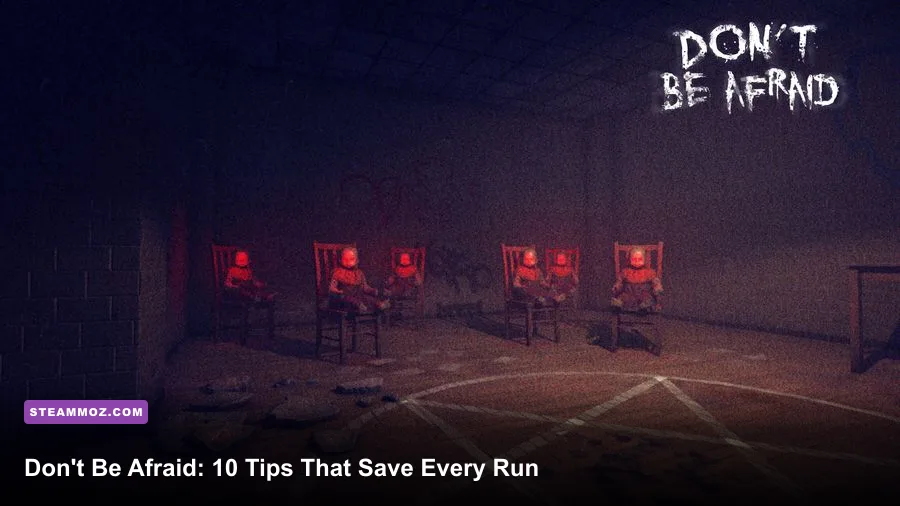
Don't Be Afraid becomes much easier once you stop treating it like a traditional action horror game. You aren't building a combat character, farming ammunition, or clearing rooms; you're controlling David, a kidnapped child who survives by reading spaces, solving environmental puzzles, and staying out of reach. Save whenever the game allows it, inspect every suspicious object, and learn to break an enemy's line of sight instead of sprinting blindly. These 10 tips will help new players conserve time, avoid needless deaths, and understand what the game actually expects from them.
Hydra Games' first-person horror adventure leans heavily on atmosphere and scripted pressure. Its scares are designed to make you rush, while its puzzles demand the opposite. That tension is the real challenge. If you're coming from a combat-heavy game such as Hunt: Showdown, forget the instinct to solve every problem with aggression. David's best weapon is information.
Start With the Right Survival Mindset
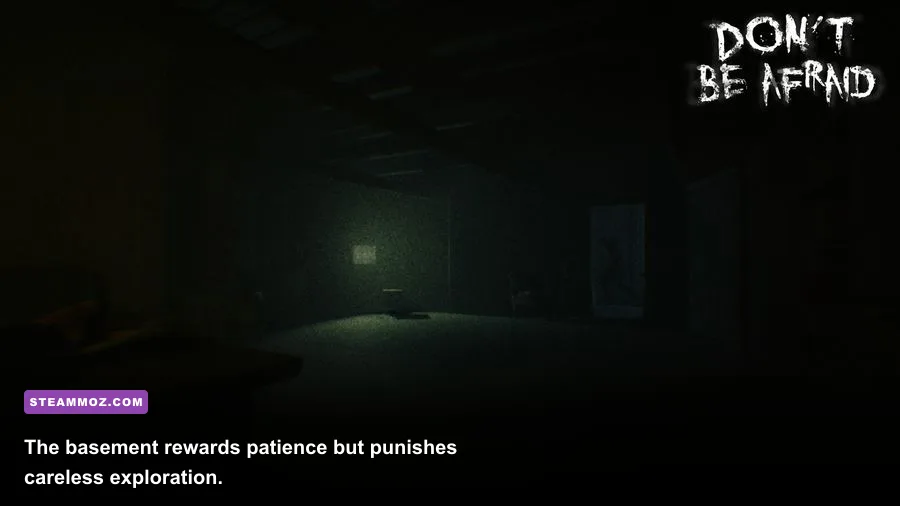
Before chasing collectibles or experimenting with every door, establish a simple routine: identify your current objective, locate the safest retreat, then interact with the environment methodically. Don't Be Afraid rarely explains its logic with a giant waypoint. Instead, it uses visual storytelling, locked routes, notes, sounds, and conspicuous objects to steer you forward.
1. Save before every risky interaction
Manual saving is your safety net, not a formality. Save before entering a new major area, approaching a suspicious sound, attempting a puzzle with several stages, or opening a door that clearly looks important. A failed chase can cost more than a few seconds, especially when you have already searched multiple rooms and collected a key item.
Use separate save points rather than constantly overwriting one file. Keep one recent save and one older backup from the previous area. That gives you room to recover if you trigger an encounter before understanding the route. Horror games often place a scare immediately after a puzzle solution, so saving after the puzzle and before the next doorway is a smart habit.
2. Turn down the panic, not the atmosphere
Don't Be Afraid's sound design is an information tool. Footsteps, distant movement, sudden breathing, and changes in ambient noise can tell you whether a threat is nearby or whether the game is preparing a scripted event. Play with headphones if possible, but don't crank the volume to painful levels. You want separation between environmental audio and warning cues, not louder jump scares.
Brightness deserves equal attention. Raising it slightly can reveal interactable objects in black corners, but maxing it out damages the game's visual contrast and can make important lighting cues harder to read. Start with the default gamma, then increase it one small step if you genuinely cannot distinguish doors, switches, or floor objects.
3. Inspect the environment in a fixed order
When entering a room, scan from left to right at eye level, then check the floor, shelves, desks, and corners. This sounds basic, but the game frequently hides progression clues among ordinary furniture. A useful object usually has one of three jobs: it opens a route, explains a code, or confirms where the story wants you to go next.
Don't mash the interact button while moving. Stop, center the reticle on the object, and wait for the interaction prompt. If a door does nothing, remember it and move on; don't assume you've missed a key just because the room feels unfinished. Many apparent dead ends become relevant only after a nearby event or item changes the area.
| Situation | First Action | Why It Works | Common Mistake |
|---|---|---|---|
| New room | Scan exits and hiding spaces | Creates a mental escape route | Focusing only on the objective |
| Locked door | Check nearby notes and props | Clues are usually local | Searching the entire map immediately |
| Strange sound | Stop and listen | Reveals timing and direction | Sprinting toward the noise |
| After a puzzle | Save before moving on | Protects progress before a scare | Assuming the danger is over |

🎮 Don't Be Afraid
Looking to experience this game? Grab your digital key directly on our store for $1.99.
View on Steammoz Store →Solve Puzzles Without Wasting Time
The puzzles in Don't Be Afraid are less about obscure logic than attention. Most solutions are built from information already present in the current section. If you find a number, symbol, photograph, diary entry, or unusual arrangement, don't treat it as decoration until you've checked whether it relates to a nearby lock or mechanism.
4. Read every note before touching a keypad
Codes are easier when you separate confirmed information from guesses. Read the note, inspect the surrounding objects, and write down the order exactly as presented. A sequence may be implied by dates, images, room positions, or repeated symbols rather than printed as four obvious digits. If the game lets you revisit the note, do so instead of trying random combinations.
Randomly cycling codes is especially inefficient because it can push you into a dangerous area while you're still mentally solving the previous one. If a keypad rejects an answer, step back and reassess the clue's order. Don't immediately assume the code itself is wrong.
5. Search vertically, not just horizontally
New players often sweep floors and tables while ignoring walls, shelves, paintings, and high cabinets. Horror environments use height to control what you notice first. Look above door frames, behind large props, and along the edges of shelves. Check corners from more than one angle, since a key item may blend into the lighting when viewed straight on.
6. Track key items by purpose
Keep a mental inventory divided into three groups: access items, clue items, and temporary puzzle objects. An access item is something like a key or tool that clearly opens a route. A clue item explains a code or sequence. A temporary object changes the environment and often disappears from relevance once used. This categorization stops you from revisiting every room whenever you get stuck.
If an item appears important but has no immediate use, don't panic. The game may expect you to carry it into a later room. Likewise, if a door opens after you use a key, search the newly accessible space before backtracking; progression clues are often positioned to make the next step readable.
7. Treat repeated symbols as a language
Recurring marks, colors, photographs, and room decorations may connect story scenes with puzzle logic. Take a screenshot or write down the order whenever the game presents a repeated visual pattern. The answer is frequently not a single object but a relationship between several objects. This is where patient observation beats guide-checking.
For comparison, puzzle-heavy games reward a different habit from games built around loot tiers. Our Layers of Fear guide makes a similar point: in weaponless horror, the environment is the progression system. Don't Be Afraid follows that rule closely.
Survive Chases and Enemy Encounters
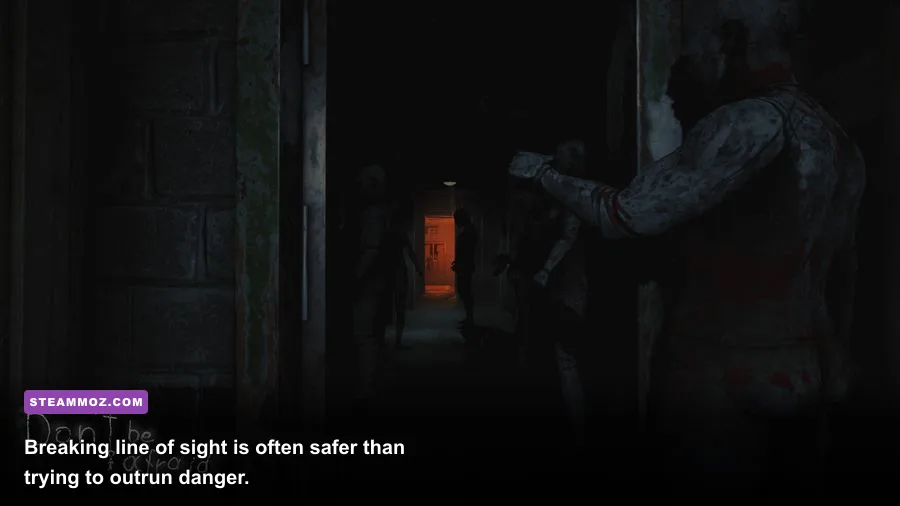
When danger appears, your first goal is not distance. It's line of sight. Enemies become most dangerous when you run without knowing where the route leads. Before triggering a chase, notice open doors, sharp corners, furniture that blocks movement, and narrow passages that could trap you. A route you understand is worth more than a straight corridor.
8. Break sight before you hide
During a pursuit, turn a corner, pass through a doorway, and create a visual break before trying to hide or change direction. Running in a straight line keeps you predictable and may leave the enemy directly behind you. Once sight is broken, stop making noise if the encounter allows it and wait for the audio to settle before moving again.
Don't crouch in the first dark corner you see. Some hiding places are obvious traps because they leave you facing a single exit or place you within the enemy's patrol path. Better hiding spots give you cover and a second route. If you die in the same location twice, the answer is usually not faster movement; it's a different path.
9. Never sprint through an unfamiliar room
Sprinting feels safe because it creates momentum, but it also prevents you from seeing objects, doors, and obstacles. Walk through unexplored areas until you know the layout. Save sprinting for a confirmed escape route or the final part of a chase. Stamina management matters less than route knowledge, yet wasting movement in a dead end can turn a manageable encounter into an unavoidable hit.
10. Recognize scripted scares and real threats
Not every loud sound requires an immediate retreat. Some moments are scripted atmosphere: a visual distortion, a noise behind you, or an object moving when you approach. Others begin a genuine pursuit and demand a route. The distinction becomes clearer after one or two attempts. If an event repeats identically and no enemy follows, use the moment to observe what changed in the room.
That doesn't mean ignoring danger. It means refusing to spend your entire run hiding from a scare that cannot hurt you. Learn the difference between a presentation beat and a gameplay trigger, then keep your attention on doors, keys, and movement paths.
| Threat Pattern | Warning Sign | Best Response | Bad Response |
|---|---|---|---|
| Scripted scare | Fixed visual or audio event | Observe what changed | Running into an unknown room |
| Active pursuit | Footsteps and sustained pressure | Break line of sight | Hiding in the first corner |
| Blocked route | Door or passage cannot be used | Search the last safe room | Repeating the same interaction |
| Patrol danger | Threat returns on a pattern | Time movement between passes | Crossing open space too early |
Settings, Performance, and Exploration Priorities
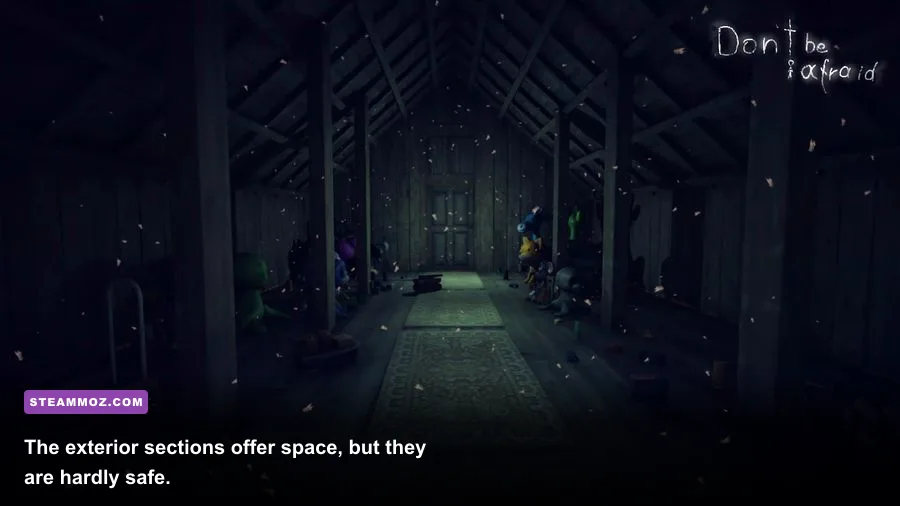
Don't Be Afraid is not a competitive game, so chasing triple-digit frame rates isn't necessary. A stable 60 frames per second is the sweet spot for reading objects, turning corners, and keeping camera movement comfortable. If your system struggles, reduce shadow quality and effects before lowering resolution. Those settings usually have a larger performance cost than texture quality, while textures preserve the game's visual clarity.
| Setting | Recommended Value | Performance Impact | Visual Trade-Off |
|---|---|---|---|
| Resolution | Native monitor resolution | High | Lowering it softens every clue |
| Texture Quality | High if VRAM permits | Low to medium | Preserves readable surfaces |
| Shadows | Medium | Medium to high | Some depth and contrast lost |
| Effects | Medium | Medium | Reduced distortion and atmosphere |
| Motion Blur | Off if uncomfortable | Small | Cleaner camera movement |
| V-Sync | On if tearing appears | Small | May add a little input latency |
Use exploration windows intelligently
When a section appears quiet, that's your chance to revisit locked doors, inspect missed notes, and map the safest route. Don't spend that time wandering aimlessly. Choose one objective and clear it completely before moving to the next. A compact checklist works well: unresolved door, unread note, suspicious object, unexplored hallway.
Collectibles are worth pursuing if you're interested in the game's backstory, but don't let them derail a first playthrough. The strongest route for new players is to finish the current objective, collect anything directly along the path, and only then sweep optional rooms. You can always return with better knowledge; you can't recover time lost to repeated blind searches.
If you enjoy planning routes and optimizing runs, the approach is similar to the resource discipline discussed in our Temple of Osiris farming guide, even though the games could not be more different. Know what you need, know where it is, and avoid unnecessary detours.
The Smartest First-Playthrough Route
For a clean first run, prioritize story progression over completionist perfection. Explore each room once, read every note, record any code or symbol pattern, and save before major transitions. If a chase starts, follow the route you identified during the quiet phase instead of improvising. After finishing the area, use your older save only if you missed a major clue or want to investigate an optional branch.
Don't look up a solution the moment a puzzle slows you down. Give yourself five focused minutes: reread the clue, inspect the room's edges, and compare repeated symbols. That small pause preserves the game's best moments and usually exposes the intended answer. If you do consult a guide, search for the exact room or puzzle rather than watching a full playthrough and spoiling every later reveal.
Also remember that fear distorts your judgment. The game's most effective trick is making you believe that every second is urgent. Often, it isn't. Stop, listen, identify the objective, and move with purpose. David is vulnerable, but the player doesn't have to be reckless.
For official information, check the game's Steam page and the Hydra Games website. If you want another atmospheric horror recommendation after finishing, Steamoz's Hunt: Showdown 1896 review covers a very different kind of tension.
The key lesson behind all 10 tips is simple: Don't Be Afraid rewards deliberate players. Save before danger, inspect before guessing, listen before running, and break line of sight before hiding. Once those habits become automatic, the house stops feeling like an unknowable maze and starts revealing its structure—and that is when the horror becomes tense rather than frustrating.