
These 10 Daymare: 1998 tips will save ammunition, inventory space, and several ugly deaths: learn the reload system, inspect every document, use the minimap intelligently, stun enemies before finishing them, and treat healing items as a resource rather than an emergency button. Daymare rewards the patient survival-horror mindset, not the run-and-gun habits of a modern shooter.
Invader Studios clearly built Daymare: 1998 as a love letter to classic Resident Evil, but it adds enough friction to catch careless players. You control Liev, Raven, and Samuel across different perspectives on the Hexacore outbreak, and each character brings a slightly different route through the same nightmare. The game can feel awkward at first. Once its systems click, though, the deliberate pace becomes the point.
This guide focuses on a first playthrough, especially on the normal difficulty. The advice still applies to harder modes, where scarce ammunition, tougher enemies, and less forgiving mistakes make every decision matter even more.
1. Learn the reload system before you fire seriously
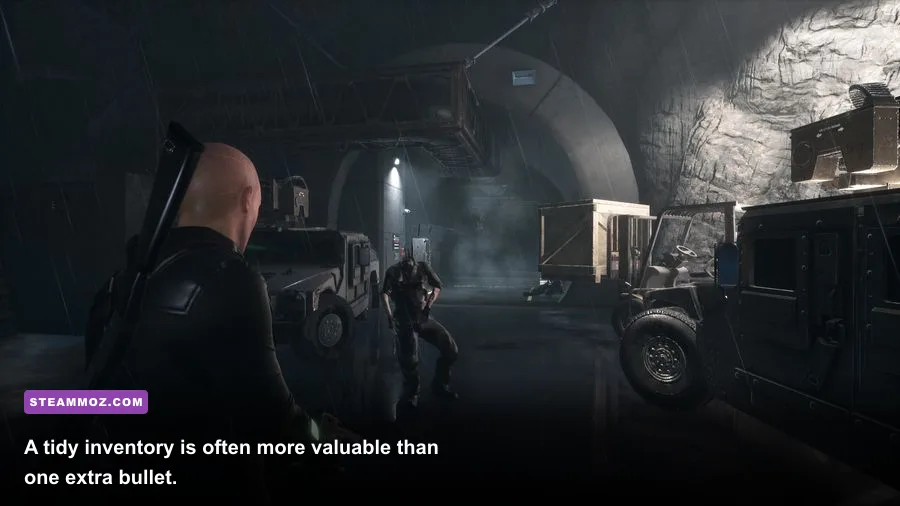
Daymare: 1998 does not treat reloading as a simple animation. Your weapon uses magazines and ammunition reserves, so repeatedly topping off after firing one or two rounds can leave you with a collection of half-empty magazines at exactly the wrong moment. That is one of the game's nastiest early traps.
Watch the ammunition display and reload when you have a safe window, preferably after clearing a room rather than while an enemy is closing distance. If you reload during combat, create space first by moving around furniture, backing through a doorway, or staggering the target with a well-placed shot. A reload performed in the open is an invitation to get grabbed.
Keep different ammunition types organized in the inventory instead of dumping everything into the first available slot. Handgun rounds are your everyday tool, while shotgun shells are better reserved for enemies that have already entered striking range or for a dangerous group blocking a narrow passage. The assault rifle can burn through supplies quickly, so use short controlled bursts rather than holding the trigger.

🎮 Daymare: 1998
Looking to experience this game? Grab your digital key directly on our store for $2.99.
View on Steammoz Store →2. Make inventory space part of your route planning
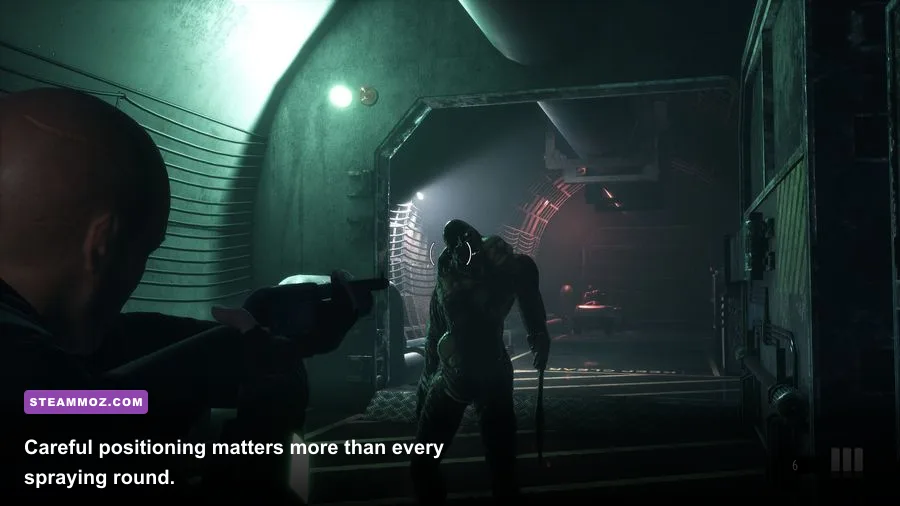
The inventory is a puzzle, not a backpack. Daymare's grid forces you to think about the shape and timing of every item, and a poorly packed case can turn a useful discovery into a frustrating backtrack. Before leaving a safe room, decide what the next objective actually requires.
Carry one reliable weapon, its ammunition, one healing option, and the key item for your current objective whenever possible. Do not haul every green herb, bottle, document, and spare magazine through the entire facility. Safe rooms and storage points are there so you can bank supplies and return later when the story demands them.
Combine compatible items as soon as you know they will be useful. A combined healing item occupies less space than several separate components, while mixed ammunition or utility objects can prevent a last-second inventory shuffle. Leave a few open squares before entering an unexplored area; Daymare regularly rewards investigation with documents, keycards, and mission-critical objects.
| Item Type | Carry Priority | Best Use | Common Mistake |
|---|---|---|---|
| Handgun ammunition | High | Staggering ordinary infected enemies | Wasting it on enemies you can avoid |
| Shotgun shells | High | Close-range emergency damage | Firing from too far away |
| Healing items | Medium | Recovering after unavoidable damage | Using them at minor injury |
| Key items | Mandatory | Opening story-critical routes | Dropping them without checking descriptions |
| Documents | Situational | Codes, lore, and puzzle clues | Ignoring them and guessing terminals |
Think of storage as a staging area. Before a boss or a long objective, make a deliberate loadout rather than wandering in with whatever happened to remain in your pockets.
3. Headshots are useful, but stuns are the real goal
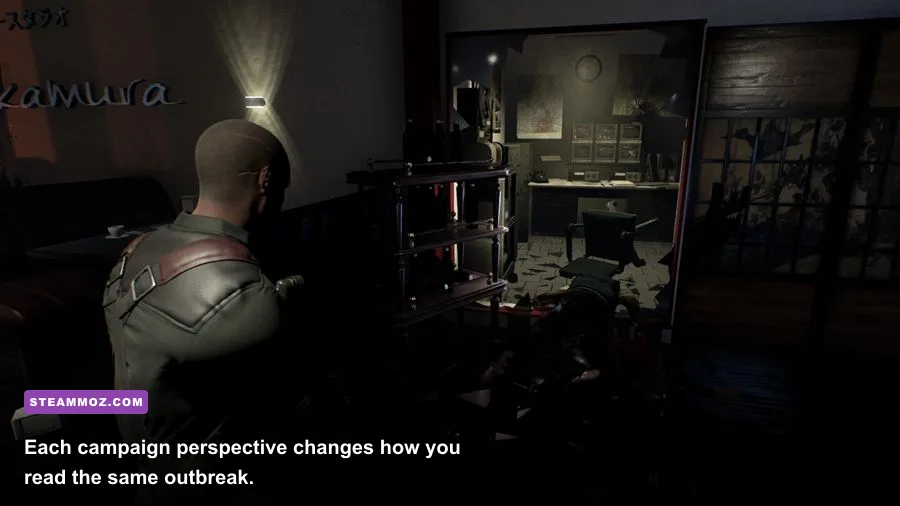
Most new players focus exclusively on headshots and then wonder why the infected keep advancing. Daymare's combat is more forgiving when you think in terms of interruption. A shot that staggers an enemy buys time, and time lets you reposition, reload, or simply run past instead of spending an entire magazine.
Aim high with the handgun when you have a clear line of sight, but do not stand still waiting for a perfect critical hit. If the target is already close, use the shotgun to create breathing room. The important sequence is simple: stun, create distance, decide whether the enemy deserves a finishing shot.
Not every creature must die. Enemies placed in a corridor you will revisit are worth eliminating, particularly if the room contains a puzzle or a narrow doorway. An infected standing beside an optional dead end can usually be avoided. Remember where it is, keep your escape route open, and preserve the ammunition for a mandatory encounter.
Never backpedal blindly. The camera and cramped geometry can hide another enemy behind you, which is how a manageable fight becomes a grab animation and a wasted healing item. Turn corners deliberately, check the space behind you, and use doorways as funnels rather than fighting in the center of a room.
4. Use each character’s perspective to rethink familiar areas
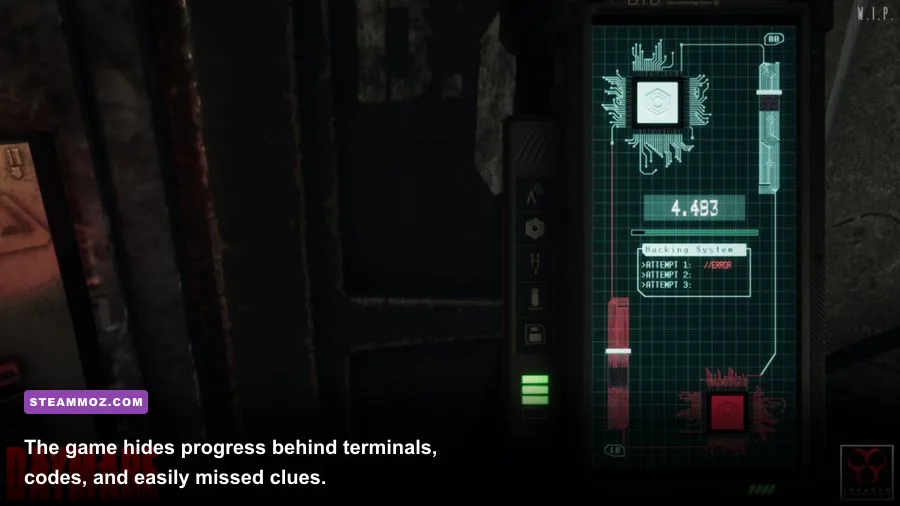
Daymare: 1998 switches between Liev, Raven, and Samuel, and the campaign structure benefits from treating their chapters as separate survival problems. Do not assume a route that felt safe for one character will be safe for the next. Enemy placement, available equipment, and your objective can change the value of every corridor.
Liev’s H.A.D.E.S. perspective establishes the outbreak through a soldier’s eyes, so his sections encourage methodical clearing and tactical movement. Raven’s chapters place more emphasis on investigation and the consequences of the outbreak, while Samuel’s perspective adds another angle on the disaster and often changes how you interpret locations you have already visited. Their stories are not interchangeable, even when the environments overlap.
Use character transitions as a mental reset. Check your current objective, read the new character's available weapons, and inspect the map before assuming you can simply retrace your old path. The game wants you to recognize landmarks, not memorize a single universal solution.
If you enjoy games where character-specific tools change route planning, Steamoz's beginner build guide for Aliens: Colonial Marines covers a much more combat-heavy approach to surviving hostile corridors.
5. Read documents before touching a keypad or terminal

Daymare hides its best clues in documents, computer screens, wall notices, and environmental details. Keypads are rarely designed for blind trial and error. If you find a locked door, check nearby desks, offices, bodies, and terminals before trying random combinations. The clue may be in a memo that looks like optional lore but includes a date, sequence, or department reference.
Pay attention to recurring names and abbreviations. Hexacore's research facility is full of corporate language, access levels, and references that help you connect a code to the correct door. Read item descriptions as well: a keycard or component often tells you which area it belongs to, which prevents you from discarding something that appears useless.
When a puzzle seems unclear, stop moving and inventory the evidence. Ask what the room is communicating. Is it showing a sequence, matching symbols, a security hierarchy, or a date? Daymare's puzzles are generally less about reflexes than about noticing the one line of text you skipped while rushing toward the next objective.
Make manual notes if necessary. A quick phone note containing door names and partial codes is faster than repeated trips through an infected hallway, especially when the game starts layering several locked routes over the same facility.
6. Save before experiments, not after disasters
Save terminals are not just a formality. Use them whenever you find one, especially before spending rare ammunition, entering an unfamiliar wing, or solving a puzzle that opens a new section. The classic survival-horror rhythm is deliberate: explore, return to safety, save, then commit to the next dangerous stretch.
Do not overwrite your only comfortable save immediately before a boss if you still have time to prepare. Keep a second save when possible. That gives you a recovery point if you arrive at an encounter with low health, poor ammunition, or an inventory full of items that are useless for the fight.
Difficulty changes how valuable this habit becomes. On normal, a careful player can recover from a few mistakes. On higher settings, every missed shot and unnecessary hit compounds. Saving before a risky detour also lets you test whether an optional room is worth the ammunition it costs.
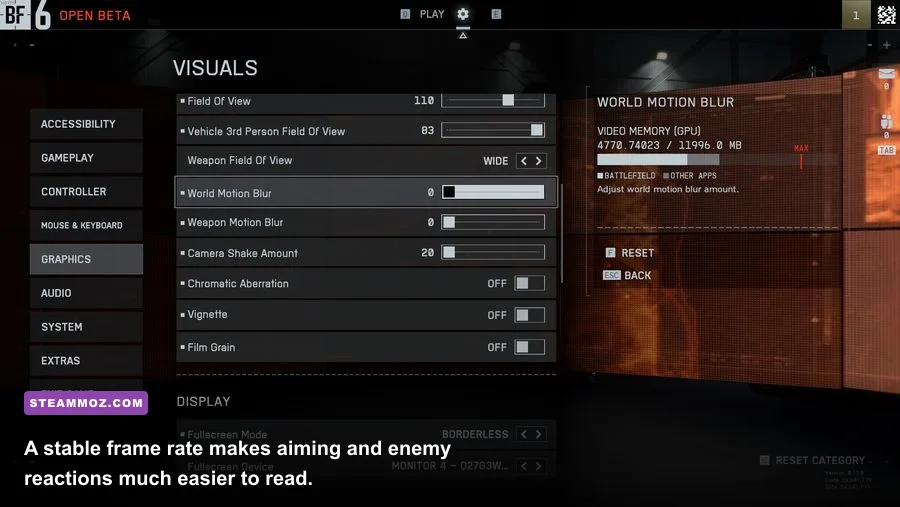
For PC players, a stable frame rate is part of this preparation. If stutters make aiming inconsistent, check Steamoz's guide to settings for smoother FPS and apply the same general principle here: prioritize consistent frame pacing over flashy effects.
7. Know which enemies deserve bullets
Enemy behavior is more readable than it first appears. Ordinary infected are dangerous mainly because they occupy space and force you into bad angles. A lone target in a wide room is often an avoidance opportunity. Several enemies packed around a doorway are a combat problem because they can block your retreat.
Use the environment. Doorways, counters, stairwells, and corners can separate a group and let you engage one target at a time. Avoid getting pinned against a wall, where the camera and grab range work against you. If an enemy's movement is slow and predictable, let it commit to an attack before stepping around it rather than wasting ammunition while it is still far away.
Watch for telegraphs: a sudden lunge, a raised arm, a change in posture, or a vocal cue usually gives you a moment to move. The safest dodge is often a clean lateral reposition followed by a short retreat, not frantic circles around the enemy. Panic movement burns stamina-like opportunities, exposes your back, and makes aiming harder.
Clear rooms that contain a terminal, elevator, or narrow objective route. Skip enemies in optional offices unless you need the supplies inside. This distinction is the backbone of a good first playthrough: kill what controls your route, avoid what merely threatens your pride.
8. Prepare for bosses with a purpose-built loadout
Boss fights in Daymare: 1998 punish players who enter with an ordinary exploration inventory. Before crossing a suspiciously open arena or triggering a major story event, return to a save point and reorganize. Carry the strongest practical weapon, enough ammunition to survive a prolonged phase, and at least one healing item. Leave documents and puzzle clutter behind.
Do not unload everything into the boss's center mass without observing the arena. Large enemies typically communicate attacks through movement and audio cues. The first part of a fight should tell you where the safe lanes are, which objects block projectiles, and whether the boss becomes vulnerable after an attack. Once you know that rhythm, damage becomes much safer.
Keep moving, but do not sprint blindly. A controlled loop around the arena is better than hugging the outer wall, where you can get trapped by debris or a bad camera angle. If the boss summons lesser enemies, decide whether they are a permanent threat or a temporary distraction. Kill adds when they close escape routes; otherwise, maintain focus on the main target.
| Boss Situation | Main Danger | Counter Strategy | Best Resource |
|---|---|---|---|
| Open arena | Panicked circling into an attack | Learn one safe movement loop | Handgun for controlled damage |
| Close-range rush | Getting cornered during recovery | Stagger, then cross behind or widen distance | Shotgun |
| Summoned enemies | Blocked retreat route | Remove only the adds controlling your path | Fast, economical weapon |
| Projectile phase | Standing still to aim | Shoot between attacks and use cover | Assault rifle bursts |
The game does not hand you a character-build system with permanent stat allocation, so your real build is the loadout you bring and the ammunition you preserve. That makes preparation more important than grinding.
9. Tune PC settings for readable combat
Daymare: 1998's atmosphere relies on darkness, fog, and heavy environmental effects, but a beautiful screenshot is not worth an unstable fight. At 1080p, start with a stable preset and lower the settings that affect frame pacing most heavily. Shadows and post-processing are usually better places to make concessions than texture quality, provided your graphics memory can handle the textures.
Use the game's display options to match your monitor refresh rate, disable unnecessary motion blur if it makes enemy movement harder to track, and test changes in a busy corridor rather than an empty menu. The goal is not a theoretical average FPS; it is consistent input response when several enemies are on screen.
| Setting | Recommended Starting Value | FPS Impact | Visual Trade-off |
|---|---|---|---|
| Resolution | Native 1080p or monitor resolution | Very high | Lowering it reduces clarity noticeably |
| Textures | High if VRAM allows | Medium | Mostly affects surface detail |
| Shadows | Medium | High | Less depth in dark rooms |
| Post-processing | Medium | Medium to high | Reduced bloom and cinematic effects |
| Anti-aliasing | Medium | Medium | More jagged edges at lower values |
| Motion blur | Off if aiming feels muddy | Low | Cleaner camera movement |
Check the game's official Steam page for current platform information, and compare your hardware against the listed requirements before chasing ultra settings. Steamoz also has practical performance articles for smooth PC runs if you are tuning an older system.
10. Explore like a survival-horror detective
The final tip ties the whole game together: slow down enough to notice what the environment is telling you. Daymare: 1998 is not at its best when played as a straight corridor shooter. It wants you to revisit spaces, remember locked doors, identify unusual symbols, and recognize when a newly acquired item changes the value of an old route.
Use the map as a memory aid. Locked doors, unexplored rooms, and objective markers help you decide where to return, but the map cannot replace observation. Check shelves, desks, bodies, corners, and the edges of rooms. Important ammunition and documents are often positioned just outside the path your objective encourages you to take.
Keep a mental rule for backtracking: return only when you have a clear reason. A newly found keycard, tool, or code should trigger a focused detour, not an aimless tour of the entire facility. Bring enough empty inventory space for the reward and enough ammunition to handle anything that has respawned or repositioned.
That patient approach is also why Daymare works best for players who enjoy older survival-horror design. If you want another tightly structured beginner experience, Steamoz's Goat Simulator 3 beginner tips takes the opposite, wonderfully chaotic route, while this Just Cause 4 performance guide is useful when open-world spectacle is your priority.
The smart way to play Daymare: 1998
Daymare: 1998 becomes far less intimidating once you stop measuring progress by how many monsters you kill. Your real victories are a full magazine before a dangerous hallway, an open inventory slot before a key-item room, a saved game before a boss, and a remembered route that avoids an unnecessary fight.
Use the handgun to control space, the shotgun to recover from close-range mistakes, and the assault rifle in deliberate bursts when the situation genuinely demands it. Read the documents, respect the save terminals, and treat the Hexacore facility as a place to investigate rather than a shooting gallery.
For more background, visit Invader Studios' official website and the game's official Daymare site. With these habits, the campaign's awkward edges become manageable, its atmosphere lands harder, and your first playthrough feels tense for the right reasons instead of frustrating ones.