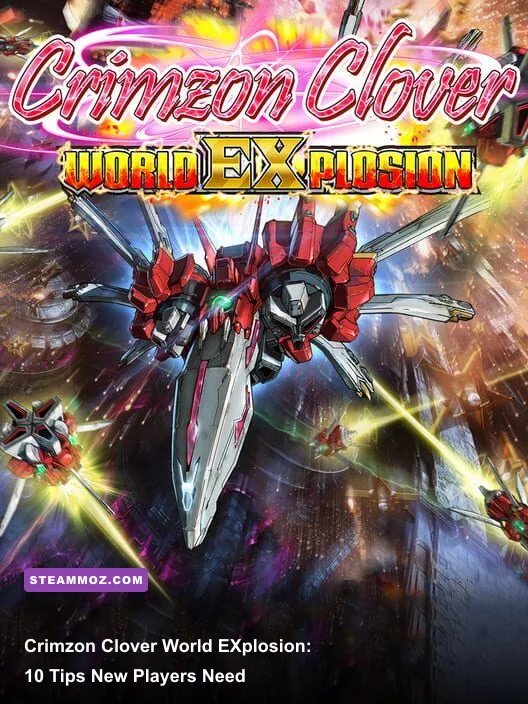
New players should begin with Novice or Boost, learn the three ship types in short practice runs, and treat Break as a defensive resource before using it for score. The fastest route to a first clear in Crimzon Clover - World EXplosion is simple: keep your ship centered, recognize bullets by color and speed, stop greedily collecting medals when a pattern gets dangerous, and practice bosses one phase at a time.
That sounds straightforward until the screen fills with hostile fire and your carefully built chain disappears in one bad decision. This is a dense, generous, brilliantly tuned bullet hell, but it still expects you to understand its systems. These 10 tips explain what matters first, what can wait, and how to turn random-looking deaths into repeatable progress.
1. Start in Novice or Boost, Not Unlimited
Crimzon Clover has several ways to play, and choosing the wrong one can make the game feel unfair before you've learned its vocabulary. Novice is the best place to see stages, identify enemy entrances, and understand boss timing without immediately drowning in ammunition. Arcade mode is the serious standard once you can survive the opening stages consistently. Unlimited is not a normal difficulty step; it is designed to push the game's bullet density and scoring systems far beyond a first-clear environment.
Boost is especially useful for beginners because it emphasizes the game's lock-on and Break mechanics. It gives you a clearer sense of how targets, gauge management, and destruction timing connect. Don't judge your skill by an Unlimited run. Judge it by whether you can reach the same boss with fewer panic bombs or deaths than last time.
| Mode | Best Use | New-Player Advice |
|---|---|---|
| Novice | Learning routes and attacks | Use it for your first clear and boss observation |
| Boost | Learning lock-on and Break flow | Excellent practice for controlled destruction |
| Arcade | Standard challenge and scoring | Move here after Novice feels predictable |
| Unlimited | Expert bullet-hell challenge | Save it for after you understand every system |

🎮 Crimzon Clover World EXplosion
Looking to experience this game? Grab your digital key directly on our store for $9.99.
View on Steammoz Store →2. Learn What Each Ship Actually Wants

The Type-I, Type-II, and Type-III fighters aren't cosmetic choices. Their shot shapes, lock-on behavior, movement feel, and damage profile change how you solve a stage. Type-I is the natural starting point for most players because its forward-facing attack is easy to understand and its damage is concentrated where you're aiming. It rewards staying near the center and reading threats directly ahead.
Type-II offers broader coverage, which is helpful when enemies enter from multiple lanes. The trade-off is that its damage can be less concentrated against a single target unless you position carefully. Type-III changes the rhythm again with a more unusual attack pattern and is better suited to players who already understand how to place a ship rather than simply react.
Spend one life with each ship in Stage 1. Watch where enemies die, how quickly a stage target disappears, and whether you can keep your eyes on the ship while firing. Don't switch ships after every death, though. Pick the one whose firing pattern you can read and use it for at least three complete attempts.
| Ship | Strength | Weakness | Best Beginner Habit |
|---|---|---|---|
| Type-I | Focused forward damage | Less screen coverage | Aim deliberately and hold center lanes |
| Type-II | Wider enemy coverage | Needs positioning for boss damage | Use side movement to cover entrances |
| Type-III | Flexible, distinctive shot pattern | Less immediately intuitive | Practice placement before chasing score |
For a useful comparison, think of the ships as different answers to the same question: do you want to delete one threat quickly, cover several threats safely, or build a route around unusual positioning?
3. Keep Shot, Lock, and Break Separate in Your Head
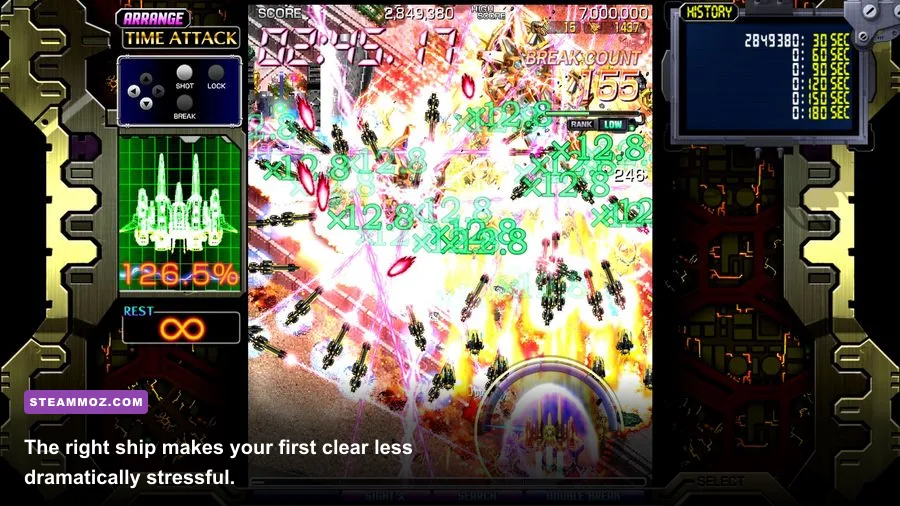
The game becomes much easier once the three core actions have different jobs. Shot is your default damage tool. Lock-on is for selecting or marking enemies and creating controlled destruction. Break is the resource that changes the entire tempo of a run. If you mash all three whenever the screen gets busy, you'll waste opportunities and have no plan when a boss begins its hardest pattern.
Hold Shot almost constantly unless you're testing movement or deliberately setting up a lock-on sequence. Use Lock when several targets are about to leave the screen, when weak enemies are entering from awkward angles, or when you need to remove a dangerous turret without moving into its line of fire. Then activate Break when it either solves a survival problem or creates a clear scoring opportunity.
On a first-clear attempt, your priority should be shot for damage, movement for survival, lock-on for control, and Break for emergencies. Scoring routes come later. That order prevents the most common beginner mistake: activating a powerful resource because the screen looks exciting rather than because it solves a specific problem.
4. Use Break as a Shield Before Using It for Points
Break is the system that gives World EXplosion its identity. When your Break Gauge is ready, activating Break boosts your offensive power and changes how you interact with enemies and score items. It also gives you breathing room when a pattern is about to overwhelm your normal movement. New players often save it for an imagined perfect scoring section and die while carrying a full gauge. That's backwards.
Use Break when a boss attack is reaching its most crowded point, when multiple high-value enemies appear at once, or when your normal shot cannot clear a dangerous lane quickly enough. The best defensive Break is usually the one activated a moment before panic starts. If you wait until bullets surround your hitbox, the activation may not rescue you from a mistake already made.
Don't automatically spend every gauge at the first available target. Watch the stage for repeatable danger points. If the third wave of a stage always traps you between aimed shots and a side swarm, that is a better Break location than an easy opening where you could survive normally. Your goal is to turn Break into a route, not a reflex.
Break Rate and the resulting scoring pressure matter more once you're chasing a high score. For a clear, the resource's practical value is time: it lets you destroy threats faster, simplify a pattern, and preserve your life. That makes a modest score with two lives intact far more valuable than a flashy chain followed by a restart.
5. Aim for the Hitbox, Not the Ship Sprite
Your fighter looks much larger than the area that actually causes a death. The visible ship is a distraction, especially during boss patterns where bullets pass over its wings and engine. Train yourself to track the small central hitbox and make tiny corrections instead of sweeping the entire screen.
Use slow, deliberate taps when bullets are close. Large circular movements feel safe, but they often carry the hitbox into a second bullet that you stopped watching. A good rule is to move only as far as needed to create a gap, then stop. Constant movement is not automatically safer; predictable movement with clean spacing is.
When a pattern looks impossible, identify the fastest bullets first. Slow bullets are often visual clutter that you can route around later. Fast bullets determine your immediate escape. Move through the widest visible gap, not necessarily toward the edge of the screen. Corners can become traps when aimed bullets arrive behind you or when the next wave removes your exit.
6. Read Bullet Color, Speed, and Origin
Bullet hell games are less about reacting to every projectile than recognizing the rule behind a group of projectiles. In Crimzon Clover, watch three things: where the bullet started, how quickly it travels, and whether it aims at your current position or follows a fixed route.
Aimed bullets punish stopping in obvious lanes. If several enemies fire at you in sequence, make a small movement to bait the shots, then return to a safe position. Fixed curtains and aimed shots require different answers: weave through a fixed pattern, but manipulate aimed fire by moving early. Mixing those responses is how players walk into bullets they thought they had already dodged.
Don't stare at the boss alone. Keep your peripheral vision on the lower half of the screen, where your hitbox lives. Your eyes should alternate between the next gap and the boss's firing animation. With practice, a boss's sound cue and muzzle flash will tell you what is coming before the bullets become dense.
7. Stop Chasing Medals When the Route Gets Dangerous
Medals and chains are the game's temptation. Collecting them improves your score and keeps the run feeling explosive, but a medal is never worth walking through a bad gap. If a valuable item appears on the opposite side of a spreading pattern, let it go. A broken chain costs less than a death, and a death costs much more than one missed pickup.
Build your first route around safe destruction. Kill enemies before they stack into overlapping fire, collect medals that naturally fall toward your lane, and leave awkward pickups alone. Once the route is stable, identify one risky collection per stage and practice it separately. This turns scoring into a controlled upgrade instead of a reason to restart every few minutes.
Lock-on is useful here because it lets you manage targets while moving away from danger. Mark enemies when you have room, then release the attack while your ship is already positioned for the next pattern. The strongest scoring play often begins with safe positioning several seconds before the points appear.
8. Learn Stages as Short Sequences, Not One Giant Run
Stage memorization is the real progression system. Instead of trying to “get better” at an entire run, divide each stage into sections: opening wave, first turret group, mid-stage formation, pre-boss sequence, and boss. Record where you die and restart mentally from that landmark.
On each attempt, give yourself one job. The first run might be about surviving the opening. The next can focus on entering the boss with Break available. After that, practice the boss's first two attacks. This approach creates reliable checkpoints in your memory even though the game doesn't function like a conventional checkpoint-based action game.
Use the official Steam page to confirm available modes and control options, then spend time in the mode that matches your current goal. If you're also tuning other demanding PC games, Steamoz's stutter-fixing settings guide has useful general advice about stable frame pacing.
9. Treat Bosses as Pattern Tests, Not Damage Races
Bosses are where the game's systems finally demand discipline. Hold your main shot on the boss whenever safe, but don't tunnel vision on the health bar. Watch the boss animation, identify the first bullets of each attack, and decide whether the pattern calls for micro-movement, a wide dodge, or Break.
Enter a boss with a specific plan. If your normal shot can handle the opening phase, save Break for the attack that repeatedly kills you. If you consistently reach the final phase with no resources, stop trying to maximize the early score and use one Break to shorten the dangerous section. Boss practice is about reducing the number of decisions you make under pressure.
| Boss Situation | Primary Danger | Counter Strategy | Resource Choice |
|---|---|---|---|
| Opening aimed shots | Moving too late | Bait shots with small early movement | Save Break |
| Dense rotating pattern | Tracking the sprite instead of the gap | Follow the safest lane and make tiny taps | Break if the lane closes |
| Multiple side threats | Off-screen fire | Clear the nearest threat before repositioning | Use Lock for control |
| Final phase | Panic movement and greed | Ignore medals and prioritize survival | Spend remaining Break |
For broader boss-practice habits, our Gearshifters first-run tips make the same useful point in a different genre: build repeatable decisions before optimizing the run.
10. Optimize Performance Before Blaming Your Reactions
A bullet hell game is only as fair as your frame pacing. You don't need an expensive graphics card for Crimzon Clover, but you do need consistent input and a stable refresh rate. A random stutter during a dense pattern can turn a readable gap into an accidental hit.
Start with a stable fullscreen or borderless mode, disable unnecessary overlays, and cap the game to a frame rate your system holds consistently. Avoid chasing a fluctuating high number. A locked 60 FPS is preferable to swings between 60 and 144 if those swings affect timing or input feel. If you play on Steam Deck or a laptop, test the same stage repeatedly after changing one setting at a time.
| Setting or Variable | Recommended Starting Value | Gameplay Impact | What to Watch For |
|---|---|---|---|
| Display mode | Fullscreen or stable borderless | Reduces focus and presentation issues | Check input feel after alt-tabbing |
| Frame rate | Stable 60 FPS baseline | Keeps timing consistent | Prefer consistency over peak FPS |
| Steam Overlay | Disable if stutters appear | Can remove overlay-related spikes | Test before changing game files |
| Background apps | Close recording and browser-heavy tasks | Reduces intermittent frametime spikes | Monitor during boss patterns |
Also check the game's Steam community discussions for controller and display reports before assuming a personal setup is broken. Steamoz's performance settings guide covers the same troubleshooting mindset, while our PC stutter fixes are handy if your whole system is misbehaving.
Build a First-Clear Practice Plan
Use the developer's official site for game information, then follow a simple four-session plan. In session one, play Novice with Type-I and focus only on reaching the first boss. In session two, repeat Stage 1 until its enemy entrances feel familiar, then test Type-II and Type-III without worrying about score.
In session three, choose one ship and learn where you want to spend Break. Entering a boss with a plan is more important than entering with a full gauge. In session four, attempt a complete run and write down the exact attack or wave that ended it. That note is your next practice target.
Don't measure progress only by a clear. Reaching a boss with one fewer death, surviving a pattern without bombing, or maintaining control while ignoring a medal are all meaningful wins. Crimzon Clover - World EXplosion rewards repetition because its chaos is carefully structured. Once you understand the structure, the screen stops looking like noise and starts looking like a route you can solve.
For more focused practice advice, see Steamoz's progression planning guide and our performance troubleshooting guide. The genres differ, but the lesson carries over: remove technical uncertainty, build repeatable habits, and only then chase mastery.
Once your first clear arrives, move to Arcade mode, keep the same ship, and change one variable at a time. Improve a single boss phase, then a single stage route, then your Break timing. That's how a new-player survival run becomes the beginning of a real score attack.